I
DA B. WELLS
, the famous black newspaper owner, has always been a bit of a mystery.
Her story has gotten short shrift in history books, particularly compared to African-American males from the same period such as Frederick Douglass, W.E.B. DuBois, and Booker T. Washington.
As both an African-American and a female journalist, I've always been curious about this crusader, a woman who was running a newspaper before women even had the right to vote. As a student, I'd learned that Wells was born to former slaves and eventually co-owned a newspaper, only to wind up being chased out of Memphis, Tenn., after publishing scathing anti-lynching editorials. The fact that a woman of her day had fought against this form of vigilante justice always struck me as courageous. But that was about all I knew about Ida B. Wells.
Then, last week, my husband surprised me with a copy of her new biography, "Ida: A Sword Among Lions" (Amistad, 2008) by Paula J. Giddings. It's a 800-page collector's item that promises to be a satisfying read some long, lazy weekend - when one presents itself. Coincidentally, I'd already picked up the book at the office and interviewed the book's author just a few hours before receiving his gift.
"We, in this country, have a difficult time with history in general and with African-American history in particular," Giddings told me during our phone interview. "A lot of people get left out. We also haven't really integrated African-American history with mainstream history."
Besides, Giddings pointed out that educators often use black history to counter negative stereotyping of African-Americans, particularly that of black males, and as a result, some of the equally noteworthy stories about black women get overlooked. Although Wells was active in the suffragette movement, the cause with which she is most closely aligned is her anti-lynching crusade, but the way she conducted it often caused her to be shunned by whites and blacks.
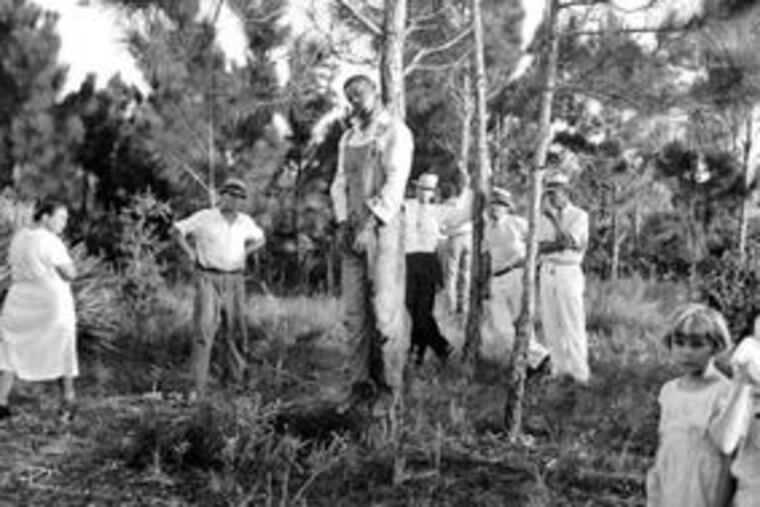
During Wells' time, the rationale for lynching was that it was necessary and that the perpetrators were protecting white women from being raped by black men. Wells triggered a firestorm by authoring editorials challenging that presumption, writing that white women were voluntarily engaging in sexual relationships with black men. In response, the New York Times called her a "slanderous and dirty-minded mulatress," according to the biography. Meanwhile, some blacks found her views extreme and assumed that lynching victims had somehow brought their violent deaths on themselves.
But Wells, according to "Sword Among Lions," refused to back down, writing at one point, "Having destroyed my paper, had a price put on my life, and been made an exile from home for hinting at the truth, I felt that I owed it to myself and to my race to tell the whole truth now that I was where I could do it freely."
"She knew she was going to pay for it and she did and kept on doing it," said Giddings, who was inspired to delve into Wells' story after writing a book about black women activists called "When and Where I Enter." "It was a very tumultuous period in history and she was right in the middle of it."
"This is really the first definitive study of Ida Wells," Giddings continued. "There have been things written about her, but they weren't comprehensive. I liked the fact that she was so unambiguous about her dedication to the race and to what she had to do."
One of my favorite stories that Giddings recounts is about how more than 70 years before Rosa Parks refused to relinquish her seat on a bus, Wells did the same thing - repeatedly. Wells, riding a whites-only train car, would refuse to move when confronted by a conductor, resisting vigorously. Each time it took several men to remove her.
After the first incident, Wells sued, but before her case could be heard, the U.S. Supreme Court overturned the Civil Rights Act of 1875 barring such discriminatory practices. She eventually won her case, but the decision was later reversed. "I would like to take the race in my arms and fly away with it," she said after losing the case, Giddings said.
A black-studies professor at Smith College, Giddings was aided in her research by Wells' unfinished autobiography, "Crusade for Justice," which was published in 1970, as well as by a fragment of a diary and numerous papers owned by the University of Chicago. As Giddings went through them all, she began to appreciate Wells in all her complexities. For instance, the journalist struggled with anger. And Wells had an authoritarian style and was considered difficult to work with.
Giddings theorizes in her book's introduction that Wells' militancy and strident personality may have contributed to the fact that her accomplishments weren't always included in books about black heroes, such as that by Carter G. Woodson, the father of what would become Black History Month. "And despite her reputation as an isolated - if courageous - crank, there is ample evidence that Wells was not petulant in the sense that she refused to cooperate with those whom she personally disagreed with over matters that benefitted the race," Giddings wrote. Remarkably, Wells managed to stay hopeful.
"In the end, she's never bitter and she never lost hope in the ability of the country to change . . . despite the lynchings, despite all of her disappointments," Giddings said. "I think some people lose the faith but not her. She had faith in people. In 1930, she decided that she was going to start a newspaper. She said, yes, people are in a Depression . . . but she said people are going to pay for a paper that was going to educate them."
Wells continued to write up until her death in 1931. In fact, the biography she started in 1862 ends mid-sentence. "She was writing until she could no longer lift her hand," said Giddings. *
The Daily News and the African American Children's Book Project are sponsoring a book-signing with author Paula Giddings from 5:30-7:30 p.m. Thursday in the public room of the Daily News/Inquirer building, 400 N. Broad St. Books will be available for sale. For information call 215-878-BOOK.