Yummy in the tummy: Getting toddlers to eat well
Just a few short weeks ago, my daughter Mila, not yet 2, happily munched on tapas and demanded more flatbread with dip at Amada.
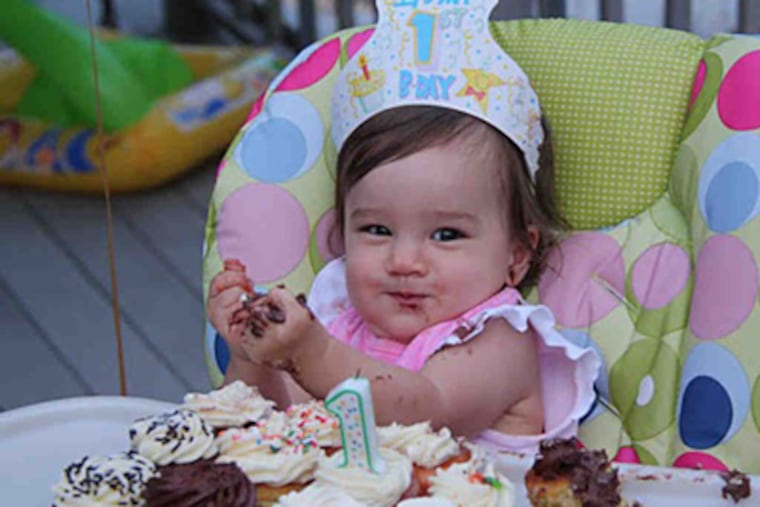
Just a few short weeks ago, my daughter Mila, not yet 2, happily munched on tapas and demanded more flatbread with dip at Amada.
She chowed down on grilled eggplant picked from Linvilla Orchards, and devoured pattypan squash from the Media Farmers Market. She also enjoyed eating shrimp and fish. I proudly thought I had a hearty - even adventurous - eater.
But then, the other night, Mila opened her mouth to let a mass of chewed grapes fall out: "Mom - has skin."
Minutes before, she wouldn't touch her asparagus, which she usually inhales. Then she declared the zucchini "has skin" and spit a mushy mess back onto her plate. She nibbled on some pasta. So went dinner.
And that's the way it is with toddlers. One day, they're eating everything on their plate and you give yourself a little pat on the back. Other days, they simply refuse meals. It's a challenge coming up with three healthful and appealing meals each day.
For me, it's not just about getting her to eat. I want her to eat well. Like many parents, my husband, Josh, and I try to cut back on processed foods and emphasize organic or local produce.
I started thinking more about Mila's diet when she began eating solid foods around 6 months of age. We were living in Shanghai, and imported baby food wasn't cheap. It made more sense to prepare my own purees. I set out to cook, equipped with Annabel Karmel's The Healthy Baby Meal Planner (Simon & Shuster).
Karmel, a best-selling author who is considered a leading expert on baby and toddler nutrition, stresses the importance of bringing up children on fresh foods from the start to ease the transition into family meals.
A friend's gift of a Beaba Babycook Baby Food Maker (a French-made blender, steamer, warmer, and defroster, all in one unit) also proved enormously helpful, though once I decided to make larger quantities to freeze, I used my own kitchen appliances.
To me, the purees really did taste much better than processed foods from a jar, and I think Mila felt the same way. She spit out jarred baby food by the time she was seven months. I had given them a try, thinking that it could introduce her to more flavors.
But Mila was eating my sweet potato with spinach and peas, tomatoes and carrots with basil, among other homemade purees. Following Karmel's advice, I was introducing a wide variety of tastes and textures in an effort to develop Mila's taste buds and foster good eating habits.
Since then, I've moved on to generally serving chopped-up fruits and vegetables; protein consisting of either meat, dairy, or beans; and whole grains in bread, rice, and pastas. Sometimes, she's even able to have the same meal that we're eating.
While I want Mila to eat healthful food, I try not to be militant about her diet. After a busy day, it's convenient to heat up chicken nuggets (I like Applegate Farms, no hormones, additives, or preservatives) and sweet-potato fries in the oven. If I don't have time to make my own, Trader Joe's low-sodium organic butternut squash soup will do.
She has treats in moderation, too. Mila loves ice cream, and we'll share our cupcakes with her. She had a few bites of our greasy but tasty funnel cake when we visited Rehoboth Beach in Delaware earlier this summer. "Not bad," she told us with some powdered sugar on her lips.
I think fruit is still her favorite dessert based on her limited commentary these days. "Strawberry. It's good. I like it! It's red."
Josh and I have come up with some creative strategies to outthink our finicky eater.
At one point, Mila would try new foods if I recited a line from her favorite book at the time, Green Eggs and Ham by Dr. Seuss: "You do not like them. So you say. Try them! Try them! And you may. Try them and you may, I say." She'd take a bite with a big smile across her face.
Another success (and my husband demands credit for this one): I used to clear her main meal before serving her fruit, but he suggested leaving a spot open on her plate to put the fruit there. Usually, she'll eat the fruit and go back to eat her vegetables.
I took a cooking-for-children class with friends to get more recipes and ideas, but it turned out to offer some group therapy as well. There is some comfort knowing that other parents experience the same issues. It's not uncommon to hear about toddlers going through phases of eating just fruit and bread, snubbing pasta or eggs, rejecting meat, or not eating any vegetables.
Some recipes sneaked in vegetables in the form of purees, but, so far, I haven't resorted to disguising. In class, we had made French toast using bread battered with a mixture of butternut squash puree, cinnamon, and egg. The only sneaking-in I do lately is adding some flaxseed to her fruit smoothies and banana bread.
What I really took away from the class is that I need not worry as much when she doesn't eat, and to try more meals that we can all eat together as a family. You always hear it: "They'll eat when they're hungry." Nonetheless, it's difficult not getting frustrated when she's more interested in making her food dance than eating it during a meal.
I can only hope Mila's phase of spitting out food doesn't last long. In the meantime, I still have to keep up with my general plan. Who knows? She might jump back on board at any meal.
Basic Banana Bread
Makes 16 servings
EndTextStartText
1 1/2 cups mashed ripe banana
1/3 cup plain fat-free yogurt
5 tablespoons butter, melted
2 large eggs
1/2 cup granulated sugar
1/2 cup packed brown sugar
6 3/4 ounces all-purpose flour (about 11/2 cups)
1/4 cup ground flaxseed
3/4 teaspoon baking soda
1/2 teaspoon salt
1/2 teaspoon ground cinnamon
1/8 teaspoon ground allspice
Cooking spray
1/3 cup powdered sugar
1 1/2 teaspoons 1 percent low-fat milk
EndTextStartText
1. Preheat oven to 350 degrees.
2. Combine first 4 ingredients in a large bowl; beat with a mixer at medium speed. Add granulated and brown sugars; beat until combined.
3. Weigh or lightly spoon flour into dry measuring cups; level with a knife. Combine flour and next 5 ingredients (through ground allspice). Add flour mixture to banana mixture; beat just until blended. Pour batter into a 9x5-inch loaf pan coated with cooking spray. Bake at 350° for 55 minutes or until a wooden pick inserted in center comes out clean. Remove from oven; cool 10 minutes in pan on a wire rack. Remove bread from pan; cool completely. Combine powdered sugar and milk, stirring until smooth; drizzle over bread.
Per serving: 175 calories, 3 grams protein, 29 grams carbohydrates, 17 grams sugar, 6 grams fat, 36 milligrams cholesterol, 174 milligrams sodium, 2 grams dietary fiber.
Hummus
Makes 2 1/2 cups or ten 1/4-cup servings
EndTextStartText
1 (15.5 ounce) can no-salt-added chickpeas, rinsed and drained
1 garlic clove, crushed
1/4 cup water
2 tablespoons tahini (sesame seed paste)
11/2 tablespoons of fresh lemon juice
1 tablespoon extra-virgin olive oil
1/4 teaspoon salt
EndTextStartText
1. Place chickpeas and garlic in food processor; pulse 5 times or until chopped. Add 1/4 cup water and remaining ingredients; pulse until smooth, scraping down sides as needed.
Note: For toddlers, serve with wedges of soft, whole-grain pita bread or tender raw vegetables such as pea pods and cucumber halves or slightly steamed carrot sticks and broccoli florets. Spread the hummus onto a whole wheat tortilla wrap, and roll it into "pinwheel" bites.
Per serving: 191 calories, 9 grams protein, 28 grams carbohydrates, 5 grams sugar, 6 grams fat, no cholesterol, 38 milligrams sodium, 8 grams dietary fiber.EndText
Healthy Fish Sticks
Makes 8 servings
EndTextStartText
1 shallot, peeled and finely chopped
2 teaspoons lemon juice
1 tablespoon vegetable oil
2 gray sole or 1 flounder, filleted and skinned
1 egg
2 teaspoons milk
All-purpose flour
Crushed cornflakes
A little butter or margarine for frying
EndTextStartText
1. Mix together the chopped shallot, lemon juice, and oil. Marinate the fish fillets in this mixture for an hour. (If you are short on time, you could skip this stage.)
2. Remove the fillets from the marinade. Cut them into diagonally into four or five pieces, depending on the size of the sole.
3. Beat the egg together with the milk. Dip the strips first into flour, then the egg and milk, and finally the crushed cornflakes. Fry in butter or margarine until golden brown on both sides. They should take no more than a few minutes to cook.
Per serving: 189 calories, 29 grams protein, 4 grams carbohydrates, 6 grams fat, 104 milligrams cholesterol, 138 milligrams sodium.