Coat your vegetables with a flavorful glaze
So many home cooks are obsessed with making dishes just like the professionals do. They buy hand-forged Japanese chefs' knives, seek out $50 bottles of olive oil, and spend hours elaborately composing dishes from The French Laundry Cookbook or Eleven Madison Park.
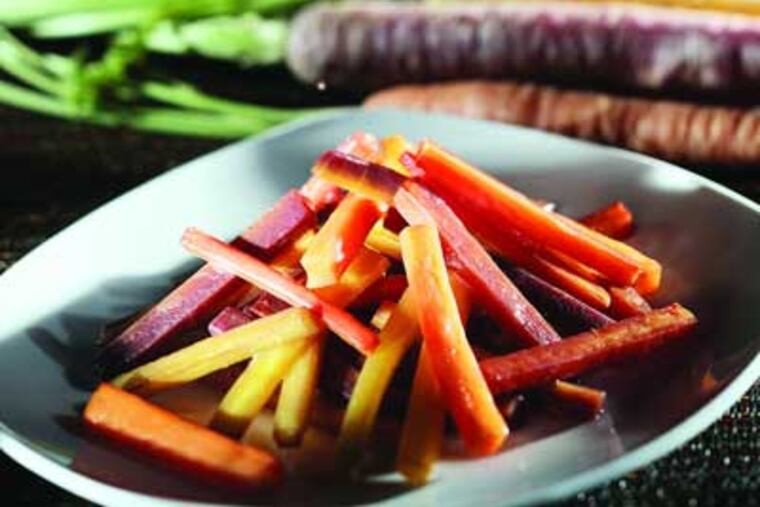
So many home cooks are obsessed with making dishes just like the professionals do. They buy hand-forged Japanese chefs' knives, seek out $50 bottles of olive oil, and spend hours elaborately composing dishes from The French Laundry Cookbook or Eleven Madison Park.
Yet, a lot of them have never even heard of one of the most basic techniques of cooking, requiring no special equipment or expensive ingredients: glazing vegetables.
It's as fundamental to a cook's repertoire as roasting a chicken - maybe even more so - and you can probably do it in a few minutes with what's in your kitchen right now.
Glazing works for all sorts of vegetables, and particularly now, when we're enjoying the full flush of the harvest, it's something you ought to master.
Here's how:
Cut the vegetables into equal-sized pieces, so they cook at the same pace. Place them in a skillet just big enough to hold them, one that has a securely fitting lid.
Add just enough water to cover the bottom of the pan, roughly 1/2 cup (very dense vegetables will take a little more; soft vegetables will take a little less). Add a bit of fat (a thumb-sized knob of butter or a couple of glugs of olive oil). If you have seasonings that need to be cooked - minced onions, shallots or garlic - add them, too.
Place the pan over medium heat, cover tightly and cook. Stir every couple of minutes, checking on the tenderness of the vegetables. If the water gets low too quickly, add a splash - just 2 or 3 tablespoons.
When a paring knife easily penetrates the vegetables, remove the lid and turn the heat to high. Cook, tossing and stirring fairly constantly, until the liquid is gone and the vegetables are shiny and just beginning to brown; it'll take only a couple of minutes.
Add the final seasonings - a sprinkle of salt, chopped herbs or spices, and a splash of acidity from a squeeze of citrus or a spoonful of vinegar - and serve.
That's all there is to it.
It's a great thing to do to vegetables because as they cook under cover, they release moisture of their own (most vegetables are more than 90% water). When you uncover the pan and turn up the heat, the water evaporates and the flavor essences left behind mix with the fat to coat the vegetables with a delicious glaze.
At one time, I called this "braising" because it is very similar to what happens when you stew a piece of meat. That little bit of added liquid serves to soften the cellulose structure of the vegetable, releasing the juices inside, which are then reduced to a sauce. In the case of vegetables, it's just done backward; you soften with liquid first, then brown at the end.
Glazing doesn't work with all vegetables. They need to be firm enough that they won't fall apart during cooking. But for those that are suitable, glazing is almost infinitely flexible. With one technique, you have learned dozens of "recipes."
The only thing it requires is a certain amount of minding - to get the vegetables perfectly done (cooked through but not mushy), you must pay attention. But that's a skill every home cook should master.