Dried, wrinkly and flavorful
Dehydrated foods may not be pretty, but they offer a most concentrated taste.
When it comes to preserving food, dehydrating is the least-glamorous option, exiled from most cookbooks and conversations while canning and freezing get the attention.
Dried foods aren't always the prettiest (dehydrating darkens and wrinkles them), but they're the lightest-weight and arguably have the purest flavor of anything preserved.
"A dried peach tastes peachier than a fresh peach," writes Deanna DeLong in her comprehensive guide How to Dry Foods (HP Trade, 2006), first published in 1979.
The most challenging requirement is patience: Most everything needs a minimum four hours.
"The key is to forget about it," says Michael Friedman, executive chef and co-owner of Red Hen in Washington.
Among other things, Friedman dries cherry tomatoes (packing them in olive oil) and has been substituting dehydrated blackberries for raisins in ice cream and other desserts.
Use fruit and vegetables at their peak maturity, when flavor and nutritional value are greatest.
"If it's prime for eating, it will be prime for drying," DeLong says.
After choosing the produce, rinse and dry, inspecting it for mold or bruises. Don't dehydrate anything with signs of decay. Unlike with sauces and the like, skip the bruised seconds.
When dehydrating produce, you can practice without much worry about food safety if you start with unbruised fruit. "You can make mistakes and nearly everything you do is still going to be good," DeLong says.
That's because the absence of water inhibits the growth of microorganisms (bacteria, mold, yeast). These food spoilers are not gone, but they won't multiply until water is reintroduced, returning the food to its perishable state. Worst-case scenario with fruits and vegetables? You see mold, or smell fermentation, and throw out the produce.
There are advantages to using the sun to dehydrate food: the resulting bright colors, and with drying trays and screens, batches bigger than can be done in ovens and dehydrators. But DeLong points out disadvantages, too: Nutrients are lost from lengthy exposure to sun and air, and foods are less sanitary than those dried in an oven or dehydrator.
While Friedman says a home oven is a fine option ("You just need a little more time"), DeLong prefers a dedicated machine.
An oven, she says, "should be a last resort unless you have a convection with a very low temperature." Convection ovens have a fan to move air, and an outlet to remove moisture. Exhaust systems are helpful, too, so you don't have to leave the door open. But the difficulty of controlling temperature and air circulation can produce darker, less flavorful results.
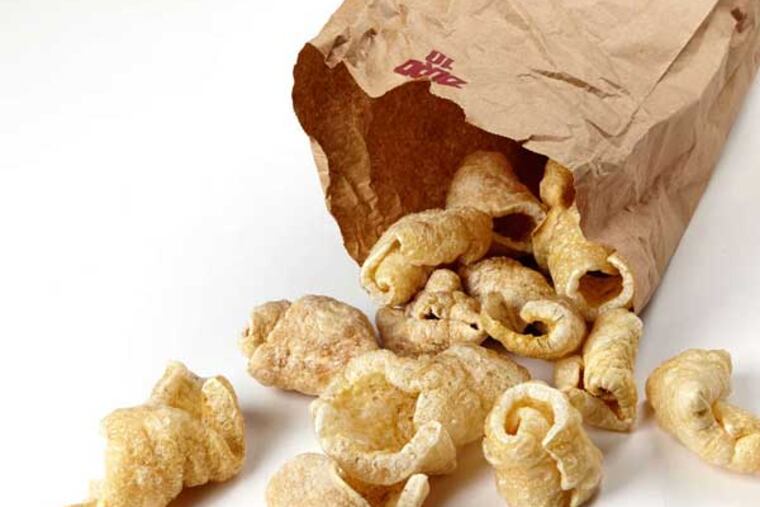
While produce is easy and relatively safe to dry, the technique needn't be limited to fruits and vegetables. At the Red Hen, Friedman dehydrates ricotta salata (a semi-firm sheep's milk cheese whose curds and whey are pressed and dried before aging) so he can grate it. At the Pig - where they buy whole animals and try to avoid waste - executive chef Michael Bonk dehydrates skin to make cracklings. "The process is pretty straightforward," he says. Unlike produce, meats must first be cooked to a temperature that kills bacteria and then kept at a certain temperature for drying safely.
Dehydrating began as early as 12,000 B.C. But besides the Paleolithic-inclined and backpackers, raw-food devotees have long used dehydrating in their eating.
"Dehydrating allows you to keep enzymes intact," says Jonathan Seningen, executive chef at Elizabeth's Gone Raw in Washington, who makes "pasta" from zucchini slices. "All the nutrients are available for your body to digest and take advantage of."
DeLong sees many reasons - health, budgetary, environmental - for dehydrating. But one simple reason may trump them all: "It makes great food."
Dried Peaches
Makes 12 servings
EndTextStartText
12 peaches
Enough water to submerge peaches
1 teaspoon of ascorbic acid per quart of water or a solution of 1/4 teaspoon of sodium bisulfite or potassium metabisulfite per quart of water
EndTextStartText
1. Wash and scald peaches in boiling water briefly to remove the skins. Immediately plunge into cold water to cool.
2. Cut the fruit in half and discard the pits. If the halves are large, cut each into two slices.
3. Submerge the halves in a solution of 1 teaspoon of ascorbic acid per quart of water or a solution of 1/4 teaspoon of sodium bisulfite or potassium metabisulfite per quart of water. Stir to dissolve. Soak for no more than 15 minutes.
4. Lightly rinse the halves in clear water.
5. Arrange them, cut sides down, on the rack of a food dehydrator fitted with a thermostat, a fan, and a heating element. Dry at 130 to 140 degrees for about 8 hours; if there is a lot of humidity, it may take up to 12 hours. The dried peaches should be leathery and pliable with no pockets of moisture.
Notes: Select firm, ripe peaches that are heavy for their size. Ascorbic acid can be found in drug stores. For those who aren't sensitive to sulfites, food-grade sodium bisulfite or potassium metabisulfite are available at purveyors of winemaking supplies and online at www.homebrewit.com.
Per serving: 38 calories; 1 gram protein; 9 grams carbohydrates; 8 grams sugar; trace fat; no cholesterol; no sodium; 2 grams dietary fiber.EndText
Oven-Dried Cherry Tomatoes In Olive Oil
Makes about 2 cups or 6-8 servingsEndTextStartText
1 pound mixed bite-size tomatoes, such as grape or cherry tomatoes, varying in size and color
1 tablespoon kosher salt
2 sprigs fresh thyme
2 sprigs fresh oregano
One 3-inch sprig rosemary
6 basil leaves
11/2 cups extra-virgin olive oilEndTextStartText
1. Preheat oven to 200 degrees.
2. Rinse the tomatoes in cold water, then dry with paper towels. Use a serrated knife to cut each in half and place in bowl; toss with the salt until evenly coated.
3. Line a large-rimmed baking sheet with parchment paper; spread the tomatoes on it. Dry for 1 hour in the oven, then rotate the baking sheet from front to back and dry for 1 hour. The tomatoes should look slightly dehydrated but still have a bit of moisture; think tomato raisins. Cool completely.
4. Transfer the oven-dried tomatoes and the herbs to a sterilized pint jar. Fill with the oil, making sure the tomatoes and herbs are submerged. They will be loosely packed.
5. Seal and refrigerate for at least 1 hour and up to 1 month.
Per serving (based on 8): 84 calories; 1 gram protein; 3 grams carbohydrates; 2 grams sugar; 9 grams fat; no cholesterol; 3 milligrams sodium; 1 gram dietary fiber.