Celebrate St. Patrick's Day with corned beef
Irish heritage is not required to enjoy a great, easy, St. Patrick's Day-inspired meal. My mid-March tradition of planting peas outside while a corned beef brisket and cabbage simmer away on the stove may come simply from living in East Coast cities with Irish-American friends and neighbors.
Irish heritage is not required to enjoy a great, easy, St. Patrick's Day-inspired meal. My mid-March tradition of planting peas outside while a corned beef brisket and cabbage simmer away on the stove may come simply from living in East Coast cities with Irish-American friends and neighbors.
This cold, dreary spring may not allow for outdoor planting on St. Patrick's Day, but you can be sure we'll be eating corned beef.
Corned beef is not only delicious, it is extremely easy to prepare at home. The word "corn" is an early Anglo-Saxon word meaning pellets or granules, and was commonly used to mean any of various grains. "Corned" beef was beef preserved with corn-sized grains of salt.
In his book Salt, Mark Kurlansky says that the Irish produced a salted beef in the Middle Ages that was "the forerunner of what today is known as Irish corned beef."
Potatoes replaced beef as a dietary staple in Ireland by the end of the 19th century. When the wave of Irish immigrants arrived through the East Coast ports, they discovered affordable and abundant beef, and kosher butchers serving salt-cured brisket to the waves of Jewish immigrants.
Soon enough corned beef became an Irish-American staple - while, in Ireland, corned beef is relegated to tourist fare.
Pickling your own beef is as easy as brining a chicken or turkey, and for purists, allows for creative use of spices and the option to control the quality of the meat and preservatives. Simply submerge a hunk of beef - usually brisket - in a crock filled with brine and spices. (The downside: it needs to brine for five days.) Michael Ruhlman, a chef and writer who has written extensively about curing meats, has a detailed recipe on his website, ruhlman.com.
Easier still is to purchase "ready to cook" brined beef which is widely available in American markets each year around St. Patrick's Day. If you prefer, you can find even grass-fed beef and preservative-free, ready-to-cook briskets at many markets.
To prepare, rinse off the spices, bring a pot of fresh salted water to a boil and add the beef.
After about an hour and a half (which is about an hour before beef is completely tender - depending on the size), add halved onions, whole or chunked carrots, potatoes, cabbage, parsnips or rutabaga.
These veggies add flavor to the beef, and the beef adds flavor to the veggies, and they can all be served together as the easiest late winter one-dish meal I know.
The corned beef can be served as is, with a side of mustard or horseradish, or dressed up a bit with a glaze of mustard and brown sugar broiled briefly. Slice thin and serve warm. Leftovers make a great sandwich.
Include a few more dishes from the Emerald Isle and this basic weekday meal becomes a classic Irish-American St. Patty's Day tribute, with colcannon, Irish soda bread, and a pint of beer or glass of Irish whiskey.
Colcannon is a spring green-colored combination of buttery potatoes mashed with a "cole" crop - such as kale or cabbage mixed with leeks or spring onions. This mash should be served steaming warm in a bowl with a knob of butter, or it can be made into patties to bread and pan fry, or layered into a gratin dish with a wee bit of grated Irish cheddar browned on top.
Irish soda bread is an easy to assemble quick bread, leavened with the combination of baking soda and buttermilk, sometimes seasoned with caraway, often enlivened with raisins or dried currants.
My neighbor, who has spent a dozen summers in County Cork, taught me that the quality of flour matters. She would travel home with multiple five-pound bags of freshly ground flour, commonplace in the supermarket near the cottage she and her family rented, so she could recreate authentic Irish baked goods.
The local Pennsylvania brand, Daisy, is comparable for my bread-baking needs, but any good fresh flour will work fine.
The key to successful soda bread, like all quick breads, is not to over-work the dough. Mix the ingredients till they are just moistened, so as not to develop the gluten which would make this bread tough.
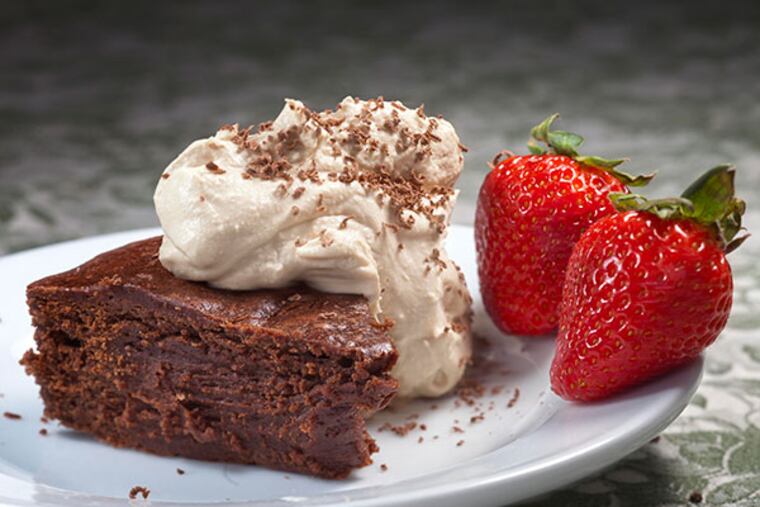
Inspired by Irish coffee, I created a fitting finale to this festive meal by spiking the batter of a rich moist chocolate cake with Irish whiskey, a big heap of sweet coffee whipped cream on top.
Depending on how much you are celebrating, you can serve this dessert with a cup of coffee or a glass of whiskey - but, please, no green beer!
Irish Whiskey Cake With Coffee Whipped Cream
Makes 6-8 servings
EndTextStartText
For the cake:
6 ounces dark (70 percent) chocolate
1 stick butter, plus more for pan
1 1/3 cups granulated sugar
4 eggs
1/3 cup Irish whiskey
1 teaspoon vanilla
1 cup flour, plus more for pan
1 teaspoon baking powder
For the coffee whipped cream:
2 cups heavy cream
3 tablespoons instant coffee
1/2 cup sugar
1 teaspoon vanilla
EndTextStartText
1. Preheat oven to 350 degrees. Butter and flour an 8-inch springform pan.
2. Melt the chocolate over a double boiler.
3. In the bowl of a stand mixer or by hand, beat the butter with the sugar until smooth and creamy. Add the eggs, one at a time, and beat well. Add the melted chocolate to this mixture and mix until well incorporated. Stir in the whiskey and vanilla, add the flour and baking powder, and mix gently until incorporated and smooth.
3. Pour into prepared pan, smooth until even. Bake in center of preheated oven 30 to 35 minutes until top is set but cake is still moist. Let cool. Serve with coffee whipped cream.
4. To prepare the coffee whipped cream, whisk all ingredients together in a cool bowl. Continue to beat until cream thickens and forms peaks.
Per serving (based on 8): 606 calories; 7 grams protein; 72 grams carbohydrates; 57 grams sugar; 31 grams fat; 158 milligrams cholesterol; 142 milligrams sodium; 1 gram dietary fiber.
Corned Beef
Makes 6 to 8 servings
EndTextStartText
1 3- to 5-pound brined (or corned) beef
All or some mix of these vegetables:
1 large onion, peeled and quartered (leave stem intact and onion will stay together)
4 potatoes, well scrubbed and halved
4 carrots, well scrubbed, tops trimmed and sliced into chunks or left whole
1 small cabbage, quartered through the stem
1 parsnip, well cleaned, cut in chunks
1 rutabaga, chunked or quartered
Optional glaze:
See note
EndTextStartText
1. Bring a large pot of water to a boil. Remove brisket from the bag or brine crock. Rinse extra spices off of the meat. Add meat to the pot and cover. If the meat does not stay submerged, place a heavy plate on the meat to keep it under the water while cooking. Lower heat and simmer for an hour and a half to two hours.
2. Add the vegetables and cook for another hour. The meat and vegetables should be fork tender.
3. Serve the meat sliced thin, surrounded by the vegetables and some of the steaming cooking liquid. Corned beef and vegetables may be made ahead and reheated to serve.
Note: To prepare an optional glaze, preheat the broiler. Mix 2 tablespoons grainy mustard, 3 tablespoons brown sugar, and 1 tablespoon orange juice. Trim the cooked beef of visible fat. Slather the glaze on top of the cooked corned beef. Broil 2 to 5 minutes until glaze is bubbly and just browning.
Per serving (without optional glaze; based on 8): 564 calories; 34 grams protein; 32 grams carbohydrates; 7 grams sugar; 33 grams fat; 167 milligrams cholesterol; 1,973 milligrams sodium; 6 grams dietary fiber.EndText
Irish Soda Bread
Makes 1 loaf, or 6 to 8 servings
EndTextStartText
11/2 cups fresh whole wheat flour
11/2 cups unbleached white flour
1/4 cup wheat bran or rolled oats
2 1/2 teaspoons coarse salt
1 1/2 teaspoons baking soda
1/2 teaspoon baking powder
5 tablespoons cold unsalted butter, cut into small pieces
3 teaspoons caraway seeds, optional
1 cup raisins
1 1/2 cups thick buttermilk
EndTextStartText
1. Preheat oven to 375 degrees. Butter an 8-inch round cast-iron skillet, a heavy round baking dish, or a flat baking sheet.
2. Mix all the dry ingredients together. Using your hands or two knives, mix the butter into the flour mixture until the butter is in small pieces and well coated with flour. Stir in the caraway seeds, if using, and the raisins. With a wooden spoon or rubber spatula, stir in the buttermilk until just incorporated.
3. Dough will be moist. Turn into skillet or pan, or turn onto a floured board and form into a round to place on a baking sheet. Using a sharp knife, make a large "X" across the top of the round. This will allow the center dough to cook through before the sides are too browned.
4. Bake until well browned, about 1 hour. Let cool 10-15 minutes before removing from pan and serving. Leftovers are great toasted and slathered with butter before serving.
Per Serving (based on 8): 311 calories; 7 grams protein; 54 grams carbohydrates; 13 grams sugar; 8 grams fat; 21 milligrams cholesterol; 1,067 milligrams sodium; 3 grams dietary fiber.
Colcannon, one variation
Makes 6 to 8 servingsEndTextStartText
2 to 3 pounds potatoes, peeled or well scrubbed, halved
Salt
2 cups chopped clean kale, thick stems removed
1 leek, well cleaned, halved, trimmed, and sliced thin
3/4 cup whole milk
1/2 cup butter
4 scallions, washed, trimmed, sliced thin
Salt and pepper to taste
1-inch knob of butterEndTextStartText
1. Bring a large pot of water to a boil, add 1 tablespoon salt and potatoes, and cook until soft. Drain the potatoes, and return to the hot cooking pot to keep warm and allow excess moisture to evaporate.
2. Bring a separate medium saucepan filled halfway with water and 1 teaspoon of salt to a boil. Add the kale and sliced leek, and cook for 2 to 3 minutes until softened. Drain well. Turn onto a cutting board, and chop kale-leek mixture coarsely.
3. Add the milk and butter to the pan with the potatoes, and heat on low until the butter has melted. Turn off heat, and using a masher or fork, mash the potatoes, mixing in the butter and milk. Add the chopped cooked kale-leek mix and most of the scallions (reserve some for garnish). Continue mashing and mixing, seasoning well with salt and fresh ground pepper, until well mashed, mixed, and seasoned.
4. Serve in a warm bowl, with a knob of butter nestled in the center. Sprinkle remaining scallions on top.
Per Serving (based on 8): 234 calories; 4 grams protein; 23 grams carbohydrates; 3 grams sugar; 15 grams fat; 40 milligrams cholesterol; 859 milligrams sodium; 3 grams dietary fiber.