The char challenge
Food meets flame at local restaurants. Done wrong, the burn's fatal; done right, a charred dish sings with depth and smoky subtlety.
If it smells kind of scorched around here, it's probably not the errant crumbs in your toaster oven. More likely it's the wafting scent of all the fire-scarred foods coming out of local restaurants: Charred salad greens, charred squids and octopi, charred slices of bread with charred vegetable spreads. And there's no escaping the avalanche of charred brussels sprouts.
"The trend we're seeing is open-flame cooking. Whether it's wood-burning ovens, charcoal grills, wood-burning grills, or simple gas ranges, cooks are really experimenting with fire," says Greg Vernick of Vernick Food & Drink.
Turns out, there's more than one way to get food black and flaky. While an everyday charcoal grill will certainly do the trick, there are nuances to the other methods employed in restaurant kitchens. At Vernick, for instance, food might be charred in a wood-burning oven or a grill with lava rocks.
"Cooking with natural products just adds something spiritually to the process," Vernick says. "But it also allows for higher temperatures, which in turn allows for better caramelization and flavor."
Vernick developed a deeper appreciation for charring when he learned wok cookery at Spice Market in New York City.
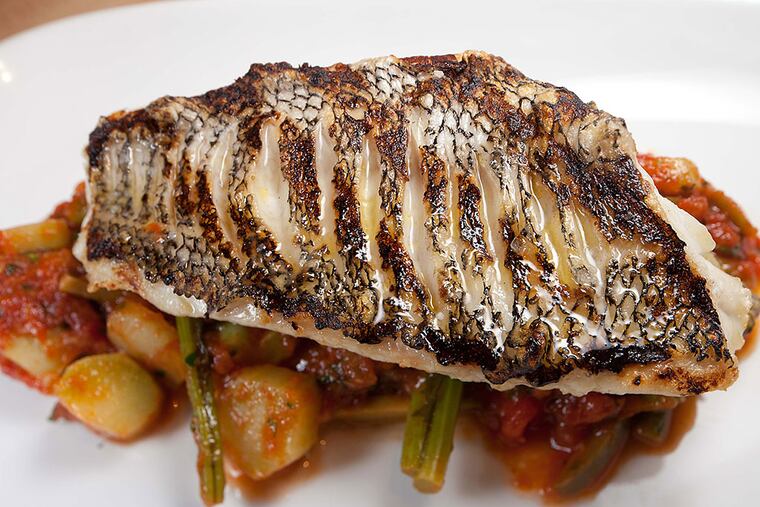
"The pan itself creates a charred flavor profile which is referred to as 'the breath of the wok.' It's fragrant and savory." Without a wok, he aims to get that same subtle dimension into his signature menu items such as charred spinach and fontina on toast, and grilled fish with crispy skin served over roasted tomato sauce and broccoli, a simple and rustic dish that derives its rich depth from a pure blast of blistering heat.
Charring is an especially useful technique for vegetables - particularly in a moment when vegetable cookery is reaching new heights of ingenuity. While cooks are traditionally taught to pre-blanch their densest stalks and leaves, simply exposing them to an extra-hot heat source can obviate the need for the extra step, says Jeremy McMillan of Talula's Garden.
"What's great is that you retain the freshness and often the crispness of the food," he says. A staple dish for him at the restaurant and at home is broccoli roasted with shaved garlic until it pops and crackles, tossed with hot sauce, pecorino or parmesan cheese, and breadcrumbs, plus a bit of lemon juice and olive oil. The same approach also works beautifully with cauliflower and those ubiquitous brussels sprouts. Green beans are another vegetable that only improves with blackening. At the Fitler Dining Room, they're tossed with ricotta cheese, pickled shallot, and lime juice.
At its best, charring creates a surprise element - crispy edges, tender brown spots where natural sugars oxidize and break down.
"When controlled properly, charring adds an appealing bitterness and a certain depth without compromising the ingredients' integrity and natural flavor profile," says Chip Roman, of Blackfish, Mica, and the Treemont. At Blackfish, he serves a charred torn scallop with grilled fennel; at Mica, there's a chicken liver pate served with charred strawberries and grilled macadamia butter. Both use multiple methods to tease out the smokiness.
Charring doesn't have to be limited to vegetables and proteins, either. This time of year, stone fruits - peaches, nectarines, plums, cherries - are made even sweeter on the grill, and can be served for dessert or even as a side dish or salad. (See Alla Spina's balsamic-glazed pork ribs with charred peach salad.)
Because charring is as much about taste as texture, it can be interesting to play with precharred ingredients in traditional recipes, says Roman. "For example, charring cucumbers before making a gazpacho. Charring pecans before making a pecan butter. Things of that nature."
In those scenarios, it's a supporting flavor and not the dominant one. Caitlin Mateo of Square 1682 chars corn kernels with green mango, cilantro, and mango habanero-infused compound butter - calling upon all the tastebuds at once: sweet, salty, spicy.
"I personally love the char flavor and I use it all the time. Once you know how to get that initial effect, you can start to match it to other components," she says.
While the charring technique is easily adapted for the home cook with a charcoal grill, grill pan, or cast iron skillet, it takes a bit of practice to get the timing right. There's a very fine line between thoughtfully charred and carelessly singed. Mere seconds, actually.
"If you have a cake tester you can check to see if the vegetables are just tender. But you can also just use your nose as a test," McMillan says. He adds that he usually seasons charred dishes after cooking to mitigate some of the bitterness.
When it's done correctly, charring should add toastiness or smokiness, without covering up the true taste of the ingredients, which are often still only lightly cooked inside. When it's done wrong - well, it tastes like overdone toast.
"Every trained chef knows how to charbroil a steak, and all it takes is practice." Mateo advises using a light touch and a watchful eye. "You want it burnt but not burnt."
Charred Corn With Mango Habanero Butter
Makes 6 servings
EndTextStartText
For the compound butter:
1/2 pound unsalted butter, cubed and softened
¼ cup clarified butter
1 habanero pepper, sliced down the middle
Zest of 1 lime
¼ cup mango puree
For the corn:
5 ears of corn, shucked
1/4 cup canola oil
1 shallot, julienned
2 garlic cloves, minced
1/4 cup green mango, finely diced
2 tablespoons cilantro, chopped
Salt and pepper to taste
EndTextStartText
1. Make the butter: Set unsalted butter cubes in a medium mixing bowl. Melt clarified butter and set the habanero in it over medium heat for 5 minutes. Remove from heat, allowing mixture to steep for an additional 10 minutes.
2. Stir lime zest and mango puree into unsalted butter, mixing until smooth. When the clarified butter has cooled slightly, strain the liquid into the unsalted butter mixture. Mix thoroughly and season to taste if needed. Roll the butter in parchment paper, label, and store. (Only a portion of it is needed for the recipe, but the rest can be saved for later use.)
3. Heat a grill to very hot and grill the corn, rotating until evenly charred. Remove corn from the grill, and let stand for 2 minutes. Cut the kernels off the cobs, and set them aside.
4. Heat a large saute pan over high heat and add oil. Combine the shallots, garlic, and corn in the pan and season with salt. Saute until the garlic and shallots have cooked through and become very aromatic, about 3 minutes. Toss the green mango and cilantro into the corn mixture and remove from heat. Place the corn into a serving dish and top with a generous amount of mango-habanero butter. Serve hot.
Per serving: 479 calories; 2 grams protein; 14 grams carbohydrates; 3 grams sugar; 48 grams fat; 102 milligrams cholesterol; 220 milligrams sodium; 2 grams dietary fiber.
Grilled Black Sea Bass With Tender Broccoli and Fire-Roasted Tomato Sauce
Makes 4 servings
EndTextStartText
For the tomato sauce:
2 pounds canned San Marzano whole plum tomatoes
2 ounces extra-virgin olive oil
2 garlic cloves, minced
1/2 sweet onion, small dice
1/2 teaspoon kosher salt
1 bunch fresh basil
For the fish:
1 head broccoli, cut into small florets, stems peeled and cut into 1/4-inch coins
1 black sea bass (approximately 21/2 pounds), filleted into 4 portions with skin on and pin bones removed
Kosher salt
Cayenne pepper
Olive oil
1 teaspoon unsalted butter
1 tablespoon Cerignola olives, pitted and thinly sliced
3 to 4 fresh-picked leaves of basil, rough chopped
5 to 6 freshly picked leaves of parsley, rough chopped
EndTextStartText
1. Make the sauce: Preheat oven to 500°. Strain tomatoes, reserving liquid. Roast tomatoes until they begin to slightly char and blister on the outside, approximately 20 minutes.
2. While tomatoes roast, combine olive oil, garlic, onions, and salt in a medium saucepan and sweat on medium-low heat until everything is extremely tender, almost mushy, and there's no raw garlic smell.
3. Add charred tomatoes back to their liquid and cool. Then, gently mash the tomatoes with your hands until they're slightly broken up. Add tomatoes and liquid to the pot and simmer for 30 minutes. Steep in the basil and allow sauce to cool. Then remove basil and season with salt.
4. Prepare an ice bath while bringing a pot of salted water to boil. Cook broccoli until completely tender. Then plunge in the ice bath and drain.
5. Heat a grill or grill pan to medium-high heat. Season fish fillets with salt and a little cayenne pepper. Brush the skin side with a little olive oil. Grill until skin is crispy and fish is properly cooked (about 4 minutes on the skin side and 3 minutes on flesh side).
6. While fish is grilling, add broccoli, stems, and butter to a small pan with approximately half of the tomato sauce (save the rest for another use) and simmer until sauce is emulsified with butter and slightly reduced, about 20 minutes. Add olives and chopped herbs at the last minute and taste, adjusting seasoning as needed.
7. Spoon the sauce on the bottom of each plate and place the grilled fish on top. Drizzle with a little olive oil to finish and serve.
Per serving: 563 calories; 73 grams protein; 17 grams carbohydrates; 10 grams sugar; 23 grams fat; 195 milligrams cholesterol; 732 milligrams sodium; 4 grams dietary fiber.
Charred Cauliflower
Makes 4 servings
EndTextStartText
1 head cauliflower, cut into small florets, stem peeled and diced
1/4 cup extra-virgin olive oil, plus more for saute
Kosher salt and fresh ground pepper to taste
1 teaspoon shaved garlic
1 teaspoon hot sauce, such as Frank's or Louisiana brand
Juice of 1/2 lemon
1/4 cup ground or grated pecorino romano cheese
2 tablespoons toasted breadcrumbs (optional)
EndTextStartText
1. Preheat oven to 500°. Over medium-high heat, warm 1 tablespoon of olive oil in an oven-safe pan (cast iron is ideal) and saute cauliflower for 5 minutes. Season with salt and pepper and stir in shaved garlic before placing pan in oven.
2. When cauliflower is just cooked through and charred in places (about 15 minutes), remove from oven. Toss in a bowl with hot sauce, olive oil, lemon, pecorino, and breadcrumbs, if using. Adjust seasoning with salt. Serve warm.
Per serving: 103 calories; 2 grams protein; 3 grams carbohydrates; 1 gram sugar; 10 grams fat; 5 milligrams cholesterol; 142 milligrams sodium; 1 gram dietary fiber.