More to food than cooking
Mark Bittman writes cookbooks and opinion pieces. He wants us to learn that food need not be processed.
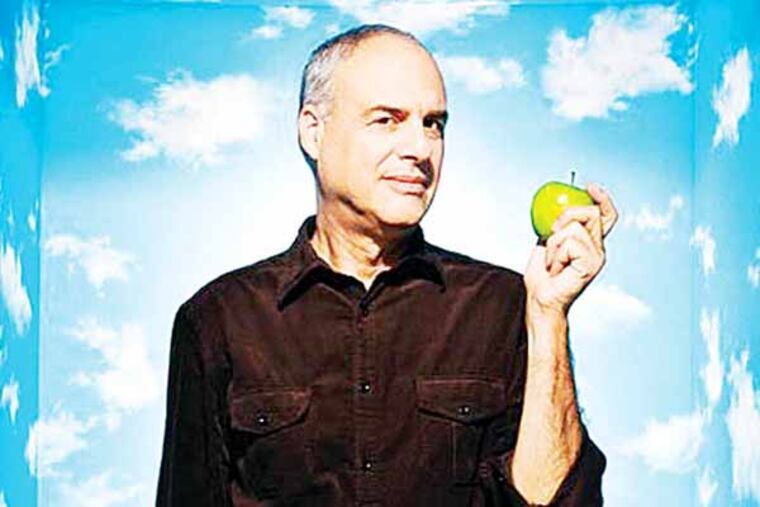
Cookbook author and New York Times columnist Mark Bittman was in town last week to promote his latest cookbook, How to Cook Everything Fast, (Houghton Mifflin). I interviewed him before a sold-out audience at the Free Library of Philadelphia. Here is a condensed version of our conversation.
Question: You've evolved from writing recipes to writing about how food touches politics, the environment, and public health. Why?
Answer: I became a recipe writer sort of by accident. But when I became more or less successful, I thought, it's pretty good. It's justifiable. This was in the '80s or '90s. And I thought if I could get everyone in this country cooking rice and beans one time a week, get people to cook the easiest, most straightforward, pretty healthy thing, that would be an amazing career. Because people weren't doing that. They still aren't. . . . Fast forward to 2000 or so. It became clear that writing any old recipes wasn't enough. After Omnivore's Dilemma and Fast Food Nation, I was jealous, frankly. I was sorry that I hadn't been forward-thinking enough to be where they were. I felt I could do this too. The first serious piece I wrote was about how we overproduced and overconsumed meat and how bad it was for our bodies and how bad it was for the planet. Then I went to the opinion section at the Times, and I said you have op-ed columnists on the economy, on business, food is as important as these things. Food ties into everything. . . . Ironically, four years into this, I started to re-recognize this recipe-writing stuff really is important. One of the themes I keep returning to is how important cooking is.
Q: Are you optimistic that some Big Food companies are getting the message that to remain profitable they have to change?
A: No. I'm optimistic that people will start new companies. There is good stuff going on out there, but McDonalds and Pepsi are not representative of that. They don't get it. I don't think they have the guts, I don't think they have the perception. I don't think they have the commitment to succeed at doing things better. I think they are going down with the ship.
Q: Do you think it is an increasingly larger percentage of the population that is paying attention to these things? Or is it still a minority.
A: It's a minority. But it's a big country. If 10 percent of the population is paying attention, that is 35 million people, that's half the size of England. I think it's 5 or 7 percent, somewhere in the single digits. What percentage of the population has a greater awareness of the importance of eating good food? 90 percent. That is a huge number. What percentage is acting on it regularly? Much, much smaller. I'm not talking about locavores and people who only eat organic. To me, the most important thing is that there is something called food, that isn't processed, which is what we should be eating and 80 percent of what we find in the supermarket doesn't actually qualify.
Q: You are clearly on a mission to get more people to cook. Any advice for people who want to cook more but have a hard time getting started?
A: The mission is 30 years old. If we all knew how to cook rice and beans, then we would know how to cook quinoa and vegetables. Once you cook one thing, you know how to cook lots of things. Once you are not afraid of the equipment and not afraid of the heat, and not afraid to screw up, I think once you get to that stage, you are on a springboard, you are ready to go. And the question is how do we get people to that little tiny first step. I always wind up comparing it to driving a car. If you expected to drive a car well the first time, your expectations are really way too high. The trick or goal, is to just try one thing, and you will like it and you will be successful and you will try it again. But you have to make a commitment, you have to make it a priority. This is why I wrote Fast. This book is my best shot at saying to people, this is the way I believe you can get yourself into the kitchen and not screw up. It has a seamless new kind of recipe that anyone can do.
Q: The format is different for the recipes in this new book. You reject the mise en place method, prepping all the ingredients in advance. It seems intuitive to chop the onion while the water is boiling. Do beginning cooks need that spelled out? Who is this book designed for?
A: People who don't cook. But there are reasons for experienced cooks to buy this too. We've all written recipes wrong: they were written from the point of view of a chef. What I did here is turn the ingredient list into kind of a shopping list. But then the instructions are broken down into preparation and cooking and it is exactly what you just said. Put a pan on the stove, put some oil in, then you start chopping the onion. Then put that in the pan; then start slicing tomatoes, or slicing chicken; then go onto the next cooking step. The method takes advantage of the fact that cooking does take time. Applying heat doesn't instantly cook something. There are natural interludes, during which experienced cooks do the prep work and not-experienced cooks slavishly follow this list of things that they are supposed to do. And the old way, it takes 20 minutes just to get all the ingredients prepped in little bowls on the counter. This way, it all happens simultaneously or concurrently or whatever. (See accompanying recipes.) There are also options for doing things slower and options for cooking things even faster, because we all have to realize that cooking something is better than cooking nothing. . . . We write books that represent who we are, and this book represents how I cook now. . . . If there is a single recipe in this book that I'm extra proud of, it's the chicken Parmesan. It's the greatest.
Q: Do you cook every day?
A: It used to be that I cooked every night and made dates to go out. Now I go out every night and make dates to cook. I'm not home that much. I do a lot of travel for the work I do for the Times magazine, and the opinion section. I'm on the road more than half the time. Do I cook when I'm at home? Yeah, I do. I know more about the restaurants in London and Paris than I do about the restaurants in New York. When I'm home, I try to cook.
Shrimp Simmered in Dal
Makes 4 servingsEndTextStartText
2 tablespoons vegetable oil
1 small onion (trimmed, peeled and chopped)
1 garlic clove, peeled and minced
1 inch fresh ginger, peeled and minced
1 tablespoon curry powder
2 cups coconut milk
1 cup dried red lentils
1 bunch fresh cilantro, chopped
11/2 pounds peeled shrimp
Salt and pepperEndTextStartText
1. Put 2 tablespoons oil in a medium saucepan with a lid over medium-high heat. Add the chopped onion to the pan and cook, stirring occasionally until it softens, 3 to 5 minutes.
2. When the onion softens, add the peeled and minced garlic and ginger and 1 tablespoon curry powder. Cook, stirring until they're fragrant, a minute or 2.
3. Add 2 cups coconut milk, 1/2 cup water, and 1 cup red lentils. Bring to a boil, then adjust the heat so the mixture bubbles gently but steadily. Partially cover and cook, undisturbed, adding more liquid if the mixture gets too dry, until the lentils are nearly tender and beginning to break down, 20 to 25 minutes
4. When the lentils are nearly tender, nestle in the shrimp and sprinkle with salt and pepper. Cook, turning once, until the shrimp are pink and just cooked through, 3 or 4 minutes per side.
5. By the time the shrimp are cooked, the lentils should be tender and saucy. Taste and adjust the seasoning. Garnish with cilantro and serve.
Per serving: 684 calories; 54 grams protein; 44 grams carbohydrates; 6 grams sugar; 39 grams fat; 358 milligrams cholesterol; 439 milligrams sodium; 19 grams dietary fiber.
Fastest Chicken Parm
Makes 4 servingsEndTextStartText
5 tablespoons olive oil
3 medium ripe tomatoes, cored and sliced
4 boneless, skinless chicken breasts (about 2 pounds), cut in half horizontally to make 2 thin cutlets for each breast (press down on each with the heel of your hand to flatten)
Salt and pepper
8 ounces fresh, grated mozzarella cheese
2 ounces (1/2 cup grated) Parmesan cheese
16-20 fresh basil leaves stripped from the stems.
1 cup bread crumbsEndTextStartText
1. Turn the broiler to high; put the rack 6 inches from the heat. Put 2 tablespoons olive oil on a rimmed baking sheet and spread it around. Put the baking sheet in the broiler.
2. Combine the bread crumbs, mozzarella, and Parmesan in a small bowl.
3. Carefully remove the baking sheet from the broiler. Put the chicken cutlets on the sheet and sprinkle with salt and pepper. Top with the tomatoes, and broil one side only until the chicken is no longer pink in the center, rotating the pan if necessary for even cooking, 5 to 10 minutes.
4. When the chicken is cooked through, remove the baking sheet from the broiler. Lay the basil leaves on top of the tomatoes, sprinkle with the bread crumb and cheese mixture, and drizzle with 3 tablespoons olive oil.
5. Return to the broiler, and cook until the bread crumbs and cheese are browned and bubbly, 2 to 4 minutes. Serve immediately.
Per serving: 874 calories; 91 grams protein; 26 grams carbohydrates; 4 grams sugar; 49 grams fat; 242 milligrams cholesterol; 873 milligrams sodium; 2 grams dietary fiber.
Seared Broccoli or Cauliflower
Makes 4 servingsEndTextStartText
3 tablespoons olive oil
1 medium head broccoli or cauliflower (1 to 11/2 pounds), trimmed and chopped into small florets
2 peeled and minced garlic cloves
1/2 teaspoon red chile flakes (optional)
Salt and pepperEndTextStartText
1. Put 3 tablespoons olive oil in a large skillet over medium heat.
2. Add the broccoli or cauliflower to the skillet and raise the heat to high. Cook undisturbed until the florets brown, 3 to 5 minutes.
3. When the florets are brown on the bottom, turn and sear on the other side, another 2 or 3 minutes.
4. Add the garlic to the skillet along with the 1/2 teaspoon of red chile flakes, if using them, and a sprinkle of salt and pepper. Cook, stirring or shaking the pan occasionally until the broccoli or cauliflower is nearly tender and the garlic is fragrant, 1 or 2 minutes.
5. Add 3/4 cup water and scrape any browned bits off the bottom of the skillet, then lower the heat to medium.
6. Cook, stirring occasionally until the broccoli or cauliflower is fully tender and the liquid bubbles away, 2 to 4 minutes. Taste and adjust the seasoning and serve hot, warm, or at room temperature.
Per serving: 141 calories; 4 grams protein; 10 grams carbohydrates; 2 grams sugar; 11 grams fat; no cholesterol; 194 milligrams sodium; 4 grams dietary fiber.
Shrimp and Tomato Paella
Makes 4 servingsEndTextStartText
31/2 cups shrimp or vegetable stock or water, plus more if needed
Pinch of saffron
3 tablespoons olive oil
1 medium onion, trimmed, peeled, and chopped
Salt and pepper
1 pound peeled shrimp, cut into 1/2-inch pieces
3 large ripe tomatoes (11/2 pounds), cored and cut into wedges
2 cups short- or medium-grain rice, preferably paella or Arborio rice
Several sprigs fresh, chopped parsley for garnishEndTextStartText
1. Heat the oven to 450 degrees. Put 31/2 cups stock or water and a pinch of saffron in a small saucepan over medium heat.
2. Put 3 tablespoons olive oil in a large ovenproof skillet over medium-high heat.
3. Add the onion to the skillet, sprinkle with salt and pepper, and cook, stirring occasionally, until it softens, 3 to 5 minutes.
4. When the onion is soft, stir in 2 cups rice and cook, stirring occasionally, until it's glossy, a minute or two. Add the warmed stock and stir in the shrimp.
5. Lay the tomato wedges on top of the rice and put the skillet in the oven. Cook, undisturbed, for 15 minutes.
6. After 15 minutes, check to see if the rice is dry and just tender. If not, return the skillet to the oven for 5 more minutes. If the rice looks too dry but still not quite done, add a small splash of stock or water.
7. When the rice is ready, turn off the heat and let the pan sit in the oven for 5 minutes.
8. Remove the skillet from the oven, sprinkle with the parsley, and serve hot or warm.
Per serving: 629 calories; 37 grams protein; 84 grams carbohydrates; 4 grams sugar; 14 grams fat; 239 milligrams cholesterol; 955 milligrams sodium; 4 grams dietary fiber.
215-854-5744