Cape May bread maker at forefront of new food movement
LOWER TOWNSHIP, N.J. - Along a rural road where the sandy shoreline becomes loamy farmland as it moves up the narrow neck of the Cape May peninsula, the fourth-generation scion of a family with a long-standing tradition to work this land has come to be known simply as "the bread lady."
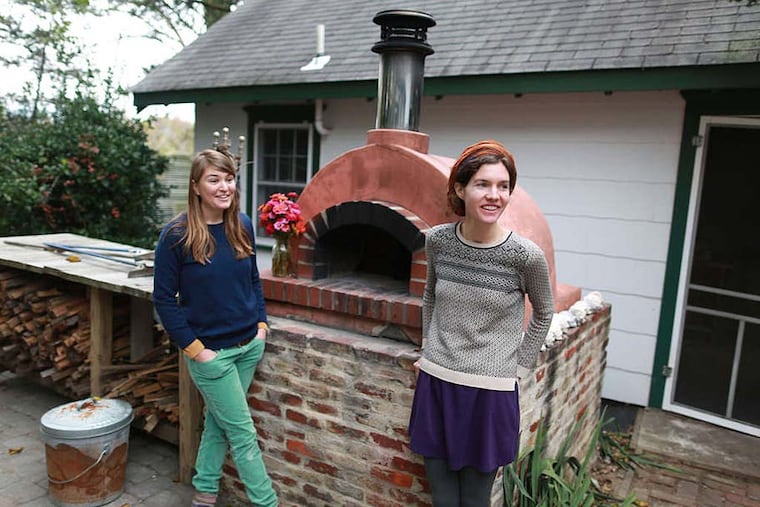
LOWER TOWNSHIP, N.J. - Along a rural road where the sandy shoreline becomes loamy farmland as it moves up the narrow neck of the Cape May peninsula, the fourth-generation scion of a family with a long-standing tradition to work this land has come to be known simply as "the bread lady."
Over the last five years on Fridays, Saturdays, and Sundays, beginning each spring and ending just before Thanksgiving, like clockwork a long line forms an hour before the red-roofed stand at Enfin Farm is set to open. Buyers want to secure their position to buy the loaves Elizabeth Degener has crafted by hand over a several-days-long process and baked that morning in a clay wood-fired oven in her family's backyard.
The aroma of freshly baked bread still warm from the oven mingles with the scent of salty sea air as Degener arranges the loaves for sale in wicker baskets lined up on the wooden counter. The breads have intriguing names and the flavors are written in chalk on tiny slate boards: beet & dill, rosemary & thyme, smoked garlic, curried coconut & fennel, roasted millet with sunflower, oatmeal molasses, and others.
"The flavors change all the time, it just depends on what we feel like baking, what we may have an abundance of on the farm that we want to work with," Degener, 28, said of the "very lighthearted" business she operates in a relatively free-form manner.
"The entire thing stays very peaceful for us because we do as much as two girls can physically do, and that philosophy is very freeing for us," said Wesley Laudeman, 26, Degener's business partner.
The crowds come also for the array of homegrown organic produce - lettuce greens, pie pumpkins, heirloom tomatoes, and other fruits and vegetables - that Laudeman has coaxed from seed to harvest on the 28-acre farm. And for the brightly colored flowers that Degener's mother, Ann, has grown on the farm and tied with twine into bunches for sale.
Regulars have likened the scene to something one would see along a European roadside: a modest wooden stand crammed with a delectable local gourmet bounty.
But it's the bread, which sells for $3.50 and $6 a loaf, that has put the enterprise on the radar of foodies and others and escalated the loaves to an almost cultlike status among those who will drive, bike, or walk the mile or so out of Cape May proper to the farm on weekend mornings.
The loaves have a delicate doughy center and a crisp, crunchy crust that has a slight smoky flavor, perhaps from the brick-and-clay Forno Bravo oven, an Italian-designed pizza oven that can reach 800 degrees.
Degener begins making the bread several days before it is finished - first mixing and then kneading the dough for each loaf, allowing it to rise, and then freezing it until it's transferred to the oven. On the days she is baking the bread, Degener goes to bed at dusk and rises at 3 a.m. to build the wood fire in the oven. When the temperature is right - that determination is made by "just knowing" - a batch of about 20 goes in.
But within an hour of the stand's opening promptly at 10 a.m., the 80 to 100 or so loaves Degener managed to produce that morning will be gone. Within a few more hours, the stand have sold out nearly all the flowers and produce.
"And then we just start all over for the next day," sighs Degener, who graduated from Irish American University in Dublin in 2009 and returned to Cape May to live on the family farm that had been named Enfin (meaning "finally," as in "finally home") by her Belgian-born great-grandmother.
But Degener's is a good sigh because she and Laudeman, whose family owns the nearby landmark Lobster House restaurant, say they have a lifestyle each dreamed about in college.
After college, each became involved in a group called World Wide Opportunities on Organic Farms (WWOOF), which connects volunteers with organic farms and growers for farm internships.
Degener said she "WWOOFed" on farms in Europe and India, and Laudeman traveled the U.S. working on family farms in Montana, New Mexico, and Washington State. The experience gave each a chance to see how small family farms are operated and allowed them to discover their passion for the concept.
Though they had known each other casually - growing up in the same community and attending the same schools - they didn't become good friends until they got together at the suggestion of their mothers, who are longtime friends, and discovered their common interest in living off the land.
WWOOF says it places more than 8,000 people annually on some 12,000 host farms in more than 40 countries across the globe.
It doesn't have statistics on how many of those who have participated in the program have gone on to own farms or start businesses related to a homemade enterprise.
But Mike Colameco, host of PBS's Colameco's Food Show and author of Mike Colameco's Food Lovers' Guide to NYC, who lives part-time in Cape May, contends Degener and Laudeman are representative of a food movement that has raised the production of edibles to a high culture over the last 20 years.
"We just have a culture right now in which people are just really into food, into knowing where it comes from and who produces it," Colameco said. "We just can't seem to get enough of it.
"And part of that stream is the millennial generation and a movement that has become part of their DNA . . . like suddenly it's cool to be a butcher, or a breadmaker in this homemade, fresh baked, artisan world," Colameco said. "And the result is that people like Elizabeth and Wesley find that niche to fill and other people want to buy what they are selling."