For better beans, skip pre-cooking soak
Rich, earthy, hearty - there are few things as comforting as having a pot of beans simmering in the oven when cool weather comes along. So why don't more people cook them?
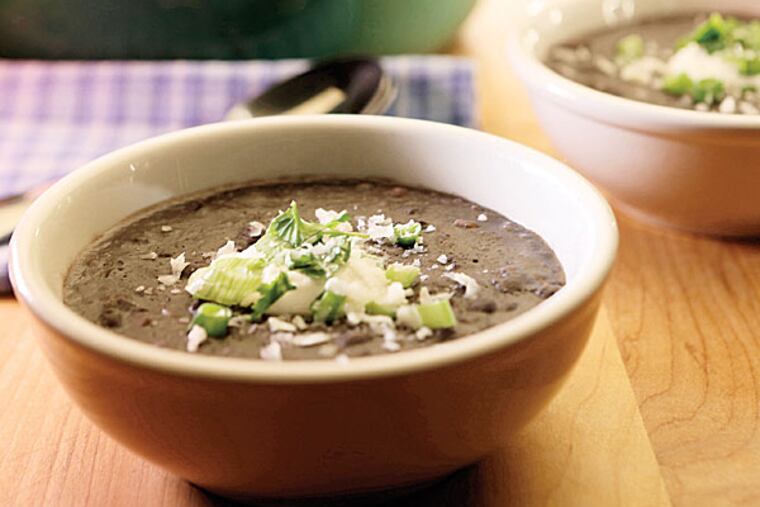
Rich, earthy, hearty - there are few things as comforting as having a pot of beans simmering in the oven when cool weather comes along. So why don't more people cook them?
One of the main reasons is the planning that's required to soak them overnight before you start. I confess that the idea that some people have meals planned a day in advance continues to astonish me.
But here's the thing - in most cases you don't need to soak. Many years ago I set out to discover if there wasn't some way to shorten the soaking and cooking process. What I learned surprised me. And it has allowed me to fix a pot of beans for dinner whenever I like.
"Almost every recipe in every cookbook you've ever read says you must soak dried beans before you cook them. In almost every case that advice is wrong." That's what I wrote after I ran my experiments 20 years ago. And it's true.
You can put most dried beans straight into a pot and simmer them until tender without any soaking at all. Not only is it more convenient, it actually improves them. A lot.
Beans cooked without soaking have a richer, fuller flavor. They taste more "beany." And the cooking broth is rich and thick as well.
I can't claim this as my discovery, not when it's the way Mexican cooks have been fixing beans for centuries. It's just knowledge that somehow had fallen by the wayside (just as we've forgotten that, as every Indian and Persian cook knows, we should soak long-grain rice for an hour or so before cooking).
Skipping the soak does increase beans' cooking time - but for most varieties only by a matter of 20 to 30 minutes, and that's unattended baking time anyway. Black beans, pinto beans, Great Northern beans, cannellini beans, navy beans - they all cook, unsoaked, without any trouble.
There are a couple of caveats. First, if you're using very old beans - ones that have been in the back of your pantry for a year or so, or that you bought from a store that doesn't turn over its stock - then they might have dried out so much that soaking is advisable.
And some types of beans do require soaking. I still soak chickpeas, of course (not technically a bean, but a legume).
I also talked to my favorite bean expert, Steve Sando of Rancho Gordo (if you haven't tried their specialty beans, you're missing something). He said that in general, he recommends always soaking beans from the runner family, Phaseolus coccineus. These are extremely large, dense beans that will become beautifully creamy when cooked - but they do need soaking to soften in a reasonable amount of time.
Also, not soaking works best for beans for soups or stews. If you're going to be using the beans in salads or other dishes where you want them to be separate and distinct, you should either soak them or at the very least give them a rinse after they've cooked.
You want proof? In the accompanying recipe, cook the black beans soaked and unsoaked and compare the two. Whenever I serve this dish, people ask me what the secret ingredient is. And since without soaking it takes all of 10 minutes to put together, it's actually something you can fix anytime.
Imagine that. An everyday pot of beans.
Smoky Black Bean Stew
Makes 6-8 servingsEndTextStartText
1 pound dried black beans
6 cups water
2 dried morita chiles or 1 dried chipotle chile
1 cup coarsely chopped onions
4 cloves garlic, thinly sliced
1 bay leaf
Salt and freshly ground black pepper
Crema Mexicana, or sour cream, for garnish
Chopped green onions, for garnish
Chopped cilantro, for garnish
Grated cotija cheese, for garnish
EndTextStartText
1. Heat the oven to 325 degrees. In a heavy pot or Dutch oven over medium heat, bring the black beans, water, chiles, onions, garlic, and bay leaf to a simmer. Cover tightly and transfer to the oven.
2. Cook for 1 hour, then add 1 teaspoon salt and a generous grinding of black pepper and stir to combine. Re-cover the pot and return to the oven to cook until the beans are tender and creamy, another 30 to 45 minutes.
3. Use an immersion blender to coarsely puree the beans just enough to release some of the starch. Alternatively, puree 1 cup of beans in a stand blender and return them to the pot. Heat just until the beans have thickened. (The dish can be prepared to this point several days in advance and refrigerated, tightly sealed.)
4. When ready to serve, bring the beans back to a simmer. Add a little more water, if they are too thick. Taste and correct seasoning with salt and pepper.
5. Ladle the beans into warmed serving bowls and garnish with a spoonful of crema Mexicana, a sprinkling of green onions and cilantro and grated cotija cheese, with more passed at the table. Serve immediately.
Per serving (based on 8): 189 calories; 12 grams protein; 34 grams carbohydrates; 1 gram sugar; 1 gram fat; no cholesterol; 293 milligrams sodium; 12 grams dietary fiber.