Preserve citrus to add zing and zest
Citrus season began this month and continues until March or April, depending on the weather. For the next few weeks, I'll take the time whenever I am at the grocery store to poke around in the produce department.
Citrus season began this month and continues until March or April, depending on the weather. For the next few weeks, I'll take the time whenever I am at the grocery store to poke around in the produce department.
I'm looking for pink grapefruit, Meyer lemons, blood oranges, pomelos, and cara cara oranges. In do-it-yourself preserving mode, I plan to take full advantage of the mountains of clementines, mesh bags of mandarins, and even lower prices on the everyday Eureka lemon.
The preservation of citrus has a long history. When sailing ships returned to northern climates, they carried in their holds citrus from the south. Clever cooks captured the flavors by drying, candying, salting, and jamming. I do the same, centuries later.
Citrus likes savory or sweet, and the opportunities to preserve are many.
If you're already zesting, you might like to try candying citrus peel. It's easy, albeit time-consuming, with three blanching rounds and a long simmer in sugar syrup until tender, after which the fruit, dried and sugared, is a great addition to the pantry.
Bakers appreciate orange, lemon, and grapefruit peel and add it, chopped, to quick breads and scones. I like to dip citrus-peel batons in chocolate; they make an elegant gift. When I spend the time on a winter weekend, I can make enough candied citrus to accommodate a year of finding new ways to use it until next citrus season.
Once the peel has simmered in the sugar syrup, the syrup itself is a divine bonus ingredient, useful in cocktails, brushed on baked goods, or used to baste meats on the barbecue.
More zesting fun: marmalade, the jam made with the juice and zest. Citrus has copious amounts of natural pectin, so achieving a proper gel/set is easy. Keep in mind that, beyond the scone, marmalade makes an excellent base for barbecue sauce and marinades, adding bitter and sweet elements. I like to pair it with mustard for a stunning glaze on pork roast.
Even when a recipe calls for just the juice of an orange or lemon, I save the zest. Whether I grate it, remove it with a vegetable peeler, or use a channel knife, I cannot throw it out. Instead, I add it to the zip-top bag of citrus swaths in the freezer that I'll later use in stir-fries and marinades.
After measuring for a recipe, I often have a pinch or two of zest still on the cutting board. I tuck that into granulated sugar and use the resulting perfumed sweetener in any baking project, but especially muffins. Or I stir zest into kosher salt with a pinch of crushed red pepper flakes to make a sprinkle for chicken, salad, or slices of avocado.
Juice shouldn't go to waste, either. When you're zesting fruit for a recipe, squeeze and freeze the juice afterward. Use an ice cube tray to hold two-tablespoon portions. One cube can give a sauce or soup some zing, ice down a glass of sparkling water, or activate fruit's natural pectin in a jam recipe.
Juice and zest combine with eggs and butter to make curd. While lemon curd is the go-to, I also like to use pink grapefruit, cara caras, Key limes, and blood oranges. The delicious spread turns up between layers of cake or atop a cream biscuit served with afternoon tea. Make curd now, freeze it in jars (leave about an inch of head space) and it will keep for six months.
Looking for a savory option? Preserving lemons in salt is de rigueur in Mediterranean cuisine, and I like to preserve limes in salt, as well.
I quarter the fruit vertically, fill the centers with kosher salt and pack them into a clean glass jar, pressing down to encourage their natural juices to cover the fruit. (Supplement with additional juice, as needed.) After a week in a cool, dark spot, the citrus will have softened and pickled slightly. After a month, it's even better. Citrus preserved in salt is shelf-stable if thoroughly submerged in the juice, although its color may fade.
I chop the preserved rind for a piquant addition to poultry and fish. I add chopped preserved lime rind to subtly elevate black bean soup.
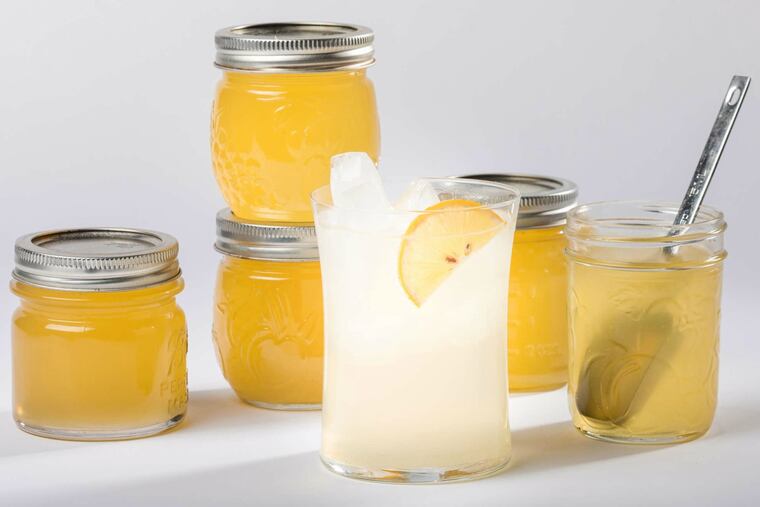
Before the season ends, I make sure to put up a few jars of Lemon Squash, intensely flavored with lemon oil, zest, and juice. A squash is an old recipe, named for an Indian concentrate of fruit juices. Squashes show up in British preserving books from the early 20th century. A presweetened concentrate, it makes exceptional lemonade by the pitcherful. It is a pantry wonder stirred into tea, sparkling water, wine or bourbon. The cheerful and sunny flavor is welcome in any season.
I make a version with ginger; when a cold is coming on, I put a glug into a hot toddy for an instantly soothing tipple. Make a version with lime, and you'll be ready for margarita season.
We are fortunate. There's no waiting for the sailing ships to arrive with their holds filled with citrus. Lemons are available every day; at this time of year, when unusual citrus varieties are obtainable, consider the options and put up some of these glorious, sunny flavors for your own pantry.
Lemon Squash
StartText
Makes 4 half-pint jars; 32 ounces total
EndTextStartText
10 lemons
4 cups water
3 cups sugar
EndTextStartText
1. Use a vegetable peeler or channel knife to zest 4 of the lemons. (You don't have to be too careful about the amount of pith.)
2. Bring the water to a boil in a large, wide pot over high heat, then add all the lemons, including the zested ones, and the strips of lemon peel. (Depending on the size of your pot, you might have to do this in batches; the fruit must be submerged.) Cook for 2 minutes, then transfer the lemons to a bowl to cool.
3. Reserve 2 cups of the lemon cooking water and the boiled strips of lemon peel in a separate medium saucepan.
4. When the lemons are cool enough to handle, cut them in half, then juice them into a large liquid measuring cup, straining and discarding the pulp, seeds, and spent lemon halves. The yield should be 1 to 11/2 cups.
5. Add the sugar to the lemon cooking water and lemon peels in the saucepan; bring to a boil over high heat; cook for 5 minutes, then remove from the heat. Discard the lemon peels, or reserve them for candying (see Notes, below). Stir in the fresh lemon juice until well incorporated.
6. Fill the jars, leaving 1/4-inch head space. Wipe the jar rims well and place the lids and rings, tightening until just secure. Process for 10 minutes in a boiling-water bath, starting timing from the moment the water returns to a boil. Remove the jars from the water bath and set them upright on a folded towel to cool completely. Make sure the seals are tight before storing, for up to 1 year. It can be frozen in jars (directly, with plastic lids), leaving 1-inch head space to allow for expansion, for up to 3 months.
Variations: To make Ginger Lemon Cold-Be-Gone, cut a 1-inch piece of peeled fresh ginger root into coin-size slices and add them to the boiling mixture of lemon water, zest, and sugar; discard the ginger after cooking. Stir the cooled mixture into hot water as a cold soother. To make a bourbon or cognac sidecar, combine 11/2 ounces of liquor and 1 ounce of the Lemon Squash. Serve over ice.
To make Quick Candied Lemon Strips: boil 1 cup of water and 1 cup of sugar over medium-high heat, stirring until the sugar has dissolved. Add the reserved peels (from the 4 lemons) you used to make the Lemon Squash. Reduce the heat to medium-low; cook for 30 minutes, or until the strips are tender and somewhat translucent. Drain them and dry on a rack, then toss them in sugar until well-coated. The candied strips can be stored in an airtight container between layers of wax paper dusted with a little sugar for up to 1 week. The citrus-flavored syrup is a bonus ingredient that can be used in cocktails, brushed on baked goods, or used to baste meats headed to the barbecue; it can be cooled, then refrigerated in an airtight container for several months.
Notes: Use organic, unwaxed lemons when possible, or scrub conventional lemons, as the rind is integral to the recipe. If you use Meyer lemons, the squash will have a slight floral note.
Water-bath canning safely seals high-acid, low-pH foods in jars. The time for processing in the water bath is based on the size of the jar and the consistency and density of the food. For safety's sake, do not alter the jar size, ingredients, ratios, or processing time in any canning recipe. If moved to change any of those factors, simply put the prepared food in the refrigerator and eat it within a week.
- Cathy Barrow.
Per 1-ounce serving: 70 calories, 0 g protein, 19 g carbohydrates, 0 g fat, 0 g saturated fat, 0 mg cholesterol, 0 mg sodium, 0 g dietary fiber, 19 g sugar EndText