The simple, satisfying roasts of Tuscany
Florence's best-known dish is, without a doubt, bistecca alla fiorentina: an enormous porterhouse steak, minimally seasoned with salt and pepper, grilled and served bloody rare. It's a showstopper, for sure.
Florence's best-known dish is, without a doubt, bistecca alla fiorentina: an enormous porterhouse steak, minimally seasoned with salt and pepper, grilled and served bloody rare. It's a showstopper, for sure.
Less well known, but just as worthy, are the simple roasts served in the city's cozy trattorias, in family-run restaurants in the countryside, and in home kitchens throughout Tuscany.
During a recent visit to Florence, I was reminded of how appealing a roast - beef, pork, veal - can be, thinly sliced and adorned with only pan drippings. Although it was barely lunchtime at one of these trattorias, the place was packed with a mix of locals and intrepid tourists sitting elbow to elbow at communal tables. The menu, handwritten (in Italian only) on butcher paper and taped to the wall, listed the day's selections. We ordered several platters of sliced roasts to share, plus traditional sides of roasted potatoes and stewed cannellini beans. The food, like the trattoria itself, was no-frills: no special sauces, no fancy garnishes, no clever twists on classics. But it was genuine, and really, really good. Especially those roasts, all juicy and tender and succulent - just what you want a good roast to be. We polished them off.
A few days later, another roast stole the show. This one, a turkey breast, was the centerpiece of a luncheon prepared by my friend Giulia Scarpaleggia, a food writer who shares recipes and snippets of life in the Tuscan countryside on her blog, Juls' Kitchen. She served it sliced and cold, with a tonnato (tuna and mayonnaise) sauce on the side. Even without the dollop of sauce, the turkey was tender and rich, with meaty flavor.
Weeks after we returned home, I was still thinking about those roasts. With winter in full swing, I decided it was time to crack the code on how to make them.
The success of a roast depends on the quality of the meat, says Andrea Falaschi, a butcher in San Miniato, not far west of Florence. "Our recipes aren't complicated," he says. "Simplicity is our strength; it's the beauty of our cuisine. But we start with the best primary ingredients."
Florence is famous for its Chianina beef, says Emiko Davies, a longtime resident of the city and author of the cookbook Florentine: The True Cuisine of Florence. That beef comes from an ancient breed of cattle raised in Tuscany and in parts of Umbria, Lazio, and Abruzzo. The region's best pork, she says, comes from Cinta Senese pigs, a slow-growing heirloom breed prized for its fatty meat: "Whenever you eat anything made with Cinta Senese, you can tell, because it has a richness and juiciness to it that comes from that amazing layer of fat."
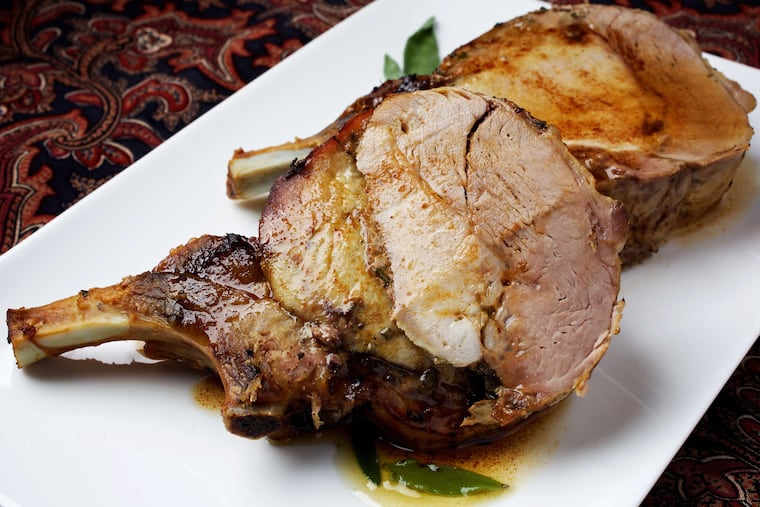
Davies, who tested recipes for her book in her native Australia, says she used Berkshire pork, a heritage breed that originated in England and that has characteristics similar to those of Cinta Senese, to make her arista di maiale. The breed has been raised in the United States since the 1800s and in recent years has become more widely available, including at local butcher shops. It is noticeably fattier and juicier than standard mass-produced pork, which is bred for leanness. Arista, with its rack of rib bones, makes an impressive roast with very little effort. For that reason, it took the place of turkey this year at our Thanksgiving table, and it might make an encore performance next year.
As for "rosbiffe," it is possible to buy U.S.-raised Chianina beef, but it is not easy to find at retail markets. Grass-fed beef, which is available at many farmers' markets and supermarkets, makes a good substitute. It is leaner and not as buttery-soft as typical beef raised on grain, with a more pronounced beefy flavor. Because of its leanness, it is best cooked slowly at a moderately low temperature.
For those willing to splurge a bit, Wagyu roast beef is a good alternative. Derived from a Japanese cattle breed, Wagyu is richly marbled with fat. However, the whole-muscle cuts typically used for roast beef, such as top round and eye round, are not as fatty. Wagyu eye of round makes an especially good roast beef, because it gives a typically lean cut that's prone to dryness, with just enough fat to ensure a good roast. At $12.99 a pound, it isn't cheap, but it is certainly less costly than prime rib or tenderloin.
Veal is more complicated; it is more expensive and less popular in the U.S. than in Italy. Italian veal is older - more like young beef - and is rosier in color and tastier than the young milk-fed veal sold here. Many Americans are put off by the poor, cramped conditions in which veal calves are raised. But it is getting easier to find humanely raised veal that is more like what is sold in Italy.
If you are not tired of turkey, try roasting a boneless turkey breast. Scarpaleggia's turkey roast sold me on this less-expensive alternative to veal or pork. You can buy a butterflied boneless breast to roll and tie yourself, or look for one that is already tied in mesh; some Whole Foods Markets stock them on the weekends (best to call in advance). Once you've chosen your roast, follow a few simple steps (see tips below), and within a couple of hours, you'll have a beautiful Tuscan-style roast at your table. All that's left is to open a bottle of Chianti.
Marchetti is the author of, most recently, Preserving Italy: Canning, Curing, Infusing, and Bottling Italian Flavors and Traditions (Houghton Mifflin Harcourt, 2016).
Tuscan-Style Roast Beef ("Rosbiffe")
Makes 6-8 servings
EndTextStartText
One 3-to-4-pound top round roast or Wagyu top round roast, tied with kitchen twine at 1-inch intervals
2 teaspoons fine sea salt, or more as needed
1 teaspoon freshly ground black pepper, or more as needed
2 tablespoons sunflower oil or olive oil
3/4 cup Sangiovese or other robust red wine
2 sprigs rosemary
1 clove garlic, crushed
EndTextStartText
1. Preheat the oven to 325 degrees. Pat the meat dry with paper towels. Season it all over with the 2 teaspoons of salt and 1 teaspoon of pepper, or more as needed.
2. Heat the oil in a heavy, ovenproof pot or small roasting pan over medium-high heat. Once the oil shimmers, add the meat and brown it on all sides, using tongs to turn it every couple of minutes, about 6 minutes total.
3. Pour the wine into the bottom of the pot (not over the meat), then toss in the rosemary and garlic. Transfer to the oven and roast, uncovered, for 1 to 11/2 hours (about 20 to 25 minutes per pound), or until an instant-read thermometer inserted into the center of the meat registers 120 (rare) to 125 degrees (medium-rare).
4. Use tongs to transfer the beef to a cutting board; tent it loosely with aluminum foil. Let it rest for at least 15 minutes, then discard the twine and the spent rosemary. Cut the meat into thin slices, slightly overlapping them on a platter as you work.
5. Spoon the pan juices over the slices, mashing the roasted garlic in them first, if you wish, and serve.
From cookbook author Domenica Marchetti
Per serving (based on 8): 230 calories, 38 grams protein, no carbohydrates, no sugar, 7 grams fat, 100 milligrams cholesterol, 620 milligrams sodium, no dietary fiber.EndText
Florentine Pork Loin Roast (Arista di Maiale)
Makes 4-6 servings
EndTextStartText
One 21/2-to-3-pound "frenched" bone-in pork loin roast (4 to 6 bones, depending on how many people you are serving), preferably with a thin layer of fat
1/4 cup extra-virgin olive oil
10 leaves fresh sage
Leaves from 1 stem rosemary
2 cloves garlic
1 teaspoon fine sea salt
3/4 teaspoon freshly ground black pepper
3/4 cup dry white wine, such as Vernaccia di San Gimignano
EndTextStartText
1. Preheat the oven to 350 degrees. Prepare the roast (or have the butcher do it): Use a sharp knife to cut all along where the bones meet the loin, as though you were removing the row of bones completely, but leave it attached by about 1 inch at the bottom. Rub a couple of tablespoons of the oil all over the roast.
2. Finely chop the sage, rosemary, and garlic, combining them in a small bowl as you work. Add the salt and pepper and mix thoroughly. Spread half of that mixture into the cut along the bone. Rub the rest all over the roast. Tie the roast with kitchen twine to hold it together, wrapping the string at intervals between the ribs. Wrap the exposed, individual rib bones in aluminum foil to protect them from burning during cooking.
3. Place the pork on a roasting rack in a roasting pan. Drizzle the remaining oil over the pork, then pour the wine over it. Roast for about 1 hour, or until the center of the meat registers 155 degrees on an instant-read thermometer. (Start checking the temperature after 45 minutes so you can properly gauge the progress.) Remove the roast from the oven; increase the temperature to 475 degrees. Once it reaches that temperature, return the roast to the oven for about 5 minutes, just to crisp the surface. Transfer the roast to a cutting board and tent lightly with foil. Let it rest for at least 15 minutes.
4. To serve, cut the roast into thick chops, using the bones as your guide. Or detach the meat from the bones and cut the roast into thin slices. Spoon the pan drippings over the meat.
Notes:
It's helpful to have an instant-read thermometer. Use high-quality heirloom pork, if possible, as the meat is richer and less dry than commercially produced pork. (If you use the latter, you may end up with few or no pan drippings.)
Per serving (based on 6): 390 calories, 31 grams protein, 1 gram carbohydrates, no sugar, 26 grams fat, 95 milligrams cholesterol, 420 milligrams sodium, no dietary fiber.
EndText
Stove-Top Veal Roast (Arrosto Morto di Vitello)
Makes 4-6 servings
EndTextStartText
One 21/2-to-3-pound veal top round or chuck roast, tied at 1-inch intervals (see note)
1 rosemary stem
1 teaspoon fine sea salt
1/2 teaspoon freshly ground black pepper
1 tablespoon extra-virgin olive oil
1 tablespoon unsalted butter
2 tablespoons finely diced pancetta
1 clove garlic, lightly crushed
3/4 cup dry white wine, such as Vernaccia di San Gimignano, or more as needed
Chicken or beef broth (optional)
EndTextStartText
1. Pat the veal dry with paper towels. Insert the stem of rosemary underneath the string so it lies along the length of the roast. Season the meat all over with salt and pepper.
2. Heat the oil and butter in a heavy-bottomed pot or Dutch oven just large enough to fit the roast snugly over medium-high heat until the butter is melted and begins to sizzle. Add the roast and brown on all sides, using tongs to turn it every couple of minutes. (Brown the ends, too.) This may take a total of 20 to 25 minutes.
3. Transfer the meat to a deep plate. Add the pancetta and garlic to the pot; reduce the heat to medium and cook for about 5 minutes, stirring often, until the pancetta has begun to crisp and render some of its fat.
4. Return the meat to the pot and pour in the wine (not over the meat). Reduce the heat to low, partially cover, and cook for 1 to 1 3/4 hours (about 30 minutes per pound), until the internal temperature of the meat registers 160 degrees on an instant-read thermometer. This will yield a fully cooked, tender roast with a faintly rosy center. (If the liquid in the pot becomes scarce during cooking, add another splash of wine or a splash of chicken or beef broth.) Use tongs to transfer the veal to a cutting board, and tent the meat loosely with aluminum foil. Let it rest for at least 15 minutes.
5. Discard the string and rosemary. Slice the veal thinly and arrange the slices, slightly overlapping, on a platter. Spoon the pan juices, including the bits of pancetta, over the slices and serve.
Note:
Look for the more expensive pasture-raised veal, sometimes called "rose veal," which is pinker and more flavorful than commercial veal.
Per serving (based on 6): 300 calories, 29 grams protein, 1 gram carbohydrates, no sugar, 16 grams fat, 130 milligrams cholesterol, 510 milligrams sodium, no dietary fiber.
EndText
Stove-Top Roasted Turkey Breast (Arrosto Morto di Tacchino)
Makes 4 servings
EndTextStartText
One 21/2-pound boneless turkey breast, tied with string or bound with mesh (see note)
3 tablespoons extra-virgin olive oil
2 tablespoons minced fresh herbs (a mix of parsley, sage, and rosemary)
1 teaspoon fine sea salt
1/2 teaspoon freshly ground black pepper
2 tablespoons unsalted butter
1 small carrot, scrubbed well and finely chopped
1/2 celery rib, finely chopped
1/2 small onion, finely chopped
1/2 cup dry white wine, such as Vernaccia di San Gimignano, or more as needed
1/2 cup dry Marsala
Chicken or beef broth (optional)
EndTextStartText
1. Pat the turkey dry with paper towels. Rub 1 tablespoon of the oil all over the turkey, then sprinkle the fresh herbs all over it. Season with the salt and pepper.
2. Combine the remaining 2 tablespoons of oil and the butter in a small, heavy pot or Dutch oven over medium-high heat; once the butter has melted and begins to sizzle, add the turkey breast and brown on all sides, using tongs to turn it every couple of minutes (about 6 minutes total). Transfer to a plate. Add the finely chopped vegetables to the pot; reduce the heat to medium-low and cook for 7 to 8 minutes, stirring often, until the vegetables have begun to soften and turn translucent.
3. Return the meat to the pot and pour in the wine and Marsala. Reduce the heat to low, partially cover the pot, and cook for 45 minutes to 1 hour (about 15 to 20 minutes per pound) or until the internal temperature of the meat taken near the center registers 165 degrees on an instant-read thermometer. The meat should be fully cooked, with no hint of pink in the juices when pierced. (If the liquid in the pot becomes scarce during cooking, add another splash of wine or a splash of chicken or beef broth.) Use tongs to transfer the turkey to a cutting board; tent it loosely with aluminum foil. Let it rest for at least 15 minutes; cover the pot during that time to keep the pan juices warm. If you'd like to create a smooth sauce, use an immersion (stick) blender to puree the pan juices and cooked vegetables.
4. Remove the string, as needed, and cut the turkey into 1/3-inch-thick slices. Arrange them, slightly overlapping, on a platter. Spoon the pan juices or sauce over the slices and serve.
Notes:
If the turkey roast you buy is bound with plastic mesh, remove it and replace it with kitchen twine tied at 1-inch intervals. If the mesh is cotton, you can leave it on.
When it's not holiday time, boneless turkey-breast roasts are most often sold frozen in supermarkets, and they are often bound with mesh rather than string. You can also detach one breast half from a whole, bone-in turkey breast.
Per serving: 520 calories, 67 grams protein, 4 grams carbohydrates, 2 grams sugar, 21 grams fat, 175 milligrams cholesterol, 870 milligrams sodium, no dietary fiber.
EndText