Ronnie Polaneczky: Being the longest-missing soldier was better than this
HOW DO YOU move from the shaky hope of limbo into the cold reality of grief? That's the dilemma faced by those who loved Matt Maupin.
HOW DO YOU move from the shaky hope of limbo into the cold reality of grief?
That's the dilemma faced by those who loved Matt Maupin.
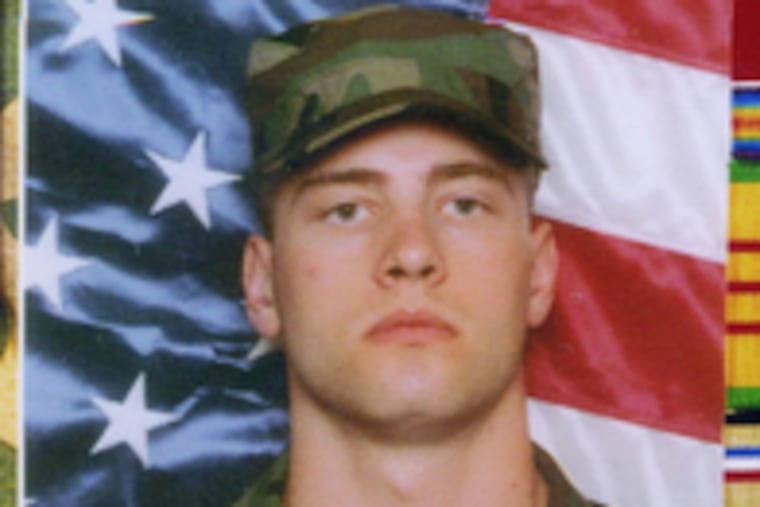
For four years, Matt was the Iraq War's longest-missing U.S. soldier. His status changed last month, when his remains were found and flown back home. Two weeks later, his parents have yet to arrange his funeral.
"We're thinking sometime toward the end of the month," a Maupin family friend said, when I called to ask when Matt would be laid to rest. "Everyone's adjusting. We're still in shock."
That she said "we" is telling. Because, once he went missing, Matt Maupin became a son to all of Batavia, Ohio.
That's where I spent time with his parents, Keith and Carolyn, in October 2004. I was visiting my brother in Cincinnati, and we talked about the Iraq War's terrible toll on military families.
My brother told me about Batavia, located nearby. He said that Matt's capture had transformed the community.
"The entire town is covered in yellow ribbons," he said. "You've got to see it."
Matt, an Army reservist, was captured on April 9, 2004, while his unit was protecting a fuel-supply convoy.
A week later, Al Jazeera TV aired a video of Matt, looking scared but unharmed, surrounded by masked gunmen. Two months later, another video was shown. It depicted a man, facing away from the camera, being shot in the back of the head and dumped into a grave. An Arabic speaker said the man was Matt.
But the images were so dark and grainy it was impossible to determine whether the person in the video was really Matt. So he was classified as "missing, whereabouts unknown."
It was in that aftermath that I visited Batavia, where every other house and business sported yellow ribbons and signs exhorting Matt's safe return.
This was just before the hotly contested 2004 presidential election. But on many blocks, campaign signs for Bush and Kerry were crowded out by messages in support of Matt.
"Our Prayers Are With Matt," read the sign in front of Uncle Bob's Self-Storage. Similar sentiments - "Thinking of Matt," "Pray for Matt," "We love you, Matt" - called from every church and school marquee.
And an elaborate tribute had been constructed on a fence at Glen Este High School, where Matt had been a standout scholar. Its dense, fluttering yellow ribbons looked like forsythia that refused to drop their blossoms despite the autumn chill.
"Believe," it commanded in red letters. As in, believe Matt's alive, believe he'll come home.
It was often impossible for Matt's dad to do any such thing.
"The truth is, I don't know what to think, but I'm feeling everything," Keith Maupin told me, when I located him for an interview in 2004. "I try to keep believing that Matt's alive, because, if he comes home, he'd want to know we never gave up on him."
Keith and Matt's mom, Carolyn, had thrown themselves into volunteering at Batavia's Yellow Ribbon Support Center, a locus of support for Matt and for other deployed troops.
Founded by Carolyn and friends, it sold posters, shirts and pins with Matt's likeness on them, plus patriotic trinkets and yellow-ribbon paraphernalia. Proceeds financed the center's massive, weekly shipment of supplies to troops, all donated by the community.
The place was like the Church of Matt, teeming with the devout who toiled long hours there with the Maupins. A volunteer told me it was the only way for the couple to sleep at night - to drop from exhaustion.
At the time, I thought, "That's no way to live."
Except that it kept the Maupins, and Batavia, in a place of hope.
Four years later, these good people must plan Matt's funeral. They must let go of Matt's open-ended status as "longest-missing soldier" to "latest casualty."
First, they had to get through this week's support-center fundraiser, held on the April 9 anniversary of Matt's capture.
Which, in itself, was a goodbye to hope.
Now they must figure out how to say goodbye to Matt, the way that the families of 4,000-plus other soldiers have had to do since this terrible war began.
But few of those families were ever in limbo the way the Maupins and their town have been. It doesn't make their goodbye harder, but it does make it different.
With Matt's death, a part of Batavia's identity - home of the longest-missing soldier, home of hope - has died, too. *
E-mail polaner@phillynews.com or call 215-854-2217. For recent columns: