A jury said Philly cops made a $1M mistake. An appeals court disagrees
A Philadelphia jury erred in 2016 when it awarded $1 million to a man charged but later acquitted of killing a police officer in a car-bike crash outside the East Mount Airy home of their mutual love interest, according to a Commonwealth Court ruling released Friday.
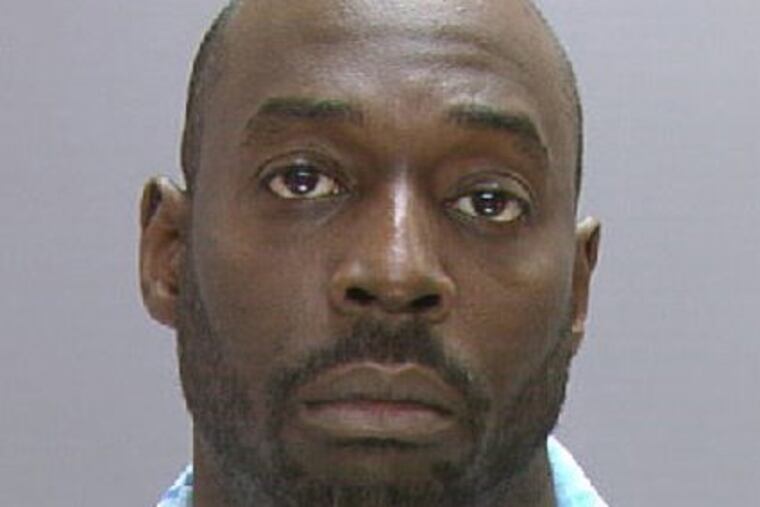
A Philadelphia jury erred in 2016 when it awarded $1 million to a man charged and later acquitted of killing a police officer in a car-bike crash outside the East Mount Airy home of their mutual love interest, according to a Commonwealth Court ruling released Friday.
In an opinion written by Judge P. Kevin Brobson, the court said the homicide officers involved in the investigation — Detectives George Pirrone and James Pitts, and Lt. Philip Riehl — had not violated Kareem Alleyne's rights when he was arrested and charged with vehicular homicide and related counts in the death of Officer Marc Brady in 2012. Police initially said Alleyne and Brady had "bad blood" over the fact that Alleyne had begun dating the mother of Brady's children.
The judge in Alleyne's criminal trial eventually tossed all counts against him for insufficient evidence, but Brobson wrote that the officers had enough probable cause to arrest Alleyne, and had not conspired or acted maliciously to ensure he was prosecuted — accusations that formed the basis of his civil suit against the officers.
"Civil liability," the appellate court wrote, "does not flow automatically from a weak criminal case."
James Funt, one of Alleyne's attorneys, said he was "very disappointed" in the decision, adding: "We believe it is totally contrary to the record, and we intend that there will be a full and vigorous appeal to the [state] Supreme Court."
A spokesman for the city's Law Department declined to comment.
Alleyne, a former bank teller, was accused in July 2012 of intentionally driving his car one night into Brady, who was riding a bicycle outside the East Mount Airy home of Romara Glenn, Alleyne's girlfriend and the mother of six of Brady's children. Brady, 32, was pronounced dead shortly afterward at Einstein Medical Center. Alleyne was arrested the day after the collision.
A judge dismissed all charges against Alleyne in the middle of his 2014 criminal trial. Alleyne then sued the men who investigated him and argued that they had improperly bolstered their case by overlooking or downplaying evidence about their deceased colleague that might have tainted his reputation.
"They had made up their minds," one of his lawyers, Lori Mach, said during Alleyne's 2016 civil trial. "They had decided before [completing] their investigation" to charge him.
But Brobson, in his opinion, wrote that the officers and the District Attorney's Office had sufficient probable cause to arrest Alleyne, and that the evidence Alleyne said was withheld or downplayed during the investigation would not have changed that.
What's more, the court said, some of the evidence Alleyne believed would have been helpful to him — including Internal Affairs reports accusing Brady of harassing him — could have been interpreted as giving Alleyne a motive to target and harm his romantic rival, thus adding to the list of factors providing probable cause.
Funt disagreed with that interpretation of the case, saying the detectives intentionally "omitted critical information from the District Attorney's Office. That's malicious prosecution."
Alleyne, in a brief interview Friday, said he had not yet learned of the court's decision and did not want to comment.
Because the city had filed an appeal over the civil case, he had not been paid any of the $1 million the jury voted to award him.
Correction: A previous version of this story misspelled the name of Judge P. Kevin Brobson.