$250 million for Somalia
Global donors pledged the aid to strengthen security and stop piracy.
BRUSSELS, Belgium - International donors pledged more than $250 million yesterday to strengthen Somalia's security forces and try to stop the rampant attacks by armed Somalian pirates that have plagued one of the world's most important waterways.
The hefty sum, which included funding for military equipment and material as well as development aid, exceeded the initial request made by U.N. Secretary-General Ban Ki-moon, said EU Development Commissioner Louis Michel.
"We have just begun the first step of an important process to restore rule of law in Somalia ... which has been a lawless state for 20 years," Ban said after the one-day, U.N.-sponsored donors conference.
Stabilizing Somalia was the focus of yesterday's meeting, but near-daily pirate attacks along Somalia's 1,900-mile-long coast line that endanger ships from around the world immediately moved to the forefront of the discussions.
"Piracy is a symptom of anarchy and insecurity on the ground," Ban told the delegates. "More security on the ground will make less piracy on the seas."
Somalia's president, Sheik Sharif Sheik Ahmed, pledged to do "everything imaginable" to stabilize Somalia and fight piracy. "This phenomenon will not last forever," he promised, expressing "regret" for the pirates' actions.
The pledges were a recognition of the need to end two decades of anarchy in Somalia and of the threat that further lawlessness posed to the world, not just to one nation.
The funds included at least $134 million for the African Union peacekeeping mission already in Somalia, which numbers 4,350 but is expected to expand to 8,000 troops.
An additional $31 million will go to training the Somalian police force by the United Nations and developing Somalian security forces and their oversight bodies.
The package also included aid for medicine, education, and rural development under the auspices of the European Development Fund.
According to the U.N. humanitarian agency, about 2.8 million Somalis received food aid in March, up from 1.8 million at the start of 2008.
"The situation continues to be very difficult, but with this financial help ... I sincerely hope we will be able to control the situation there," Ban said at a joint news conference with Jose Manuel Barroso, president of the EU's executive body.
Ahmed, elected by parliament in January, is a former fighter with the Islamic insurgency. He has been trying to broker peace with warring groups after years of chaos and gain legitimacy, but his Western-backed government wields little control outside the capital of Mogadishu, and it needs help from African peacekeepers to do even that.
U.N. bodies will oversee funding earmarked for Ahmed's government, which wants to build a police force of 10,000 along with a security force of 6,000 members.
Ahmed said his government had taken measures to achieve peace and stability and to reconcile with the country's warring militias.
In Kenya, 18 Piracy Suspects
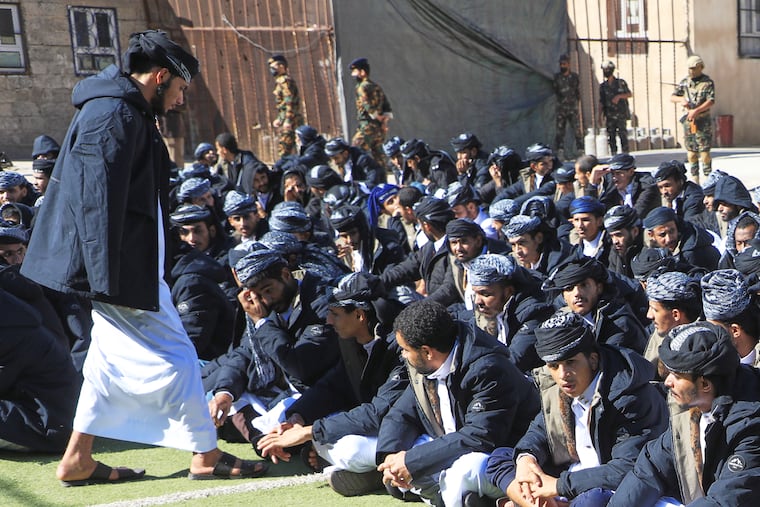
Shabbily dressed and solemn, 18 Somalian men nabbed at sea by European navies crowded into a courthouse yesterday in Mombasa, Kenya, to face piracy charges that could put them behind bars for life.
Kenya appeared to be ramping up prosecutions amid talk of establishing an international piracy tribunal in the country that borders Somalia, the lawless epicenter of a flourishing pirate industry off the Horn of Africa.
At one hearing yesterday, 11 Somalis wore faded sarongs, old jackets and cheap sandals. Two had no shoes. The men were tracked down by French commandos and seized April 14 in a raid as they ate breakfast in their skiffs off Somalia. They will remain in jail until a May 27 bail hearing.
Next door, seven other pirate suspects heard witnesses testify against them. German sailors captured the men in late March after they reportedly attacked a German naval supply ship. Another trial is under way in Kenya of pirate suspects handed over by Britain.
- Associated Press
EndText