Big East realignment will face challenges
So how long will this shotgun marriage between traditional Big East basketball members and a far-flung collection of football schools hold?
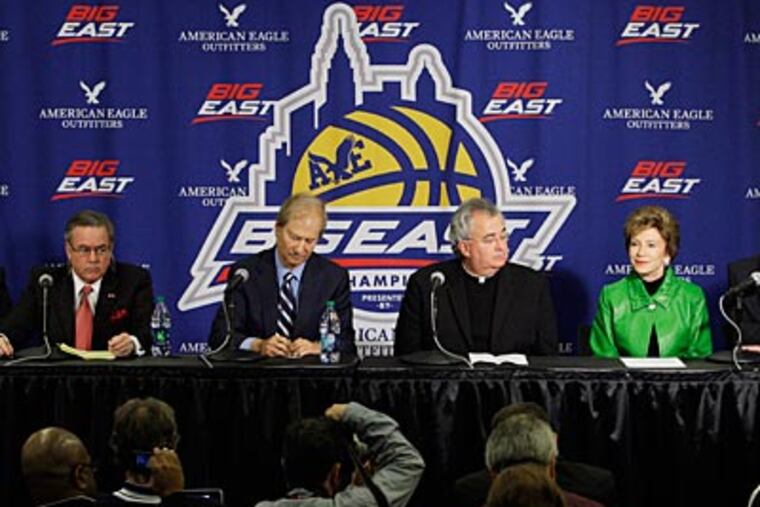
So how long will this shotgun marriage between traditional Big East basketball members and a far-flung collection of football schools hold?
And speaking of shotgun weddings, how long will Temple and Villanova even stay in the same basketball league?
The ink isn't wet yet on Temple's entrance papers to the Big East for football this fall and the rest of the sports in 2013, but let's cut to the chase: Is there a tipping point when Big East hoop schools such as Georgetown, Providence, and St. John's go their own way? Would that point be Louisville leaving? Louisville and Cincinnati? Louisville and Cincinnati plus Connecticut?
Every time (and I mean every time) you ask this of Big East long-timers, you get variations of the same answer: "That's a legitimate question."
So is this: If there is ever a split, what would Villanova want to do, continue to look at joining Big East football, as it continues to do, or keep basketball ties to more of 'Nova's traditional rivals?
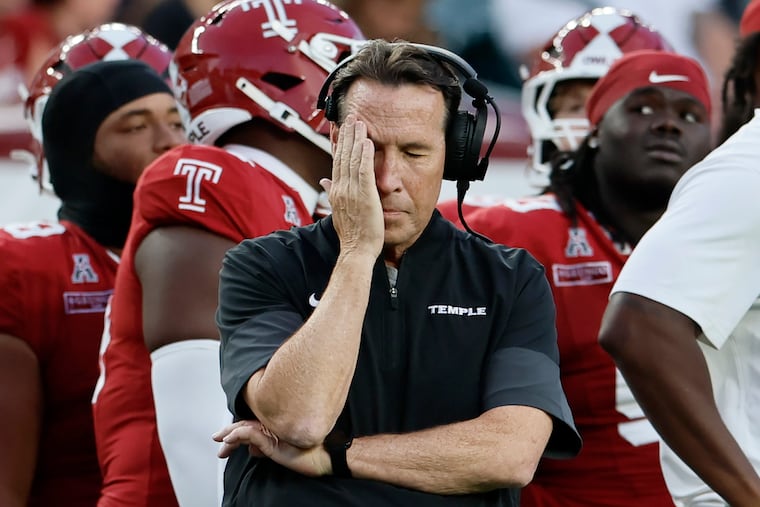
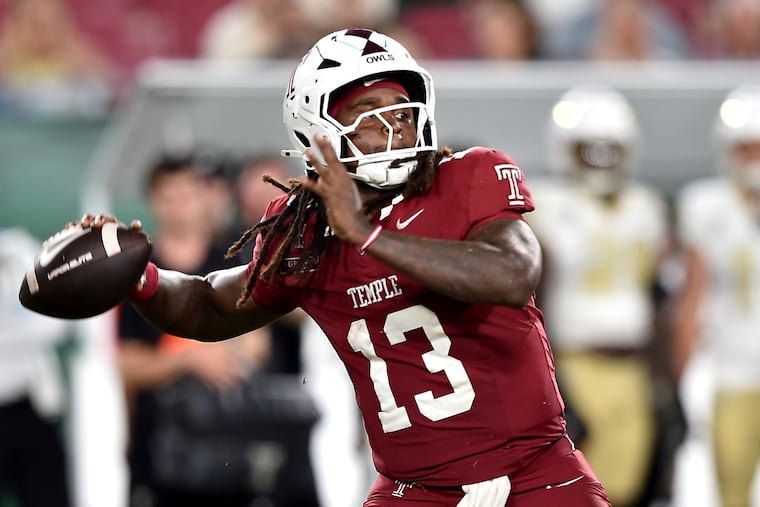
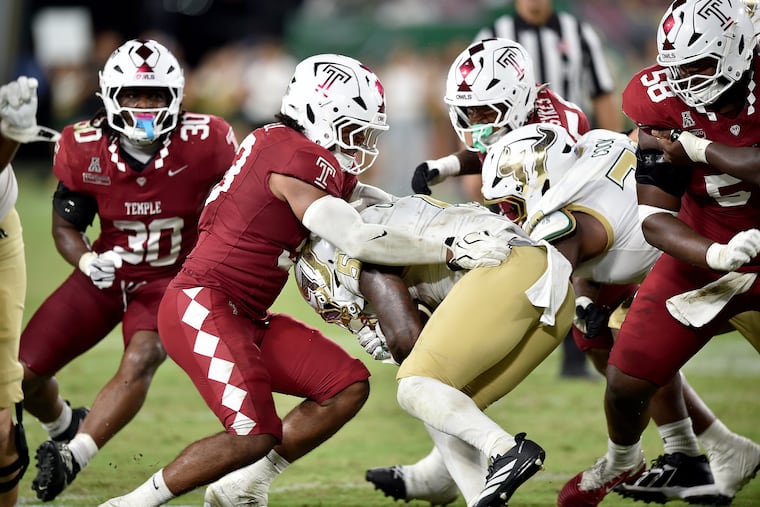
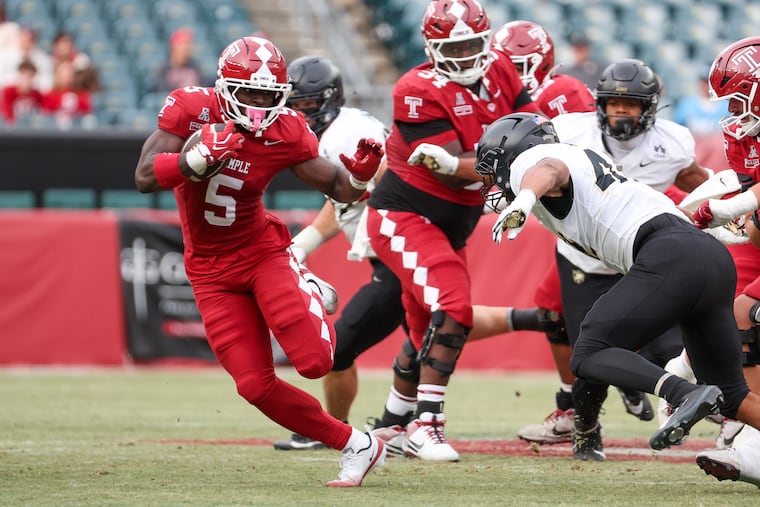
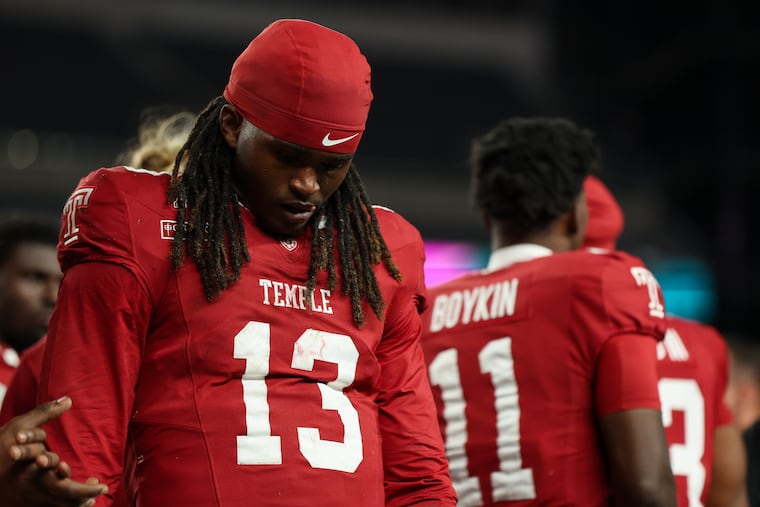
Whatever happens down the road - which now includes stops in Boise, Dallas, and San Diego - Temple has upgraded significantly, especially in football. That's the case even if the Big East suffers more defections, if the Big East loses its BCS automatic berth, and, worst case, Boise State runs for the hills or whatever they have in Idaho. The biggest win for Temple: Whatever the worth of the next Big East television contract, it will offer far more money than the Mid-American Conference ever did. Even if there aren't a lot of marquee teams left, you'd rather play South and Central Florida than Eastern and Central Michigan.
Temple's last Big East football sojourn was a disaster. The Owls all but asked to be kicked out. This time, it won't be. Virginia Tech and Miami aren't around anymore. Temple already can hang with this current crop.
The more interesting equation is in basketball. Obviously the current Big East is stronger than the current Atlantic Ten by any measure and still would be if Louisville, Cincinnati, and UConn all bolted. But what if the hoop schools decide to go their own way? Then Temple basketball would be with the Florida schools (South Florida, Central Florida), Texas schools (SMU, Houston) plus Memphis, Rutgers and whatever schools are added (say, Massachusetts?). That would be a higher revenue league than the A-10 but not a league with enough traditional rivalries to stoke anyone's imagination. There's the only obvious risk on North Broad Street.
All this is important today because these are 20-year decisions being made. Villanova clearly still wants to upgrade to Big East football if there is value there and has gotten certain accommodations that suggest the Big East is keeping the door open, if not exactly inviting 'Nova in.
This might be the most interesting news of the day: According to a Big East source, as part of this deal the league will give $1 million to Villanova for football-related expenditures such as facility renovations. It also will waive the $2.5 million buy-in fee if Villanova eventually moves up. The next football invitee will presumably be from the Western region, the league decided, but high-level discussions were held about giving 'Nova top consideration after that.
Even with these accommodations - which fall far short of promises - Villanova has to continue to weigh its football future carefully. Not only would an upgrade involve massive expenditures, but going with football schools after a split would mean parting from traditional rivals Georgetown, St. John's, and the others. It's hard to see that happening, whatever the value of the next Big East football contract.
All this means that the Big East's future remains murky (and rickety), and tipping points for a breakup seem to lurk around every corner, even on a (shotgun) wedding day.