Scene Through the Lens with photographer Tom Gralish.
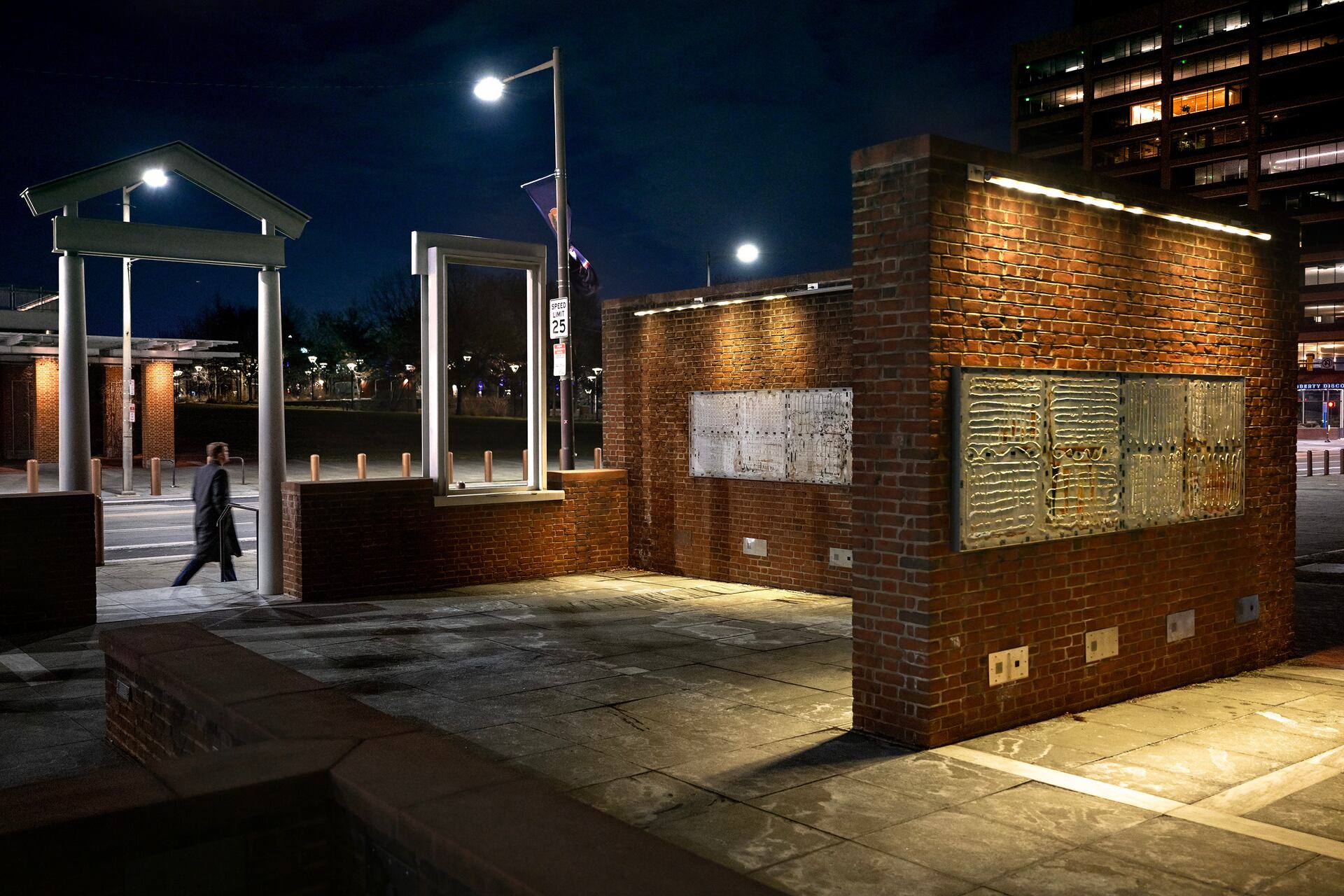
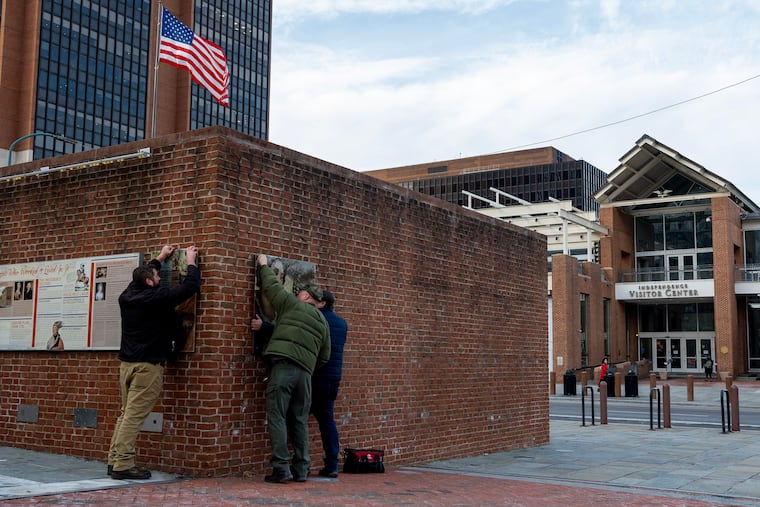
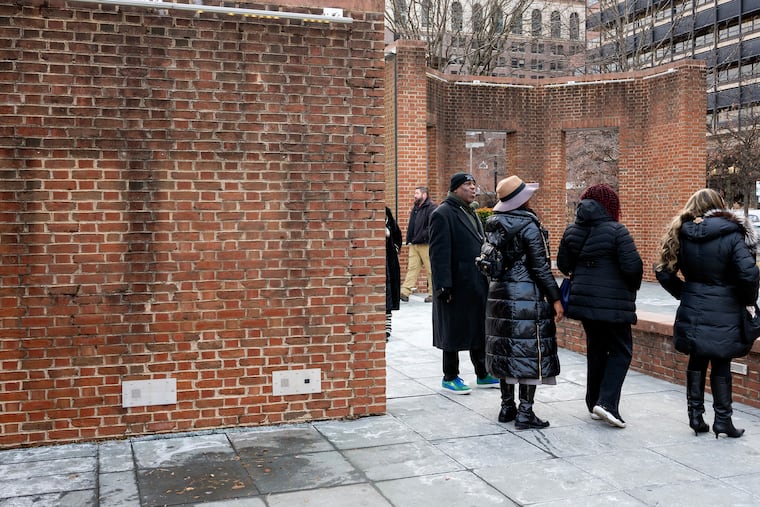
The President’s House in Independence National Historical Park hours (Jan. 22) after all historical exhibits were removed following President Trump’s Executive Order last March that the content at national parks that “inappropriately disparage” the U.S. be reviewed. The site, a reconstructed "ghost" structure titled “Freedom and Slavery in the Making of a New Nation” (2010), serves as a memorial to the nine people George Washington enslaved there during the founding of America. Read moreTom Gralish / Staff Photographer
I have walked through Independence National Historical Park many times looking at the many interpretive panels, exhibits and historical materials after President Donald Trump’s March 27, 2025 Executive Order 14253.
Titled "Restoring Truth and Sanity to American History," the order directed the Department of the Interior, which oversees the National Park Service, to review over 400 national sites to remove or modify interpretive materials that it deems “inappropriately disparage Americans past or living (including persons living in colonial times).” The order aimed to focus on the “greatness of the achievements and progress of the American people.”
At first I looked at the many interpretive panels, videos, exhibits and historical materials in Independence Hall, Liberty Bell Center, President’s House and Ben Franklin Museum, wondering which ones the Interior Secretary might identify that “perpetuate a false reconstruction of American history, inappropriately minimize the value of certain historical events or figures, or include any other improper partisan ideology.”
I took a lot of photos, but realized there wasn’t a way I could write a caption reading, “the administration doesn’t like what this panel says about slavery.” So I put any photos I made in a file for later use.
In July, the New York Times broke the story that employees of the National Park Service had been flagging descriptions and displays at scores of parks and historic sites around the country for review — and they had examples of a few here in Philadelphia.
The next day, armed with the specific panels at the Liberty Bell and the President’s House they reported, I went back and re-photographed them all for our own story.
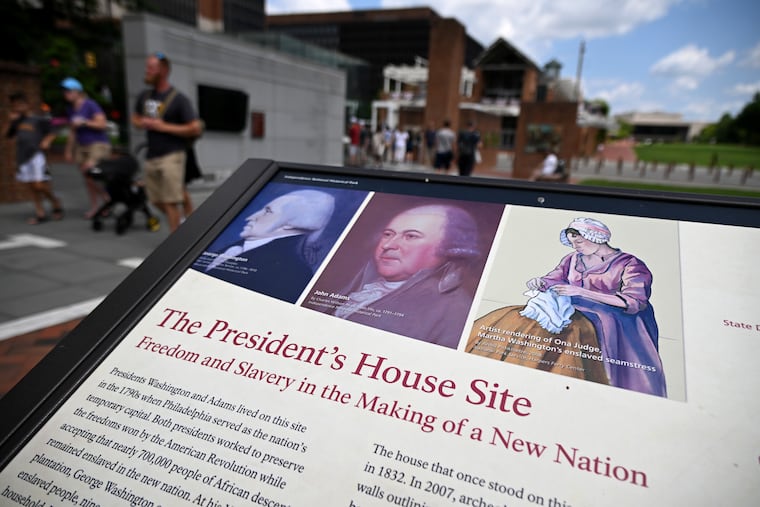
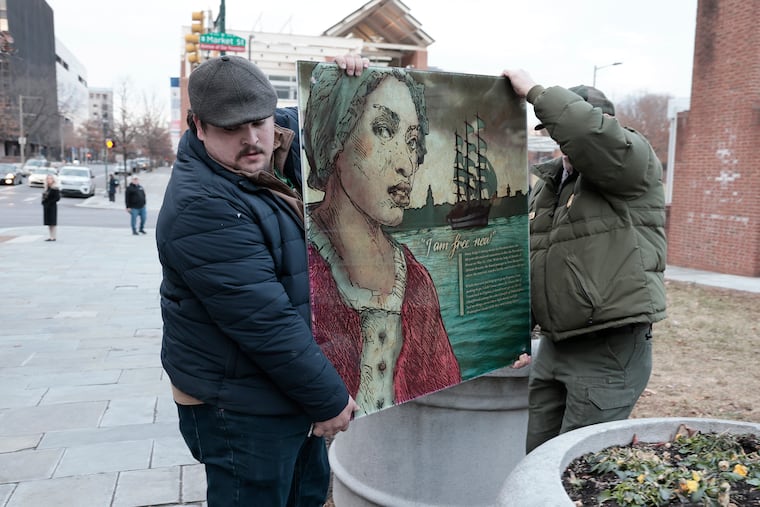
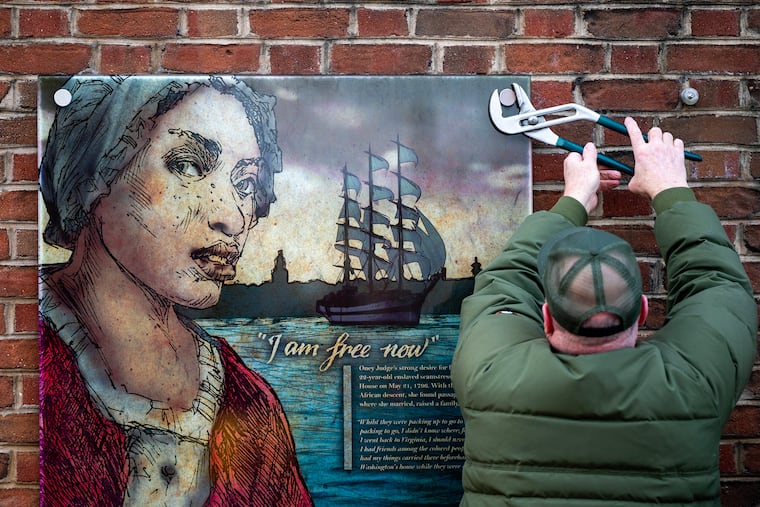
Panel at the President’s House shows Presidents Washington and Adams and Ona (Oney) Judge, George Washington’s 22 year-old enslaved seamstress. She fled the household on May 21, 1796 for New Hampshire, “where she married, raised a family and lived to old age.” Read moreTom Gralish / Staff Photographer
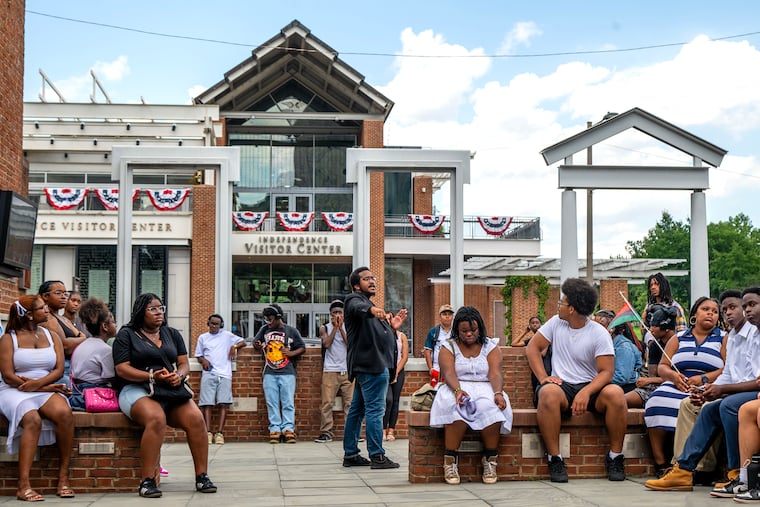
Mijuel Johnson with The Black Journey: African-American Walking Tour of Philadelphia, leads visitors from Charlotte, North Carolina in the President’s House July 23, 2025.Read moreTom Gralish / Staff Photographer
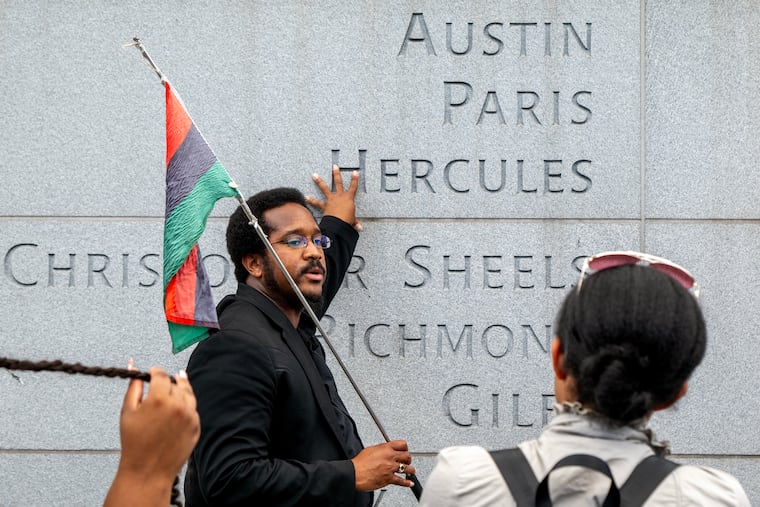
Johnson discusses the names of nine enslaved people who lived and worked at the House are engraved in stone on the site. Visible are: Austin and Paris, horsemen and stable hands; Hercules, the chief cook; Christopher Sheels, Washington's personal attendant; Richmond, Hercules’ son and kitchen worker; and Giles, a driver and stable hand.Read moreTom Gralish / Staff Photographer
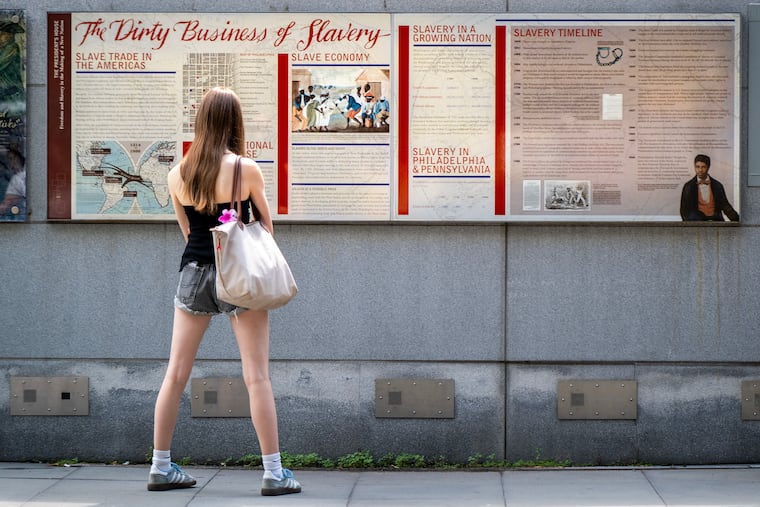
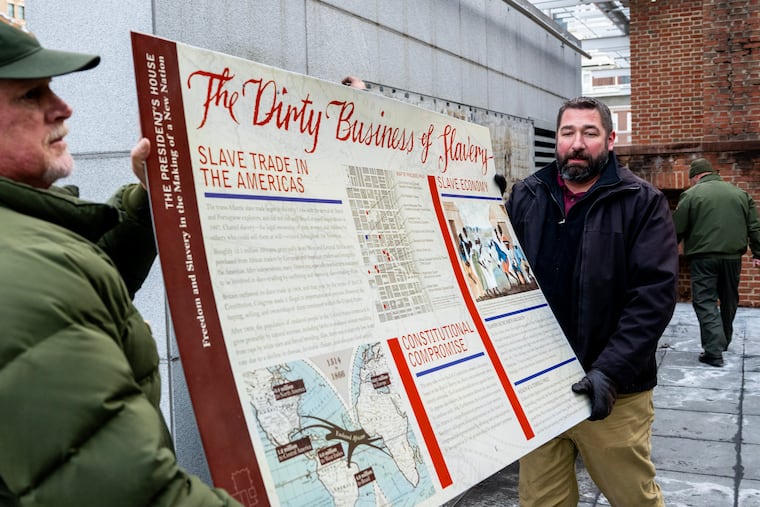
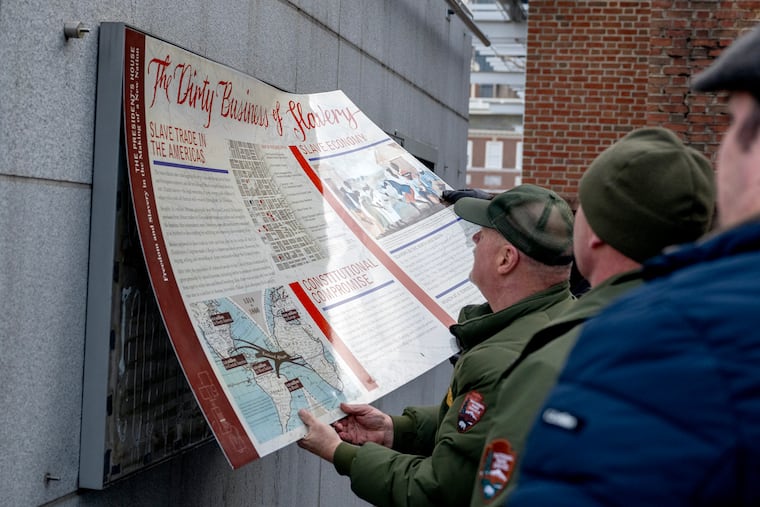
Visitors view a panel titled, “The Dirty Business of Slavery” at the President’s House in Independence National Historical Park.Read moreTom Gralish / Staff Photographer
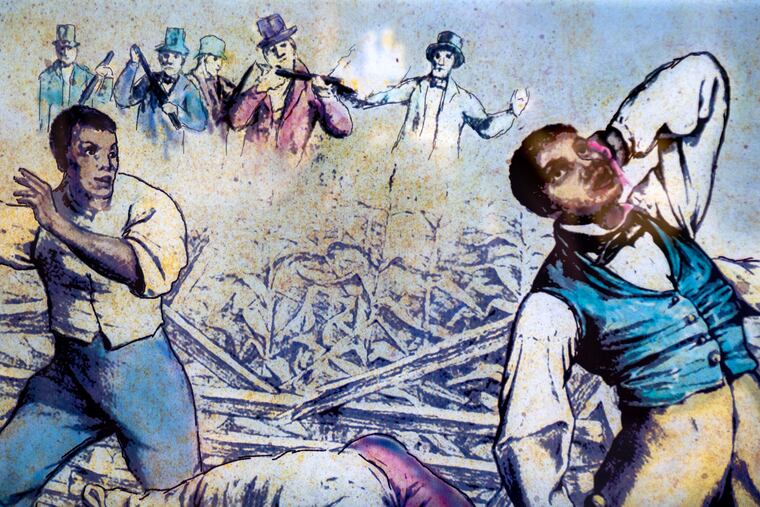
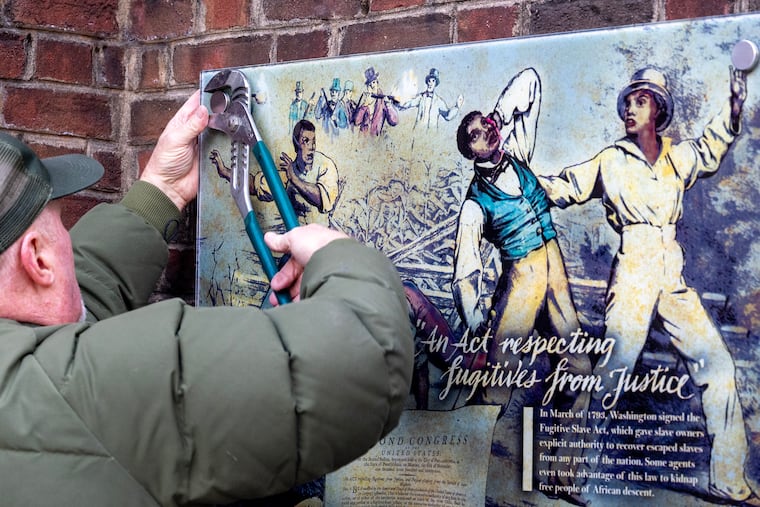
Detail of a President’s House panel on the 1793 Fugitive Slave Act.Read moreTom Gralish / Staff Photographer
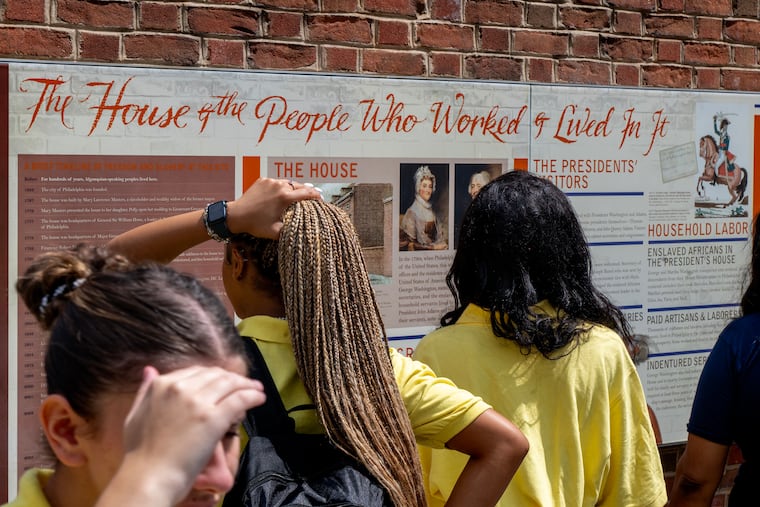
A panel titled, “The House of the People Who Worked and Lived in It.” Read moreTom Gralish / Staff Photographer
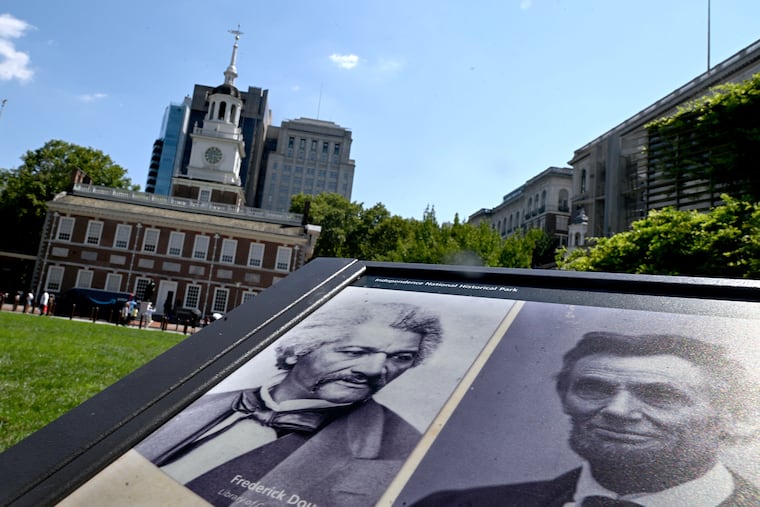
A panel titled “Intoning Inspiration” in front of Independence Hall shows three Americans who spoke at the Hall and Liberty Bell. Abolitionist Frederick Douglass (left) gave a speech against slaveholding in 1844; President-elect Abraham Lincoln (right) stopped on his inaugural journey to Washington D.C. in 1861 and pondered the meaning of “all men are created equal; ” and Suffragette Susan B. Anthony (not shown) and others disrupted the nation's centennial celebration on July 4, 1876 to read the “Declaration of the Rights of Women of the United States.”Read moreTom Gralish / Staff Photographer
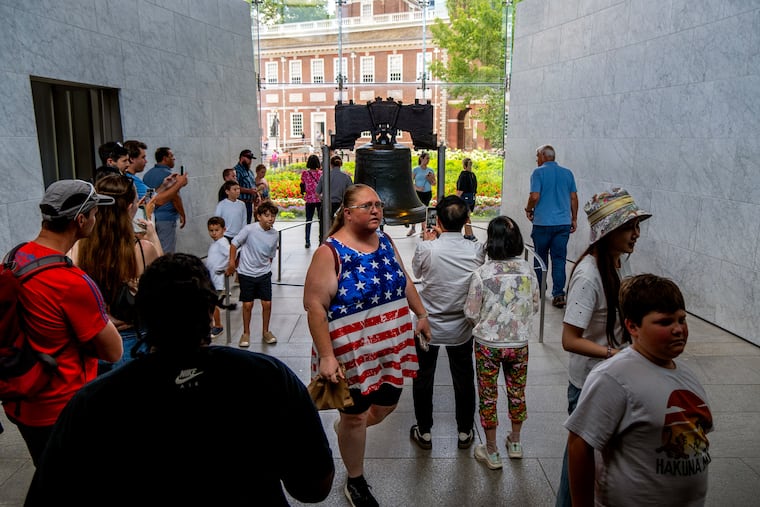
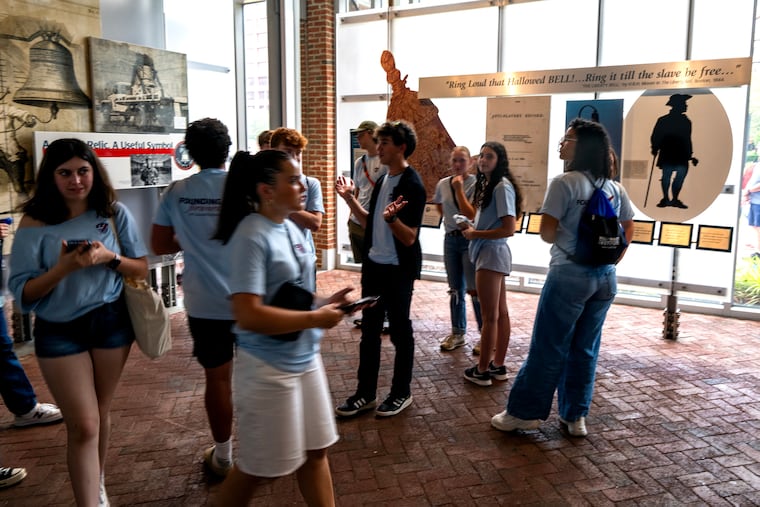
Visitors at the Liberty Bell Center.Read moreTom Gralish / Staff Photographer
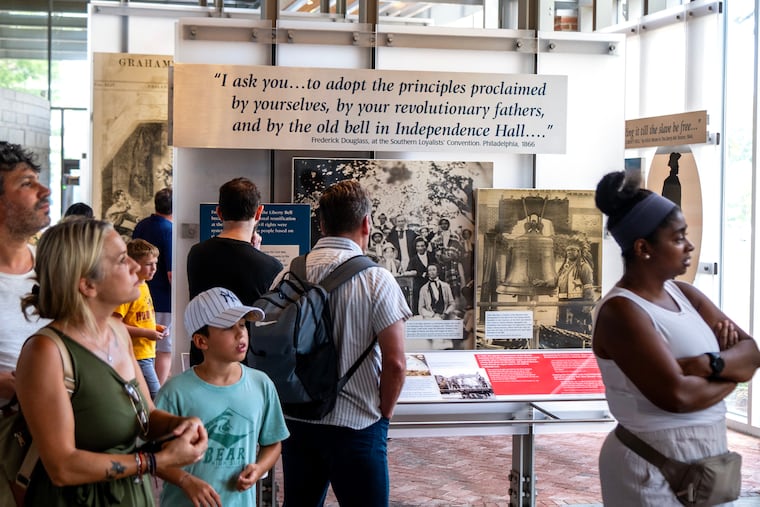
A Liberty Bell exhibit that discusses the Bell’s travels across the country during the era of Reconstruction.Read moreTom Gralish / Staff Photographer
A Liberty Bell exhibit on the many symbolic uses of the bell throughout history. The Quakers were the first to make the explicit connection between the Liberty Bell, the scandal of slavery, and the need for abolition. The first reference to the Liberty Bell in print was published by the Boston Anti-Slavery Society in 1835.Read moreTom Gralish / Staff Photographer
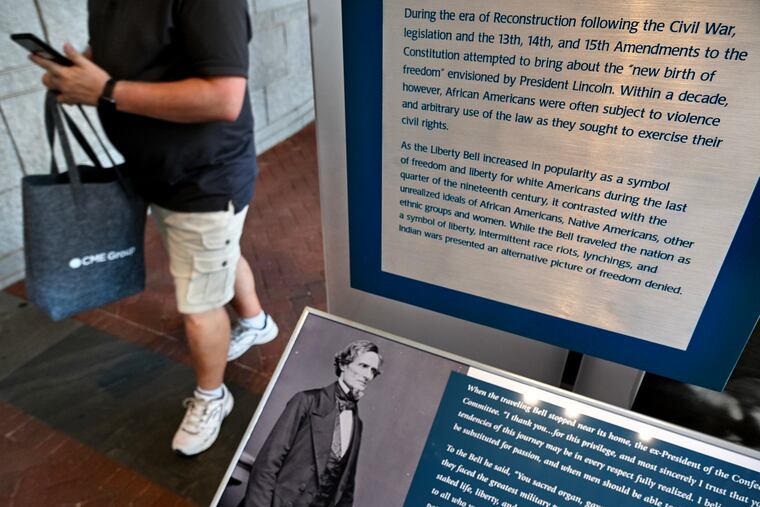
Visitors at the Liberty Bell pass an exhibit that discusses the Bell’s travels across the country during the post-Reconstruction period. The image below is of Jefferson Davis, the former president of the Confederacy who visited the bell as it traveled near his home on its way to New Orleans in 1885 for the World's Industrial and Cotton Centennial Exposition, an event that symbolized national reconciliation following the Civil War. The panel reads Davis, “represented many Americans who revered the Liberty Bell, but whose vision of human rights excluded African Americans.”Read moreTom Gralish / Staff Photographer
Empty panels (left) in the West Wing of Independence Hall's West Wing.Read moreTom Gralish / Staff Photographer
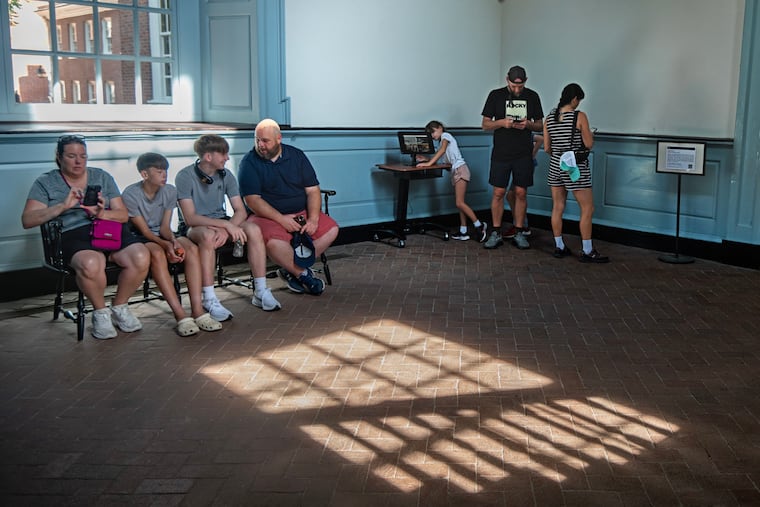
An iPad exhibit that gives a virtual tour of the second floor in Independence Hall and the room when men, women, and children accused as "fugitive slaves" stood to lose their liberty in a courtroom set up after passage of the Fugitive Slave Act of 1850.Read moreTom Gralish / Staff Photographer
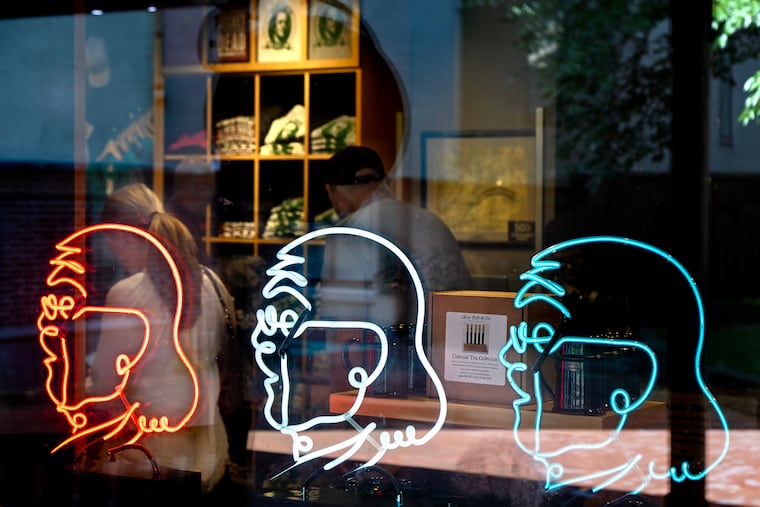
The Benjamin Franklin Museum gift shop.Read moreTom Gralish / Staff Photographer
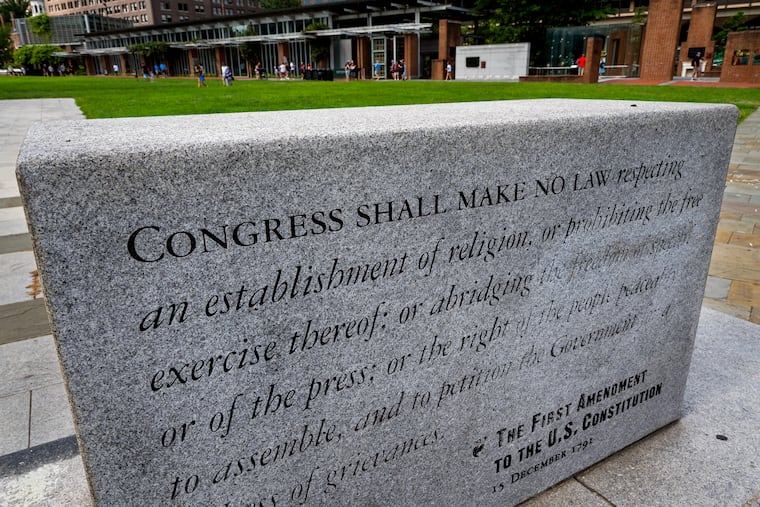
The words of the First Amendment to the U.S. Constitution are engraved in a monument in Independence National Historical Park Wednesday, July 23, 2025. Park employees have flagged descriptions and displays for review in response to President Trump’s executive order to remove or cover up materials that “inappropriately disparage Americans.” Read moreTom Gralish / Staff Photographer
My colleague Fallon Roth obtained and reviewed the internal comments submitted by NPS employees here with many more details so in the following days I made many more photos.
I was even told to re-photograph some panels for a third time, grumbling (to myself) when told “we need higher resolution versions, shot head on, without any distortion,” for an interactive project. Which, I had to admit later (again, to myself) turned out great!
The President’s House came under particular scrutiny, and the removal of noncompliant displays was initially slated to come on Sept. 17.
The administration’s deadline came and went. We got tips that signs had been altered, but I checked, and nothing actually happened. Until Thursday.
I was on assignment near Independence Hall, and as always, walked through the President’s House. It was quiet except for a local TV news crew using Independence Mall as a location for their report on this weekend’s coming winter storm.
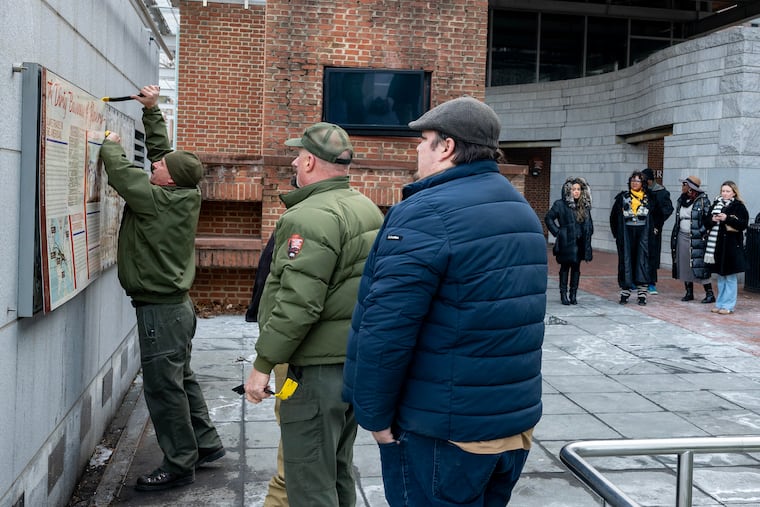
Later while editing that assignment, we got a tip that workers with tape measures where looking and poking around “behind the panels” there. I rushed down where my colleague Maggie Prosser was already asking them what they were up to.
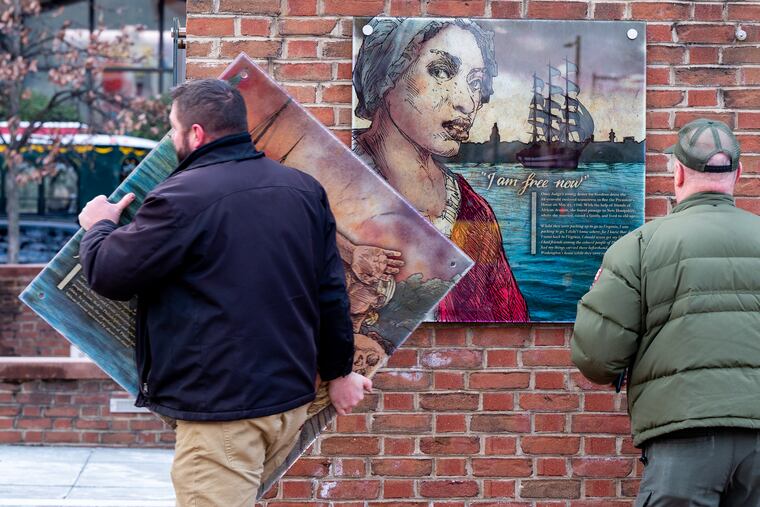
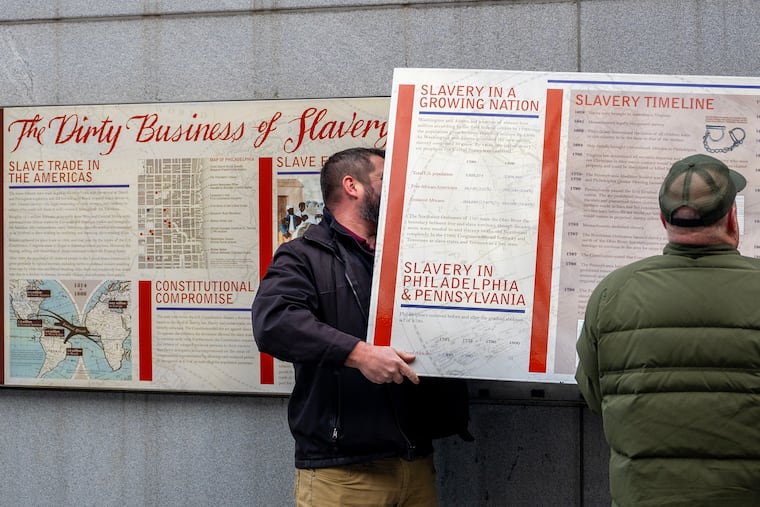
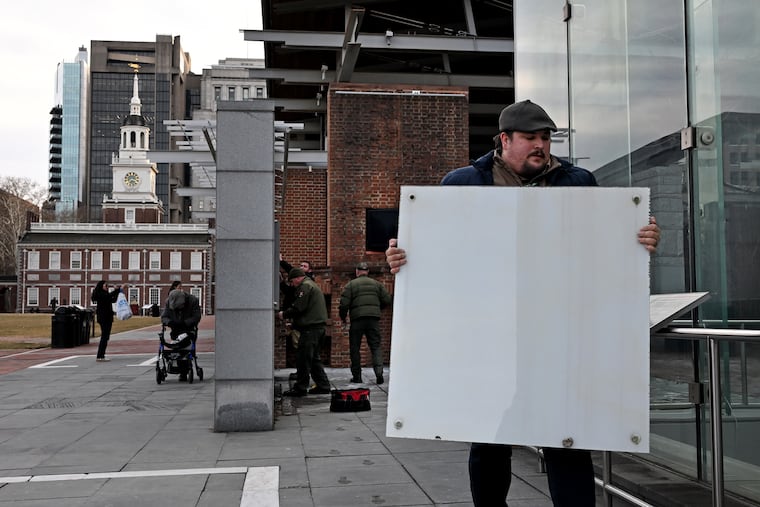
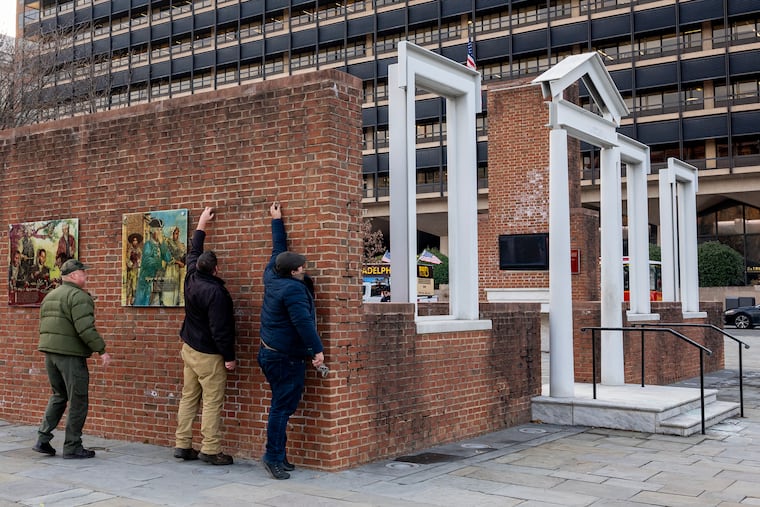
Workers remove the displays art the President’s House site in Independence National Historical Park Thursday, Jan. 22, 2026.Read moreTom Gralish / Staff Photographer
National Park Service workers remove the displays at the President’s House site in Independence National Historical Park in Philadelphia on Thursday, Jan. 22, 2026.Read moreElizabeth Robertson / Staff Photographer
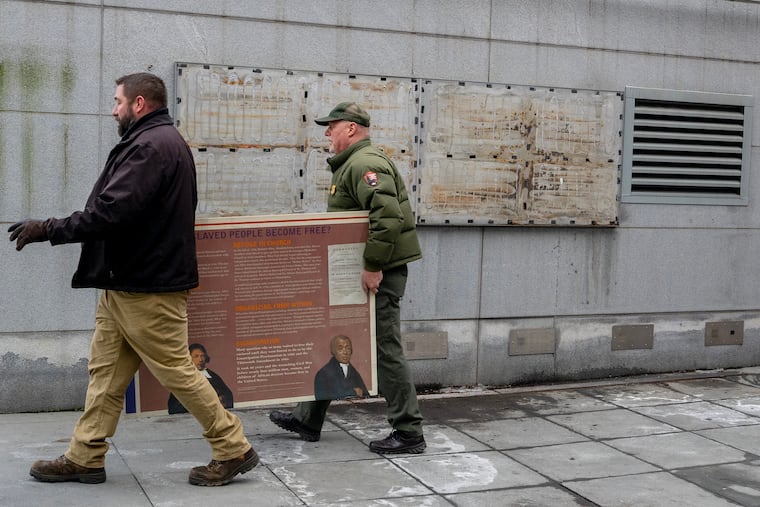
Workers remove the displays at the President’s House site in Independence National Historical Park Thursday, Jan. 22, 2026.Read moreTom Gralish / Staff Photographer
Workers remove the display panels, including on for Oney Judge (right) at the President’s House site in Independence National Historical Park Thursday, Jan. 22, 2026.Read moreTom Gralish / Staff Photographer
National Park Service workers remove the displays at the President’s House site in Independence National Historical Park in Philadelphia on Thursday, Jan. 22, 2026.Read moreElizabeth Robertson / Staff Photographer
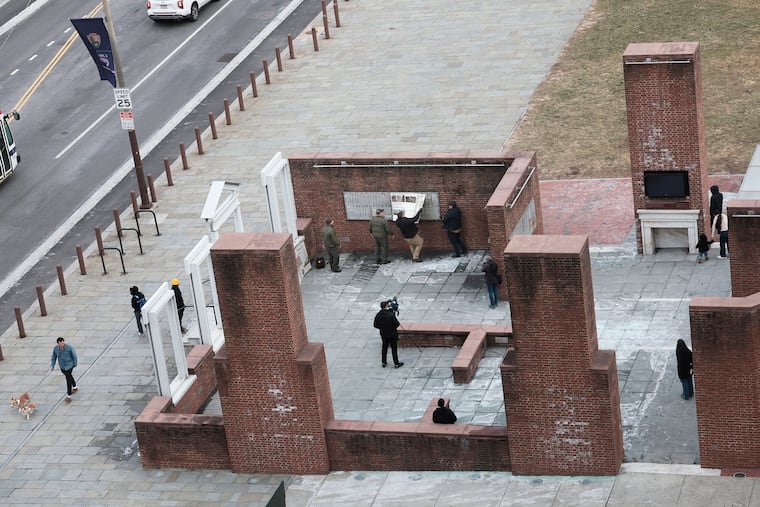
Visitors at the President’s House site in Independence National Historical Park Thursday, Jan. 22, 2026 watch as workers remove more a dozen displays about slavery that were flagged for the Trump administration’s review.Read moreTom Gralish / Staff Photographer
Workers remove the displays at the President’s House site in Independence National Historical Park Thursday, Jan. 22, 2026. Read moreTom Gralish / Staff Photographer
Workers remove the displays at the President’s House site in Independence National Historical Park Thursday, Jan. 22, 2026.Read moreTom Gralish / Staff Photographer
Visitors pass through the President’s House site in Independence National Historical Park Thursday, Jan. 22, 2026 minutes after more a dozen displays about slavery were flagged for the Trump administration’s review were removed.Read moreTom Gralish / Staff Photographer
Workers remove the display of panel for Oney Judge at the President’s House site in Independence National Historical Park Thursday, Jan. 22, 2026. Read moreTom Gralish / Staff Photographer
Workers remove the displays at the President’s House site in Independence National Historical Park Thursday, Jan. 22, 2026.Read moreTom Gralish / Staff Photographer
I photographed the entire removal, and was joined by photographer Elizabeth Robertson who even made an overall photo from our newsroom overlooking the site.
Finally, I ended up returning after dark, just because.
Since 1998 a black-and-white photo has appeared every Monday in staff photographer Tom Gralish’s “Scene Through the Lens” photo column in the print editions of The Inquirer’s local news section. Here are the most recent, in color: