How I take an image of an image
This week’s Scene Through the Lens with Inquirer photographer Tom Gralish.

If you’re a newspaper photographer who tries to do more than just point a camera at your subject, people will sometimes say you’ve got “real talent.”
In these days when everybody who has a smartphone is a photographer, that’s hitting a pretty low bar.
Sometimes they will expand on it and will say, “you’re a real artist.”
Seeing photos with a story about a museum a coworker recently praised my “…compositions, textures, colors, relationships among objects, sense of place. Not only worthy of the subject, but worthy of hanging on the walls inside.”
An artist’s work is about expressing a personal vision, emotion, or concept.
My main job is to inform the public by documenting real events as they happen. But I want my pictures to do more than just that; I strive for images that stay with the reader (in the old days by even clipping and sticking them on their refrigerator!).
But as a creative visual journalist, how do I best photograph the work of others without making it more about me? I have thought about that for my entire career.
One of the aspects I most enjoy about photography is the intentionality. How every choice — from which lens I use, to my camera settings to whether I stand left or right or kneel — is uniquely mine. My visual sensibility is shaped by my own experiences and aesthetic influences.
But I am still practicing journalism that contributes to the reader’s understanding of the news event, person, or place I am documenting.
Covering the Governor’s signing of an executive order promising to protect access to vaccines, like probably everyone else there, I was stuck by the mural on the lobby of CHOP’s new Hub for Clinical Collaboration.
Gov. Shapiro is in our newspaper a lot, so readers know what he looks like. I felt comfortable — journalistically speaking — to go wide. I composed the image carefully, finding the best angle (holding the camera high above my head) and deciding what to include beyond the large mural, as well as picking a moment when the Governor and another important person — the state’s Health Secretary — were in action. Even if they were just a small part of the frame.
The mural was a collaboration by The ROZ Group and Creative Repute, a design agency created by Philadelphia artist Nile Livingston. Their theme “Solving the Unsolvable,” was envisioned to be a homage to CHOP and its impact on the community.
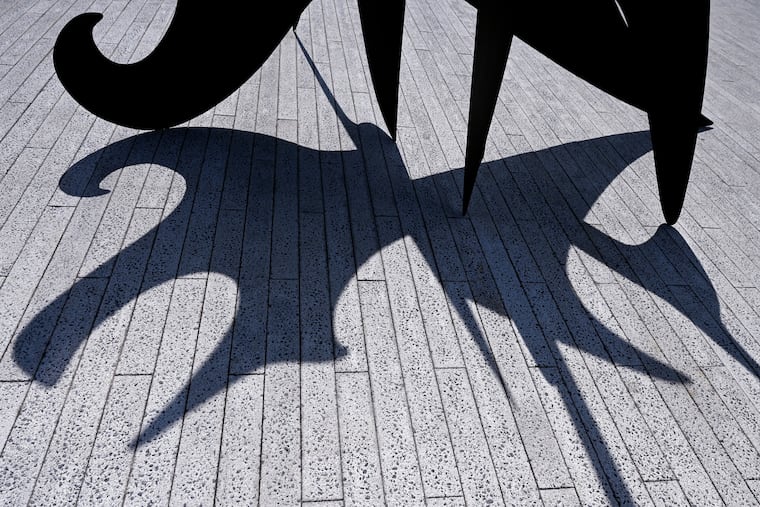
The opening last month of Calder Gardens presented another great visual opportunity and a challenge to show the work of Alexander “Sandy” Calder, the great American sculptor born in Philadelphia in 1898 to a family of artists. (His grandfather, Alexander Milne Calder produced over 250 sculptures for City Hall including the 37-foot statue of William Penn cast in 1892.)
With the many stories the newspaper told about the Gardens, I was able to do more than just deliver information. I could also invite some of the interpretation the Calder family intended.
As the Phillies head into the National League Championship Series for the second time in three years, I recall an October when they weren’t there. To make this photo I positioned myself on the Schuylkill River Trail to see Tug McGraw and Mike Schmidt between the stairs to the Walnut Street Bridge in 2015’s “Phillies Mural” by longtime Mural Arts Philadelphia muralist (and Phillies fan) David McShane. His painting highlighting the 1980 and 2008 World Series victories is well known, so I could get by with not showing the entire mural.
A video image of 17 year-old Joaquin Oliver who was killed in the Marjory Stoneman Douglas High School mass shooting in Parkland, Fla. is reflected in the window of the Cherry Street Pier in 2022. The boy’s father, artist Manuel Oliver, was there live-creating a mural calling for federal action on gun violence.
The light on the Pennsylvania Railroad War Memorial in the lobby of 30th Street Station beautifully honors both sculptor Walker Kirtland Hancock (1901-1998) and the 1,307 Pennsylvania Railroad employees who died in World War II to which it is dedicated.
When snow fell for the first time in the winter of 2003, I immediately thought of the sculpture of the Haddonfield dinosaur — Hadrosaurus foulkii — by local artist John Giannotti that was dedicated two months earlier and headed straight there.
I photographed the installation of the “OY/YO” sculpture by Brooklyn-based artist Deborah Kass at the Weitzman National Museum of American Jewish History on Independence Mall in 2022.
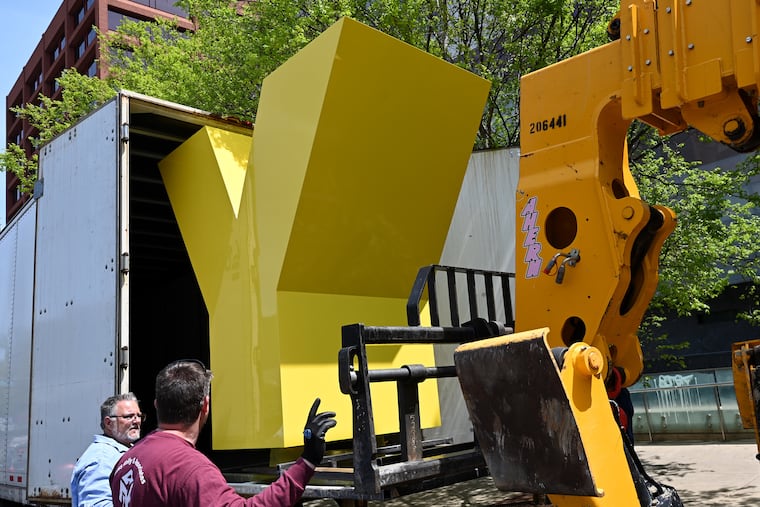
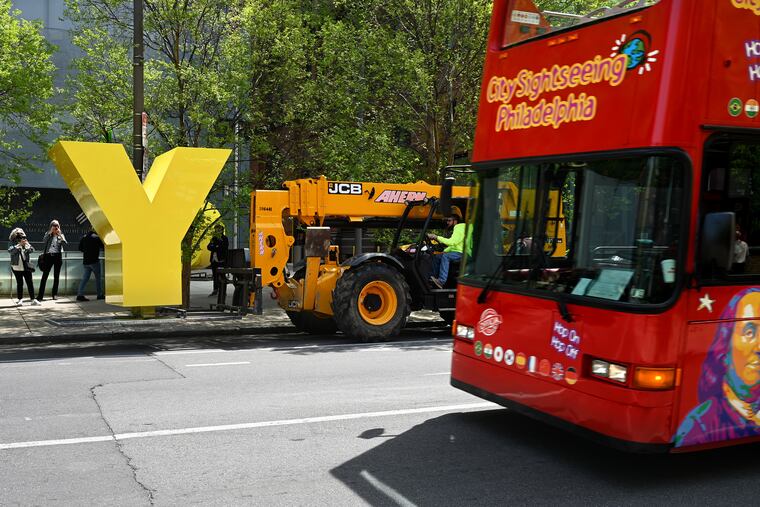
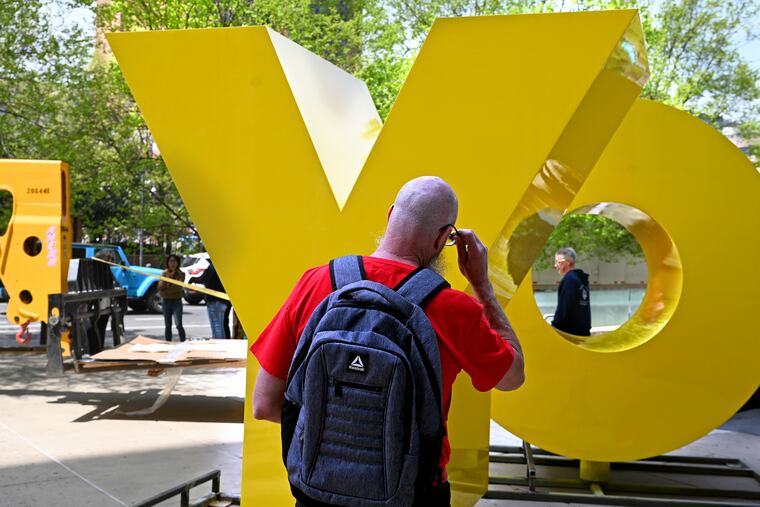
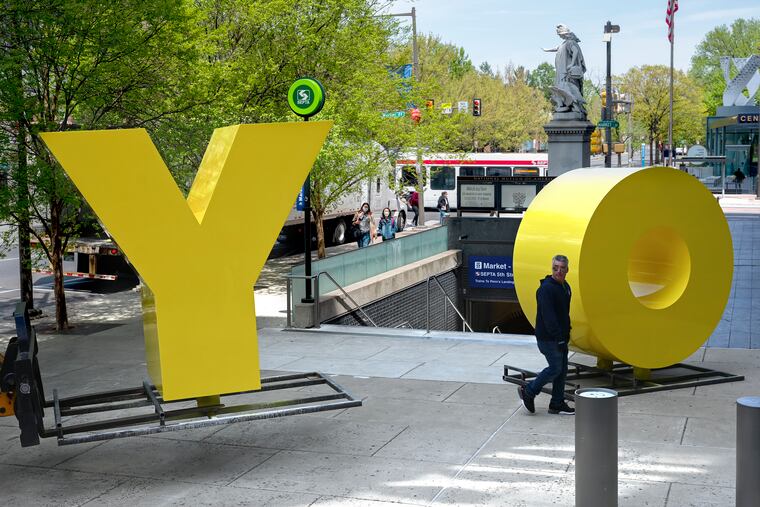
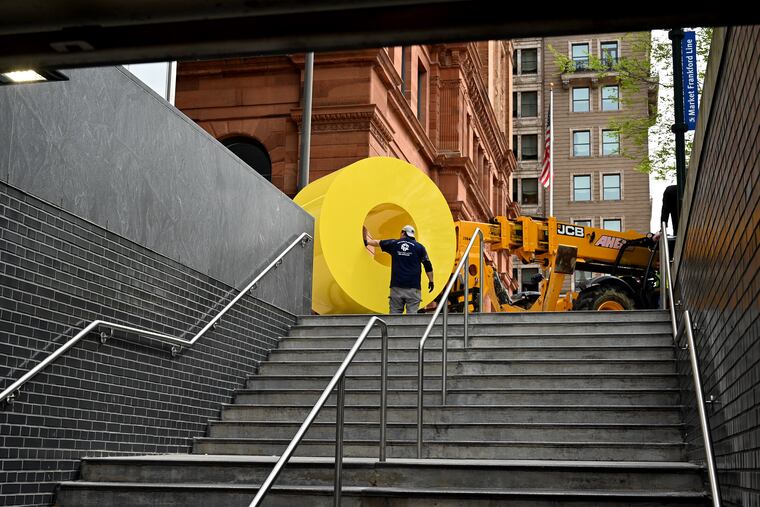
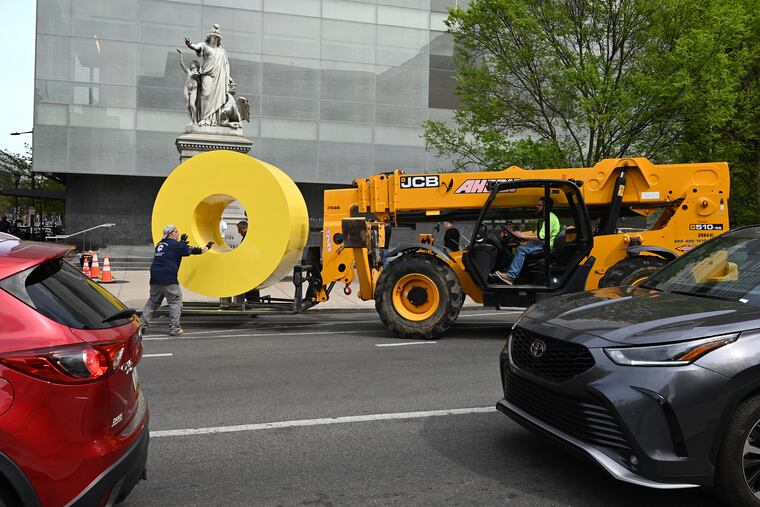
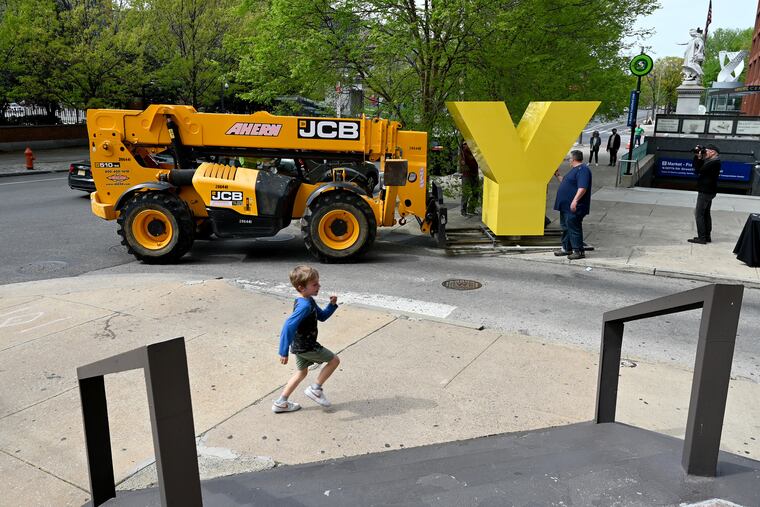
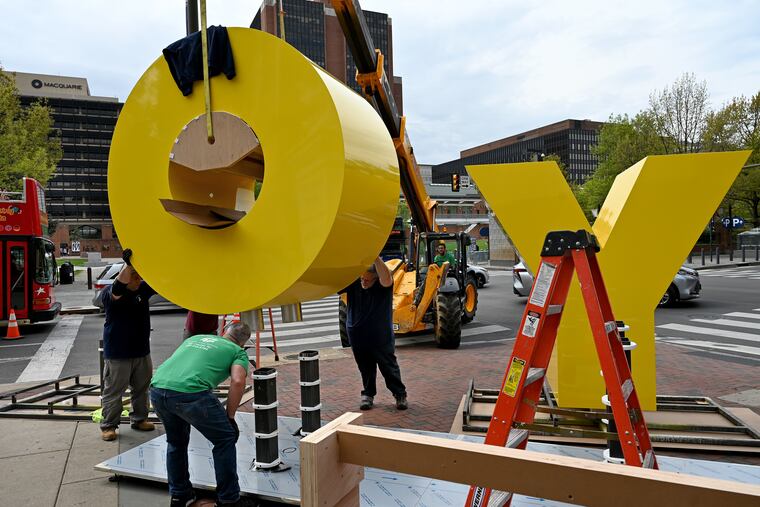
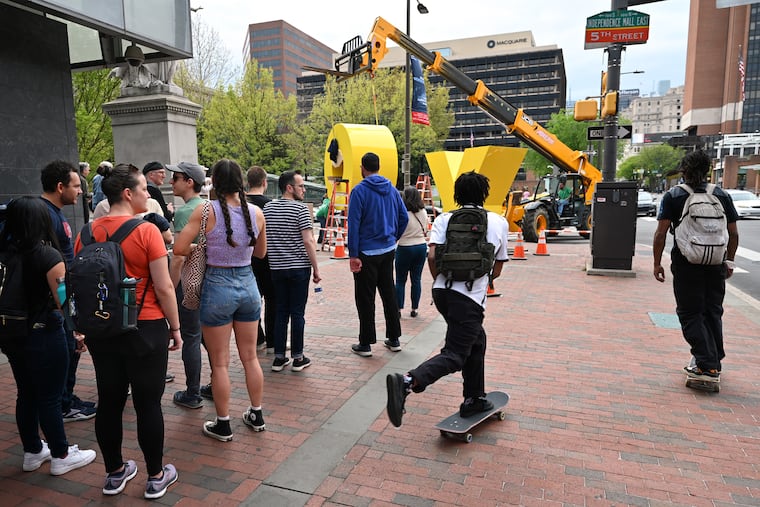
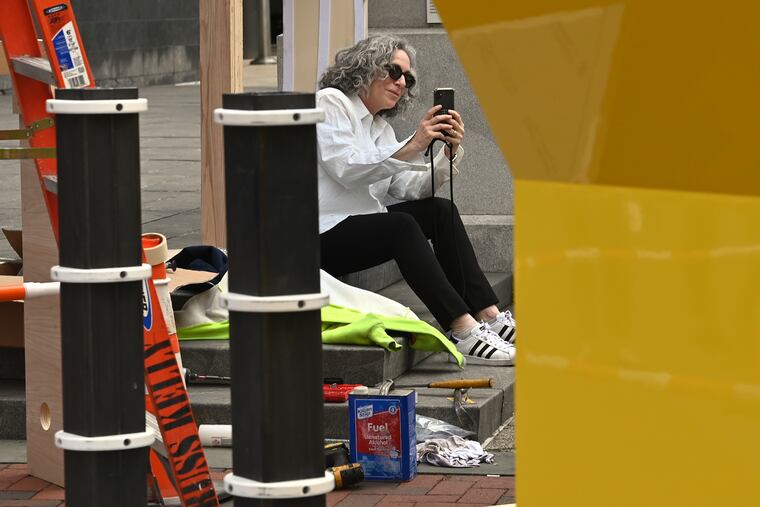

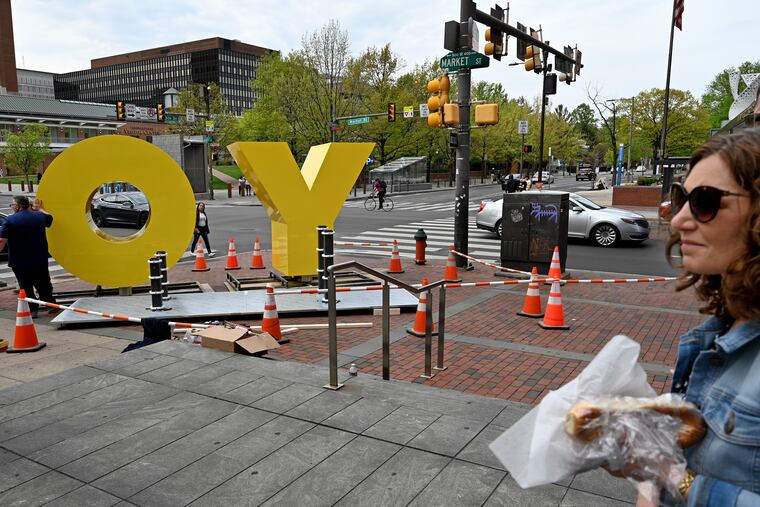
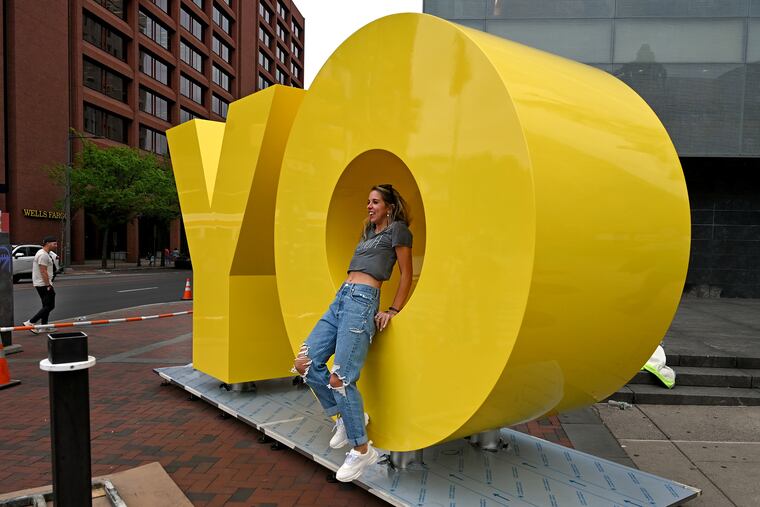
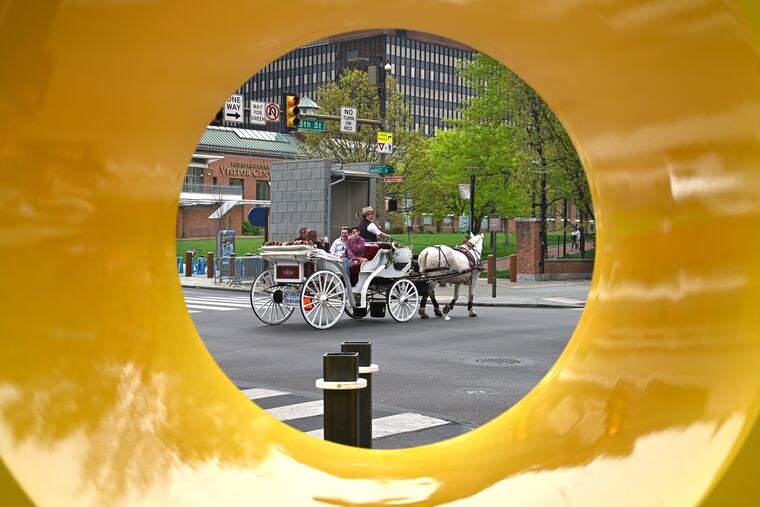
When doing assignments since then in the Historic District or visiting The Inquirer newsroom on Independence Mall, I would often, as a photographic exercise and a way to clear my mind, set a timer on my phone for 7.6 minutes (you know, for 1776) and stand at the same exact spot, diagonally across Market Street from the 8 feet tall, 16 feet wide sculpture and take a few pictures of people and vehicles that pass in front of me. The museum took the “OY/YO” away in May for refurbishment, seizing on an opportune period this summer while construction is underway on Market Street in time for next summer’s the Semiquincentennial.
What I really wanted was to make a photo of a yellow car passing in front. Maybe when OY/YO returns.
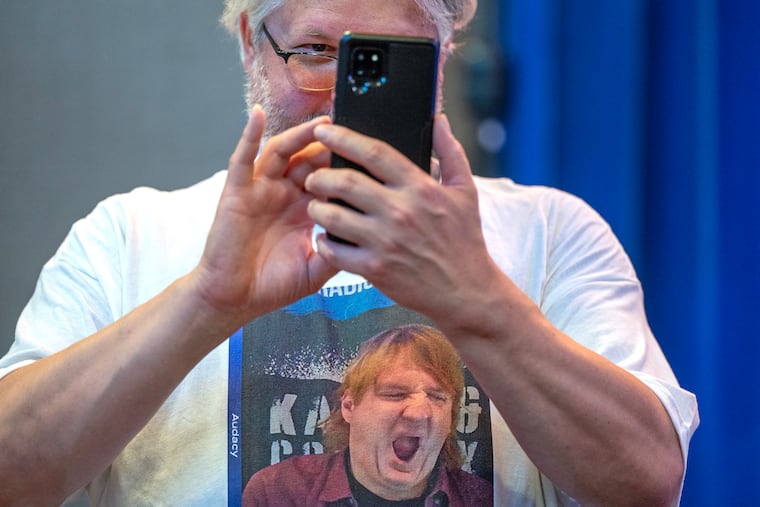
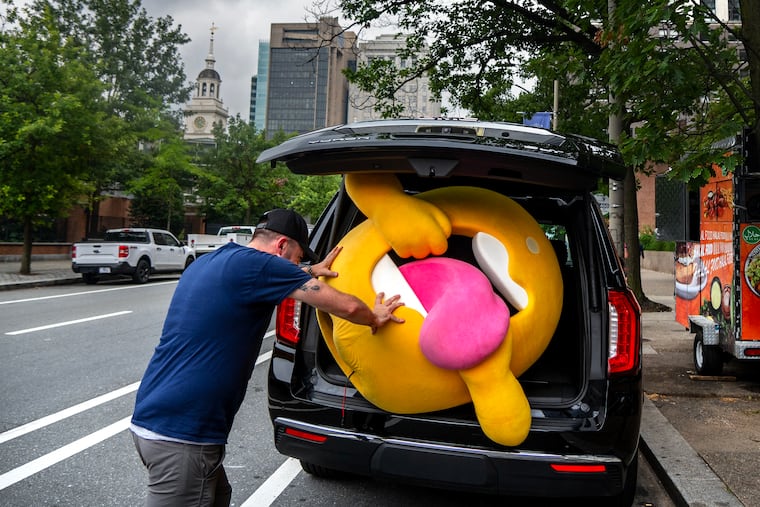
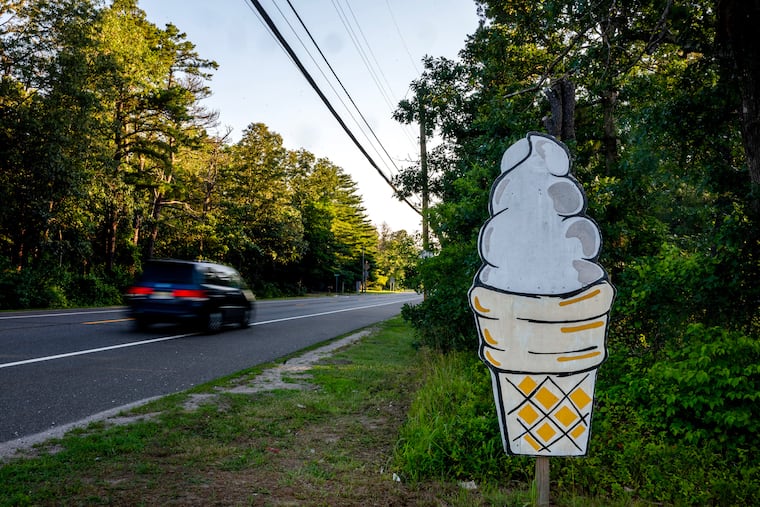
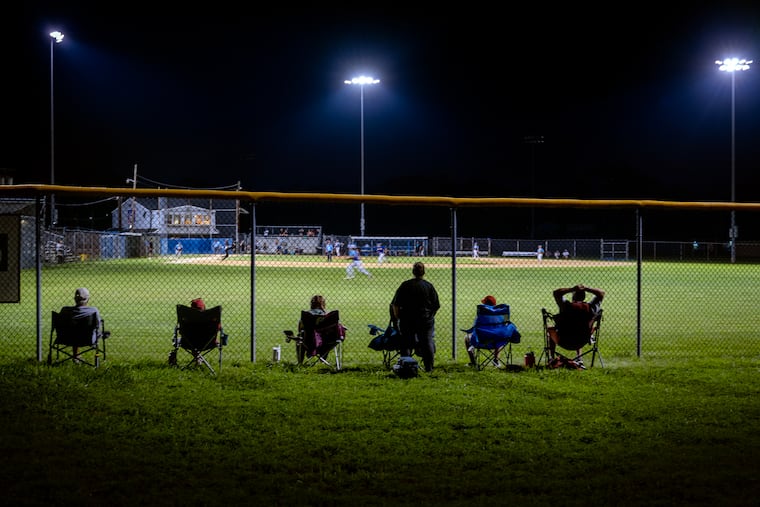
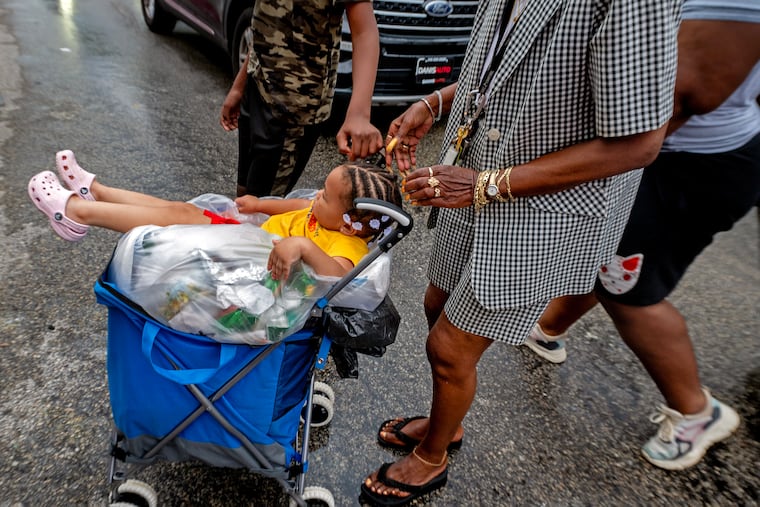
Since 1998 a black-and-white photo has appeared every Monday in staff photographer Tom Gralish’s “Scene Through the Lens” photo column in the print editions of The Inquirer’s local news section. Here are the most recent, in color:




» SEE MORE: Archived columns and Twenty years of a photo column.

- Brazen armored truck robberies in Philadelphia marked a sweltering summer
- Does the internet have a Philly accent? Why too much time online can make you ‘culturally Philadelphian.’
- When can I say I'm from Philly? Advice chat
- The best things we ate (and drank) this week
- How to have the perfect Philly day, according to the Phillie Phanatic
- Citywide Quest: Prove how well you know the streets of Philly in our new weekly game
- How to spend a luxurious weekend in St. Michaels, two hours from Philly | Field Trip
- A wine director purchased a 1910 South Philly rowhouse with help from the city | How I Bought My House
- Flies shut down one of Philly’s ‘fancy’ airport lounges | Weekly Report Car
- How I take an image of an image