David Oh to face Cherelle Parker in challenge to Philly’s Democratic dominance as the GOP nominee for mayor
Oh, an 11-year Council member, won the uncontested GOP primary for mayor. He will face Democratic nominee Cherelle Parker in the November general election.

David Oh won an uncontested race Tuesday to be the Republican nominee for mayor of Philadelphia.
Oh, a City Council member for 11 years, has a more substantive political resume and a more independent streak than most GOP mayoral nominees in recent history, but he’ll still face a near-vertical climb in the general election against Democratic nominee Cherelle Parker, as Democrats have won every election since 1947.
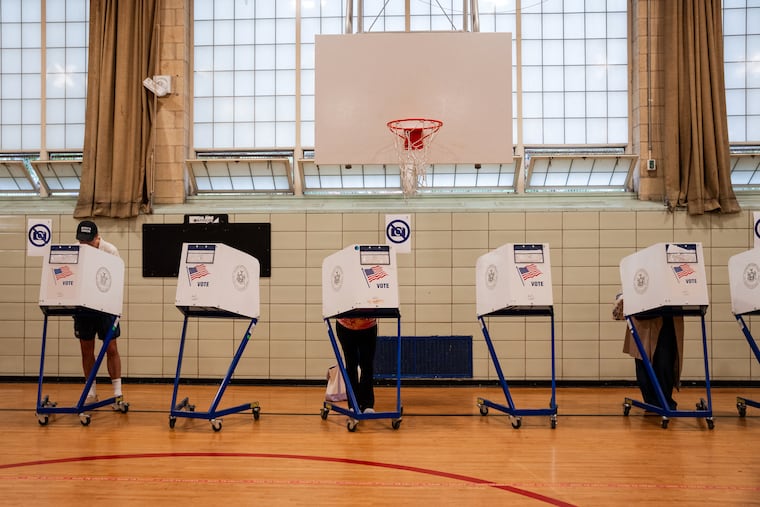
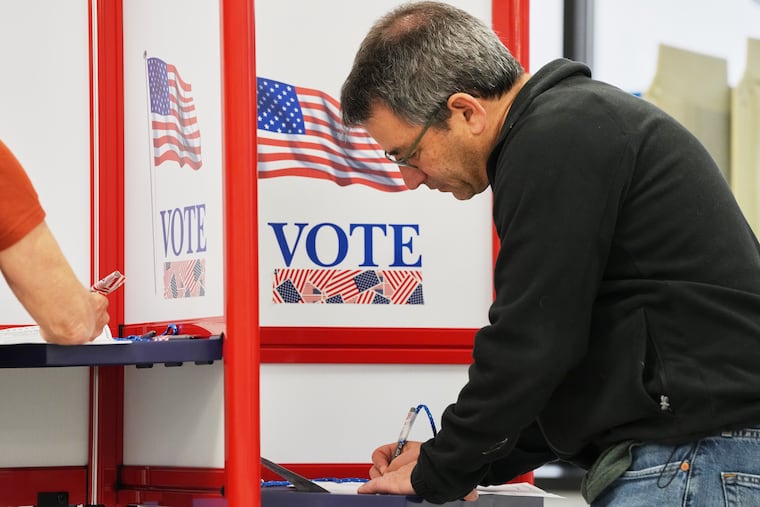
“The problem that I see in Philadelphia is that somehow our city has ended up believing that the only people who matter in our city are the ones who vote today,” Oh said of Democrats voting in the Democratic primary. “That’s only 300,000 people in a city of 1.6 million people.”
As results rolled in Tuesday and Democrats awaited results of a close contest, Oh calmly sipped a Diet Coke at a victory party in Northeast Philadelphia.
“I get a sense that there’s a general apathy,” Oh said of Philadelphia voters. “People are not excited about what [Democrats] are saying.”
Philadelphia voters are registered 7-1 Democratic. The city often fuels statewide Democratic wins, backing Democratic Sen. John Fetterman by 68 points over his Republican challenger last year and delivering President Joe Biden a 63-point margin of victory in 2020.
At the city level, an already outnumbered GOP was further weakened when Working Families Party candidate Kendra Brooks won a City Council at-large seat over the Republican candidate in 2019.
But Oh said he sees this year’s mayoral race as more localized than the hyper-partisan national picture. He thinks his tenure on Council means people know him by more than his party registration and that the city’s myriad challenges, from crime and public safety to education, might make voters more inclined to give the Republican candidate a shot.
He said he thinks the first mayoral primary in the wake of COVID, when city health restrictions angered both those in the GOP base and some independents, could also help his case.
“When you look at registration, yeah it’s significant, but it’s really only significant when you have candidates you don’t know,” he said. “For the last 20 years, Philadelphia hasn’t had a good Republican candidate. The last credible candidate they had was when Sam Katz was a candidate. But Sam Katz did not come with a diversity of voters, he was an alternative to John Street, and he did not do well among nonwhite voters.”
Oh said he thinks he has a unique campaign as a centrist Republican who has often butted heads with the city party, and one who is building a diverse coalition that includes immigrant communities he thinks Democratic candidates have largely ignored.
“By brand name, I am not supposed to have the level of diverse support I have,” Oh said. “If you look at Republicans, they normally don’t have a lot of immigrants, Muslims, Africans, Latinos, but I do.”
While most Republicans usually get the bulk of their votes from comparatively conservative parts of South and Northeast Philadelphia, Oh has won support from pockets across the city. Those votes helped him hang on to his seat when Brooks won in 2019.
He also argues that Democratic nominees aren’t used to having to campaign after the primary.
“When the race is over, they don’t retain staff, they don’t plan for November. They’re not picking up any additional votes, and a lot of those votes are already committed to me.”
The son of Korean immigrants, Oh grew up in Philadelphia and is an Army veteran and former prosecutor. He ran unsuccessfully for Council twice before winning, in 2011, one of the two at-large seats that are set aside for members of minority parties.
Oh has often been isolated on Council, both due to Democrats holding 14 of 17 seats and his rocky relationship with his own party. Oh has called for auditing the state-controlled Philadelphia Parking Authority, one of the few bastions of patronage jobs for Philadelphia Republicans, and GOP ward leaders have unsuccessfully backed other Republicans vying for his seat.
His time in office has also had its share of controversies and unusual moments. In 2011, he was criticized and eventually apologized for exaggerating his military service by implying that he had served in the Army Special Forces, or Green Berets, when he had not. Since then, Oh has frequently championed veterans issues on Council.
In 2017, Oh was stabbed outside his home in Southwest Philadelphia. The suspect was acquitted due to a lack of corroborating evidence. Oh referenced the case in his mayoral campaign announcement, saying that Philadelphia’s problems with crime have come “right up to my doorstep.”
In 2018, the Department of Human Services conducted a child abuse investigation after he accidentally broke his son’s collarbone while practicing martial arts. The city agency found that Oh had not abused his son, and Oh criticized DHS for investigating him.
Through it all, Oh has built an unusual coalition of supporters by positioning himself as the champion of a variety of disparate communities, often on issues outside of partisan politics.
Oh, for instance, has activated communities of veterans to support his efforts to preserve hiring preferences for them, and he has met frequently with immigrant groups for people from Asia, West Africa, and other parts of the world. He even turned his child abuse investigation into a political opportunity, holding hearings that allowed him to tap into communities of parents who feel wronged by DHS.
He has a keen interest in Philadelphia’s arts and culture, and his office led PHL Live, a citywide music competition.
Oh said his Democratic opponent will need to work to expand her coalition.
“You can win the primary with 100,000 votes — but if that’s who you’re going to answer to and you’re going to forget about the other 1.5 million people, this city will not advance.”