Pa. Republicans are mostly backing the Iran war or staying quiet ahead of a deadline for Congress to assert its authority
Only one of Pennsylvania's 11 Republican lawmakers in Congress has suggested President Donald Trump would be breaking the law if he continues the war without approval.
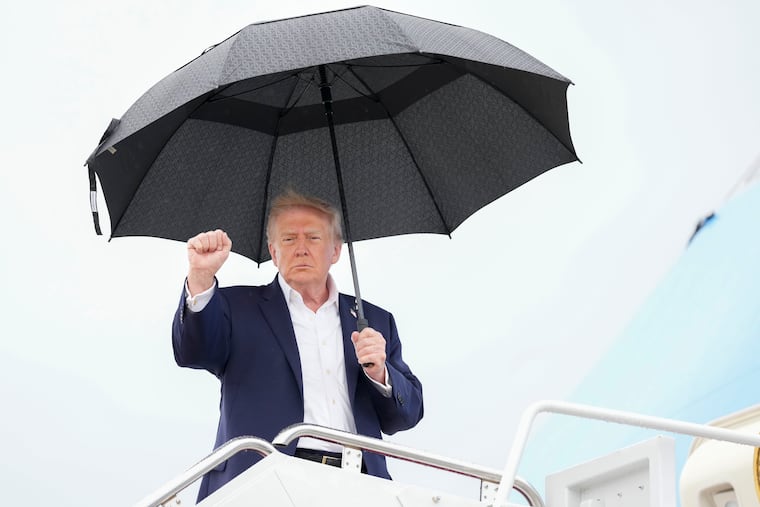
Pennsylvania Republicans who have backed President Donald Trump’s war in Iran are mostly keeping quiet ahead of a Friday deadline that even some of their GOP colleagues say is a critical legal marker in the conflict.
The deadline — 60 days after Trump formally notified lawmakers of the intense bombing campaign he unilaterally began on Feb. 28 — is the date under a 1973 law that requires the president to end the use of military force if it is not authorized by Congress.
Democrats have argued since the start of the campaign that the attacks violate the Constitution, which gives Congress the authority to declare war.
But their attempts to rein in Trump through multiple war-powers resolutions have been rebuffed by Republicans in the majority.
All 11 GOP lawmakers representing Pennsylvania have voted consistently to let Trump continue unimpeded — and only one has suggested the president would be breaking the law if he bypasses the 60-day milestone.
“The War Powers Act of 1973 is the law of the land. This consistent standard must be applied to all past, current, and future administrations when it comes to military hostilities abroad,” U.S. Rep. Brian Fitzpatrick (R., Bucks) said in a statement while announcing his own version of a war-powers resolution last month.
Fitzpatrick’s resolution would require Trump to follow the law’s requirement to remove armed forces from the region.
It differs from other resolutions that were recently introduced, and that Fitzpatrick voted against, by calling specifically for a “phased withdrawal.” It would also allow Trump to keep service members in the region if he determines they are necessary to defend against an “imminent attack, or prevent the procurement of a nuclear weapon” — two war justifications that Democrats have denounced as not backed by evidence.
Fitzpatrick, a five-term incumbent and former FBI agent, is facing perhaps his most challenging reelection campaign this year in the purple 1st Congressional District, which covers all of Bucks County and a sliver of Montgomery County. The moderate Republican has broken with his party in other high-profile moments in recent months, though he has largely supported the attacks in Iran.
His office did not respond to multiple requests for an interview or answer questions from The Inquirer about his proposed resolution.
Three other Pennsylvania Republicans whom Democrats are aggressively trying to unseat in this year’s elections have also backed the war despite polls showing most voters do not support it and are concerned about the resulting increase in gas prices.
U.S. Rep. Ryan Mackenzie (R., Lehigh) — a freshman lawmaker who is widely considered one of the most vulnerable members of Congress this year — indicated he would continue to oppose limits on the president’s ability to conduct the war ahead of the Friday deadline. In a statement, he emphasized the ongoing ceasefire and said “Congress should not weaken the President’s negotiating position.”
“Congressional approval could be necessary for further long-term conflict, but the immediate priority must be to support efforts to secure our objectives through peaceful means,” Mackenzie said.
Neither Mackenzie nor the other Pennsylvania GOP lawmakers responded to The Inquirer’s questions about whether they would vote to authorize the war if presented with the option, or if they believe forces should be withdrawn because of the legal deadline.
The last authorization for use of military force that Congress approved was the 2002 vote to wage war in Iraq under then-President George W. Bush. That decision went on to haunt some lawmakers in future campaigns.
And newer elected officials like U.S. Sen. Dave McCormick (R., Pa.), an Army veteran elected in 2024, have said they do not want to see a repeat of the wars in Iraq and Afghanistan in Iran, even if they agree with the mission so far.
McCormick, in a statement that did not directly mention the existing law’s deadline, reiterated that support and his belief that Trump is “acting squarely within his constitutional authority to deploy forces and protect American interests.”
He said “significant progress” in the nearly 60 days of the campaign included the degradation of Iran’s weapons manufacturing infrastructure and existing weapons.
“Congress will have its opportunity to weigh in through the defense supplemental process,” McCormick said, referring to the Pentagon’s forthcoming request for Congress to fund the war.
Others who did not respond to The Inquirer’s questions or requests for an interview included the two other House members facing competitive reelection contests this year: U.S. Reps. Scott Perry (R., York) and Rob Bresnahan Jr. (R., Lackawanna).
Those who also did not respond and are running again in safe GOP districts across the state were U.S. Reps. Dan Meuser (R., Luzerne), Lloyd Smucker (R., Lancaster), John Joyce (R., Blair), G.T. Thompson (R., Centre), Guy Reschenthaler (R., Washington), and Mike Kelly (R., Butler).
Meanwhile, some of their Republicans colleagues have underscored what they see as the importance of the deadline.
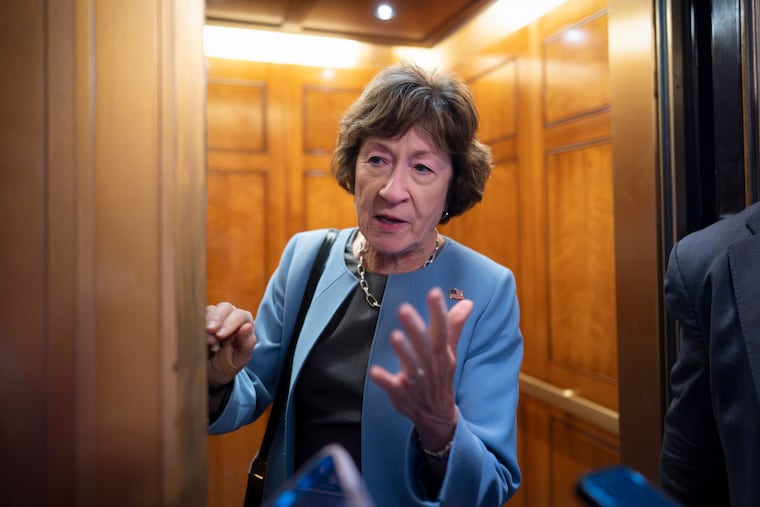
“If this conflict exceeds the 60 days specified in the War Powers Act, or if the President deploys troops on the ground, I believe that Congress should have to authorize those actions,” U.S. Sen. Susan Collins (R., Maine) said in a statement last month.
U.S. Sen. John Curtis (R., Utah) wrote in an op-ed that it would be unconstitutional to continue the attacks even though he supported them.
“It would be an act of disrespect to our Constitution if we were to accord the president the right to make war without any declaration of war,” Curtis wrote. “The Framers deliberately described a substantive power to declare war and assigned that power to Congress.”
Democrats were pressuring their colleagues again this week to heed those warnings.
“Our Constitution and the War Powers Resolution are not polite suggestions. Of course, the Congress should do its duty and put an end to the Iran War and bring our troops home,” said a statement from U.S. Rep. Chris Deluzio, a Western Pennsylvania Democrat and Navy veteran who has been outspoken in his criticism of Trump’s handling of the military.
U.S. Rep. Brendan Boyle (D., Philadelphia) said it was “disappointing that congressional Republicans have once again chosen to fall in line behind Trump, no matter the costs borne by the American people.”
Unlike other bills and resolutions, the 1973 law allows a single lawmaker to force a vote on a war-powers resolution. And for the third time, House Democrats were preparing to force such a vote this week to immediately withdraw the U.S. forces. The two prior House votes failed, along with five similar votes in the Senate.
The only Democrat in the Senate to vote every time with Republicans against the measure was U.S. Sen. John Fetterman (D., Pa.), who has praised the attacks and denounced his party for not celebrating with him.
This article contains information from the Associated Press.