John Fetterman votes against restricting Trump again as Democrats rage against Iran war
Democrats forced the war powers vote for the fourth time after the president's comments last week threatening Iran's "whole civilization." John Fetterman and Dave McCormick both voted against it.

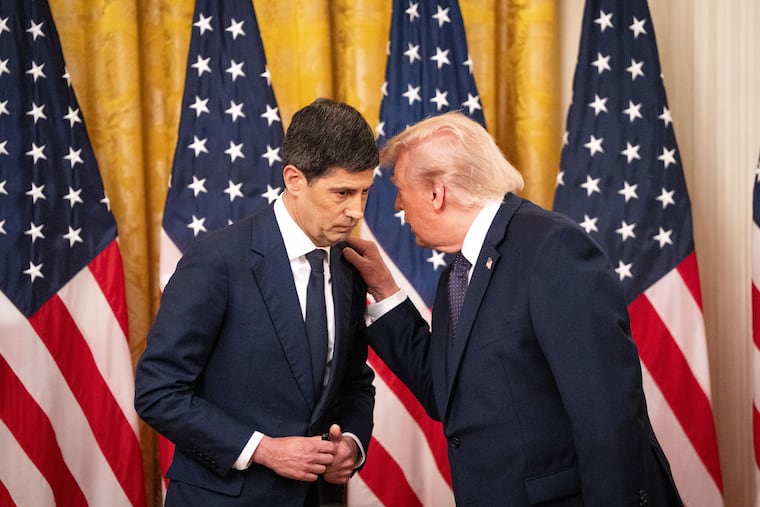
WASHINGTON — For the fourth time since the war in Iran began, Democratic U.S. Sen. John Fetterman joined nearly every Republican on Wednesday to help kill an effort to restrict the president’s attacks in the Middle East.
The vote on the measure took place roughly a week after Trump threatened to eliminate Iran’s “whole civilization,” prompting many in Fetterman’s party to call for the president’s removal from office.
U.S. Sen. Dave McCormick (R., Pa.) also voted against the Democratic-led war powers resolution, which failed 52-47.
Democrats forced another vote on limiting Trump’s military power halfway through a two-week ceasefire, following Trump’s decision to back down from his threat. Negotiations between the two nations have stalled and tensions remain high as the U.S. launched a blockade of Iranian ports this week.
Fetterman and McCormick did not join the chorus of voices condemning Trump’s threat, which some Republicans have also criticized and that 64% of voters overall thought was unacceptable, according to a poll released Wednesday by Quinnipiac University.
The Pennsylvania senators have both continued to fully support the war, with Fetterman remaining the only Senate Democrat to do so.
“I don’t understand why other Democrats can’t acknowledge that pulverizing the Iranian military and their capabilities, that’s a good thing overall,” Fetterman said Wednesday morning on Fox News, appearing in the studio in Washington after spending recent weeks regularly calling into the network.
Fetterman’s fellow Democrats have said they’re not mourning the destruction of Iran’s ballistic missiles and capacity to develop a nuclear weapon. But they’ve questioned the effectiveness of Trump’s strategy and his reasons for launching a full-scale attack in the first place.
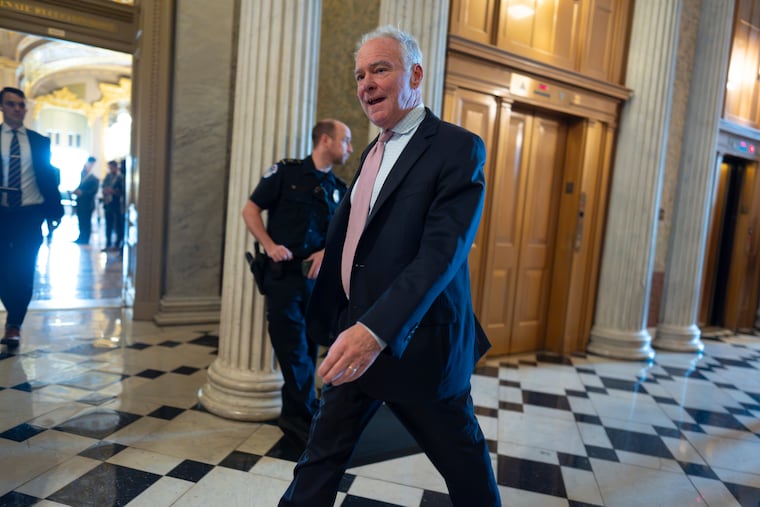
U.S. Sen. Andy Kim (D., N.J.), who worked on national security issues in the Middle East for two administrations before his election to Congress, said last week he’d seen no evidence that Iran will not be able to rebuild its arsenal.
Standing with colleagues on Monday to call for the passage of the war powers resolution, he said the Vice President J.D. Vance’s failed negotiations with Iran over the weekend were “embarrassing” and “dangerous because we cannot find an off-ramp at this point.”
“I’m just tired of this,” Kim said at a news conference Monday. “As someone who worked in diplomacy before, nothing that we saw in Pakistan with these Iran discussions and negotiations resembled anything like what diplomacy and serious work should look like.”
U.S. Sen. Cory Booker (D., N.J.) said at the same news conference that Democrats would keep forcing debates and votes in the Senate until Republican leaders join them in asserting congressional oversight.
Unlike other votes in Congress, a single lawmaker can force a vote on a war powers resolution under a 1973 law. The law also requires the president to remove U.S. forces 60 days after the start of a conflict, making April 28 another significant date in a war that Trump originally said would last four to six weeks.
“These are not usual times,” Booker said. “We are in a moment of moral urgency.”
The vote Wednesday came as more U.S. forces deployed to the region and enforced the blockade. The limited oil shipments transmitting through the Strait of Hormuz — the critical shipping channel that Iran mostly closed — continued to keep gas prices elevated (above $4 in Philadelphia).
McCormick, an Army veteran who served in the Gulf War, said after the ceasefire began last week that the military should be further deployed if necessary to open the strait.
At a conference with Pennsylvania Republicans on Friday in Harrisburg, McCormick reiterated that he “absolutely has no taste” for an extended conflict.
Though he’s warned against the deployment of troops on the ground in Iran, he’s also said the U.S. needs to get the conflict “wrapped up” in order to bring gas prices back down.
“The only way we’re going to get energy markets back to normal is to finish the job,” McCormick said.
The U.S. House is also set to vote on a war powers resolution for the second time as soon as Thursday. Pennsylvania’s divided House delegation voted along party lines as a similar measure failed last month.