Senators are pushing back against Trump’s NIH cuts. Philly scientists say their advocacy is working.
A Senate committee rejected Trump's proposed 40% cut to NIH funding. Philadelphia's medical research community says it means advocacy efforts are having an impact on Capitol Hill.
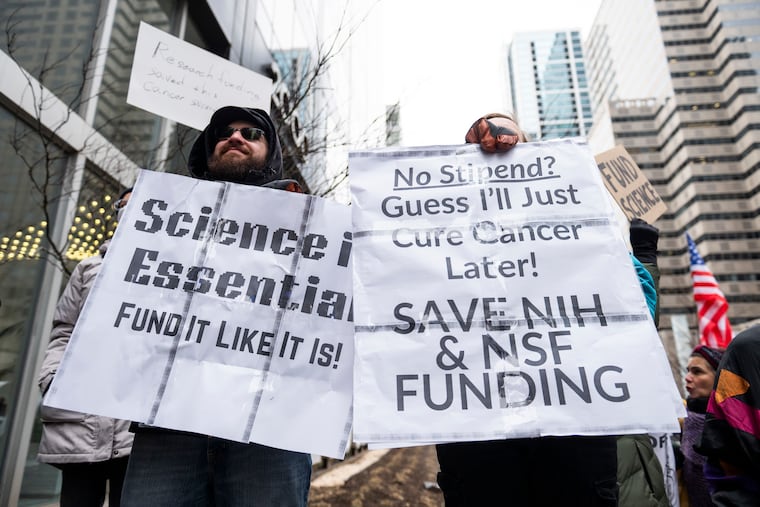
Philadelphia-area advocates are encouraged by the Senate Appropriations Committee’s Thursday vote to increase funding for the National Institutes of Health by $400 million — instead of cutting it by 40%, as President Donald Trump had proposed.
Scientists and advocacy groups in the region have spent the last several months decrying slashed grants and delayed funding at the NIH — including nearly $47 million in reported cuts to grants at Philadelphia institutions.
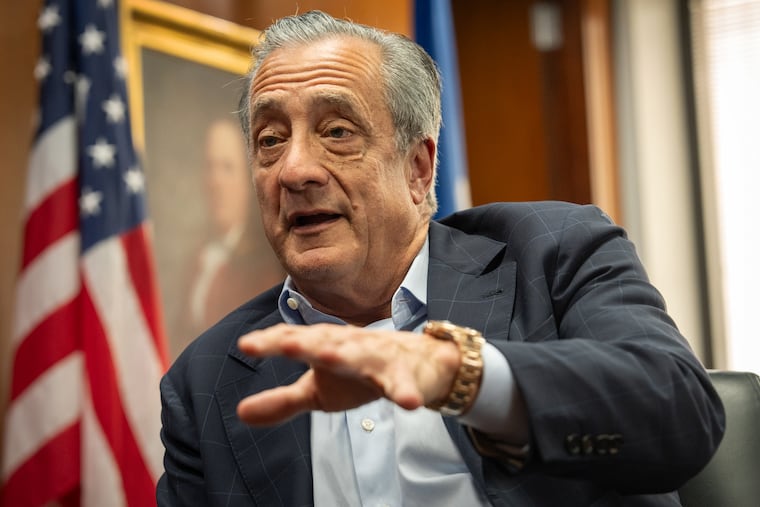
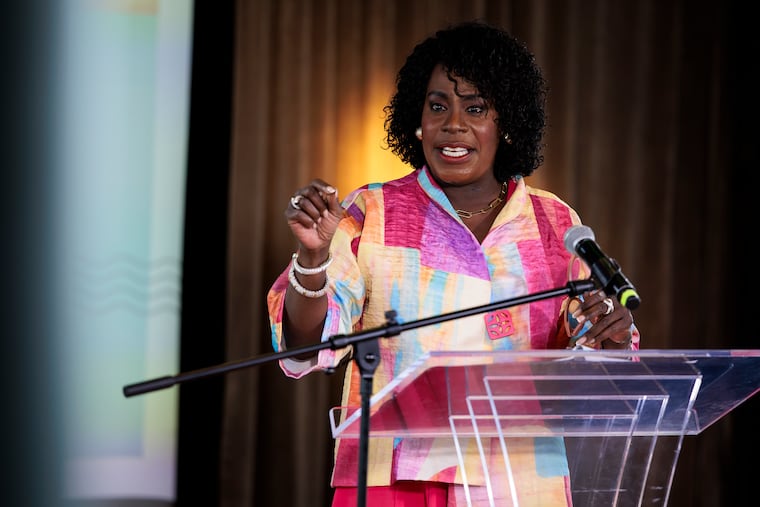
“[The senators] recognize that the entire medical research community is coalescing, getting patients and citizens to call members of Congress. They’re hearing from their constituents that this should not be tolerated,” said Jon Retzlaff, the chief policy officer for the Philadelphia-based American Association of Cancer Research.
The bill appropriates funding to the Departments of Labor, Health and Human Services, and Education for fiscal year 2026. Thursday’s 26-3 vote to send the bill to the full Senate is just the beginning of the budget process.
The pushback on Trump’s spending priorities follows an abrupt freeze on research funding at NIH earlier this week and a group of Republicans calling for an end to delays on grant payments at the agency.
On Tuesday, the Office of Management and Budget abruptly paused all research funding at the NIH — then quickly reversed the decision after lawmakers and advocacy groups balked. That followed a letter sent by Pennsylvania Sen. Dave McCormick and 13 other Republican senators last week, calling on OMB to stop delaying the release of NIH research funds appropriated by Congress in March.
“Suspension of these appropriated funds — whether formally withheld or functionally delayed — could threaten Americans’ ability to access better treatments and limit our nation’s leadership in biomedical science,” the letter said. “It also risks inadvertently severing ongoing NIH-funded research prior to actionable results.”
This isn’t a new issue for McCormick. At a telephone town hall in March, he fielded questions from a cancer researcher from Havertown who had lost his job following Trump’s cuts to the NIH in February. On that call, the senator said he was concerned about research funding cuts as well.
Area researchers say they’ve been struck to see support for medical research from both sides of the aisle.
“We’re particularly encouraged by the bipartisan nature of the recent actions. It does tell us we have support, that our advocacy efforts are working,” said Amanda Therrien, a neuroscientist who serves as the colead and organizer of Philadelphia Science Action, a group of area scientists who organized this spring’s Philly Stand Up for Science rally.
‘You’re talking about life and death here’
The Philadelphia region has been hit hard by the administration’s controversial cuts to NIH grants, which have faced legal challenges around the country. The Department of Health and Human Services has reported that it has terminated funding totaling $47 million for 96 grants covering a wide range of research topics at city institutions.
The Trump administration has offered few explanations for the criteria it used to make the cuts. An Inquirer analysis found that the administration had particularly targeted funding for diversity, equity and inclusion initiatives; LGBTQ+ health; and health disparities — research into the ways social factors like race and income affect a person’s health.
Some of that funding has since been returned to researchers after a federal judge ruled in June that the cuts were discriminatory.
Delayed grants are more difficult to track, but are part of a pattern of disruption and uncertainty engendered by the Trump administration’s attacks on research, the AACR said in a statement Thursday. Researchers have seen grant reviews delayed, funding stalled, and clinical trials disrupted, they said.
Therrien, who works at Thomas Jefferson University, said she’s been lucky so far — none of her grants has been terminated or delayed by the administration. (She stressed that she was speaking on behalf of Philadelphia Science Action, not the university.)
But she said she has colleagues whose research has been affected by delays in funding, and who are worried about their and their staff’s livelihoods — as well as the future of their work.
“It’s an atmosphere of high uncertainty. People outside the academic community don’t realize how tight our timelines and budgets are,” Therrien said. “Any interruption in the research schedule can invalidate a whole clinical trial — and, effectively, now you’ve also wasted money.”
Retzlaff said the AACR is also tracking the effect of delayed funding and NIH budget cuts on patients participating in research. Some patients enrolled in clinical trials have seen their care delayed because of staff cuts at the NIH. Others, waiting for delayed trials to start, are now ineligible to participate, said Retzlaff.
“You’re talking about life and death here,” he said.
The organization sees the Trump administration’s actions as “an attempt to dismantle the entire medical research system that’s been so productive for decades, and is resulting in lifesaving treatments,” he added. “It’s extremely concerning.”
Retzlaff said he’s hopeful that AACR and other advocacy organizations are building momentum against cuts and delays to research funding.
“We’re so pleased with today’s Senate Appropriations action to reject the chaos [Trump has] been implementing,” he said.
At Philadelphia Science Action, Therrien hopes that the committee’s signal of support for the NIH is a sign that other major federal research funders, like the National Science Foundation and NASA, will receive similar attention from the Senate.
“We’re really encouraging people to take this as a sign of encouragement that what we’re doing is getting through to people. I think it’s a really empowering message: It’s working, keep going, don’t give up,” she said.