Camden County is building 60 efficiency apartments for people experiencing homelessness
Camden County has seen homelessness increase by 20% since 2020. Officials hope a Blackwood facility now under construction will address the need.
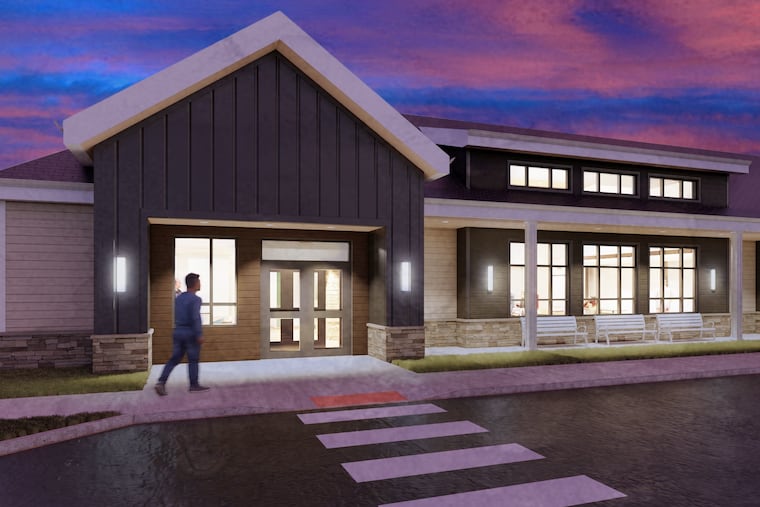
For Patricia Clark, who survived living on the streets of Camden for 25 years, the county’s move to build a supportive housing center with 60 efficiency apartments for people experiencing homelessness is a welcome development in a distressing moment.
“The homeless rate is crazy, and this new place is needed, absolutely,” said Clark, 65, who struggled with substance abuse disorder starting at age 32 before going through recovery and becoming a homeowner and administrator at Joseph’s House of Camden, which offers shelter and support for unhoused people.
“I thought I’d die as Jane Doe with a needle in my arm and a crack pipe in my mouth,” she said. “I’m so grateful for the help I got. I know the new center will help, too.”
Named after a former Camden city attorney, the $22 million Martin McKernan Supportive Housing Center in Blackwood is expected to be completed in the spring, according to Camden County spokesperson Dan Keashen. Ten of the center’s 60 units will be set aside for emergency shelter, while the balance will be transitional housing, available to individuals for up to two years, according to Rob Jakubowski, director of Camden County Homelessness and Community Development. Residents will be offered case-management services that typically include counseling, employment help, and assistance finding permanent housing, he said.
Camden County has seen homelessness grow by 20% between 2020 and today — from 633 to 759 people, 148 of them unsheltered, according to figures provided by Keashen.
The county is confronting that increase in need as it faces a threat to federal housing aid under a Trump administration plan to cut two-thirds of the aid designated for permanent housing for people experiencing homelessness.
Federal housing administrators argue its proposal would “restore accountability” and promote “self-sufficiency” in people by addressing the “root causes of homelessness, including illicit drugs and mental illness. But housing experts say it could displace 170,000 people nationwide.
“We are already seeing some of the effects of the HUD plan, with housing programs being cut,” Colandra Coleman, executive director of Joseph’s House, said. “I expect more to be cut back significantly.”
The McKernan center now seems that much more important, said Louis Cappelli, director of the Camden County Board of Commissioners. He stressed that homelessness is growing not just in the city of Camden, but in other parts of the county.
“It’s in Haddonfield and Collingswood and so many other places,” he said. “We want to provide the best possible opportunity for people everywhere who need it.”
While substance abuse and behavioral health are at the root of homelessness for many people, anti-homelessness agencies say the main reason Americans are homeless is the dearth of affordable housing.
“The affordability crisis is at the heart of the larger numbers of people who experience homelessness,” said Kathleen Noonan, president and CEO of Camden Coalition, a nonprofit helping those with complex health and social needs. The average rent in New Jersey as of this month is $2,087, a 2% increase over last year, according to Apartments.com.
For Clark, having a roof over her head and the sobriety to keep it still feels like a miracle.
“I never had a happy moment on the street in 25 years,” she said. “Getting beaten, going hungry, being arrested for shoplifting, being judged by people. I remember wishing I was dead.
“But now it’s different. I work to give hope to people living like I used to. In the end, God had a better plan for me.”