New Jersey’s Tom Kean ends his months-long absence from Congress, saying he was being treated for depression
Until you experience depression yourself, Kean said in a brief speech upon his return to public life Tuesday, "it’s difficult to fully understand how powerful this illness can be.”

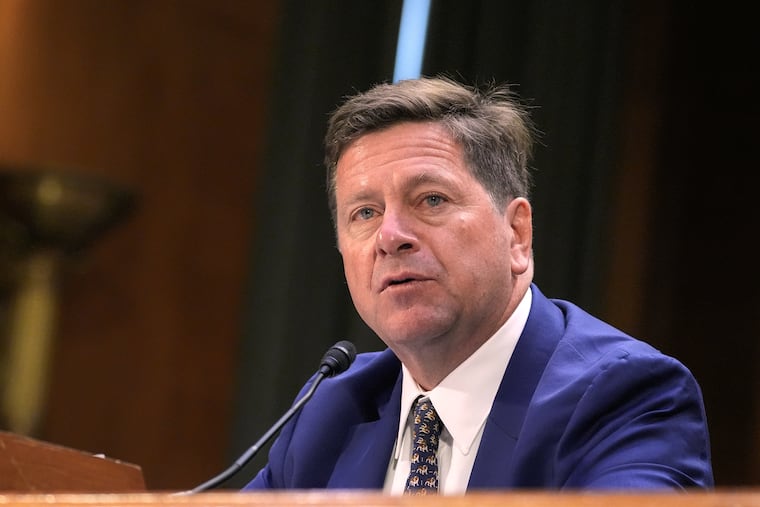
U.S. Rep. Tom Kean Jr., who had not been seen since March in Congress or in his competitive New Jersey district, said Tuesday that he had been hospitalized to treat depression.
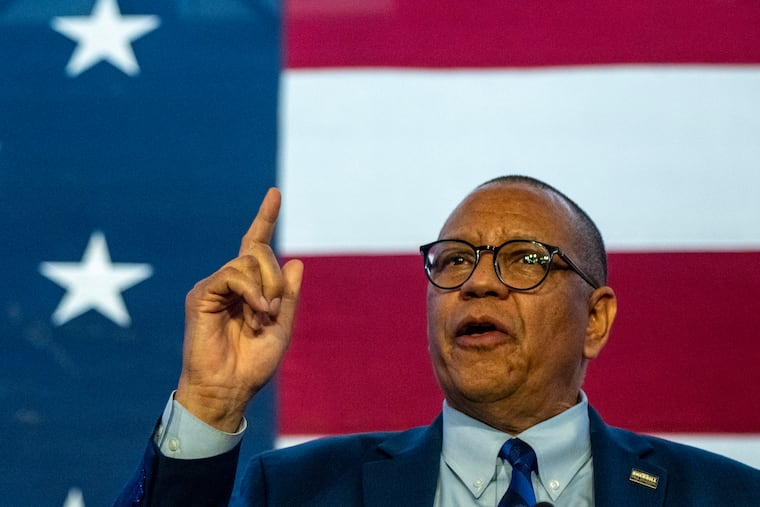
“I believe I owe an explanation to the people of New Jersey’s 7th District,” Kean, a Union County Republican, said in a five-minute speech in the House chamber on his first appearance on Capitol Hill in more than 100 days.
“I was given the diagnosis of depression. ... It is physical, it is emotional, and until you experience it yourself, it’s difficult to fully understand how powerful this illness can be.”
Kean’s district could determine control of the U.S. House next year. The two-term Republican and son of a former governor is widely seen as New Jersey’s most vulnerable incumbent as he faces Democratic nominee Rebecca Bennett.
Addressing his nearly four-month absence from public life, Kean said he hadn’t believed treatment would result in a long-term hospital stay. But, he added, “there is no timeline for recovery, only the work of getting better one day at a time.”
He said that during his treatment, he began to understand how long “depression had been affecting my life.” Kean added that when he initially told people, he had hoped to return in a matter of weeks, “I believed it.”
Kean, 57, has not voted on a bill since March 5. Throughout that time, his office cited vague health issues without any specificity, even though Kean was facing a tough election in a swing district that includes parts of North and Central Jersey.
Kean flipped his district in 2022, ousting then-Democratic Rep. Tom Malinowski by roughly 3 points after redistricting pushed the seat toward the GOP. Kean won reelection by roughly 5 points in 2024 in a strong year for Republicans.
But now, with President Donald Trump polling poorly in the wake of high gas prices and an unpopular war, Republicans realize that keeping their majority in the midterm elections will be a challenging fight and that Kean’s absence had become a campaign trail issue.
In attacks during Kean’s long absence, his Democratic challenger, Bennett, called him a “coward” for missing votes while accepting his House salary. “You are failing us, and you do not deserve to represent us in Washington,” she said.
Bennett said in a statement she was “relieved” that Kean is well and wished him good health. But, she added, Kean was “failing our community long before this absence,” citing his support for Trump’s One Big Beautiful Bill Act, which made cuts to Medicaid.
In a statement congratulating Kean for his “courage” while excoriating Bennett for her “reprehensible” remarks during Kean’s absence, New Jersey GOP state committee chair Christine Giordano Hanlon said Tuesday that Kean’s “strength is measured by the willingness to face adversity.”
Kean, who previously served 19 years in the state Senate, including 14 as the Republican Party’s leader, returned home last week.
Kean is not the first lawmaker to seek treatment for depression. In a very similar personal battle, Sen. John Fetterman (D., Pa.) was absent from the Capitol after a six-week hospitalization for clinical depression in 2023 — though unlike Kean, Fetterman’s office at the time disclosed the reason for his hospitalization.
Fetterman, whose treatment for depression followed a 2022 stroke, details the experience in his memoir, Unfettered, which was released last year. In the book, Fetterman says he should have quit the Senate race he won that year.
“Because of the way the brain works in depression — you are always searching for a way to hate yourself — I began to wonder if some of my opponents’ insults were true," Fetterman wrote in the memoir.
Staff writer Aliya Schneider contributed to this article