You could be paying more for groceries than your neighbor. Here’s what Jersey lawmakers are doing about it.
Gov. Mikie Sherrill and New Jersey legislators are trying to ban surveillance pricing for grocery stores, but some South Jersey lawmakers want to go further.
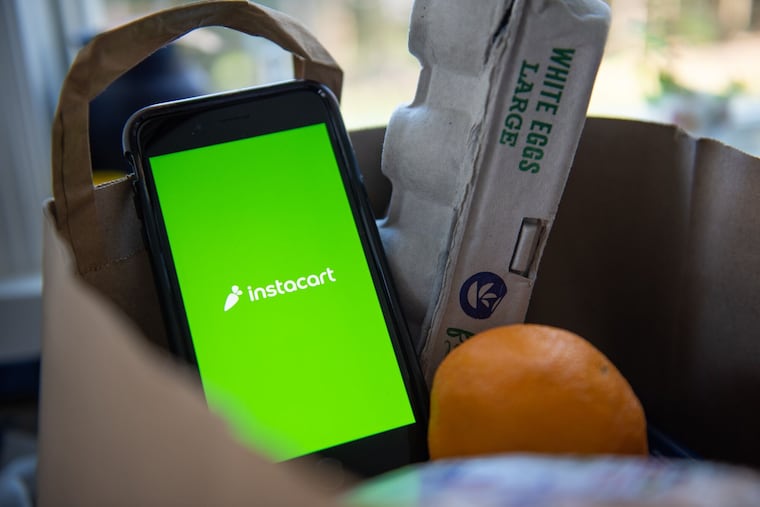
You could be paying more for that gallon of milk in your online shopping cart than other customers without knowing it.
New Jersey lawmakers are trying to ban grocery stores from using “surveillance pricing,” a term for when companies change their prices for different customers based on their personal data. New Jersey Gov. Mikie Sherrill has also criticized the practice and said she wants to work with the legislature to curb it.
But some South Jersey lawmakers think the legislative effort should go further by including more kinds of companies.
A Federal Trade Commission study issued under former President Joe Biden found that retailers frequently use data from consumers’ mouse movements to the products in their shopping carts to adjust the price tag they see. Legislators across the country are scrutinizing this practice.
“If two people are buying the same product, they should pay the same price,” said Assembly member Cody Miller, a Democrat whose district includes parts of Camden and Gloucester counties. “Using personal data to charge someone more for an item is unfair and just plain wrong.”
What is surveillance pricing?
Surveillance pricing is when businesses charge certain customers different prices based on where they’re located, what time it is, who they are, and even what kind of computer they’re using, according to the Electronic Privacy Information Center, a national nonprofit which advocates for greater data privacy.
Grocery stores can collect consumer information through their past purchases and loyalty programs, as well as from outside data brokers, according to the center.
State Sen. Paul Moriarty, a Democrat whose district includes parts of Camden and Gloucester counties, described the practice as “high-tech, personalized price gouging.”
“How much money can I get out of Paul Moriarty? Let’s see, what do we know about him? Where does he live? Where does he shop? What does he look like? How old is he? …it’s just crazy,” he said.
This tactic is often used online, but some companies also use digital price tags in brick-and-mortar stores, paving the way for similar practices in person.
Moriarty, who is signing onto a bill to combat the practice, said it goes against what a free market should be.
“I believe that a fair price is what two people agree on … but I don’t think it’s fair when someone has used all kinds of algorithms to figure out how much money you have in your bank account and how willing you are to spend it, then give you a price that may be 20-30% more than someone else,” he added.
What is Gov. Mikie Sherrill’s stance on surveillance pricing?
Sherrill, a Democrat who took office in January, spoke out against surveillance pricing for rent and groceries in her first budget address last week.
“That means if you have to shop after work, when stores are crowded, you’ll pay more than if you’re free to shop at noon,” she said. “It means if the store knows you just searched for a certain product online, it might charge a higher price. That’s outrageous.”
She said she would work with legislators to limit “this kind of for-profit surveillance by Big Tech.”
Darwin Pham, a spokesperson for Sherrill, said the governor is particularly concerned about the tactic for “everyday essentials.”
“The governor is very concerned about the impact of surveillance pricing on fairness and affordability …and does not believe companies should use personal data to tailor prices,” he said.
What is the New Jersey legislature doing to stop surveillance pricing?
The bipartisan New Jersey Senate Commerce Committee approved a bill this week called the Fair Price Protection Act that would ban the practice for grocery stores, both online and through electronic signage.
Sen. Joseph Cryan, a Union County Democrat and prime sponsor of the bill, said the legislation would prohibit companies from using personal data to set individual prices.
Opponents of the bill say it would complicate offering discounts, but Cryan asserted it would not affect loyalty program discounts as long as they’re not based on individualized data. The bill would not interfere with widespread discounts for seniors, veterans, or teachers, for example.
“Just like when you walk into a grocery store and see a price, you should have the same opportunity online,” Cryan said.
The bill wouldn’t impact companies’ ability to use customers’ browsing data to deliver catered ads, but it wouldn’t allow them to use consumer browsing data to change the price of goods, he said.
Does the bill go far enough? These South Jersey lawmakers say no.
Moriarty, who is signing on as a cosponsor but is not a lead sponsor for the bill, said he believes the ban should expand beyond the grocery industry.
“I don’t know why they don’t make this go further, because I think it could really be used to extract a lot more money from people on some higher-priced objects,” he said.
Cryan said he considered making the bill broader but wanted to focus on groceries first after seeing the 2025 Consumer Reports study focused on Instacart’s use of AI-driven pricing, which left customers with prices that differed as much as 23% per item. The company said it has since changed its practices and that its prices were not set using personal data.
“Instacart does not engage and has not engaged in surveillance pricing — period,“ said Instacart spokesperson Brianna Frias. ”No personal, demographic, or user-level behavioral information about individuals is used by retailers to set item prices on Instacart.”
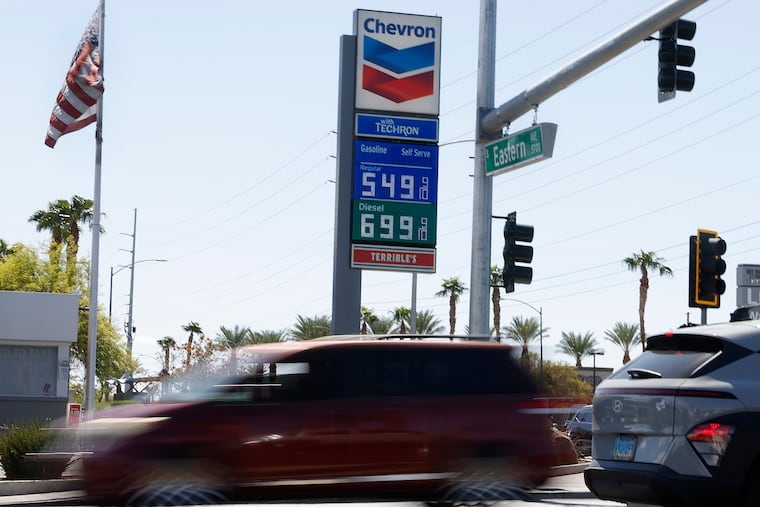
Cryan said members of the public have expressed that multiple retailers in the state are using surveillance pricing, and that the practice is also prevalent at the gas pump and for drug prices. Sherrill appeared with the bill sponsors at a Bergen County pharmacy last week to raise awareness about the issue.
The bill leaves enforcement up to the Attorney General Jennifer Davenport.
Miller, the South Jersey legislator, said that’s “not enough” when dealing with big companies and widespread practices. He said he believes consumers should also have a clear path to take action on their own.
He also wants the language in the bill to be more expansive about the types of data that can’t be used.
“Overall legislative intent is there, and it’s a first step in the right direction,” he said. “And these bills are usually reviewed by multiple eyes before they get to the governor’s desk.”
Are there national efforts to ban surveillance pricing?
Similar bills have been introduced in several states — including Pennsylvania — as The United Food and Commercial Workers International Union lobbies for action against the practice. Democratic lawmakers in the U.S. House and Senate have also introduced a similar bill.
The union, which has 1.2 million members in the U.S. and Canada, is also urging lawmakers across the country to ban digital price labels for stores larger than 10,000 square feet. The group calls electronic price tags “the missing piece of the surveillance pricing puzzle.” This technology allows companies to update prices more efficiently, but it does not necessarily mean they are using data-driven algorithms to set their prices.
Walmart, for example, already has these labels in about 2,300 stores and expects them to be in all its locations within the next year. The company has said that it will keep prices consistent throughout the day in a given location, but critics are skeptical.
The company says the new method speeds up the process of updating prices from days to minutes, and called it a “game changer” for customers, workers, and the company.
This article has been updated to include comment from Instacart.