Sharing his faith
“Some people have called me and said, ‘That Jewish brother can preach,’” said Rev. Marshall Mitchell, a close ally of Shapiro. “And I say to them, ‘That’s not contrived. He’s not putting on airs.’”
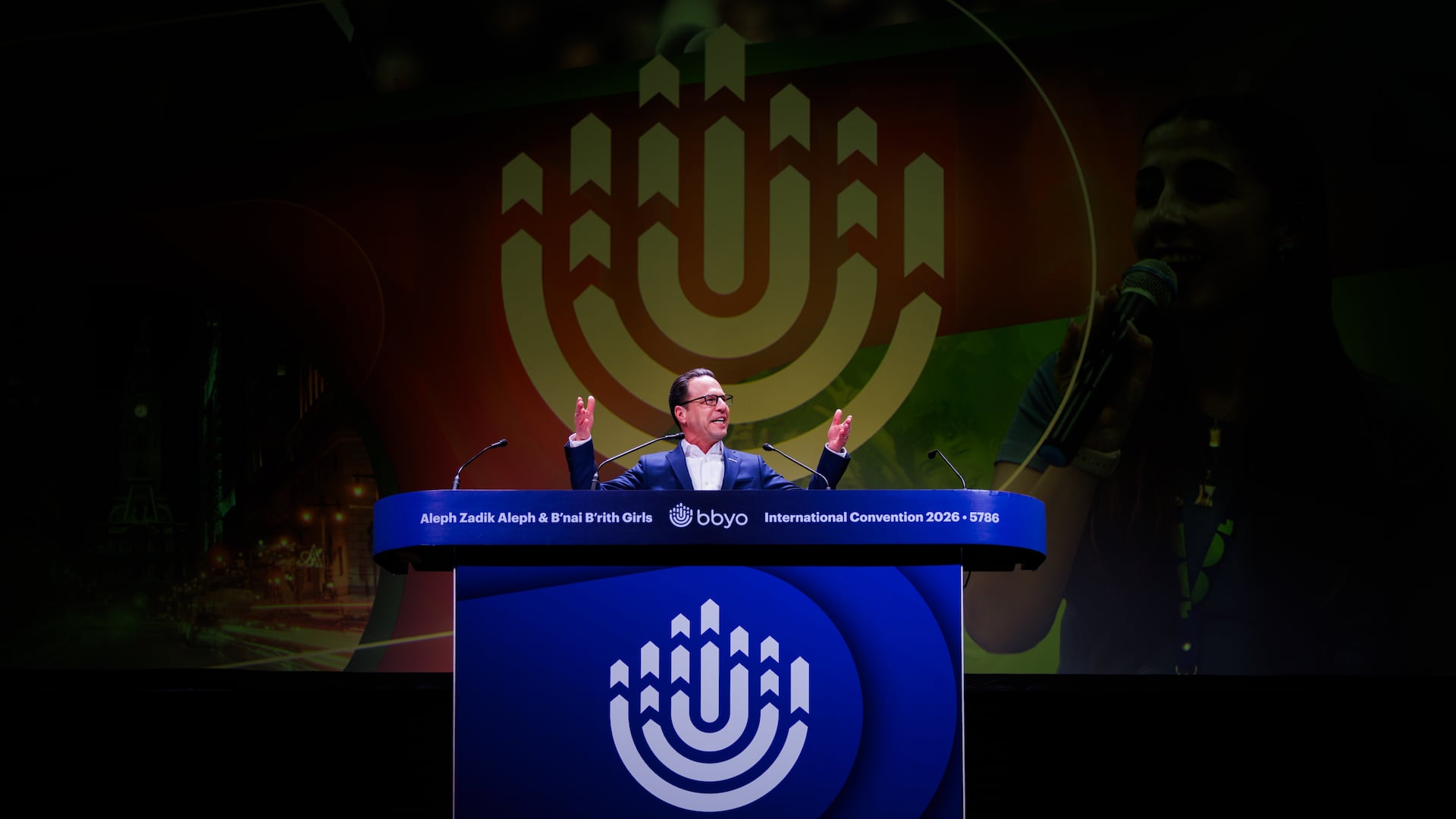
With a large illustration of a menorah towering behind him, Gov. Josh Shapiro spoke in a thundering voice as he urged a crowd of thousands of Jewish teens from around the world to speak out, seek change, and be proud of their faith.
“Hear me on this: Tikkun olam knows no religious boundaries,“ Shapiro said, quoting a Hebrew phrase that refers to efforts to improve the world. “It is our responsibility to repair the world, to do this work, and I feel I’m optimistic it will get done.”
Invited to attend by his niece, Shapiro spoke at the opening night of an international conference hosted by BBYO, a Jewish youth group, at the Philadelphia Convention Center last month. He told the gathering of Jewish teens that he finds comfort in his beliefs and that they all share a responsibility to work to improve the world.
Judaism has long been a central element of Shapiro’s personal and public identity, and it is the focal point of his newly released memoir, Where We Keep the Light. As Shapiro’s national profile rises ahead of a rumored 2028 presidential run, he has focused on commonalities between Judaism and other religions, and a “shared humanity” that Shapiro argues should guide the nation and his party. Supporters say he is building a broad coalition by reclaiming themes of faith and family from the political right.
“I think it is really important that we have more faith in our system and in our society, even if we don’t necessarily have more religion or more shared religion,” Shapiro, who is up for reelection this year, said at a book tour stop at a historic synagogue in Washington alongside U.S. Sen. Raphael Warnock (D., Ga.), a Baptist preacher.
The Rev. Marshall Mitchell, pastor of Salem Baptist Church in Abington and a longtime friend of the governor, said Shapiro has a unique ability to speak to a wide range of Americans of faith, regardless of religious background. This skill, he said, sets the governor apart from his peers in Democratic politics.
“He finds the common ground and then can truly be at home in other people’s spaces, in other people’s theologies, and in other people’s faiths,” Mitchell said.
Mitchell is regularly in touch with other Black pastors across the country, and when they ask about his relationship with Shapiro, he said he tells them that the two of them agree on more than 90% of things and that Shapiro is “one of the best Christians I know who doesn’t believe Jesus is the Messiah.”
Engaging with many religions
Shapiro writes in his memoir that after the Oct. 7, 2023, attack in Israel he was motivated to live his faith out loud, and that his determination to do so was reinforced by a refusal to be intimidated when a man, who later pleaded guilty to attempted murder, set fire to the governor’s mansion while his family slept inside during Passover last year.
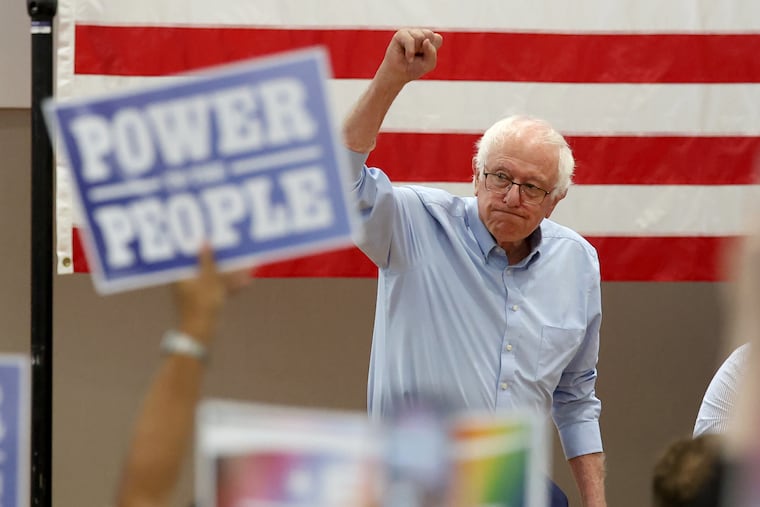
In doing so, he has positioned himself in stark contrast to other prominent Jewish politicians, such as U.S. Sen. Bernie Sanders (Ind., Vt.), who rarely discussed religion in his two runs for president. Lila Corwin Berman, a professor of American Jewish history at New York University, said Jewish people in politics have often either de-emphasized their religion or explained it through family heritage.
By contrast, Shapiro has highlighted his beliefs and values. “He feels as if it informs kind of who he is, and how he governs,” Berman said.
Shapiro talks regularly about the commonalities in Scripture across Christian and Jewish texts.
Shapiro wrote in his book that he has spent less time in synagogues in recent years, but has grown closer to his faith. He has connected with his beliefs in Mitchell’s Baptist church, and in conversations with Pennsylvanians fighting for change, he said. In the wake of the arson attack at the governor’s mansion, he said he felt close to his faith at a firehouse when the chaplain for the firefighters who saved his family presented him with a signed letter that included the same prayer Shapiro recites over his children each night.
Mitchell compared Shapiro to former President Bill Clinton, a Democratic politician who built a diverse coalition that included Black cultural and religious leaders alongside economic elites and CEOs.
Shapiro’s beliefs, he said, have led Shapiro to be a more inclusive politician.
The way Shapiro speaks about his faith and the story of Moses leading the Jewish people out of slavery, Mitchell argued, is appealing to Black voters because he touches on Scripture that shaped their theology and political ideology.
I think it is really important that we have more faith in our system and in our society, even if we don’t necessarily have more religion or more shared religion."
“I think Josh has the same chops to bring people together across the lines of faith and ethnicity and even ideologically,” he said. “Some people have called me and said, ‘That Jewish brother can preach,’ and I say to them, ‘That’s not contrived. He’s not putting on airs.’”
Last month, when members of the Pike County Islamic Center arrived at their mosque for morning prayers to find bullets shot through the glass, Shapiro was on site within days. He joined the community to break fast with them during the holy month of Ramadan and show his support.
He shared his own story of being the victim of political violence. Mohammed Alhomsi, a spokesperson for the mosque, said the governor’s presence inspired broader interfaith support in the wake of the attack.
“It was important for me to be here today to look you in the eye and to tell you have nothing to be afraid of,” Shapiro told the community, referencing the arson attack in Harrisburg last year.
Using faith to connect
Even as he emphasizes spirituality beyond religious traditions, Shapiro has kept his Jewish traditions close.
For the High Holidays, Shapiro travels back to his stomping grounds in Montgomery County to attend services at his hometown synagogue, Beth Sholom in Elkins Park — a National Historic Landmark designed by Frank Lloyd Wright.
At the end of Yom Kippur services, oftentimes three generations of Shapiros can be found praying in front of the open ark that holds the Torah scrolls. When the other congregants see the governor, they feel “a great deal of pride,” said Rabbi David Glanzberg-Krainin, of Beth Sholom, who has known Shapiro for over 20 years.
Glanzberg-Krainin said that Shapiro has an “authentic” relationship to Jewish tradition. For instance, when he was elected as governor in 2022, the rabbi recalls, Shapiro asked him for guidance on how to keep the kitchen in the governor’s mansion kosher, in compliance with Jewish dietary laws.
That genuineness, the rabbi said, is magnetic to people of all faiths and people who may be straying away from religion.
“That is something that I think helps to be a role model for people to say, ‘You can be someone who’s completely comfortable in this world, interacting with people of all different faith traditions, respecting people who come from very different places,’” Glanzberg-Krainin said.
But most importantly, the rabbi said, Shapiro’s lifetime in public service is an embodiment of tikkun olam, the Jewish value of repairing the world that the governor spoke about to the conference of Jewish teens.
Gavin Meyers, 18, a Chicago-area resident whose family knows Shapiro, was in the crowd as Shapiro addressed BBYO. He has followed the governor’s career for years and has been inspired by his rise as a potential presidential contender.
“There’s been a rise in antisemitism, it’s almost like he’s a lighthouse,” Meyers said. “It’s just so important that someone like me, you know, a Jewish guy, is so prominent in the world.”
Shapiro has condemned antisemitism on both sides of the aisle, including what he described in his book an “offensive” line of questioning about Israel from former Vice President Kamala Harris’ vetting team and President Donald Trump calling him a “highly overrated Jewish governor” during the 2024 election.
Speaking to reporters in Washington in January, Shapiro accused Trump of using “the tools of government” to impose religion on others after a question about growing anti-Islamic rhetoric and whether the Trump administration prioritized Christianity over other faiths.
It is our responsibility to repair the world, to do this work, and I feel I’m optimistic it will get done.”
In contrast, he said, the state room in the Pennsylvania governor’s mansion was a representation of his approach to faith. In that space, he has held iftars during Ramadan and his son’s bar mitzvah, and at Christmastime, he said, he became the “Jewish Clark W. Griswold,” demanding more and more Christmas trees be placed in the residence.
“When I see a federal government taking their religion, or taking religion and trying to impose that on others, as a person of faith, as a person who’s followed William Penn, that violates everything I believe,” Shapiro said, referencing Pennsylvania’s Quaker founder, who championed religious freedom and tolerance.
In a book tour stop with Warnock in Washington, Shapiro and the pastor-turned-senator traded Scripture passages significant to their own religions, noting the shared sentiments of looking out for one another and doing one’s part to improve the world.
As he has several times before, Shapiro referenced the Pirkei Avot, a tract that outlines Jewish morals and ethics, saying that “no one is required to complete the task but neither are we free to refrain from it.”
At another book tour stop at Villanova University, a Catholic institution and alma mater to Pope Leo XIV, Shapiro told the school’s iconic former basketball coach, Jay Wright, that his closeness to his own tradition has allowed him to better understand others.
“Oftentimes politicians use faith to divide us and in really, I think, cynical ways. My experience has been the opposite,” he said.