Officials urge Penn to reject Trump’s ‘Compact for Academic Excellence in Higher Education’
Lawmakers said accepting President Donald Trump's "bribe" would turn the University of Pennsylvania and other schools into "MAGA academies."

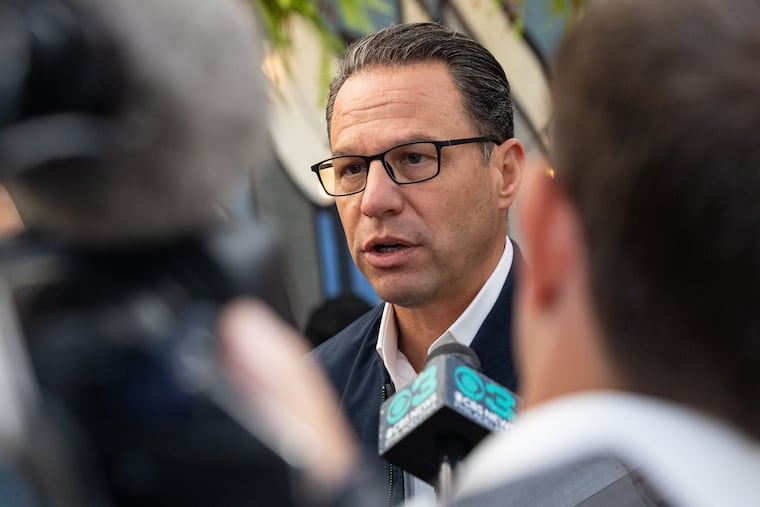
In a fiery news conference Wednesday, elected officials urged University of Pennsylvania administrators not to “bend the knee to a would-be king” and to reject the Trump administration’s proposal to shape the school’s policies and procedures.
The group of lawmakers gathered on a street corner outside the Penn campus to excoriate the plan, known as the “Compact for Academic Excellence in Higher Education.” In exchange for ceding control over functions such as hiring, admissions, and tuition pricing, as well as academic freedom and diversity, universities that sign the compact would receive priority access to federal grants.
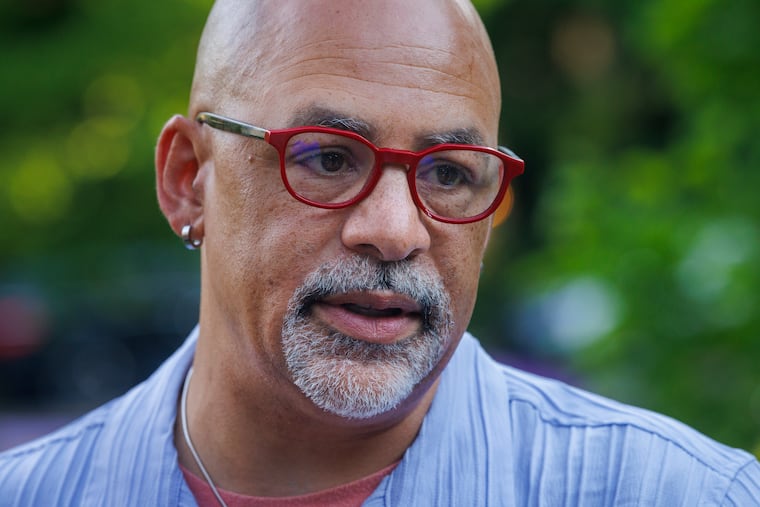
Accepting “[President Donald] Trump’s “bribe … would transform universities into MAGA academies,” said City Councilmember Jamie Gauthier, a Democrat, whose district includes Penn. “It would turn a school like Penn into a mouthpiece for the Republican Party.”
The University of Pennsylvania did not respond to a request for comment on Wednesday. But earlier in the month, Penn president J. Larry Jameson said the university will evaluate the proposed compact based on the school’s values and mission.
Those include “freedom of inquiry and thought, free expression, non-discrimination,” the law, the U.S. Constitution, and Penn’s own governance, Jameson said Oct 5.
Jameson also said in the statement to the Penn community that the university “seeks no special consideration.”
“We strive to be supported based on the excellence of our work, our scholars and students, and the programs and services we provide to our neighbors and to the world,” he said.
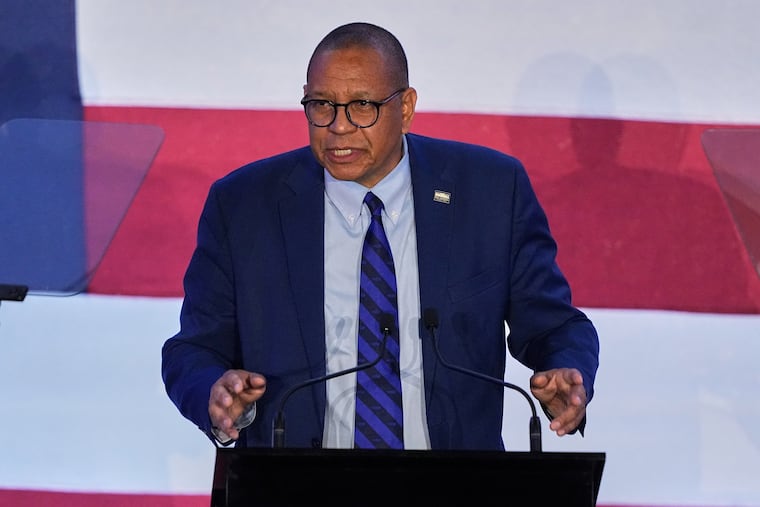
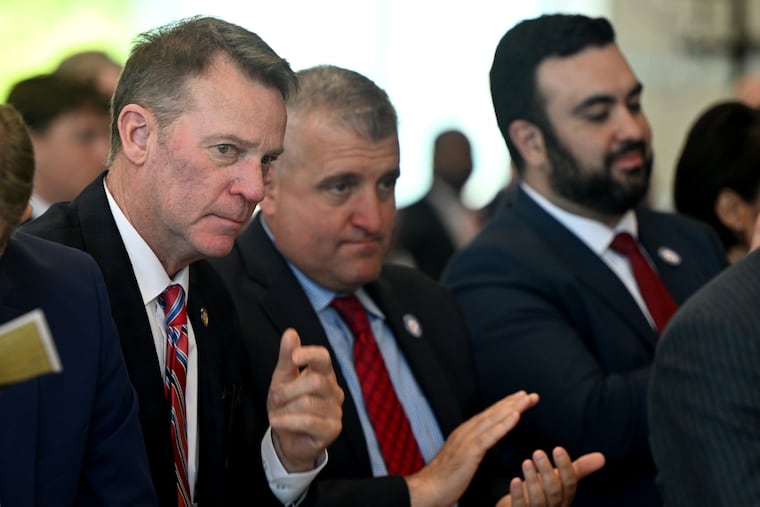
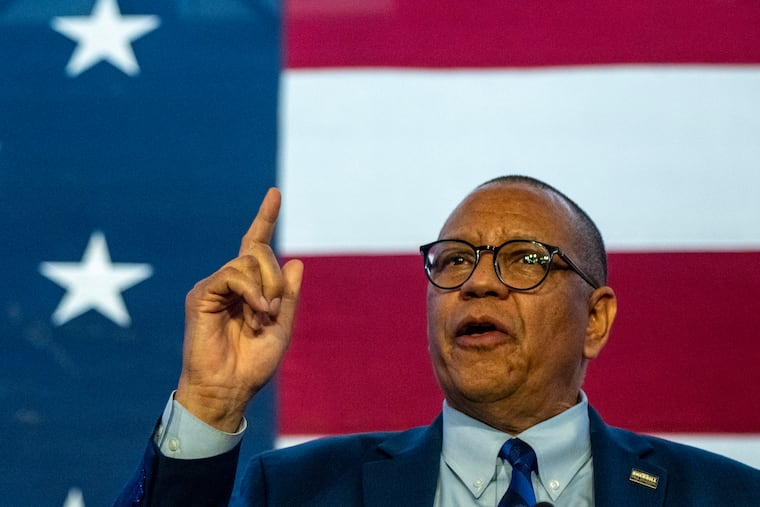
During the news conference Wednesday, led by State Sen. Anthony Williams (D., Philadelphia), Democratic State Reps. Malcolm Kenyatta and Rick Krajewski, both from Philadelphia, discussed a bill they are proposing — the Protect Pennsylvania’s Academic Freedom Act — that would prohibit institutions that receive state funding from signing onto the compact or similar agreements.
While Penn is a private university not dependent on state money, some commonwealth funding flows into it, notably to the School of Veterinary Medicine, which received a $33.5 million appropriation from the state during the 2024-25 fiscal year, according to the University of Pennsylvania Almanac.
Krajewski said a Trump compact would do even more harm to diversity, equity, and inclusion “than the administration already has.”
The compact presents “scribbles of a cabal of wealthy white men … hijacking of our democracy," he said. “Their actions could mean discrimination against Black students and queer and transgender students.”
State Rep. Napoleon Nelson (D., Montgomery), chair of the Pennsylvania Legislative Black Caucus, urged Jameson to “stand up for academic values. We’re looking to you to actually lead.”
Speakers were especially critical of billionaire Marc Rowan for what they said was his contribution to the Trump compact. Rowan is the donor who led the campaign to oust former Penn president Liz Magill over the administration’s response to allegations of antisemitism. He chairs the advisory board at Wharton, Penn’s business school.
Rowan played an important role in developing the ideas used in the compact, according to the New York Times. He could not be reached for comment.
“Rowan has wielded his position at Penn to wage a war of his own on campus,” Krajewski said.
Other colleges that were sent the compact are Vanderbilt University, Dartmouth College, the University of Southern California, Massachusetts Institute of Technology, the University of Texas at Austin, the University of Arizona, Brown University, and the University of Virginia.
Williams said the university has been silent for too long about the compact and its potential impact on students and faculty of color.
“We are tired of being polite,” Williams said. “We come from a survival background. And we know how to fight.”
The Trump administration has given the university until Oct. 20 to respond to the proposal.