How the Pennsylvania governor’s race will help decide who controls the U.S. House
Both Shapiro and Garrity ran unopposed Tuesday to officially become their parties' nominees. Come November, there’s more than the governor’s race on the line for them both.
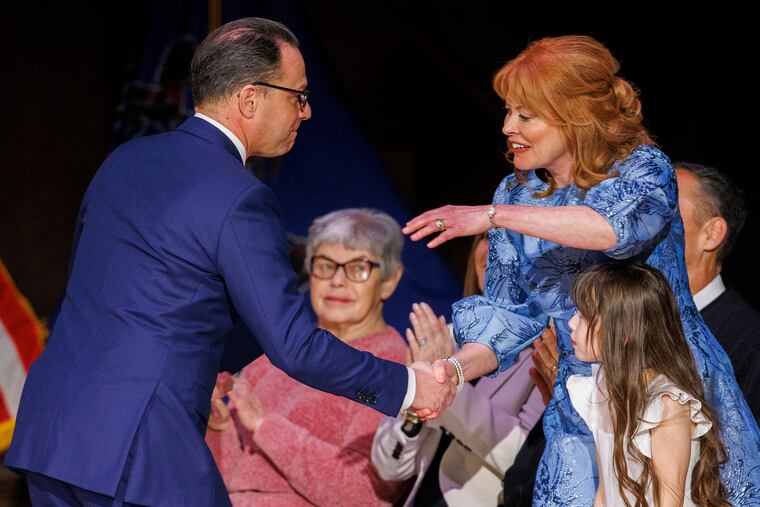
Gov. Josh Shapiro and his Republican challenger, State Treasurer Stacy Garrity, have a lot to prove over the next six months.
And come November, more than the governor’s race will be on the line for them both. Shapiro, a rumored 2028 presidential aspirant, wants to deliver Democratic control of the U.S. House to flex his political muscle as Democrats seek a new standard-bearer for the party.
Garrity will need to generate excitement that draws GOP voters to the polls in key congressional districts to stop Democratic midterm gains — and prove to the state GOP that members made the right choice by endorsing her 15 months before Election Day as a more serious challenger to Shapiro.
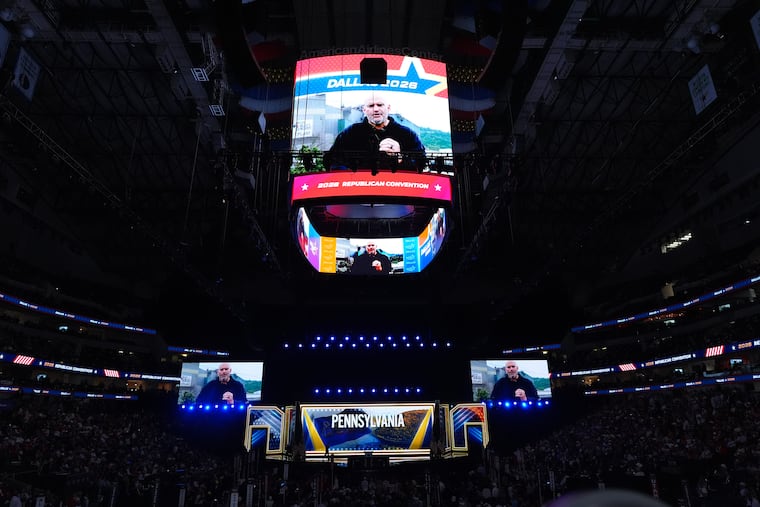
Both Shapiro and Garrity ran unopposed and cruised to victory in their respective primary elections Tuesday to officially become their parties’ nominees. Shapiro spent election night in purple Bucks County with County Commissioner Bob Harvie, the latest Democrat to try to unseat U.S. Rep. Brian Fitzpatrick (R., Pa.).He delivered an impassioned speech emphasizing how the urgency of his election — and flipping the four congressional seats targeted by national Democrats — are important to the future of Pennsylvania. Meanwhile, Garrity watched the election results roll in privately, after crisscrossing the central and western parts of the state.
Shapiro enters the general election with a strong advantage as an incumbent governor, with approval ratings hovering above 50%. He has also been elected three times statewide. Garrity, for her part, received the most votes of any state-level candidate in Pennsylvania history during the 2024 election, a record previously held by Shapiro.
Shapiro, 52, from Abington Township, is a moderate Democrat in his first term as governor of one of the most critical swing states in the country. He boasts a resume of working across the aisle to “get stuff done” — his frequently used motto — in Pennsylvania’s split legislature, though he has struggled to get top Democratic priorities through a GOP Senate. He released a memoir in January, and he has been a frequent guest on national media over the last few months as he continues to grow his brand.
But his biggest test on the national stage is whether he can deliver excitement at the top of Pennsylvania’s ticket to help Democrats flip four congressional seats in Bucks County, the Lehigh Valley, and south-central Pennsylvania so his party can take back control of the U.S. House. He said Tuesday he is approaching those races with greater urgency, as Republicans nationally advance redistricting efforts to increase the number of GOP-controlled districts.
He is also trying to win a Democratic trifecta in Harrisburg, giving him greater governing power over a state in which Democrats last controlled the executive branch, House, and Senate in 1993, and only for one year.
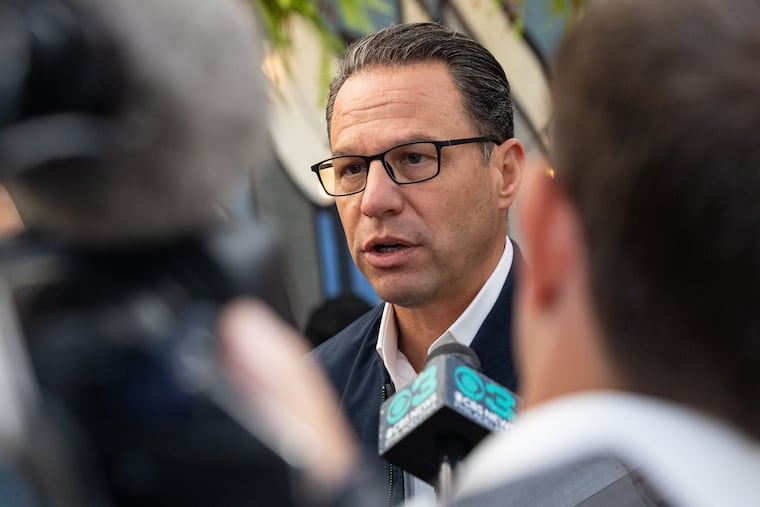
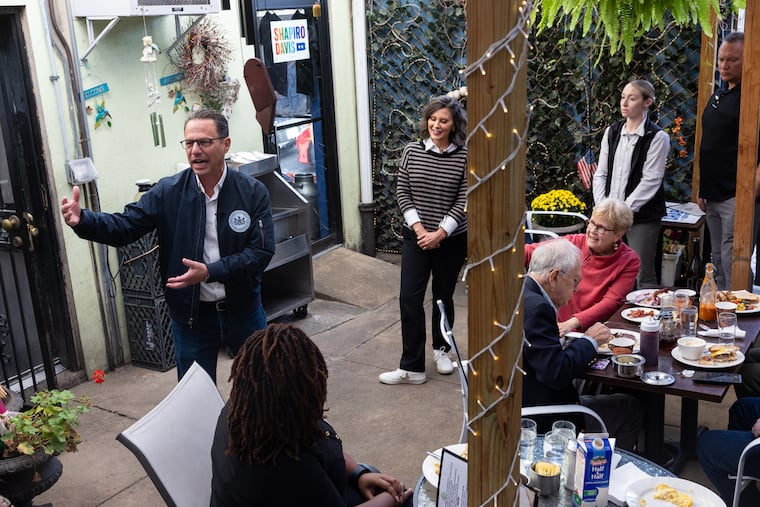
After rolling up to Rydal West Elementary with his wife in a black Chevy Suburban, Shapiro cast his ballot Tuesday morning in his signature navy blue suit and shook hands with local committeepeople before taking questions from reporters. He reminded Pennsylvanians that they will play an outsized role in this year’s midterm elections.
“I think it is very likely that the makeup of the U.S. House of Representatives, who controls it, will be decided by how people vote here in the Commonwealth of Pennsylvania,” he said. “The only thing I’m focused on is winning a trifecta in Harrisburg in 2026, this year, and helping win up and down the ballot, including for those U.S. House races.”
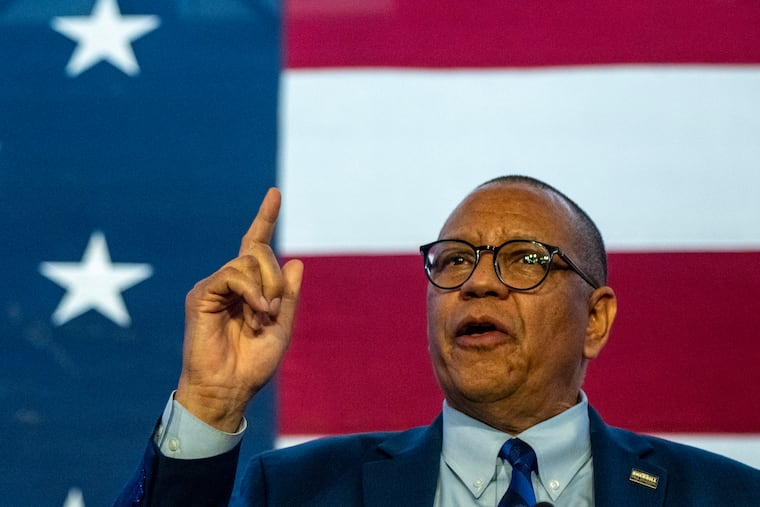
Shapiro has taken a more commanding role in the state Democratic Party by installing ally Eugene DePasquale as chair and contributing more than $900,000 to the party’s rebuild since last fall. He has promised to continue using his fundraising prowess and $37 million war chest toward helping Democrats win up and down the ballot.
» READ MORE: Gov. Shapiro is making a $250,000 donation — and big imprint on the Pa. Democratic Party
Shapiro has hung his reelection campaign on winning those four seats as the antidote to “chaos, cruelty, and corruption” under Trump in Washington. If he is successful in helping flip them, he will come out looking stronger as a national leader capable of delivering results in the Democratic Party, said Christopher Borick, a pollster and professor at Muhlenberg College.
“When you weigh in and you put your skin in the game, as the governor’s done, it’s going to reflect upon his stature in the party when the cycle is over,” Borick added, likening the move to California Gov. Gavin Newsom’s successful work in redistricting his state to increase Democratic power there.
Garrity, 63, is a retired colonel in the U.S. Army Reserve who grew up a few miles from the New York border in Northeastern Pennsylvania. She is running her campaign on the message that Pennsylvania is still well behind other states on education and economic growth, and attributing that to Shapiro’s unfocused leadership of the state as he eyes a potential presidential run.
Sporting American-flag sneakers Tuesday outside a polling place near Harrisburg, Garrity said she feels the pressure to deliver for Republicans in November. “The top of the ticket, as we saw in ’22, has a big impact on down ballot,” Garrity said. “I’m gonna be strong.”
But Garrity has struggled to keep up with Shapiro’s fundraising, entering the primary election with $1.4 million, compared to Shapiro’s $37.8 million in cash on hand.
» READ MORE: Stacy Garrity is a staunch supporter of President Donald Trump. Will that help or hurt her campaign in Pennsylvania?
U.S. Sen. Dave McCormick (R., Pa.), who endorsed Garrity, told the Pennsylvania Press Club in Harrisburg on Monday that Garrity has the odds stacked against her, as many political donors do not want to contribute to an officeholder’s challenger, in anticipation that the incumbent will win again.
“Obviously she’s an underdog, he’s an incumbent. When you run against an incumbent, it’s harder,” McCormick said, speaking from experience. In the 2024 election, McCormick beat former U.S. Sen. Bob Casey (D., Pa.), who held the seat for 18 years. When McCormick announced his campaign to challenge Casey, the prediction markets initially said he had a 3% chance of winning. McCormick said that even his dad, who was in the audience Monday, did not believe he had a chance “until the day I won.”
“Anything’s possible in politics,” McCormick added. “I wouldn’t bet against her, but obviously it’s a hard race.”
Even if Garrity does not win in November, Pennsylvania’s Republican Party is counting on her to rally the excitement needed to get enough GOP voters to cast a ballot in those four competitive districts — and potentially set her up to run again statewide in 2028 for the congressional seat currently held by Democratic U.S. Sen. John Fetterman.
Many Pennsylvania Republicans blame the state party’s failure to endorse a candidate in the 2022 gubernatorial election as the reason Democrats won so resoundingly that year, including taking control of the state House for the first time in more than a decade. Republicans also often blame that year’s gubernatorial nominee, State Sen. Doug Mastriano (R., Franklin), and his uber-conservative views for hurting the rest of the GOP candidates on the ticket.
Desperate not to repeat the same mistake, the state GOP endorsed Garrity in September 2025 to be the Republican candidate and to clear the field in order to avoid another crowded primary. Garrity was endorsed by Trump a few months later, and she remains supportive of him and his policies as Trump’s approval ratings continue to decline in Pennsylvania.
“She, of course, has a lot to prove, as the party really rallied around her,” Borick said. “They wanted her to be the nominee. They believed she would be the type of candidate that can be more competitive in a tough electoral year and even against a strong opponent in the form of Josh Shapiro.”
Garrity’s lieutenant governor nominee, Pittsburgh attorney and Allegheny County GOP chair Jason Richey, also won on Tuesday. He ran in a contested primary against John Ventre, a security expert and UFO enthusiast, while Lt. Gov. Austin Davis ran unopposed in the Democratic primary. Governor and lieutenant governor candidates run separately in a primary election, but run together as one ticket for the general.
Staff writers Gabriela Carroll and Dana Munro contributed to this article.