How Montco transformed a Days Inn into an emergency housing facility
More than 250 people have made their way through or are currently living in the facility at the former Days Inn in Pottstown. One former resident called it a "miracle."
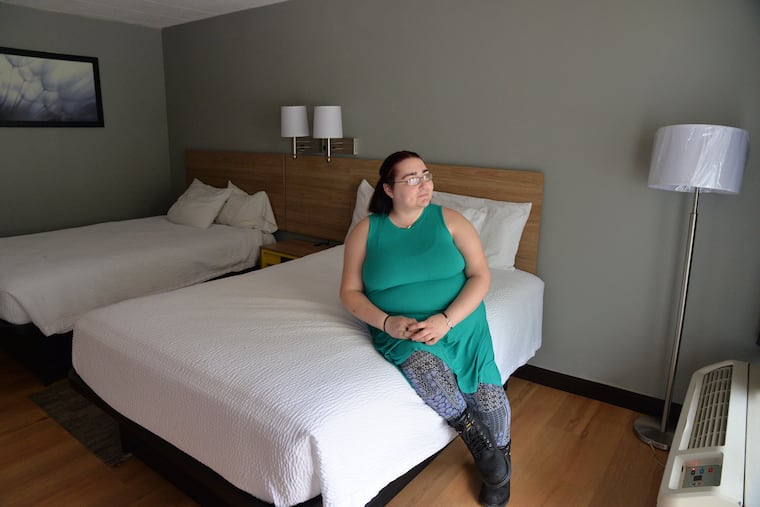
At 18, Michael Trump went to jail in his native Pottstown for selling weed with his cousin, wrecking his boyhood dream of becoming a Navy SEAL.
“Without a chance for the military,” said Trump, who is not related to the president, “I figured I’d choose a life of crime, and got arrested 35 more times for theft and for dealing and using drugs.”
Trump, a former tattoo artist, was struggling with substance abuse and sold his house in Coatesville in 2023 to feed his addiction and live on the streets of Kensington.
Last March, he wound up back in Pottstown, where he encountered a “miracle”: a former Days Inn that Montgomery County officials had transformed into a short-term emergency housing facility for people experiencing homelessness.
For a year, Trump lived in Room 209 getting clean, using the facility’s help to find healthcare and eventually his own place in town just a few blocks away.
“I finally learned to live without substances,” Trump, 53, said last week while visiting the site with the commissioners to celebrate its one-year anniversary. “Here, they helped me say no to the bad things I’d let into my life.”
Trump is one of more than 250 people, many of them from the so-called tent city in Pottstown, who have made their way through or are currently living in the facility since April 2025, when the county began leasing the building. The Pottstown facility, which helps residents experiencing homelessness transition to independent living, is part of Montgomery County officials’ broader vision to address homelessness in the area.
“We wanted footprints in the county,” said Montgomery County Board of Commissioners Chair Jamila Winder, a Democrat who has served on the board since 2023. “We are here to help the most vulnerable people.”
Last month, the county began the process of developing a 50-bed short-term housing facility in Norristown after officials opened one in Lansdale in February.
In Pottstown, the facility — which costs the county $1.5 million a year and is run by Reading-based nonprofit Opportunity House — can support 120 people at a time for an average of four-month cycles. It also provides assistance in finding jobs and recovering identification documents such as birth certificates and Social Security cards, as well as access to treatment for substance abuse.
More than 100 people have exited the Pottstown program to a “positive destination,” according to data provided by the county, meaning permanent housing, voluntary treatment programs, or reconnecting with loved ones. However, the program has not been open long enough to collect data on individuals who have returned to experiencing homelessness or housing insecurity after leaving the facility.
The space is a comfortable one for residents, officials said. Residents have their own bathrooms and, like Trump, who lives with his two dogs, Loki and Matilda, they can bring pets who were already living unhoused with them.
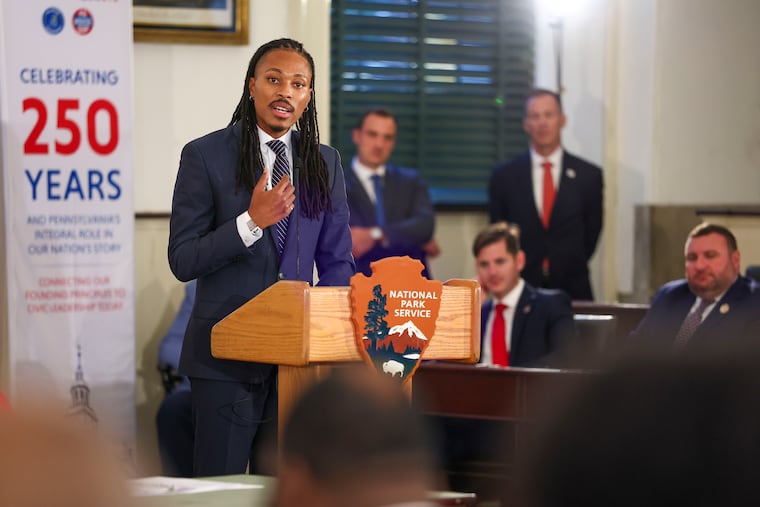
“We wanted to build a model of traditional housing or shelter where you had that sense of dignity and privacy, so you could find stability and get back on your feet,” said County Commissioner Neil Makhija, a Democrat and vice chair of the board. “And that’s what these shelter spaces are providing.”
‘Actions speak louder than words’
Heather Kemps, 39, born and raised in Kensington, began living in Pottstown’s tent city with her husband last July.
A job loss and an eviction from their apartment in Pottsville in Schuylkill County created “a situation we couldn’t control,” Kemps said. She could find only sporadic work as a home health aide, without enough hours to support herself and her husband, who, Kemps said, was dealing with mental illness.
She and her husband entered the Pottstown facility last November. Her husband died of sepsis and a stroke complicated by surgery a short time later.
In the wake of her husband’s death, it was at the Days Inn that Kemps started to change her life dramatically, as she observed social workers and psychologists helping people and has now redirected her life toward doing that work herself.
“My goal was to move out, get my own apartment, and find the peace I needed to think,” she said.
Kemps has enrolled in Montgomery County Community College, where she is double-majoring in social work and psychology and using her experience to write a paper on what she says is “both sides of the homelessness spectrum — the ones who are homeless and the staff who help.”
“The homeless person has to know that the social worker can be trusted,” Kemps added. “Listening, being there to help, is how trust is built. Actions speak louder than words.”
The concept of providing additional resources was vital, said Tom DiBello, the lone Republican on the board of commissioners.
“I’m not interested in creating a homeless shelter, a place with just a roof without help,” DiBello said. “There has to be more services to help people get to independent living.”
Eric Tars, a Mount Airy-based senior policy director at the National Homelessness Law Center, said offering voluntary wraparound services to help residents get back on their feet is the “best practice” for housing facilities, but it is often neglected.
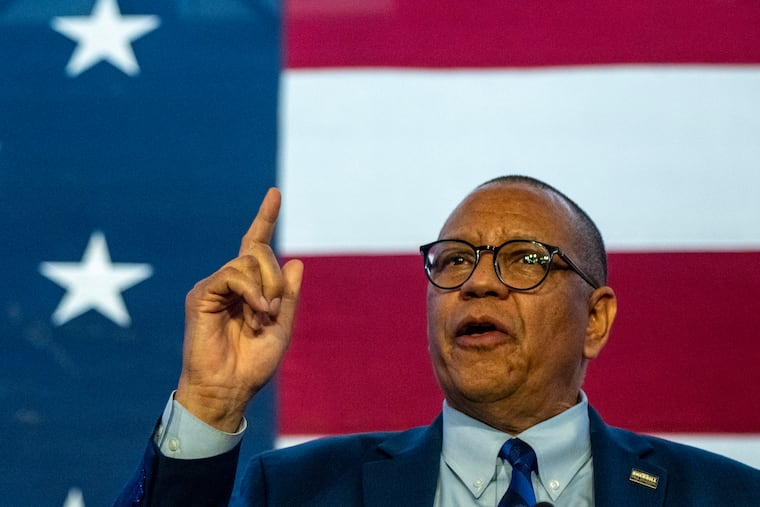
Montgomery County’s three housing facilities are a strong start, Tars said, but the most effective practice is transitioning people experiencing homelessness into permanent housing without the interim step. But increasing divestments from assistance at the federal level have made the creation of affordable housing much more difficult.
“This is a success,” Tars said of the program. “We are getting people off the street, but until we are able to turn off that spigot of people flowing into homelessness and make sure that people are able to flow out of homelessness at a faster rate than people are flowing in, we’re still going to see people on the streets.”
Ultimately, places like the Pottstown facility truly work if residents are ready to accept help, and to finally come in from the streets, Trump said.
“For years, I went along with everybody else who decided to go wrong,” he said. “But I changed things, and thanks to this spot, I’m now living on my own. I feel great. In the end, they helped me get my head right.”