More than 80,000 Pa. retired teachers, police officers, and firefighters will get a pension bump — some for the first time in decades
Negotiated as part of this year’s state budget and signed into law Sunday, more than 80,000 retired public sector workers will receive cost-of-living increases to their pension plans.
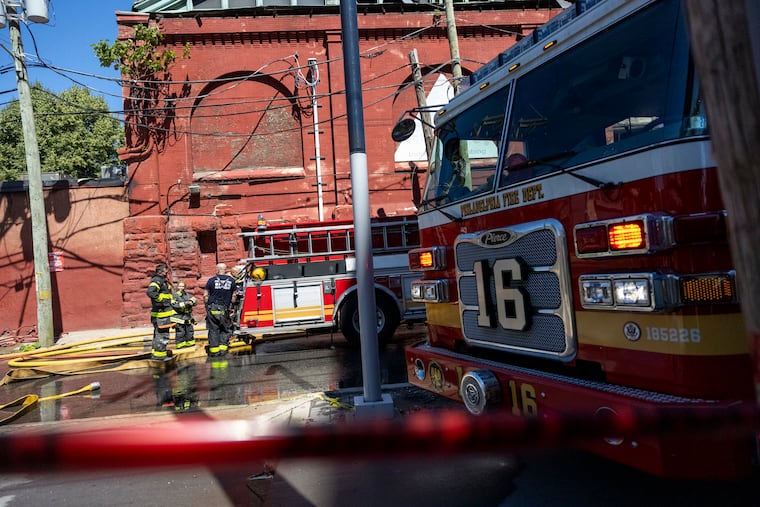
HARRISBURG — For the first time in two decades, more money will soon be flowing into the pockets of Pennsylvania’s retired public school teachers, firefighters, police officers and other state employees.
Negotiated as part of this year’s state budget, more than 80,000 retired public sector employees will receive monthly increases to their pension plans as part of a cost-of-living adjustment that advocates have sought for years.
Passing a pension bump has long been an objective of state lawmakers in both parties. And after legislators and Gov. Josh Shapiro approved the spending plan on Sunday, both Democratic and Republican leaders claimed credit for the pension boost, saying it was a product of their advocacy during negotiations.
» READ MORE: Pa. lawmakers and Gov. Josh Shapiro have approved a $50.8 billion state budget, delaying action on key issues
Public school teachers and other state employees who retired before July 2, 2001, will receive a tiered monthly payment based on their date of retirement. Similarly, police officers and firefighters who retired more than five years ago will receive additional monthly payments ranging from $50 to $300 dollars depending on how long they have been retired.
In 2001, the state legislature passed Act 9, which gave a pension boost to public sector workers who retired after 2002, but it was not retroactive and does not increase with inflation.
“Nobody gets into public education to become rich, they do it because they have a great love for the educating of our public school students,” said Aaron Chapin, president of the Pennsylvania State Education Association. “We know that when we get into education that we’re not going to retire very wealthy and be millionaires. We understand that. But we also need to make sure that these pensions are keeping up with the cost of living.”
Retired teachers and other former public workers will begin seeing the cost-of-living increase to their pensions this month, while retired police officers and firefighters will see the bump starting next month.
The state’s largest teachers union has advocated for the adjustment for many years. Those efforts included a union-coordinated campaign for teachers who retired before 2001 and did not receive a pension bump to share their stories with lawmakers, through meetings, letters, and media appearances.
Chapin said the former teachers told their representatives “the stories of how challenging this has been for them and their colleagues, whether it was paying the mortgage or the rent, paying the electricity bills, maybe not taking medication that month.”
At a news conference on Sunday evening before signing the $50.8 billion state budget, Shapiro called the pension increase “real money back in people’s pockets.”
Democratic lawmakers in the state House, he said, “made crystal clear that they wanted to stand up and put more money back in the pockets of workers who had given our commonwealth so much.”
“It’s definitely something our retirees have said to us for years,” said Kevin Ressler, the secretary of the Pennsylvania Professional Fire Fighters Association. “When you think about what things cost just 10 years ago until now, everything has gone up.”
State legislators last approved a cost-of-living adjustment for police and firefighters in 2002. Since then, inflation has resulted in a 86% price increase, according to the U.S. Bureau of Labor Statistics.
State Sen. Frank Farry (R., Bucks), a volunteer fire chief in Lower Bucks County, said members of both parties felt that it was time to pass the pension increase.
First responders “dedicated decades of work to the community, just like our educators who dedicated decades of work to helping our young people grow and learn,” he added.
While municipalities pay a portion of the pensions for first responders and public school teachers, the state will pay for all costs associated with the pension increase, Farry said. The increase, estimated to cost around $168 million annually, will come from revenue generated from an existing tax on internet gaming, he said.
The state’s Fraternal Order of Police said in a statement that while no adjustment “can fully repay the commitment these men and women made throughout their careers,” the increase “restores a measure of fairness by helping ensure their retirement benefits better reflect today’s economic realities.”
State Sen. Katie Muth (D., Montgomery) said the pension increases are the “high point” of this year’s policy changes negotiated as part of the overall budget deal.
“These are our oldest retirees, many of them living in poverty,” she said. “This is a good moment, but a late moment. This should have been done quite some time ago.”
The average age of retirees eligible for the cost-of-living increase in the state’s main two pension funds is just over 81 and 84 years old, respectively.
The new pension bump, meted out monthly, is not set to automatically increase next year. Lawmakers from both parties have pushed for pensions to increase annually, indexed to inflation.
State Sen. Tracy Pennycuick (R., Montgomery) — who sponsored a bipartisan bill to provide the pension increase to first responders — said that she hopes Harrisburg can now work to pass legislation to provide a yearly cost-of-living adjustment.
“This is sending a very powerful message to young professional firefighters and police officers that we will continue to take care of you with cost-of-living adjustments in retirement,” she added.
Ethan Young is an intern with the Pennsylvania Legislative Correspondents’ Association.