Thousands of SNAP recipients throughout Pa. are starting to lose their benefits
The Trump administration's "Big, Beautiful, Bill" changed the rules surrounding SNAP eligibility and will result in fewer people across the state receiving food aid
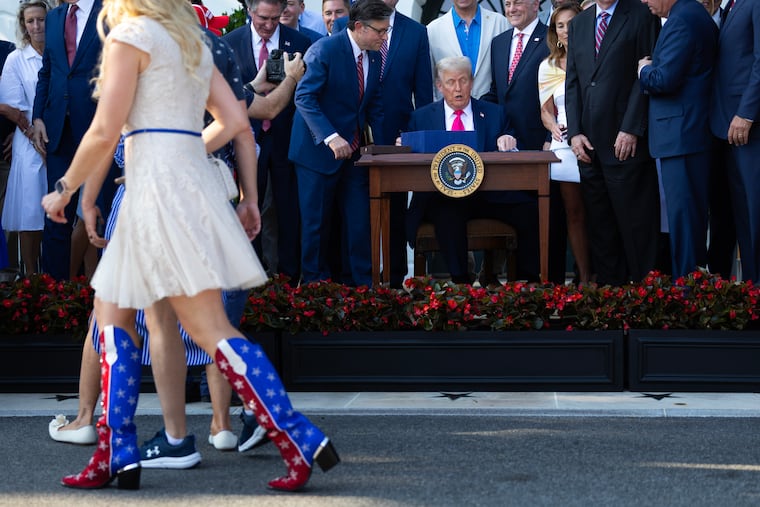
More than 4 million SNAP recipients nationwide — including 1 million children — began losing benefits throughout January as new rules included in the Trump administration’s so-called “One Big, Beautiful Bill Act” started kicking in.
In Pennsylvania, around 144,000 of the nearly 2 million people on SNAP are being affected, or will soon be, according to state Department of Human Services figures. Some will lose all benefits, while others will have their benefits substantially reduced based on the law, which was signed by President Donald Trump on July 4.
Around 45,000 Philadelphia residents are being affected, more than any other county in the state, DHS figures show.
Throughout the region, the number of people affected include around 3,300 in Bucks County, 1,000 in Chester County, 5,700 in Delaware County, and 2,300 in Montgomery County, DHS figures show.
“This is all happening right now, with a huge impact on the state,” said Lydia Gottesfeld, a SNAP expert at Community Legal Services, which provides legal help to low-income individuals in Philadelphia.
More people are expected to lose benefits throughout the year, according to Katie Bergh, senior policy analyst at the left-leaning Center on Budget and Policy Priorities.
Driving the SNAP reductions are a complex set of changes.
Until Trump’s spending plan rewrote the rules, groups of low-income people in states including Pennsylvania were exempt from a long-standing requirement that childless adults without disabilities and under the age of 54 work 20 hours per week in order to be eligible for SNAP benefits, which are typically $6 a per person, per day.
The work stipulation had been waived for decades because of high levels of poverty and hunger, as well as diminished job opportunities in Philadelphia and elsewhere in the Commonwealth.
Under the new policy, childless, able-bodied adults can only be exempt from the work requirements in areas with at least 10% unemployment. In November, Philadelphia’s unemployment rate was 4.8% and other areas in the region saw similar or lower rates.
“An unemployment rate of 10% is a catastrophic threshold not normally reached in Pennsylvania,” Bergh said.
Beginning in March, more people will begin to lose benefits, according to the Food Research and Action Council (FRAC) in Washington, D.C., the largest anti-hunger lobby in the nation.
The One Big Beautiful Bill Act also expanded the age range for people who are required to work at least 20 hours to obtain benefits. Prior to the law, anyone who reached age 55 could access SNAP benefits without a work requirement. Now, however, a person must work the required hours until they’re 64 before they’re free of the requirement.
Previously, adults with children 18 and under were exempt from the work requirement. Now, only adults with children under 14 are exempt.
And yet another group of people will begin to lose benefits, according to the Food Research and Action Council (FRAC) in Washington, D.C., the largest anti-hunger lobby in the nation.
That group includes veterans, people experiencing homelessness, and young people aging out of foster care, who will all become subject to the 20-hour work requirement they had previously been exempted from, according to FRAC.
Because so many changes are occurring at once, it’s hard to keep track of how individuals are faring, Gottesfeld of CLS said.
“We’re still trying to see who the people are who are losing benefits,” she said. “We don’t have a good summary of the changes just yet.”