Pa. will pay for security upgrades to Gov. Josh Shapiro’s home but treasurer was right to initially deny $1 million payment for the bill, AG says
Pennsylvania will still pay the outstanding bills totaling more than $1 million on security upgrades to Shapiro's personal home, and a legislative fix is needed, the office said.
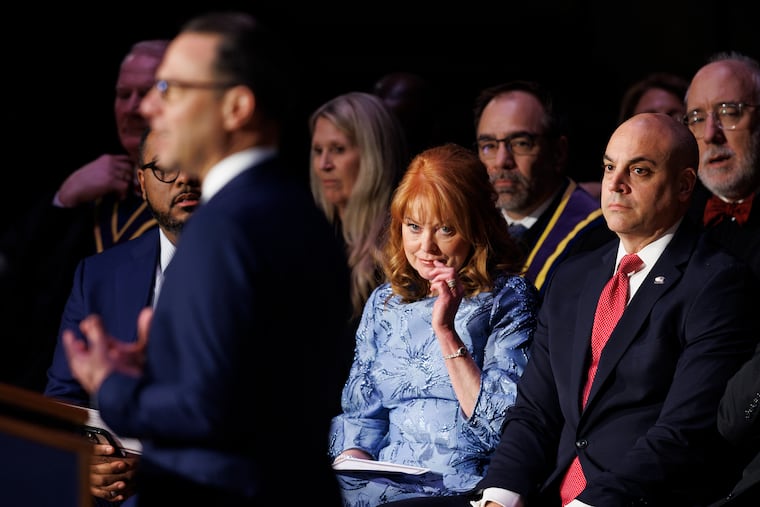
HARRISBURG — Pennsylvania Treasurer Stacy Garrity acted lawfully when she declined to pay more than $1 million in bills related to security upgrades made on Gov. Josh Shapiro’s personal home in Abington Township following an arson attack on his state mansion, the Pennsylvania Attorney General’s office announced Friday.
In a memo detailing a settlement agreement between the state and the unpaid contractors who provided security upgrades to Shapiro’s private home, the attorney general’s office said that Pennsylvania would foot the $1 million bill “on a one-time basis,” noting the extraordinary circumstances and the threat on Shapiro’s life that led to the upgrades being requested.
Current state law does not account for the increasingly dangerous position public officials face in today’s political climate, and the GOP-led state attorney general’s office encouraged the General Assembly to find a legislative solution for these issues going forward.
However, Shapiro’s administration and Pennsylvania State Police failed to follow proper procurement processes and should have approached the legislature for approvals for the security upgrades, according to the memo authored by Executive Deputy Attorney General Eisenberg and Chief Deputy Attorney General Amy Elliott.
“Going forward, we expect that such expenditures will result from specific legislative appropriation or new general laws,” they wrote in the memo. “We looked forward to working with the administration to accomplish these goals.”
Shapiro’s personal home received more than $1 million in security updates, including a new security system and landscaping that Pennsylvania State Police determined was necessary after a man attempted to murder Shapiro by setting several firebombs inside the governor’s residence in Harrisburg while he and his family slept.
Garrity, a Republican who is challenging Shapiro in November’s gubernatorial election, announced in April she could not pay the security upgrade bills, arguing that state law prohibits her from approving payment on work done on a privately owned property without legislative approval. The move was criticized by the incumbent Democratic governor’s office at the time, arguing it was a “shamefully political action.”
In a statement Friday, a spokesperson for Shapiro said the governor appreciates the attorney general’s office acting “without political interference” to approve the settlement so the contractors can be paid.
“As the Attorney General demonstrated, the safety of the governor and his family should never be weaponized for partisan gamesmanship, and our administration will continue to work with law enforcement and elected officials across the commonwealth to keep our leaders safe,” said Shapiro spokesperson Rosie Lapowsky.
After Garrity declined to pay the bills, the state had two options to address the outstanding payments: a review and settlement by the attorney general’s office or legislative approval of the funds. Shapiro’s administration chose the review by the state AG’s office, which is led by Attorney General Dave Sunday, a Republican who supports Garrity’s bid for governor.
The security upgrades on Shapiro’s personal home — plus $32 million in upgrades to the state-owned governor’s residence — were made under emergency contracts, which allow state agencies to quickly respond to emerging problems without waiting for legislative approval. However, Garrity argued — and the state attorney general’s office on Friday affirmed — that the emergency process does not allow the state to spend taxpayer funds on private property, such as Shapiro’s personal residence.
“Current procurement law does not account for the increasing reality of threats to public officers and their families,” the AG’s office wrote in the settlement agreement. “Because the law does not allow for public funding of construction on private residences, the Treasurer had no legal option other than to deny payment.”
In a statement Friday, Garrity said the settlement makes it clear “my sworn duty is to uphold the law, protect taxpayers, and only act with explicit legal authority.”
Her office has not yet received a request to pay the contracts, she said. Once it does, she will “carefully review each one” and pay the outstanding bills.
“Safety and security matter to everyone, but good intentions can never excuse ignoring the law,” Garrity added.
Shapiro has faced scrutiny from some Republican lawmakers over his administration’s rapid and sweeping response following the arson, while Democratic lawmakers rallied around him to ensure his and his family’s safety. Republican legislators have said they believe Shapiro and his family should be safe, but should follow proper channels and regulations when spending taxpayer funds.
A committee in the Republican-controlled state Senate in December took the unprecedented step to subpoena Shapiro over the security upgrades to his personal home, arguing that his administration had not been transparent in previous inquiries about how state taxpayer dollars were being used to upgrade security there.
Shapiro’s personal property upgrades also resulted in a land dispute with one of his neighbors, who argued in federal court that Shapiro was violating their constitutional rights by using his power as governor to seize a portion of their property. Shapiro, in a separate suit filed in the Montgomery County Court of Common Pleas, argued that the disputed land had been his for years.
Shapiro and his family split their time between the state-owned governor’s residence in Harrisburg and their Montgomery County home, where his two youngest children still attend school.
This story was updated to note Sunday supports Garrity’s campaign for governor.