Ala Stanford’s congressional campaign used AI to respond to a candidate questionnaire
Political campaigns are increasingly using AI to power voter targeting software and other tools. But its use for crafting candidates’ statements remains controversial.

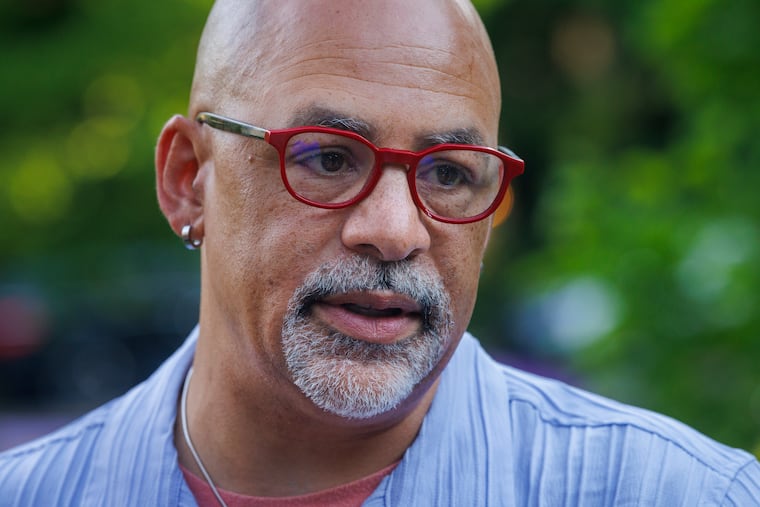
A top campaign staffer for Philadelphia congressional candidate Ala Stanford said Wednesday that he used an artificial intelligence tool to help craft responses to an endorsement questionnaire on Stanford’s behalf.
“Never been one not to own up to a mistake,” Kellan R. White, a senior adviser to Stanford, posted on X. “I wrote these answers and in an attempt to cut down on my famous long windedness, used Claude to shorten the answer.”
White’s comments came in response to a social media post from Spotlight PA reporter Stephen Caruso, who noted that one of Stanford’s answers to a questionnaire distributed to the candidates in the highly competitive Democratic primary ended with a comment referencing Claude, a large language model AI tool from Anthropic.
“Want any adjustments?Claude’s election info may be outdated,” Stanford’s answer to an open-ended biographical question concluded. “To get reliable, up-to-date voting information, visit TurboVote by Democracy Works.”
The campaign for Stanford, a well-known physician and first-time political candidate, declined to comment beyond White’s post.
As AI platforms grow in popularity and sophistication, political campaigns are increasingly using them to power voter-targeting software and other tools. But their use for crafting candidates’ statements remains controversial.
The questionnaire was issued by 5th Square PAC, an urbanist political action committee that promotes housing density and public transit.
5th Square has not yet made an endorsement ahead of the May 19 Democratic primary for the 3rd Congressional District seat. Stanford faces State Rep. Chris Rabb, State Sen. Sharif Street, and attorney Shaun Griffith.
» READ MORE: Meet the 4 Democrats vying to replace Dwight Evans in Congress
But the group is concerned about the Stanford campaign’s use of AI, said Bryan Cummings, who chairs the PAC.
“Overall, the fact that AI is being used to help our workflows and help us write — I understand that’s happening," Cummings said. “What’s a little bit more concerning is for someone to use this tool and to not proofread it to the point where they did not catch this mistake. It calls into question — have they reread what the AI put out for them to make sure what they’re actually submitting accurately reflects what they believe?"
Stanford’s AI-tagged answer came in response to a question at the end of the survey asking the candidate if there was anything else she would like 5th Square to know about her.
“I think about cities the way a physician thinks about patients,” Stanford’s answer read in part. “You do not treat symptoms in isolation. You look at the whole person, the whole system, and you ask what is actually causing the problem and what will actually fix it.”
Street’s campaign pounced on the episode.
“Philadelphians deserve a member of Congress who has thought deeply about the issues that matter to them,” said Street spokesperson Anthony Campisi, adding that the senator is “never going to let an AI application act as his policy director.”
Cummings noted that it has long been commonplace for politicians to rely on staffers like White to craft their public statements. That practice, he said, is a natural part of politics.
“That’s an organic part of the campaign, and the staffers help shape the value of their campaign and might also be employed in their offices if they were elected,” he said. “I don’t want it to come across that I expect every one of these candidates to be sitting in a room and writing these themselves.”
But Cummings said the questionnaires, which 5th Square PAC posts online, are an important resource for the group’s members and supporters to evaluate candidates and officeholders.
“Not knowing if those quotes were written by AI or not diminishes the value in what we’re trying to do,” Cummings said.
Staff writer Anna Orso contributed to this article.

- Meet the Democrats vying to replace Dwight Evans in Congress
-
Ala Stanford is banking on a healthcare message to break through crowded Philly primary for Congress
-
Big money is flooding into the Philly congressional race as all three front-runners hit the airwaves
-
How two Philly congressional candidates are quietly guiding super PACs in plain sight