Mayor Parker doubles down on commitment to using project labor agreements for city-funded work
The executive order is an iteration of similar ones signed by Parker's predecessors, and is supported by the building trades unions that have been among the mayor's most important political backers.
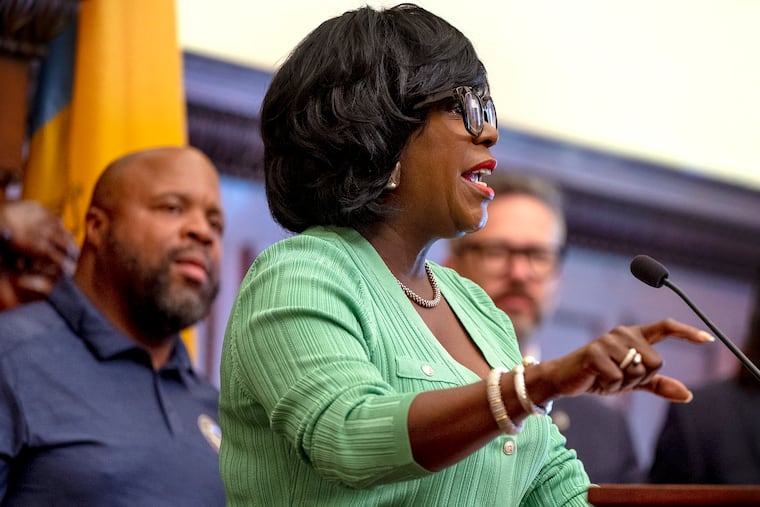
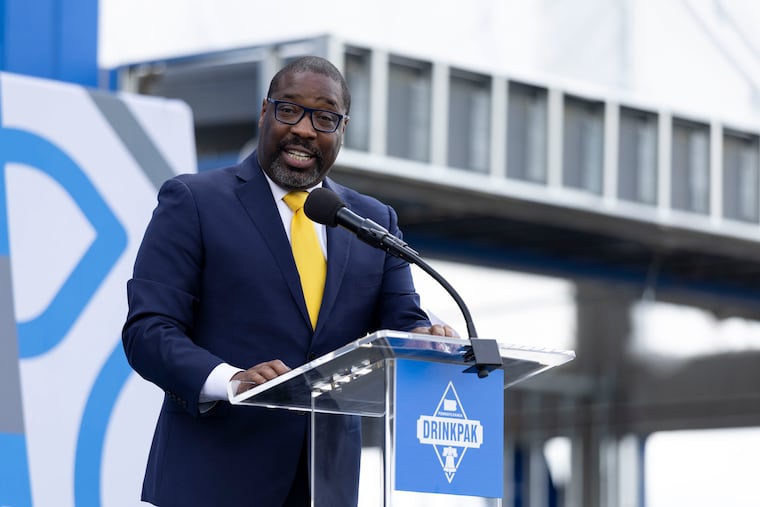
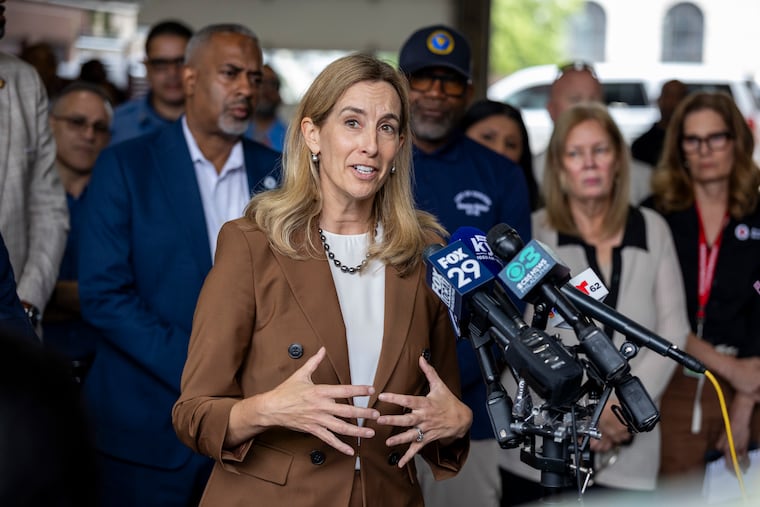
Mayor Cherelle L. Parker on Tuesday signed an order directing Philadelphia city agencies to draft labor agreements before selecting contractors for taxpayer-funded projects, a move that has long been championed by unions that represent construction workers.
The executive order directs city agencies to consider enacting Project Labor Agreements for publicly funded projects. The collectively bargained pacts, commonly called PLAs, usually set pay standards, require local hiring, and outline how future labor disputes should be resolved.
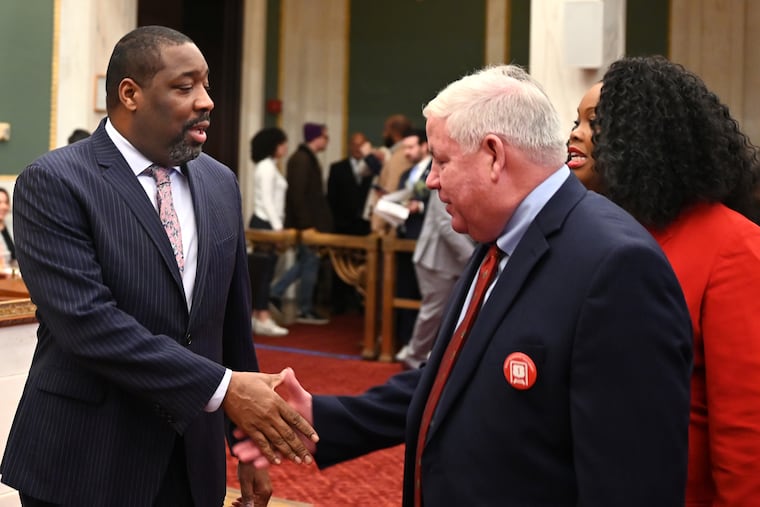
They also can effectively guarantee that city contractors use union labor. During a news conference Tuesday, Parker was flanked by dozens of union leaders, including Ryan Boyer, the head of the Philadelphia Building Trades & Construction Council. Boyer is one of Parker’s most important political allies, and the construction unions are credited with providing her a critical boost in the competitive 2023 mayoral campaign.
Parker on Tuesday insisted that the goal was not to ice out contractors who don’t use union labor from bidding for city projects.
“The city of Philadelphia is unapologetic about making sure that when we work on public works contracts ...any contractor interested in working and competing, you have the ability to do so,” she said.
The executive order includes language that says contractors have the right to select nonunion bidders. The state Supreme Court in 2019 ruled that a PennDot PLA requiring union labor violated Pennsylvania’s competitive bidding law.
PLAs have long been common in the city, and the executive order is an iteration of similar ones signed by Parker’s predecessors. Former Mayor Ed Rendell established a pilot program in 1995, and both Mayors Michael Nutter and Jim Kenney signed their own executive orders related to using PLAs.
Parker’s version is similar to the one Kenney signed, and also resembles an order Gov. Josh Shapiro signed last year that effectively asked state agencies to consider using PLAs. All three leaders are Democrats and have had close ties to organized labor.
The agreements, though, can be controversial.
Supporters say PLAs set strong labor standards and prevent work stoppages as a result of labor disputes by outlining conflict resolution processes early in a project’s process. But critics say they lock out nonunion labor and can drive up costs of taxpayer-funded projects.
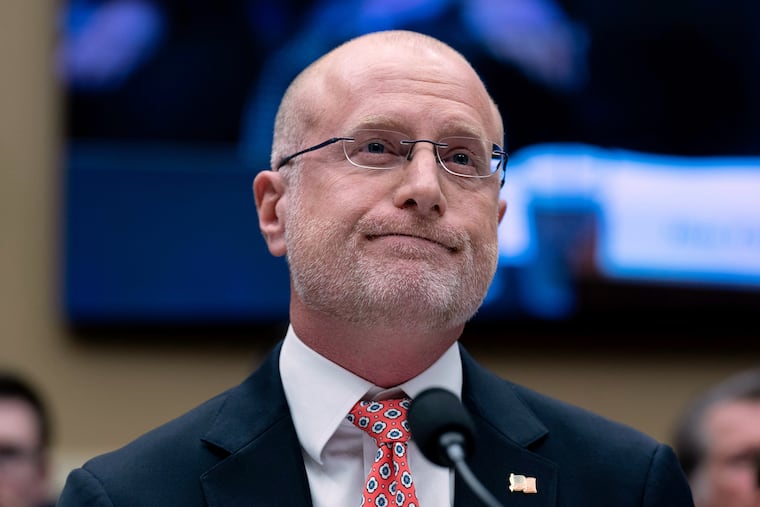
David R. Osborne, senior director of labor policy at the Commonwealth Foundation, a right-leaning think tank based in Harrisburg, said that under Philadelphia’s new executive order, it’s “obvious” unions will get an advantage.
“The idea is that you create a mechanism where unions set the terms of any agreement of a big government project, and then by the time you get people bidding on it, the major terms have been set,” Osborne said. “When you come to terms before the bid, you’ve effectively iced [nonunion contractors] out.”