Philadelphia may host another DNC in 2028. Here’s what that could mean for the local economy.
Economists who have studied political conventions are skeptical of officials' claims about their economic impacts.
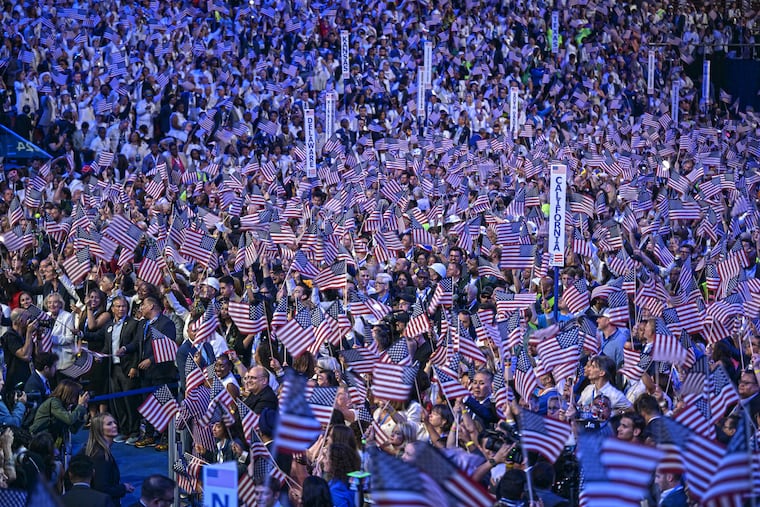
The first time Philly hosted a major presidential nominating convention was in 1848, when the Whig Party, meeting in Sansom Street’s long-gone Chinese Museum building, nominated Zachary Taylor, who went on to win the White House.
The 10th and most recent time, Democrats in 2016 made Hillary Rodham Clinton the first woman to be nominated for president by a major party.
Mayor Cherelle L. Parker and other local leaders are hoping to make more history by landing Philly’s 11th convention in 2028. And part of the appeal is the promise of a boost to the local economy as thousands of conventiongoers buy up hotel rooms, spend money at restaurants, and visit the city’s attractions.
» READ MORE: Philadelphia is on the short list to host the 2028 Democratic National Convention
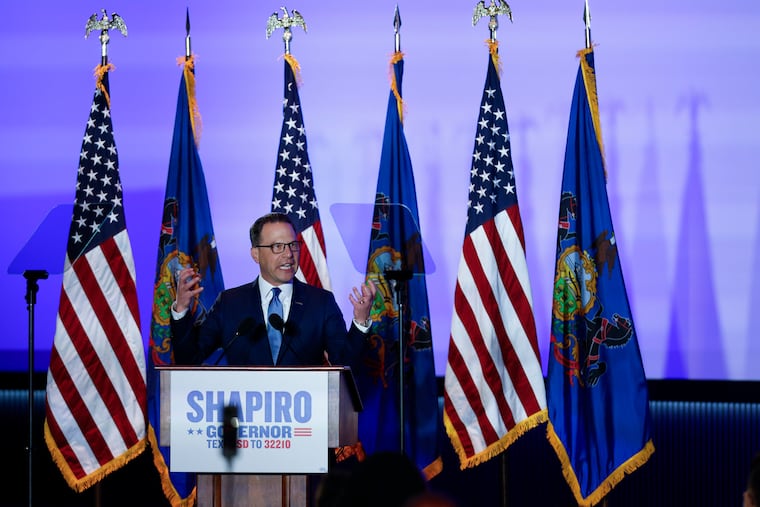
Philadelphia “would see substantial economic benefits,” Gov. Josh Shapiro recently wrote to the Democratic National Committee, which this week named the city as one of five finalists to host the party’s next convention, alongside Atlanta, Boston, Chicago, and Denver.
But how much do cities really benefit from hosting political conventions? Here’s what you need to know about what Philly stands to gain from hosting another DNC.
Conventions’ economic impact debatable
Tourism bureaus and convention planners often make lofty claims about the economic benefits of major events like political conventions.
Visit Philly, for instance, in 2016 commissioned the consulting firm Tourism Economics to examine that year’s DNC, and the firm found the event brought 54,300 visitors to the region and provided a $230.9 million injection into the local economy.
But economists who have studied conventions are skeptical of such claims. A 2018 study of both parties’ conventions in 2008 and 2012 found that “political conventions do not seem to have the large economic impact that is usually suggested by traditional economic impact studies.”
Officials at the time often claimed economic impacts north of $150 million for conventions. But estimates that high rely on unrealistic assumptions about how much money conventiongoers spend each day, according to the study, which was published in the journal Papers in Regional Science.
“Cities and states often tout mega events as vehicles for economic growth,” economists Lauren R. Heller, Victor A. Matheson, and E. Frank Stephenson wrote in the paper. “Hosting national political conventions generates a large inflow of overnight visitors and increases hotel revenue. However, the cumulative effect of approximately 29,000 additional room nights of lodging services and $20 million of hotel revenue imply that traditional economic impact estimates may be unrealistically large.”
Hotels are big winners
Although conventions’ overall economic impact is debatable, there is little disagreement about their benefits to one industry in particular: hotels.
“I’ve seen a lot of different large events come through [over] the years, and the DNC was one that definitely delivered,” said Ed Grose, president and CEO of the Greater Philadelphia Hotel Association. “I can think of a few of examples of hotels making their annual budget based on the DNC alone.”
Grose said the benefits are widespread in the lodging industry when a convention rolls into town.
“It’s not just Center City hotels, but the airport area, the suburban hotels — everyone benefits from the DNC," Grose said. “It’s especially good for our frontline team members; it’s good for our restaurants; it’s good for our bars. It is an event that delivers a huge economic hype.”
Minimal tradeoffs
Debates over economic impact are often centered on situations in which officials must weigh tradeoffs, such as whether to provide tax breaks to businesses promising new jobs.
For cities, political conventions are a different story. While hosting another DNC would likely require taxpayer resources from the state and federal governments, there would be little downside for Parker and the city budget.
Conventions are funded primarily through private contributions. In 2016, the DNC host committee raised about $85 million — $10 million of which came from taxpayers in the form of a state grant.
Much of the cost incurred by local governments related to security is reimbursed by the federal government. Congress has appropriated grant funding for presidential nominating convention host cities since 9/11.
In 2024, the localities hosting both the DNC and the Republican National Convention were each eligible to receive about $75 million in reimbursements.
Beyond dollars and cents
For some, the value proposition of a convention coming to town is as much about getting attention as it is boosting the economy. The 2016 DNC drew roughly 19,000 media members from around the world, according to the Philadelphia Convention and Visitors Bureau.
Labor leader Ryan Boyer, who heads the Philadelphia Building and Construction Trades Council and is a close Parker ally, said conventions like the DNC that bring major donors and corporations to town have the potential to result in “longitudinal jobs,” meaning they could lay the groundwork for future investments by potential employers.
He said a convention is an opportunity to showcase spots of the city ripe for investment — such as the Navy Yard, the industrial hub known as the Bellwether District, and the life sciences corridor in University City — to corporate figures who might not otherwise travel here.
“It’s a chance to show off Philadelphia,” Boyer said. “We’re a good business proposition.”
Grose said there were indirect, long-term impacts from hosting conventions.
“We get a lot of exposure from being on TV for a week. There’s a lot of things that happen during the DNC that we can’t buy,” he said. ”It’s great to see we are back in the mix after a relatively short time since hosting the DNC. That just shows what a great job we did as a city.”
David L. Cohen, the longtime Democratic fundraiser who is leading the recently formed host committee called Pick Pennsylvania, noted another reason revisiting Philadelphia could be an appealing pick for Democrats: It allows the party to dominate the biggest media market in a critical swing state.
“You own the media market for the week that you’re there,” said Cohen, a former Comcast executive who served as U.S. ambassador to Canada under former President Joe Biden. “The party couldn’t afford to pay for the positive advertising the party would get for holding its convention in Philadelphia.”