This North Philly state rep is facing his first-ever primary — and challenges from a Working Families Party-backed candidate and a local pastor
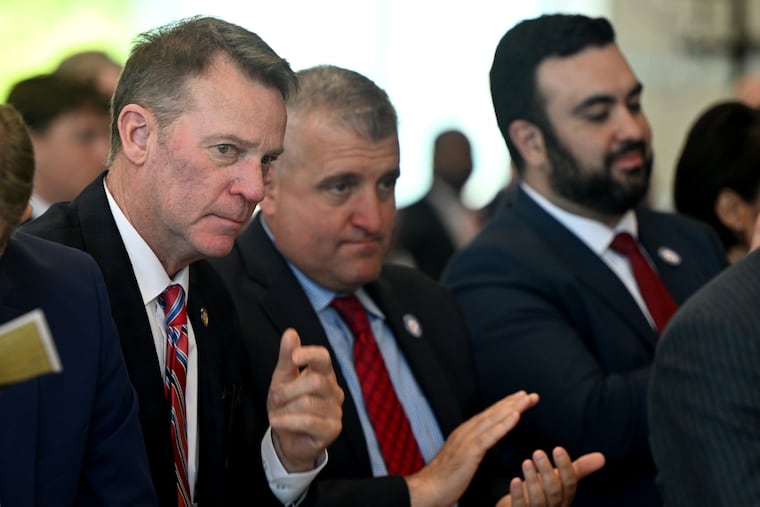
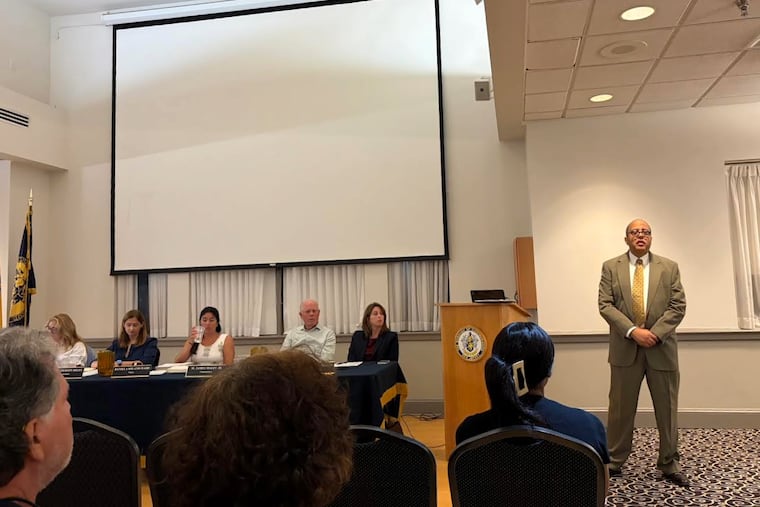
Rep. Keith Harris in 2024 ran uncontested to represent Strawberry Mansion and other parts of North Philadelphia. Now facing two challengers, his reelection path does not appear to be as smooth.
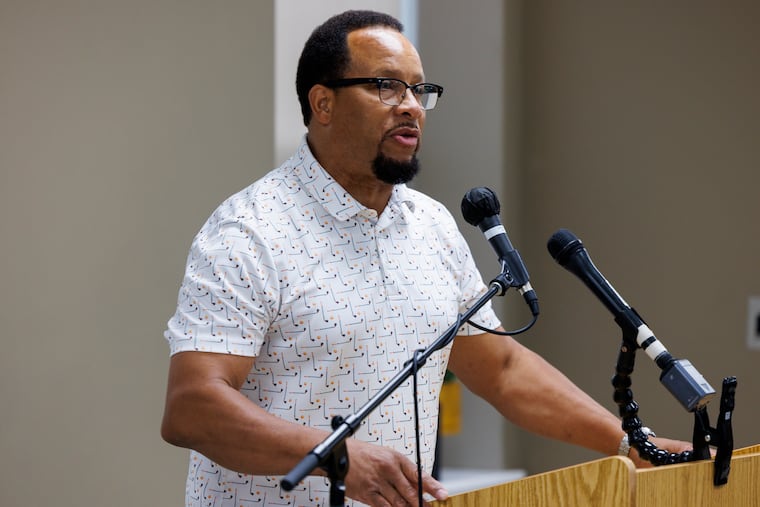
A state lawmaker representing parts of North Philadelphia is facing his first-ever competitive election in the May 19 primary with a formidable challenge from a Working Families-backed candidate — and the contest is heating up.
Rep. Keith Harris (D., Philadelphia) was elected in 2024 to represent the 195th Legislative District spanning Strawberry Mansion, Brewerytown and other parts of North Philadelphia, when he ran unopposed in a special election to fill a vacancy created after former Rep. Donna Bullock resigned to lead nonprofit Project HOME.
A longtime community advocate and leader of the 28th Democratic Ward, Harris ran unopposed in both the 2024 special and general elections.
Now, less than two years later, Harris’ path to reelection does not appear to be as smooth.
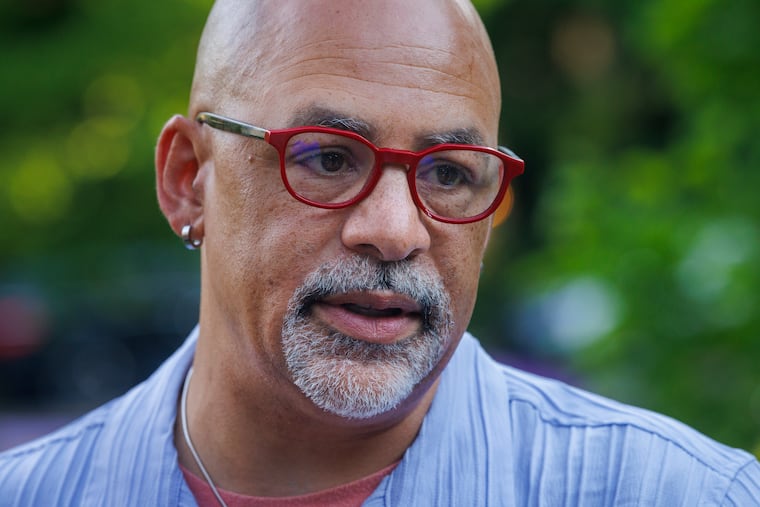
Harris will face two primary challengers who have both stacked up local endorsements: Sierra McNeil, a social worker who has the backing of the progressive Working Families Party; and Kenneth Walker Jr., a local pastor and community leader who captured support from the Guardian Civic League of Philadelphia representing Black police officers.
Endorsements can help candidates win over voters by lending trusted groups’ credibility, especially in races where there is little of the name recognition that usually comes from years of incumbency. They can also offer financial or organizational resources that can help a candidate be successful in legislative district races, which are made up of approximately 65,000 people per district.
Whoever wins the primary election in the deep-blue North Philadelphia district, where no Republican has filed to run, is all but guaranteed to win the seat in November as Democrats try to maintain and grow their narrow control of the state House.
Who is Rep. Keith Harris?
Harris, 64, is supported by the Pennsylvania House Democratic Campaign Committee, the well-funded campaign arm to elect Democrats to the state House. In a statement, political director Goldia Kiteck called him “a community leader with decades of experience in public service.”
Prior to his election to the state House, Harris worked as a community leader in Philadelphia, beginning with a graffiti cleanup effort in the 1980s that laid the foundation for the city’s Mural Arts Project. He later worked on numerous political campaigns and is now a local landlord who said in 2024 he wanted to model his leadership off Bullock’s. He ran on a promise to develop more community-based mental health resources and affordable housing options, and is involved in addiction treatment advocacy.
Since taking office, Harris has authored three bills, including legislation to increase fines for littering and dumping, a requirement that schools inform parents if their child was involved in a school incident, and an effort to transfer the former Philadelphia Nursing Home site to the Philadelphia Housing Authority. It is common for lawmakers to author few bills during their first term as they learn to navigate Harrisburg.
He’s also signed on as a cosponsor of 349 bills, and his office hosts community events in the district.
Bullock, who represented the district for nearly 10 years and remains a well-respected leader, said she has not weighed in on the race and declined to comment further.
When a reporter reached out to Harris’ personal cell phone to set up a campaign interview about the primary election, his district office director returned the call from Harris’ district office phone to set up the interview about his campaign.
It is against Pennsylvania law for staff to conduct political activities using state-owned resources or during the work day. State staff are permitted to work on political campaigns outside of the office and off the clock. House rules allow an exception for House staff to provide internal scheduling assistance or information to campaign staff “to ensure that no conflict occurs” between a member’s campaign, official, or personal schedule.
It’s unclear if the district director knew she was setting up a political interview on Harris’ behalf. Harris did not respond to additional questions on whether he was using his district office for campaign purposes.
Andrew McGinley, the vice president of policy for good-government group Committee of Seventy, said there needs to be “bright lines between campaigns and state employees.”
“Elected officials should not be directing state employees to schedule campaign calls, even if it’s what they think is a small thing,” McGinley added. “They should have campaign staff handling campaign scheduling.”
Beth Rementer, a spokesperson for House Democrats, said in a statement that the situation was “an honest mistake” and members are given regular ethics trainings.
Challenges — and questions
Harris’ progressive challenger, McNeil, 37, a social worker, is endorsed by the Working Families Party, offering her campaign the party’s well-established connections and resources in Philadelphia which could help her unseat Harris.
It’s unclear how much has been spent on the race so far. Statehouse candidates are not required to file campaign finance reports until May 8, less than two weeks before the primary election.
McNeil is a Strawberry Mansion resident and Temple alumna, and her platform is focused in part on improving public transit, violence prevention, energy affordability and public education.
She recently left her job as the director of workforce development at the Family Training and Advocacy Center to run for office. McNeil is also the president of the Pennsylvania chapter of the National Association of Social Workers, where she said she has advised lawmakers on creating legislation to reduce the shortage of social workers in the state.
The Working Families Party last endorsed a primary challenger in Philadelphia in 2024, when it backed community organizer Cass Green in another three-way primary race to unseat Rep. Amen Brown in the 10th Legislative District. Green was ultimately unsuccessful, and Brown won reelection.
McNeil has also secured the endorsements of AFSCME District Council 47 and the 15th Democratic Ward.
McNeil said she got involved with the Working Families Party in recent years when she began to feel disconnected from the Democratic Party. As a Black woman who had struggled to make ends meet despite doing “everything right,” she said she found herself aligned with the Working Families Party’s progressive values.
“I fell for the trap of the American dream,” McNeil said. “I went to school, I got the degrees, I bought the house, I built my career. Yet, why am I working two and three jobs just to live a life of survival?”
Still, McNeil said she feels like she can make the most impact running as a Democrat for the narrowly controlled state House. The Working Families Party in Pennsylvania is backing Democrats in 24 state House races and three from the state Senate, including eight incumbent Philadelphia state representatives like Reps. Malcolm Kenyatta, Danilo Burgos and Elizabeth Fiedler.
Walker, 49, has received endorsements from the Guardian Civic League of Philadelphia, and Teamsters Local 502 CASA. He has previously unsuccessfully run for state elected office to represent parts of North Philadelphia, last challenging then-Rep. Curtis Thomas in 2016. The Cheyney University alumnus is now the senior pastor at the First Born Church of God and Christ and a member of the Philadelphia Police Department’s Advisory Committee. In addition to a number of community-centered roles, he also ran the Walker Jr. Community Foundation to deliver fresh food to local families and other resources.
If elected, Walker said his top issues include improving public school education, school buildings, law enforcement, and harm reduction.
“People who best know me know that I have a heart and compassion for people,” Walker said.
Walker said he, too, sought the Working Families Party’s endorsement and was disappointed not to have received it. He feels he’s been ignored by local Democrats, despite his strong connections as a pastor and former nonprofit leader.
“I believe I put in the work, I should be the next person up,” Walker said. “It bothers me to know I have ran four times prior and I continue to be overlooked, no matter my experiences.”
Both McNeil and Walker criticized Harris’ tenure in Harrisburg as being unengaged and absent around the district.
McNeil also took issue with Harris’ legislative record, including his support for several Republican-sponsored bills, and characterized Harris’ positions as “out-of-touch.”
Harris was the lone Democratic sponsor on a number of GOP-led bills introduced during the 2025-26 legislative session, including measures to restrict undocumented immigrants from working in Pennsylvania, allow parents to access minors’ mental health records without the child’s permission, or allow residents to file civil suits against sanctuary cities like Philadelphia.
Lawmakers traditionally sponsor bills that they support, an early part of the legislative process that tells other legislators who is aligned with a proposal.
When an Inquirer reporter contacted Harris for this article, he removed his name from all but two of the bills. He maintained his cosponsorship of bills to require companies seeking state contracts and meatpacking and food preparation organizations to use the “E-Verify” system — a network widely criticized by Democrats and immigrant rights groups — to prevent undocumented people from working in the state.
“One thing I pride myself on as a lawmaker is a willingness to debate any issue and topic, no matter how sensitive,” Harris said in a statement. “That’s why I tend to add my name to bills rather than not — because even the issues I do not support deserve to be put before the people.
“I can understand how people would mistakenly assume my name on the bills makes me an automatic ‘Yes’ vote, but that is not the case,“ Harris added.
Still, McNeil said House Democrats need a candidate like her when the party has narrow control of the chamber.
“With such a small-seat majority, we can’t risk a Dem that has this sort of, out-of-touch positions, especially in such a large, hugely Democratic seat like this,” McNeil said. “It takes one vote or defection to help the Republicans pass their priorities.”