Philly may see a new fee on paper bags — if it can get through City Hall
A City Council committee on Monday advanced legislation requiring all grocery stores, convenience shops, and other retailers in the city charge 10 cents per nonreusable bag.
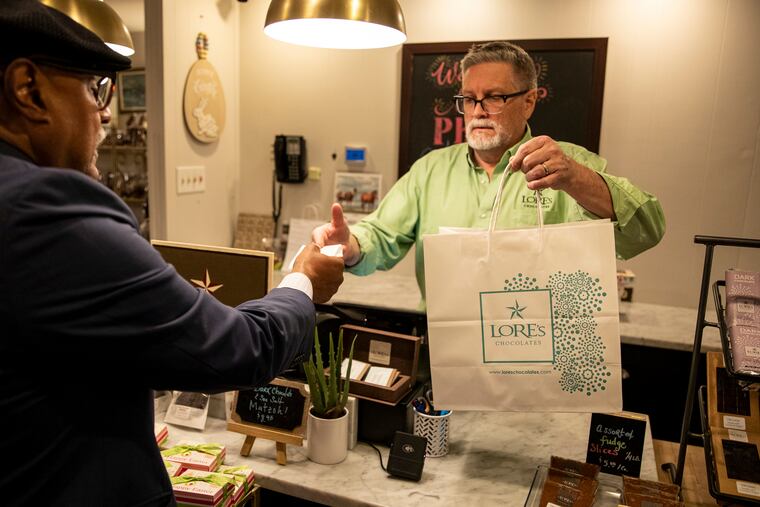
Philadelphia lawmakers are for the third time trying to pass legislation requiring that stores charge customers a fee for paper bags. And for the third time, it’s facing opposition from the mayor.
A City Council committee on Monday advanced legislation requiring all grocery stores, convenience shops, and other retailers in the city charge 10 cents per nonreusable bag. The goal is to update the city’s already existing ban on the plastic variety and encourage shoppers to bring their own bags.
The full Council could vote on the new legislation in the coming weeks. It is cosponsored by a majority of Council members, meaning it is likely to pass the chamber.
City Councilmember Mark Squilla, the architect of the plastic bag ban that first passed in 2019, said during the hearing Monday that he’s aiming to “change behavior.” The city says the use of paper bags has skyrocketed since the plastic bag ban took effect — studies show that while they are recyclable, unlike plastic, paper bags are still less energy efficient than reusable ones.
Squilla’s original plastic bag ban legislation included a required 15-cent fee on paper bags, but he stripped it from the bill after opposition from former Mayor Jim Kenney’s administration. In 2023, Council passed legislation to institute it, but Kenney issued a pocket veto, meaning he left office without taking action on the legislation, effectively killing it.
» READ MORE: Will Philadelphia see new paper bag fees?
It wasn’t clear at the time if Mayor Cherelle L. Parker, who was the incoming mayor, would support the legislation if it were reintroduced. She made cleaning and greening the city a top campaign promise, and environmental advocates hoped she’d support efforts to reduce single-use bag reliance.
But one of Parker’s top officials testified in opposition to the legislation Monday.
Carlton Williams, the director of Parker’s Office of Clean and Green Initiatives, called Squilla’s effort well-intentioned. But he said charging bag fees could disproportionately impact low-income Philadelphians experiencing high grocery costs, “especially given the current economy.” He also said the fees could push shoppers out of the city and harm mom-and-pop businesses that already operate with low margins.
If the legislation passes Council, Parker could sign or veto it. She could also let it lapse into law without her signature. If she vetoed the legislation — it would be her first since taking office last year — Council could override her veto with 12 votes out of the 17-member chamber.
When the paper bag bill was introduced in 2019, members of Kenney’s administration also said at the time that they were concerned that fees on paper bags would hurt the poorest Philadelphians. Former City Councilmember Maria Quiñones Sánchez similarly described it as akin to a regressive tax.
However, proponents of the legislation said Monday that they don’t think the argument holds up.
Maurice Sampson, the eastern Pennsylvania director of the environmental group Clean Water Action, said prices on essentials such as food could rise for everyone if stores absorb the costs of paper bags.
“There is no foundation or basis,” he said, ”in the idea that fees on bags will hurt low-income people."