People who work with unhoused Philadelphians fear those who live on the street will be ‘swept out’ during World Cup
Groups that work with unhoused people fear the city will engage in sweeps of encampments ahead of major events this summer. The city has not shared its plans.
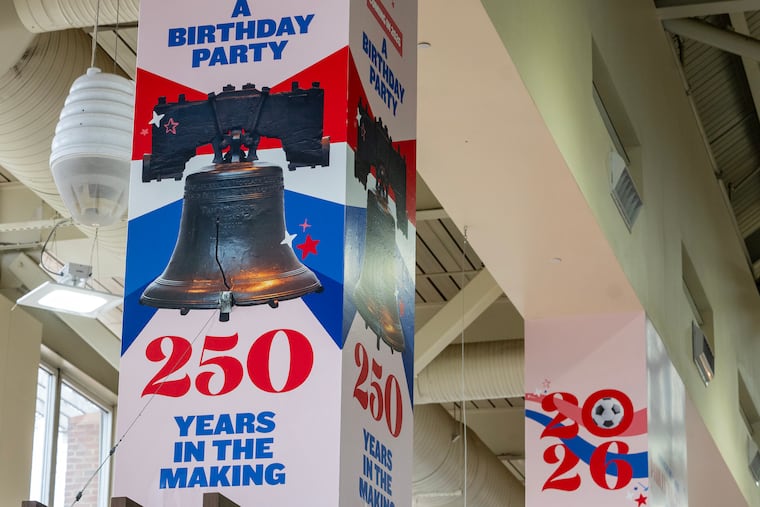
Late spring and summer in Philadelphia will be loaded with major events: the celebration of America’s 250th birthday, the FIFA World Cup, the MLB All-Star Game, and, in nearby Newtown Square, the PGA Championship.
That lineup inspired the New York Times and the Wall Street Journal to name Philadelphia the world’s top place to visit in 2026. City leaders, eager to show off to an expected 1 million or more visitors, are spending $11.5 million on local beautification.
But local groups that aid the unhoused wonder whether the impulse to scrub the city for world scrutiny also means hiding people who live on the street.
As the clock ticks down to big days ahead, the city has not shared its plans for the population experiencing homelessness, say advocates, who fear a reprise of the city’s approach during Pope Francis’ visit in September 2015.
Back then, unhoused people who were regularly being fed along the Benjamin Franklin Parkway and sleeping in encampments were “swept out,” said Adam Bruckner, a minister who led feeding programs there.
“Things were torn up, and everyone’s possessions got yanked and never given back,” Bruckner recalled.
Concerned about silence from the city about its plans, David Fair, chairman of the board of SELF Inc., the largest nonprofit provider of emergency housing to single adults in Philadelphia, also called on the city to develop a more humane strategy this time around. He’s worried about history repeating itself.
“We all need to be talking soon, or we’ll wind up mistreating people like we did with the pope,” Fair said.
Fair added that he’s “sure there will be sweeps of people living homeless,” and that advocates are “nervous — not about if people will be moved, but whether their rights will be violated when they’re moved.“
Even if Mayor Cherelle L. Parker and the police handle people experiencing homelessness “humanely,” Fair said, he believes they won’t be permitted to be on the street if they’re blocking activities.
Fair said his question to the city is: “Are they going to be asked to move, or will they be dumped somewhere?”
Given that Philadelphia will be on a national stage, Fair concluded that he “can’t imagine that the city won’t try to avert outsiders’ eyes from what’s really going on with poor people in Philadelphia.”
Asked whether there’s a plan outlining how to treat unhoused people during special events scheduled from May through July — specifically, whether people experiencing homelessness will be moved out of public view — officials from the mayor’s office and Office of Homeless Services didn’t offer direct answers. They also did not respond to concerns from advocates about being left out of the city’s strategy
Instead, in a joint statement, they reiterated a December pledge by Parker that the city has planned to add 1,000 beds for unhoused people, at least 90 of which have been provided.
Homelessness is a growing problem in the city, having increased since 2023, the statement also said. OHS figures show the number of unhoused people in the city has jumped from 4,735 that year to 5,516 people in 2025.
The statement added, without details, that the plan to increase shelter bed capacity “has been in operation for years, not in response to an expected tourist influx during 250th celebrations or FIFA events in June/July.”
It made no further reference to the scheduled spring and summer events.
Also, the statement said, the city will continue its normal efforts to maintain outreach services to help people on the street and offer them opportunities to be sheltered.
In an interview, Donna Bullock, president and CEO of Project HOME, a prominent anti-homelessness nonprofit in Philadelphia that works closely with the city, said she was unaware of any plans the city has regarding unhoused people and upcoming events.
And she said she is unaware of “any additional services” being deployed, except an increase in the number of open hours for the Hub of Hope, a Project HOME Center City facility that offers daytime help for those experiencing homelessness.
Bullock said the city is looking for long-term answers to solve homelessness, “not just when company comes.”
An ‘intense summer’
Bill McKinney, executive director of the New Kensington Community Development Corp., said he’s concerned that the convergence of people experiencing homelessness with visitors attending a packed schedule of events will make for an “intense summer.”
And, he said, the lesson of the pope’s visit is that “we don’t do that well” during such moments.
Few cities do.
“We’ve seen this kind of thing play out over and over,” said Ann Olivia, CEO of the National Alliance to End Homelessness.
Before the Super Bowl in New Orleans last winter, officials moved unhoused people to a windowless warehouse.
Cities hosting the Olympics have been especially hard on those living experiencing homelessness, according to an Alliance research report.
In Paris in 2024, for example, people experiencing homelessness were bussed out of town to shelters, then evicted.
To best coexist with those who are homeless during the World Cup, Olivia said, “planning has to happen well in advance — even before a city puts in an application."
Philadelphia was approved for the 2026 World Cup in 2022.
“So often,” Olivia added, “addressing the needs of the unhoused are an afterthought, and suddenly a city is scrambling.”
Eric Tars, senior policy director at the National Homelessness Law Center, said he’s particularly worried about the FIFA event in Philadelphia.
“There’s just two months till the World Cup [in Philadelphia June 14 through July 4],” he said, “and Philly has yet to say how they’re bringing folks safely indoors if they don’t want them on the street.”
When planning is left until the last minute, he added, “jail becomes the housing of last resort.”
Another factor worrying advocates looking for guidance from the city is that during big events, unhoused people become traumatized with lots of tourists and police around, said Robin Hynicka, lead pastor of Arch Street United Methodist Church, which provides services for homeless people. It’s happened during the Broad Street Run, the marathon, and Mummers Parade, he said.
“The crowds will inhibit people from coming to us for help like they usually do, and that’s a deep concern for us,” he said. “On the street, people experiencing homelessness aren’t treated like humans even in normal conditions.”
Ultimately, people experiencing homelessness will feel threatened when the city starts celebrating, said Susan Sheehan-Fusulo, executive director of Angels in Motion, which works with individuals suffering from substance abuse disorder, many living on the street.
She said she believes advocates haven’t heard of a city plan regarding homeless people during the summer celebrations because none exists.
But, she added, no one can say for sure.
“All I believe is the city doesn’t want urban blight in visitors’ eyes,” she said. “I believe people on the street will be cleared out, so Philly can put out flowers and picket fences for the world to see.”