Black activists helped shape the President’s House Site 23 years ago. Now they’re working to save it from Trump.
By Sept. 17, President Donald Trump's administration could remove or cover up flagged content about slavery at the President's House Site at Philadelphia's Independence National Historical Park.
Twenty-three years ago, Black activists led a relentless effort to make slavery the focal point of an exhibit on a Philadelphia home once occupied by Presidents George Washington and, later, John Adams. It was a chapter of history that the National Park Service was — at first — hesitant to explore.
But the activists’ persistence helped transform the President’s House Site at Independence National Historical Park into what it is today: a powerful tribute to the nine people President George Washington enslaved there during the founding of the United States.
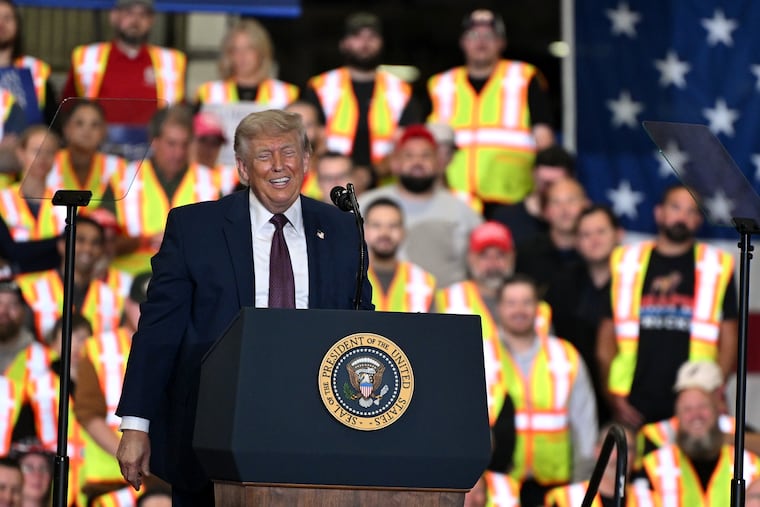
And now in a little over a month, by Sept. 17, those efforts could be altered or erased in another attempt to sanitize history in response to an order from President Donald Trump, who seeks to remove content at national parks that his administration deems to “inappropriately disparage” Americans past or living.
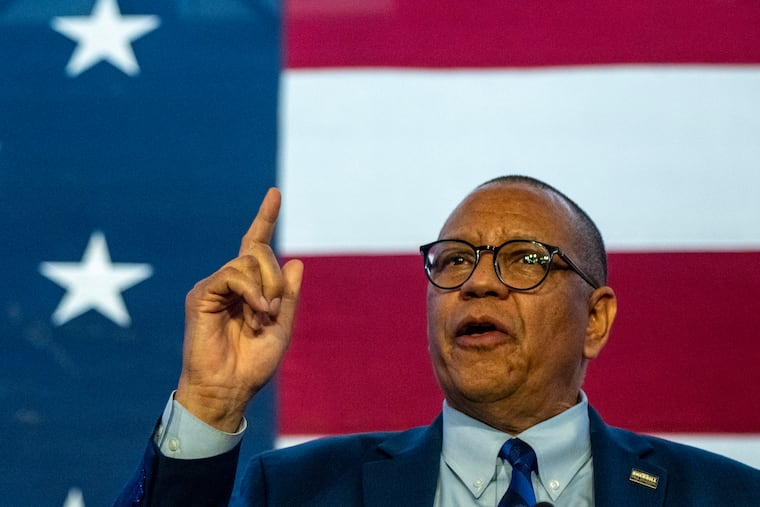
“We’re not dismayed, we’re not exhausted, we’re not pessimistic, we’re not beaten down. We are resilient,” Michael Coard, an attorney and founding member of Avenging the Ancestors Coalition (ATAC), said in an interview Wednesday. “The same energy and passion that we used from 2002 to 2010, it’s here now on steroids.”
Six of the displays that have come under scrutiny are at the President’s House and many shine a light on the horrors of slavery, the depths of which, activists say, hadn’t been fully explored at Independence Park until the site’s grand opening in 2010.
But telling that story didn’t come without a fight.
In 2002, Avenging the Ancestors Coalition, a Black-led coalition of activists worked with local scholars, lobbied elected officials, and negotiated directly with Independence Park to ensure the history of slavery was centered at the site. Generations Unlimited, led by the late historian and curator Charles L. Blockson, also joined the advocacy.
Starting that year, ATAC originated the celebration of Black Independence Day there, Coard said.
More than two decades later, many of those same advocates are once again strategizing to save the exhibits from Trump’s order. In September, activists will hold a public town hall.
The turmoil signifies what could be a larger battle over who gets to tell the story of America‘s founding ahead of the nation’s 250th anniversary next year when all eyes will be on Philadelphia.
‘One step forward, two steps in place, and then we go back’
The memory of the house where the first two U.S. presidents resided has almost faded before.
It served many purposes: a home for William Penn’s grandson, infamous traitor Benedict Arnold’s residence for a year, financier Robert Morris’ for another. From 1790 to 1800 it was Washington’s and later Adams’ executive mansion. Then it was a hotel and later demolished and transformed into commercial properties. In 1951, the last aboveground remnants of the structure were dismantled for the construction of Independence Mall.
The historical reverence of the house then significantly deteriorated — a public toilet sat at that spot from 1954 until 2003.
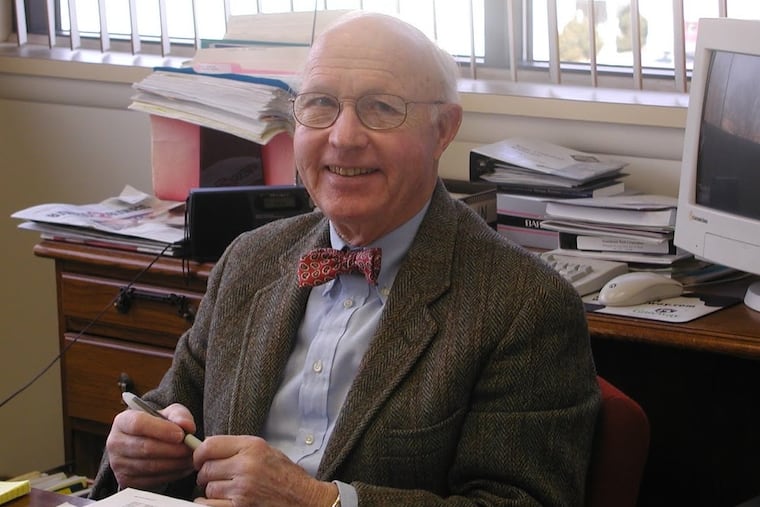
Edward Lawler Jr., historian of the nonprofit Independence Hall Association, put the site’s history together in 2002 when he published an article, “The President’s House in Philadelphia: The Rediscovery of a Lost Landmark” in the Pennsylvania Magazine of History and Biography, seeking to set the record straight about the true location — and stories — of the house.
Historians Gary B. Nash and Randall M. Miller and The Inquirer’s reporting during that time also brought awareness to the history of slavery at the site, including the revelation that the Liberty Bell pavilion was built on top of the “slave quarters” Washington commissioned. At the time, the Park Service did not want to have the site studied, according to Inquirer archives.
“No matter what happened at the President’s House, I presumed it would have to be based on my research, because I eliminated everybody else who got things wrong,” Lawler said in an interview Thursday, referring to other inaccurate speculation about the location of the house.
Lawler’s work served as a catalyst for ATAC’s advocacy, Coard said.
ATAC was able to engage Independence Park in “serious discussions” in less than a year, Coard said. He noted the park never told advocates “no,” but that it was “pretty antagonistic for the first couple of years.” It wasn’t until roughly six years after their advocacy began, when activists felt like focusing the site on slavery was a done deal.
“We all agreed that slavery was going to be prominent,” Coard said of the negotiations. “The question was, how prominent?”
Former Park Service director Mary A. Bomar, who was appointed by former President George W. Bush, was also credited by Coard for her cooperation.
After park officials presented an exhibit plan, “public reaction, city government and other stakeholders broadened the conversation and started a constructive process which created a plan that all parties believed was both accurate and respectful to all people in the past and in the present,” a spokesperson for Independence Park said in a statement to The Inquirer.
“It involved compromise by all parties,” the spokesperson added. “Overall, the park is pleased with how the collaboration evolved and with the final result.”
Two decades later, that work has brought the site under the scrutiny of the Trump administration.
One of the panels flagged by staff at Independence Park for the administration’s review sheds light on Washington’s signing of the Fugitive Slave Act of 1793, which allowed people who had escaped slavery across state lines to be recaptured by their slaveholders. Washington signed the law while he resided in Philadelphia.
Two of the people who Washington enslaved at the President’s House were able to escape to freedom: Hercules and Oney Judge. Their names along with Austin, Paris, Christopher Sheels, Richmond, Giles, Moll, and Joe, are memorialized at the site.
Former Philadelphia Mayor John F. Street brought a sense of legitimacy to ATAC’s advocacy, Coard said. Activists noted he was the first elected official to start funding the project and he created a steering committee, which Coard, Lawler, Blockson, and other key government and scholarly stakeholders sat on. The site was completed under former Mayor Michael Nutter.
Michelle Flamer, who worked for the city’s Law Department for a little over 39 years and oversaw the contractor bids for the project, said the unity in the Black community “almost transcends the value of the exhibit.”
“Just the idea that we had Black people in Philadelphia coming together and leading an effort to fully talk about history, the full story of what happened, the good and the bad,” Flamer said.
Diversity was also at the forefront of the site’s development. Roz McPherson, who served as the project director during the site’s years of development, said everything about the creation of the President’s House, including hiring professionals from nonwhite backgrounds, was intentional.
Kelly Maiello Architects, a Black-led firm, was on the project. Exhibit design firm Eisterhold Associates Inc. contracted a Black artist for the panels at the site, and Louis Messiah, a documentary filmmaker, and Lorene Cary, an author, also helped with storytelling.
But McPherson is “furious” that those years of hard work and this important part of American history are in jeopardy under Trump.
“It makes me furious that the ignorance of the person who’s trying to — He’s probably never, ever been to the site, has no idea what a lot of this history means, and he’s acting like the segregationist of yesteryear, quite frankly,” McPherson said.
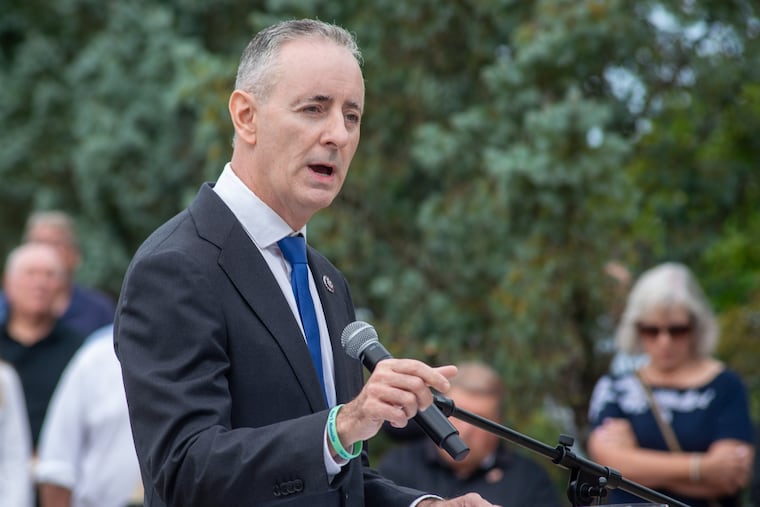
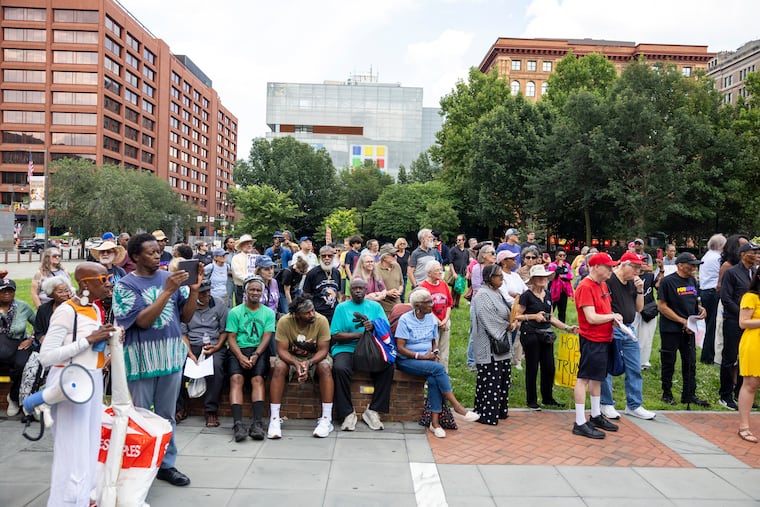
Karen Warrington, who served as then-Democratic U.S. Rep. Bob Brady’s communications director, was on the steering committee. Brady and former Democratic U.S. Rep. Chaka Fattah helped secure federal funds for the project. More than a decade later, Warrington sat in the shade near the President’s House and looked out at an Aug. 2 rally to protect the President’s House exhibits from the Trump administration. She remarked that the U.S. is like the “cha-cha-cha.”
“One step forward, two steps in place, and then we go back,” she said.
All eyes could be on President’s House activism
In the 2000s, the public watched the creation of the President’s House unfold.
Visitors stood on a nearby platform and watched the archaeological dig that resulted in the discovery of some of the original structural remnants of the house that was eventually incorporated into the modern-day project.
At a ceremonial groundbreaking in March 2007, Philadelphians collected bricks or bags of soil to commemorate the meaningful occasion.
That dig is currently housed under a glass enclosure at the park for the viewing public.
Now, activists say, public engagement will be key to protecting the site’s exhibits as they remain in peril under the Trump administration and they’re looking to build a coalition of people from all backgrounds.
The town hall in September will be an opportunity to continue spur awareness and activity, McPherson said. She’s leading the charge alongside Coard, historiographer Rev. Mark Tyler of the African Methodist Episcopal Church, and Flamer, the former Philadelphia law department attorney.
Other Philadelphians have embarked on their own projects to preserve the President’s House before it’s too late, creating crowdsourced community archives or developing an AI recreation of the original house.
Advocates are also exploring potential legal options and whether the Trump administration has jurisdiction.
“The first thing is build the army,” Coard said. “The second thing is to work on our political strategy and our legal strategy,” noting that if the former doesn’t work, “we’re compelled to go to court.”
The hope, Tyler said, is for Philadelphia and the President’s House to set an example for other at-risk exhibits nationwide.
“We have a vested interest in getting this right in Philadelphia because other sites like ours are watching us,” Tyler said. “Because, as always, Philadelphia is generally first.”