Real Christmas tree supply is ‘excellent’ this year after several years of shortages
Artificial trees, meanwhile, are mostly manufactured outside the United States and could see price hikes due to tariffs.
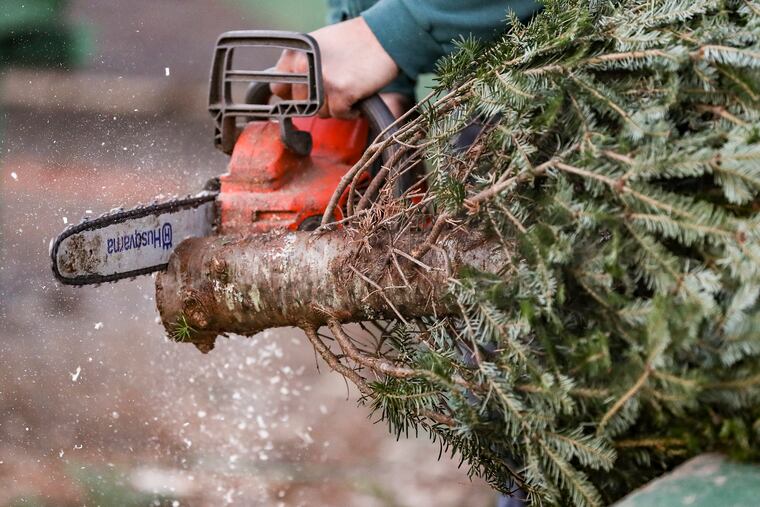
It’s shaping up to be a tree-mendous year for anyone planning to bring home a real Christmas tree, according to industry experts tracking supply and prices.
“It’s probably the best supply of real trees in at least a decade,” said Marsha Gray, president of the Real Christmas Tree Board, a research and promotional group.
A national survey of tree farmers — including many in Pennsylvania — found that prices are expected to hold steady or even dip, thanks to an unusually strong supply. The survey, conducted in August, polled wholesale growers responsible for roughly two-thirds of all Christmas trees sold in the United States. A hearty 84% said they don’t plan to raise prices, with some even expecting to trim them.
It’s welcome news after several seasons when shortages and inflation drove up costs.
Pennsylvania alone has more than 1,400 tree farms covering over 31,000 acres, according to state statistics.
Still, most trees sold in the Northeast come from Canada, and those evergreens remain exempt from tariffs, which has also helped keep costs down this year.
For artificial tree makers, meanwhile, the outlook is less merry and bright. Nearly all artificial trees are manufactured overseas, particularly in China, and have been hit with tariffs that are pushing prices upward. An artificial tree seller in California told NPR he anticipates a 10-15% price hike for consumers due to customs costs, even though manufacturing expenses have stayed steady.
Growing Christmas trees is a long-haul endeavor — it takes about 10 years for a tree to reach full size. That means today’s growers have to guess what demand might look like in 2035 while tending the evergreens that will be ready in 2029 and 2030. Their work involves pruning and pest management — the parts they can control — as well as coping with unpredictable challenges like climate shifts and surprise deep freezes.
Drought mostly affects younger saplings and typically spares mature trees, so even though 2025 has been dry in many regions, that hasn’t been a factor on the firs for sale, Gray said.
Gray said growers saw this abundant year coming: “It’s a multiyear process, so we can see what’s coming up and this is the story of the season — excellent supply.”
In recent years, headlines highlighted shortages. Gray notes there were always enough trees to go around, but during lower-supply years, shoppers might have found that the most convenient lot sold out early or that cut-your-own farms wrapped up the season weeks before Christmas.
“It does go in waves. We have little peaks and valleys,” she said. “And we’re in a peak right now.”