We tour the home kitchens of five of Philly’s most prominent chefs
Five of Philly’s most prominent chefs let us tour their home kitchens and shared secrets on luxe cookware, saving space, and decorating with style.
As cooks around the region head to their kitchens this holiday season, The Inquirer is taking you inside the home kitchens of some of the city’s culinary leaders.
From Top Chef alum Jen Carroll’s airy loft in Kensington to baker Ashley Huston’s cozy walk-up in Cedar Park, the kitchens are as unique as the dishes these chefs create.
There’s plenty of top-notch equipment — including omakase chef Jesse Ito’s tuna sword and the stainless steel counters that Kalaya’s Nok Suntaranon uses to roll out pastries. But they also have items you’d find in any kitchen in Philadelphia, including leftovers in the fridge, cookbooks tucked into tight corners, and even Goldfish crackers in wood-fire cooking connoisseur Scott Calhoun’s pantry.
So whether you’re preparing a feast or a snack, let Philly’s top chefs inspire you to roll up your sleeves and start cooking.
Austerity with a dash of Pokèmon
The chef: Royal Sushi & Izakaya and dancerobot’s Jesse Ito
The space: 1,800-square-foot apartment in Center City
Recipe for success: Keep it sparse and clean.
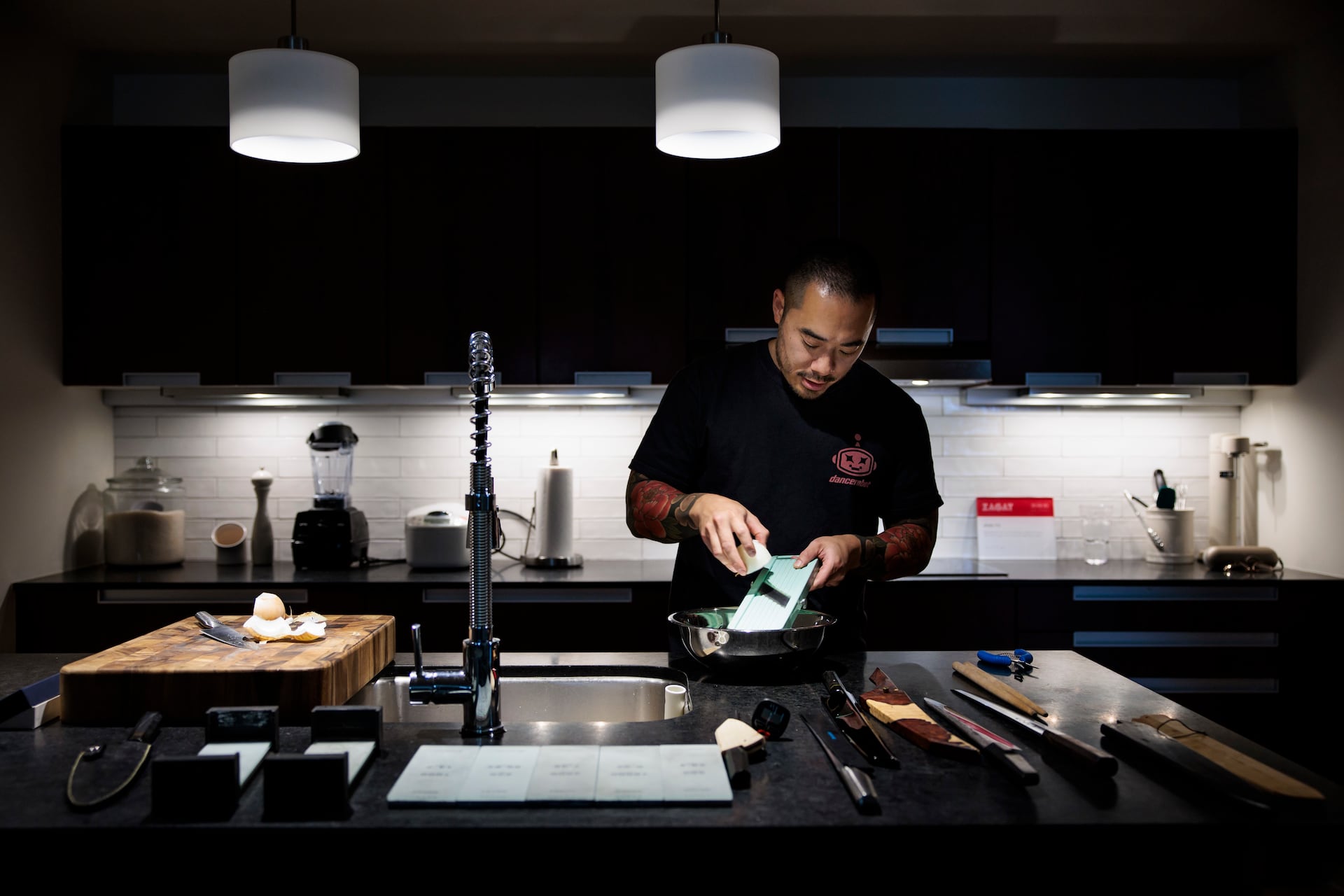
Jesse Ito’s pantry and fridge might just echo. That’s how sparsely stocked the kitchen is in the home of the James Beard Award-nominated chef.
Olive oil, soy sauce, fish sauce, and leftovers from a dinner at Kalaya are all he had during a recent visit.
Ito spends most of his waking hours at Royal Sushi Omakase & Izakaya, which he co-owns, along with the recently opened dancerobot.
“At Royal, I work with the craziest ingredients: truffles, caviar, fish flown in from Japan,” he said. “But I eat pretty simply at home, usually roasted salmon or steak with rice and kimchi.”
The bright minimalism of Ito’s eight-seat omakase, tucked into the back of the raucous, dark bar of Royal Izakaya, is reflected in the serene home kitchen of the Center City apartment he recently moved into.
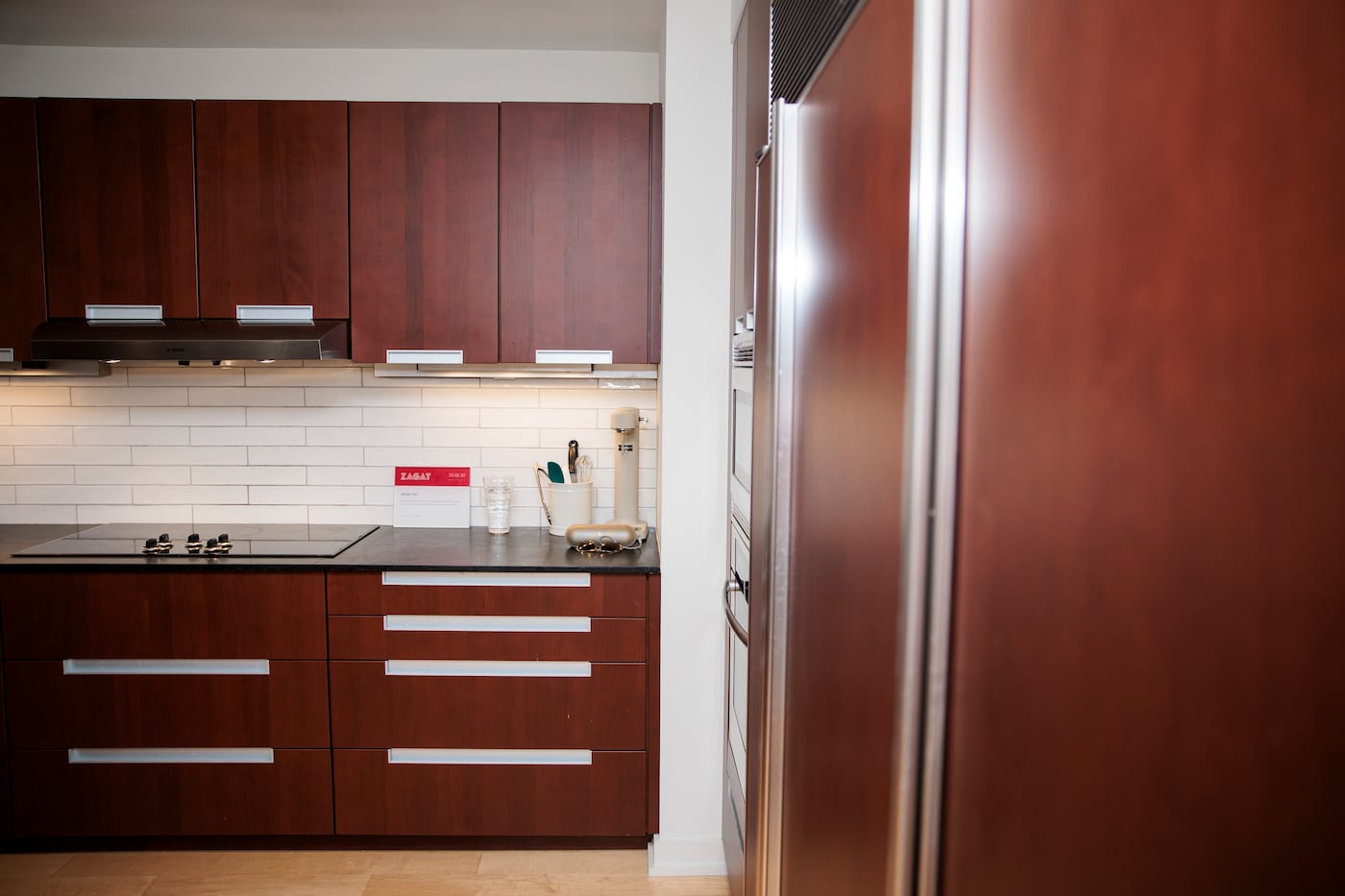
Nothing is out of place. Dark-paneled wooden cabinets reveal themselves to be mostly drawers, stashing Ito’s few cooking implements, like frying pans, pots, and a Dutch oven. A large glass apothecary jar on the countertop is filled with rice and sits next to his trusty Zojirushi rice cooker and the Vitamix he uses for protein shakes.
“This is how I am as a chef. The way things look, the aesthetic placement of things, the balance and weight of filling out a space are very important to me. Things have to be very clean,” he said.
The kitchen, which sits in the middle of the apartment and is flanked by a living room and bedroom, faces a dark brown dining table with indigo upholstered chairs, a wall holding some of Ito’s framed James Beard nominations.
“I modified one thing,” said Ito. “The backsplash. The one that was in here was super dated and I just couldn’t live with it.”
He had to get permission from his landlord, but he did the update himself, with white subway tile.
Ito’s Pokémon obsession is apparent as soon as one walks into his entryway and is greeted by a large, colorful Pokémon poster.
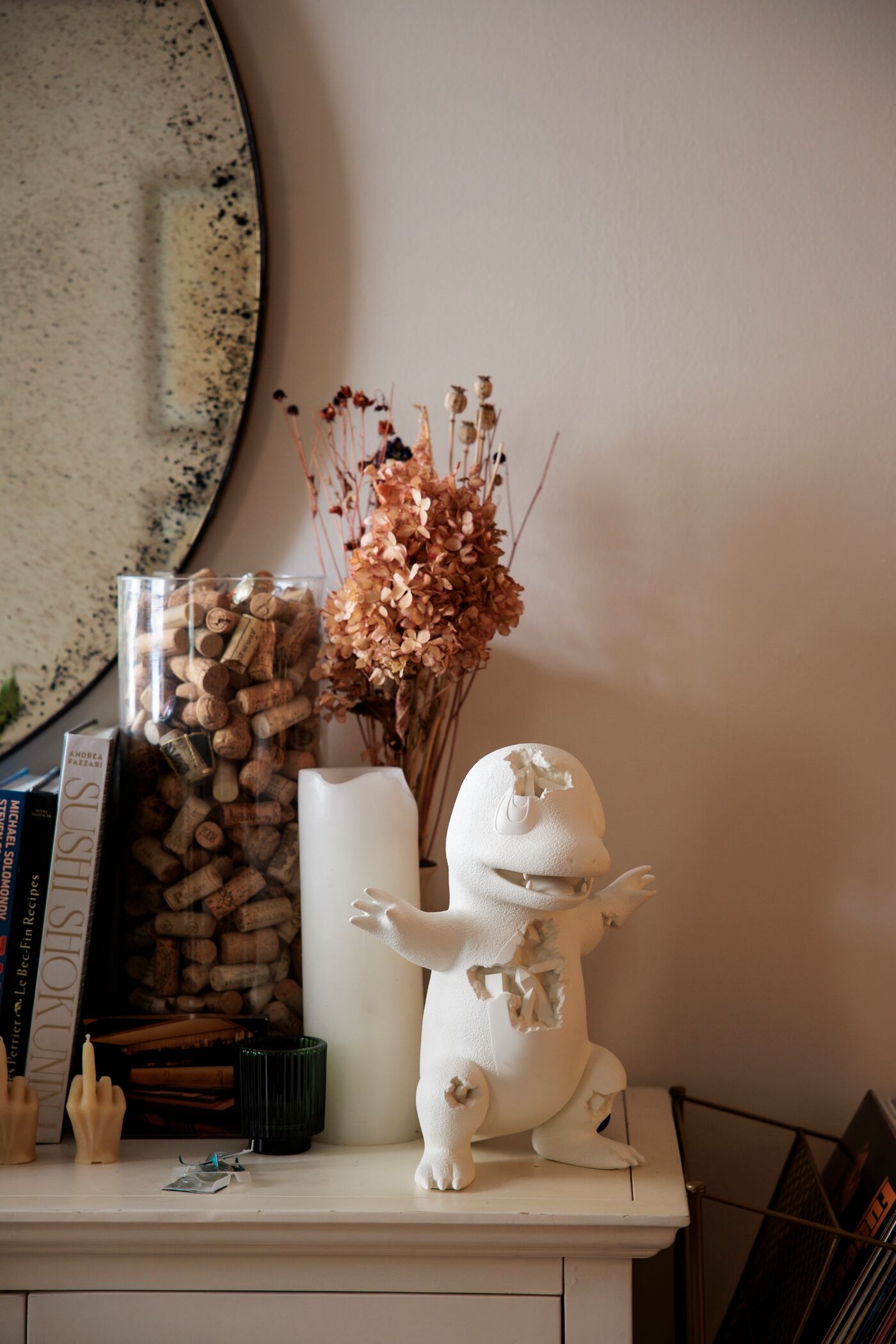
Cookbooks are stacked on a white painted buffet, next to Ito’s pride and joy: a sculpture of Pokèmon’s Charmander created by artist Daniel Arsham and given to him by a regular omakase customer.
Ito’s ample counter space is ideal for him to keep a large wooden cutting board and to sharpen his knife collection, including custom pieces made by late knife maker Steve Pellegrino and carbon steel tuna swords that he hardly ever uses, but were custom made for him in Japan — one of which cost $4,000.
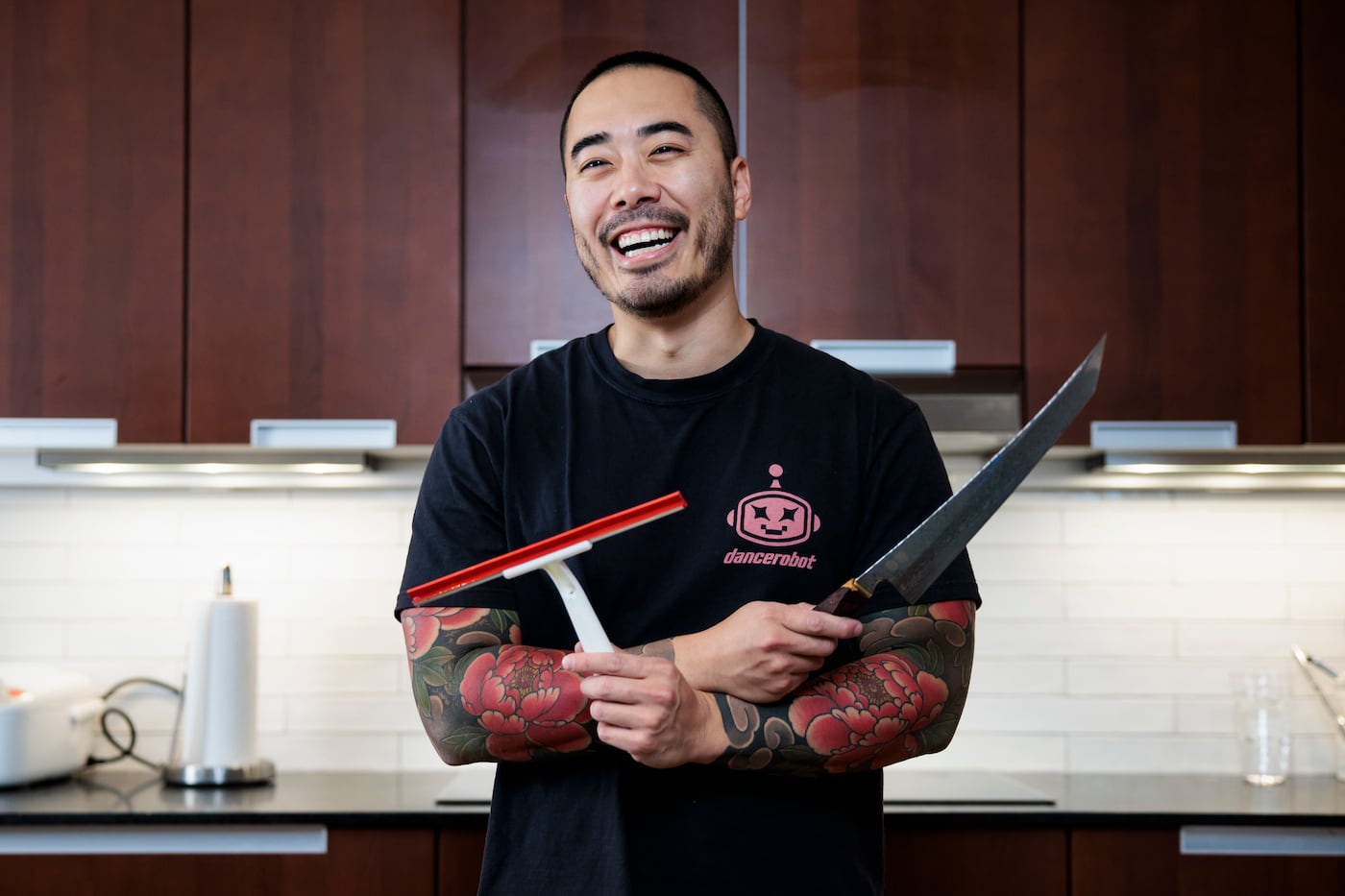
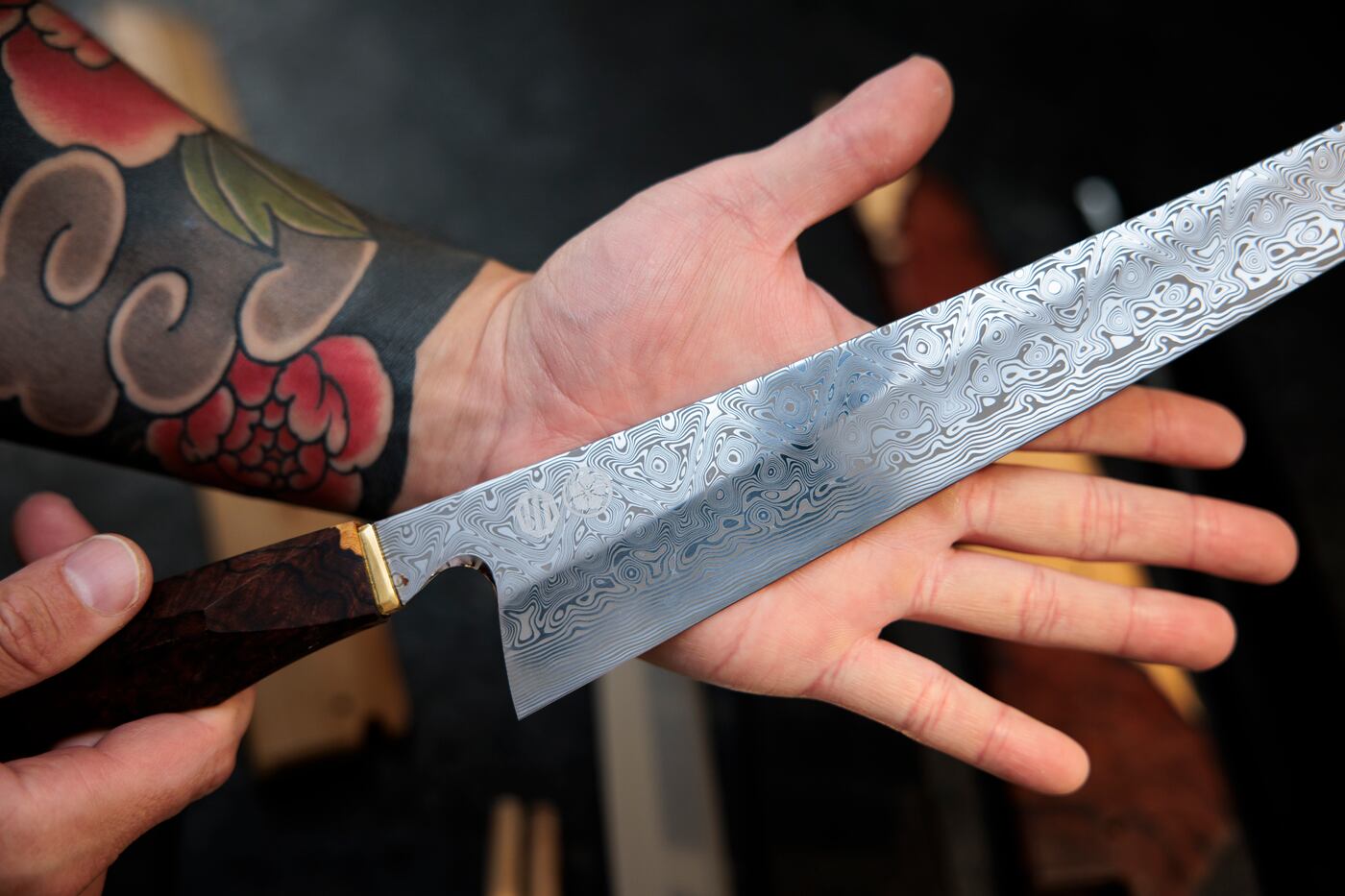
But none may be as sharp as one of his favorite tools, his $30 mandolin. “The scariest tool in any kitchen,” he said, referring to how often cooks slice their fingers on them.
And none stir up quite as much passion as Ito’s beloved squeegee, which makes cleaning up counter spills a breeze. “It’s my cheapest, most useful tool.”
Bold colors with sweet local history
The chef: Carroll Couture Cuisine’s Jen Carroll
The space: A 3,000-square-foot loft in Kensington
Recipe for success: Make the space somewhere you’re proud of.
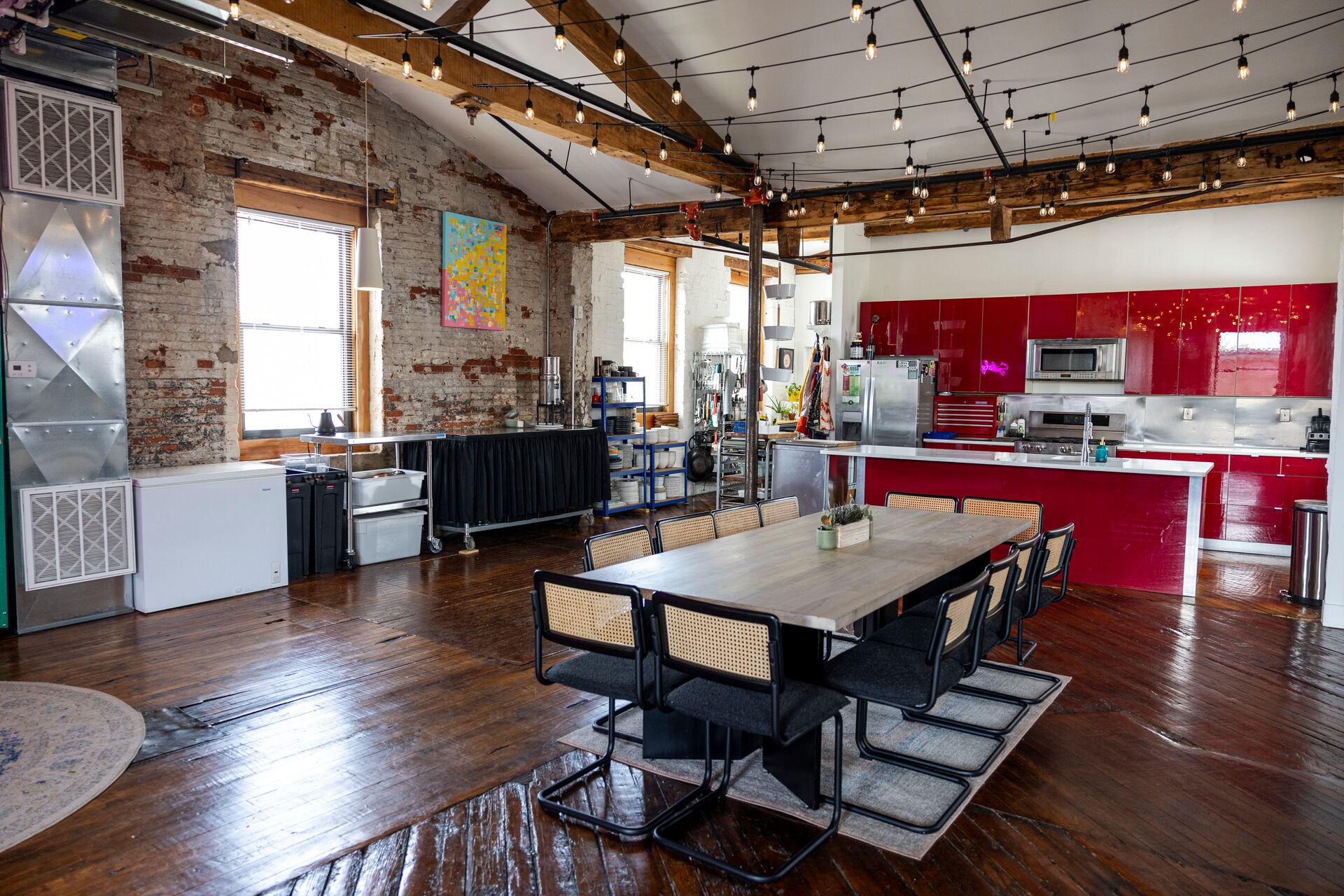
Chef Jen Carroll and her partner and fellow chef Billy Riddle blur the lines between home and work. In their 3,000-square-foot warehouse loft in Kensington, they host private dinners, using all the commercial equipment you’d expect to find at a high-end restaurant.
It is a space where Carroll, a former Top Chef contestant and the proprietor of Carroll Couture Cuisine, feels “relaxed and comfortable.”
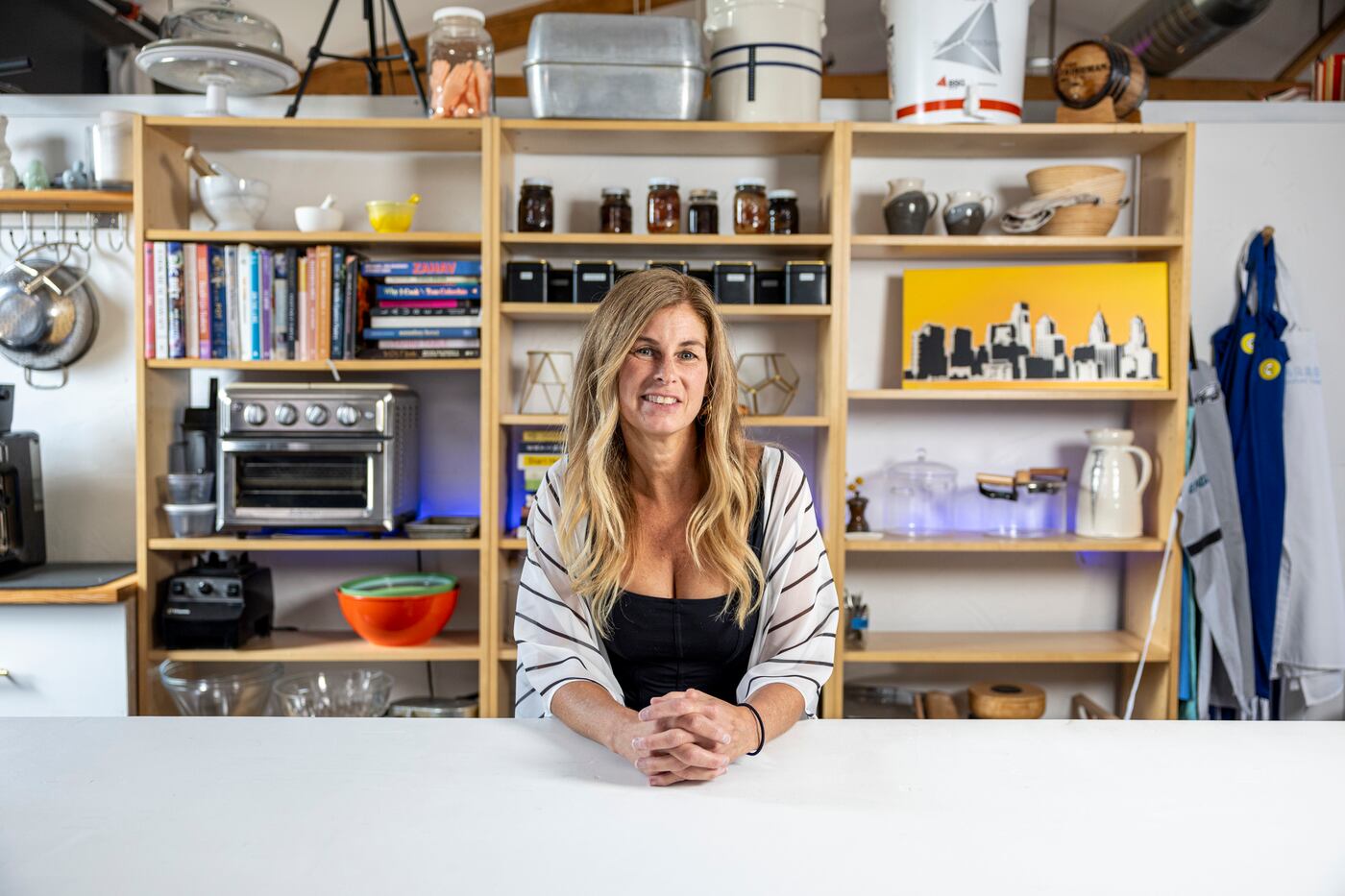
“I feel good here because I’m usually cooking something for Billy or someone else,” said Carroll. “The kitchen gives me a sense of relaxation, joy, and pride.”
The kitchen’s glossy red cabinets have made it instantly recognizable on social media, where Carroll and Riddle post cooking videos.
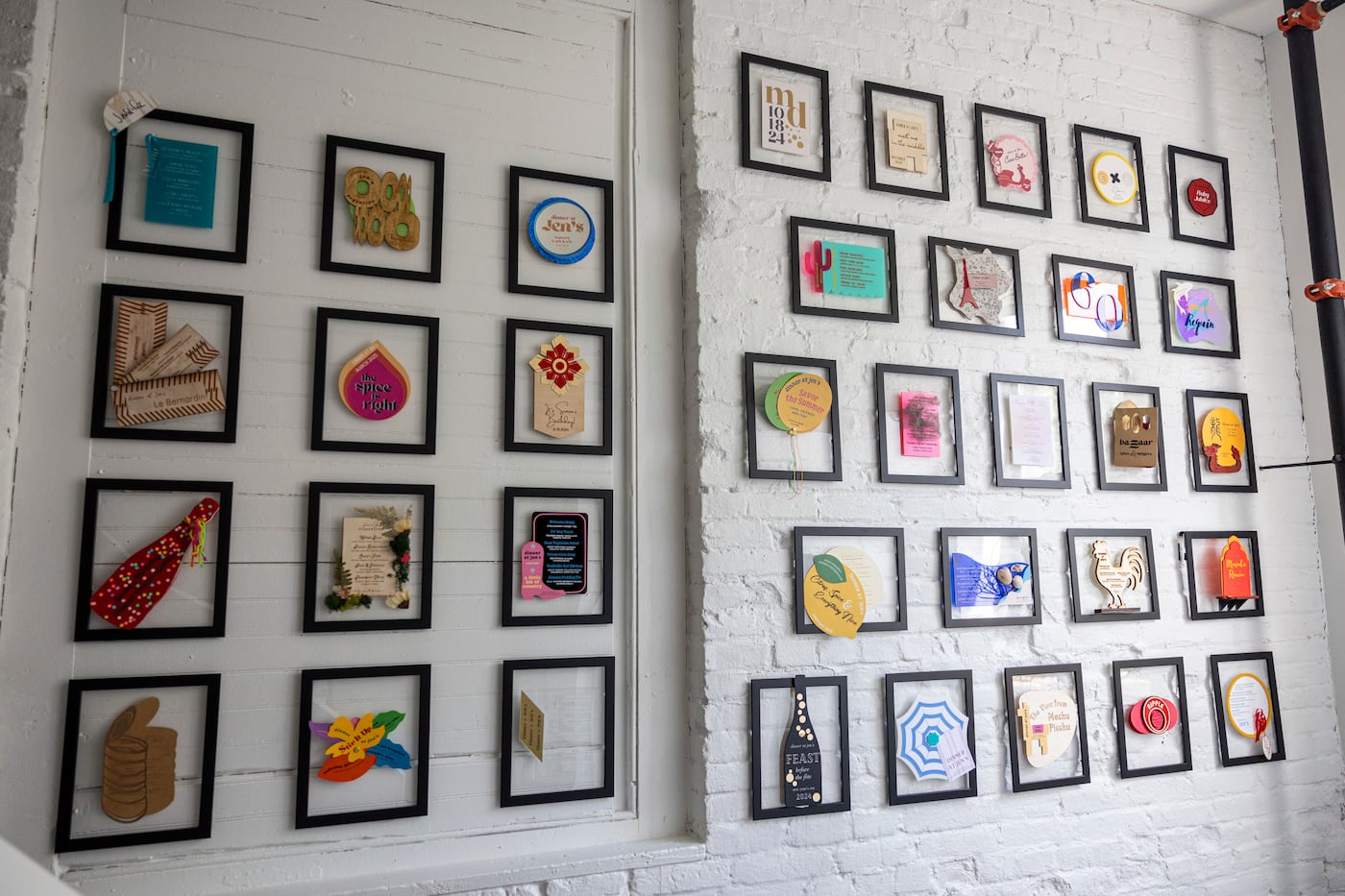
Guests ascend into the space from a foyer and staircase lined with framed menus from the couples’ dinners. The menus were designed by Tanti Lina of I Can Be Purple. “Billy did most of the work of framing — they’re attached to the wall with Velcro,” said Carroll. “You can take each of them down and flip them around to see the backs of them.”
The warehouse once served as the home of Philly-famous candy Peanut Chews. Carroll and Riddle pay homage to the iconic candy by offering guests candy from a crystal dish near the entrance.
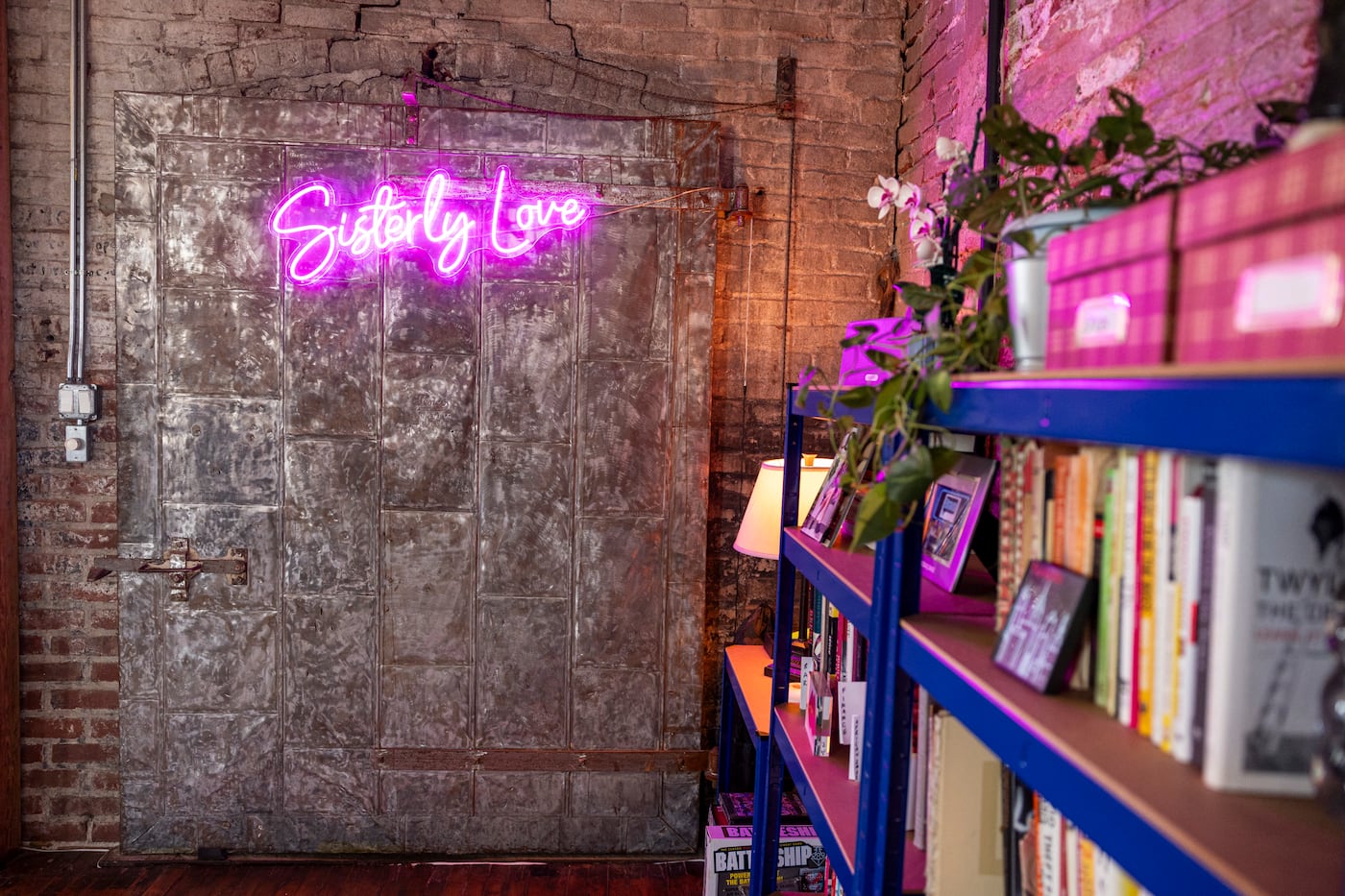
Aside from doors that hide a bathroom and the couples’ bedroom, the apartment is an enormous open space with well-worn patchworked wood floors and exposed beams. Carroll is one of the founders of the Sisterly Love Collective, through which she mentors and connects women in food in Philadelphia. A pink neon sign reading “Sisterly Love” covers the tin door that hides a long-defunct elevator shaft.
“I put it in neon so you can’t miss it,” she said.
A Craftsman toolbox sits on the countertop, holding the couple’s knives, mandolins, and small kitchen tools. That it perfectly matches the cabinets is pure happenstance. “It’s camouflaged in this kitchen,” laughed Carroll.
Spices are kept in neatly labeled metal tins in the cabinet above the toolbox.
There are prep tables flanking one wall, outfitted with skirts hiding stacks of sheet pans, pots, and appliances. Two KitchenAid stand mixers sit in one window, along with a Cuisinart toaster. Cookbooks are scattered throughout, interspersed with art gifted by friends and private dinner guests.
The long dining table from CB2 is surrounded by rattan-backed chairs purchased from Amazon. On a nearby wall, between the table and a nook where wine is stored, an abstract painting by Santa Fe-based artist Wendi Haas pulls all the colors of the space together. It was a gift from interior designer Madison Alpern, Haas’ niece.
When she “saw the space and our teal, pink, and yellow colors …, she brought us a painting that had been done by her aunt and that had been hanging in her house,” Carroll said. “I love it.”
From tiny to ‘where all good things in life begin’
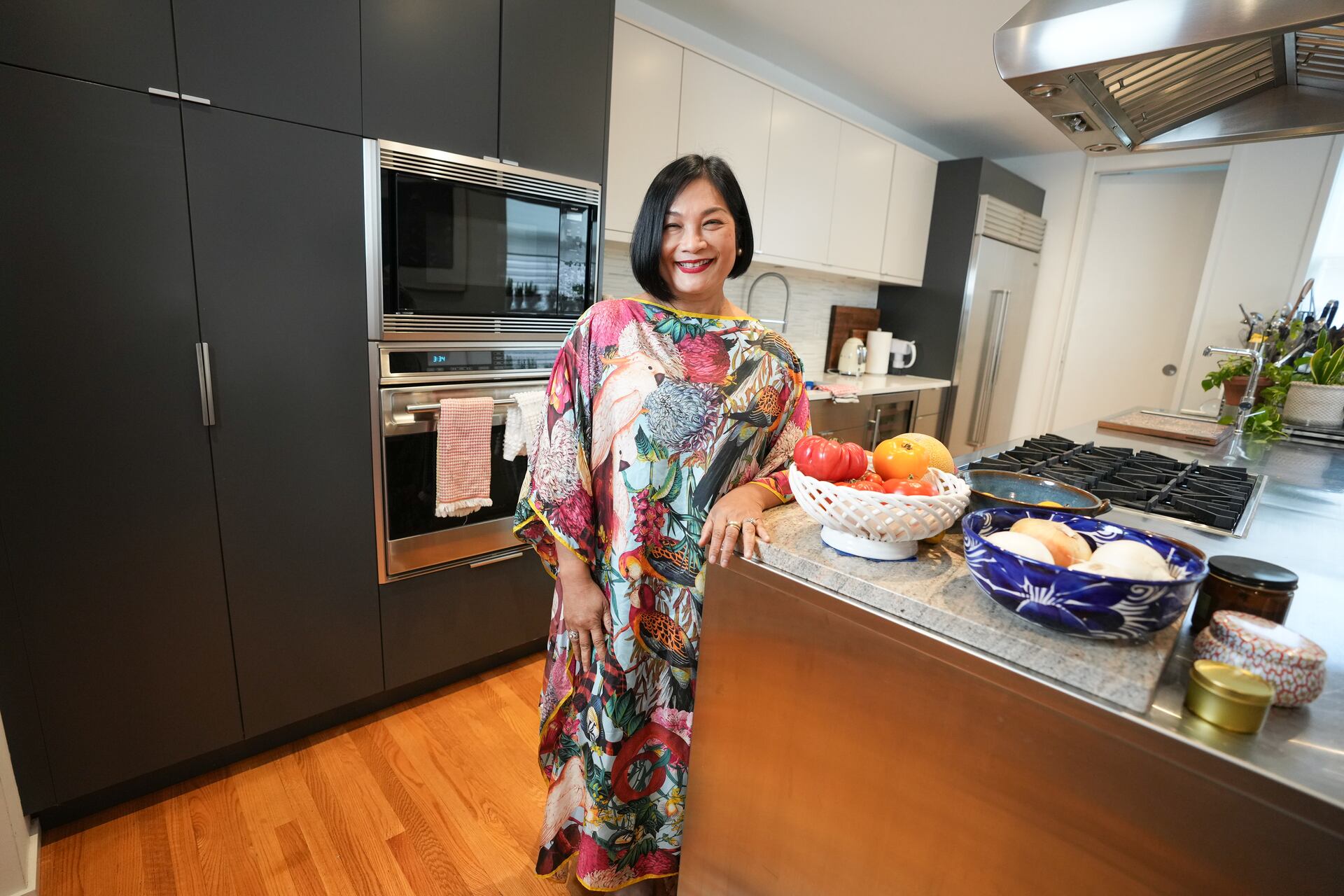
The chef: Kalaya’s Nok Suntaranon
The space: A 1,460-square-foot condo in Queen Village
Recipe for success: Make your space inspire you.
As you ascend the wooden stairs of Nok Suntaranon’s century-old Queen Village condo, the first things you see are gleaming stainless steel countertops and a large, industrial hood over the stove.
“Stainless steel is really good for rolling out dough. I wanted to be able to make croissants and pastries on the counter and have it be easy to clean,” she said. “It has marks on it because we use it. They’re like pieces of memories that get recorded every single time we use it.”
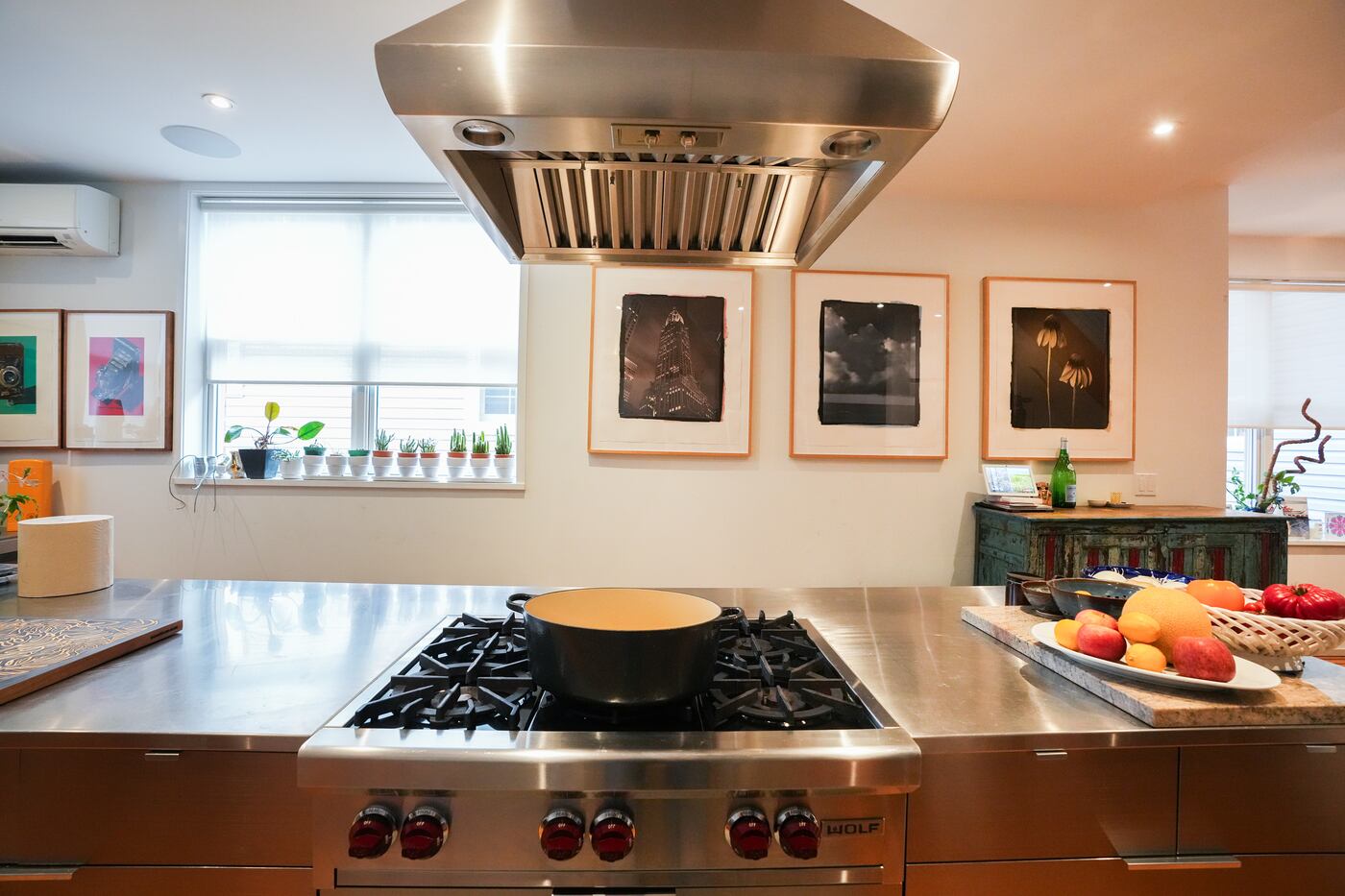
The Kalaya chef’s kitchen is singular in its presence, not unlike the chef herself, who was recently named North America’s best female chef at the 50 Best Restaurants Awards.
When Suntaranon and her husband Ziv moved into the house in 2007, it had a “tiny little kitchen.” Suntaranon wanted to change everything, longing for the big open space she has now, with commercial grade countertops like the ones she used in culinary school.
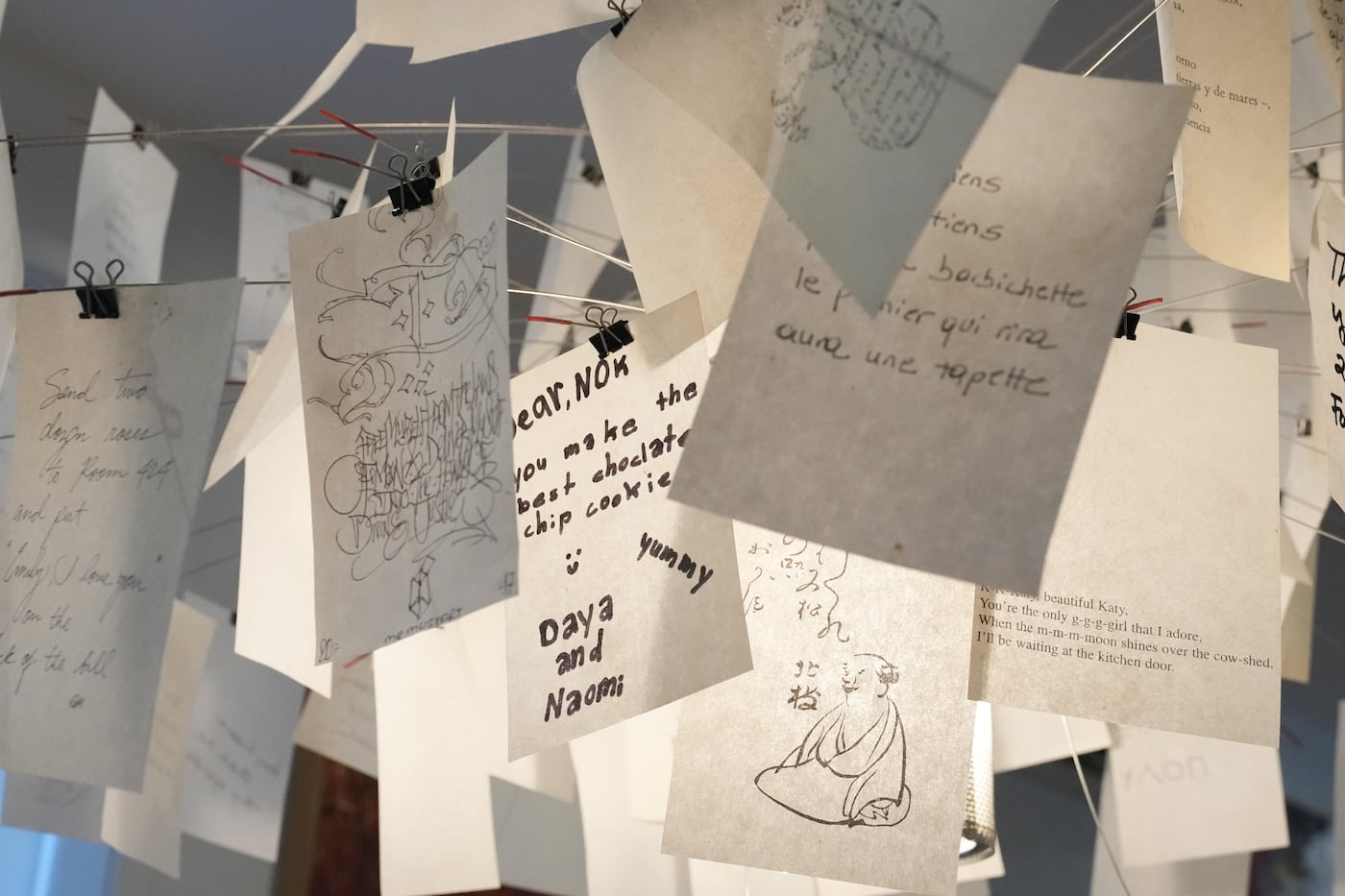
So the couple got work, demolished the walls separating three small rooms on the floor. Now, the kitchen flows into a dining room with a table that seats eight, lit from above by Zettel’z chandeliers designed by German industrial designer Ingo Maurer. The same fixtures hover about the banquettes of Kalaya, the airy Fishtown restaurant designed to resemble Suntaranon’s own art-filled home.
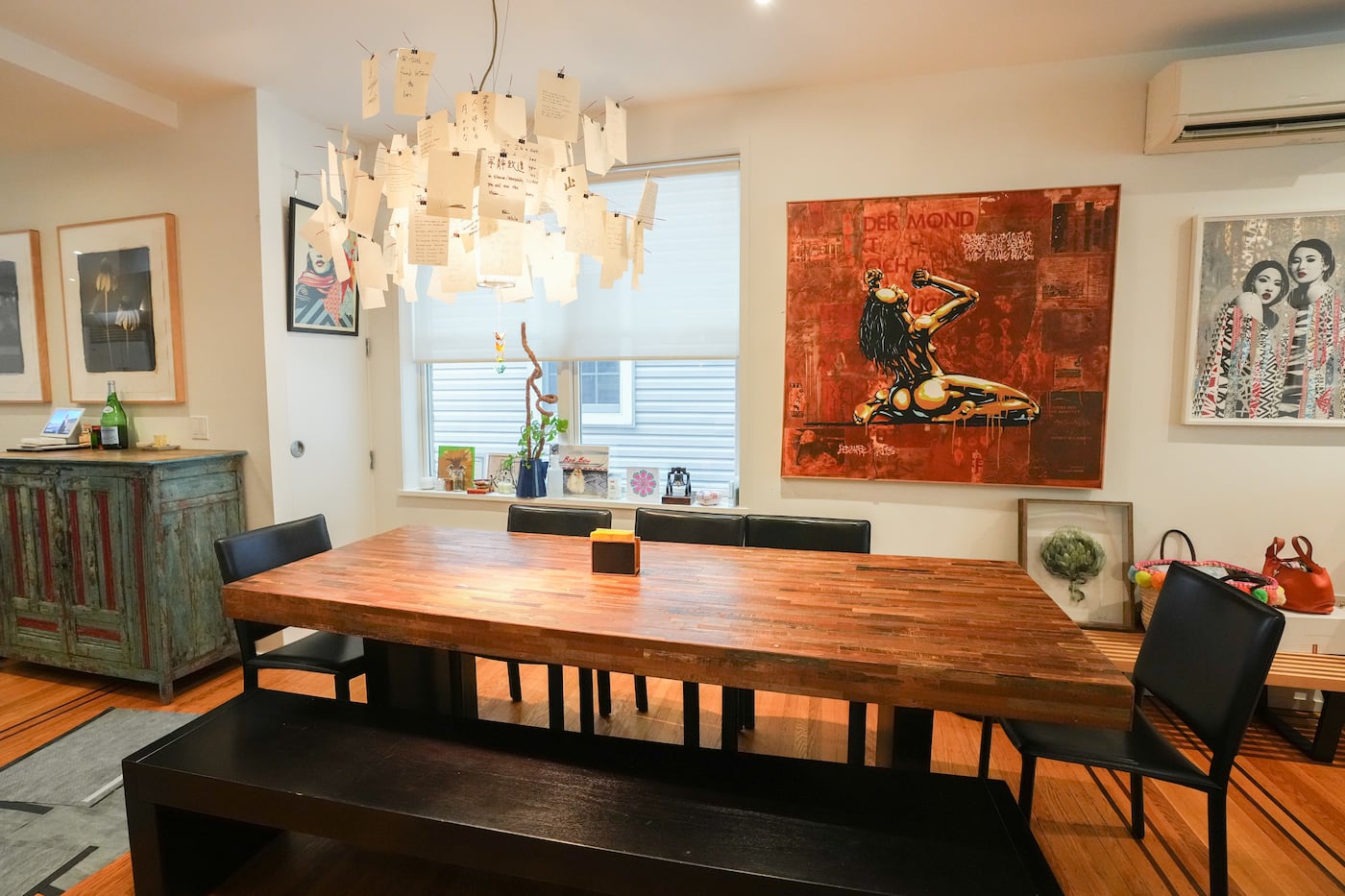
She worked with Kevin Angstadt and Stephen Mileto of local design studio Qb3 LLC and fabricator Erector Sets to bring her vision of a culinary school-inspired kitchen to life. Kitchen renovations were finished in 2011 and the space has become Suntaranon’s haven.
“I cook everything in this kitchen. In winter, I make bone broths and in summer, tomato sauces. Every morning I make scrambled egg omelets for the boys,” she said, referring to her two Pomeranians, Titi and Gingy.
This kitchen is where Suntaranon did recipe testing for her cookbook, Kalaya’s Southern Thai Kitchen. It was designed to host intimate groups of students eager to learn from Suntaranon.
“I wanted this to be a teaching kitchen where people can gather around. I wouldn’t change anything about it. This is where all good things in life begin: friendship, inspiration, my cookbook.”
It’s also where Suntaranon’s impressive art collection begins.
Tom Burrell’s architectural photographs and three of Robert Cottingham’s woodcuts of vintage cameras hang on the walls near one of two wine fridges and a stainless metro rack neatly crammed with utensils and appliances. She’s indebted to Philly Neat Freaks for organizing the rack and keeping her kitchen and closets free of excessive clutter.
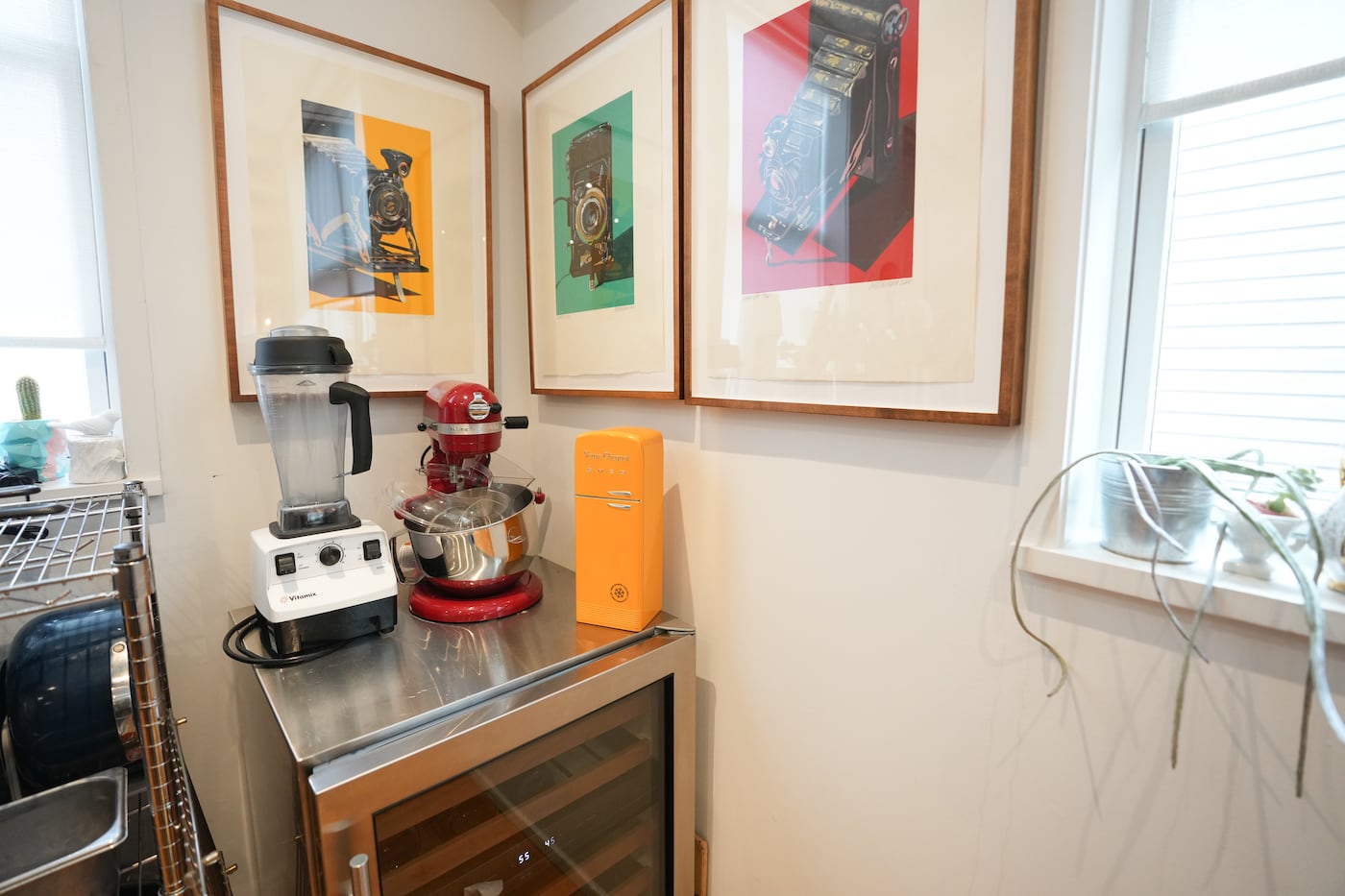
Neat Freaks owner Marlena Masitto “was a bartender before and worked in the industry,” and had a unique approach to managing Suntaranon’s items, renting a storage unit for four months to store excess kitchen tools, proving to Suntaranon that she really didn’t need that many.
The chef has a number of high-end luxury appliances and finishes: a Sub Zero refrigerator filled with condiments, a 10-year-old Jura coffee maker that Suntaranon raves about, and two sinks — one for washing dishes and the other for prepping produce.
The kitchen “gives me a sense of calm,” she said. “I see it when I first come home, and when I sit across the room on the couch. I feel like it’s peaceful and inspiring to look at every day.”
Using color to perk up a ‘landlord’s special’
The chef: DreamWorld Bakes’ Ashley Huston
The space: A 730-square-foot apartment in Cedar Hill
Recipe for success: Maximize your wall space
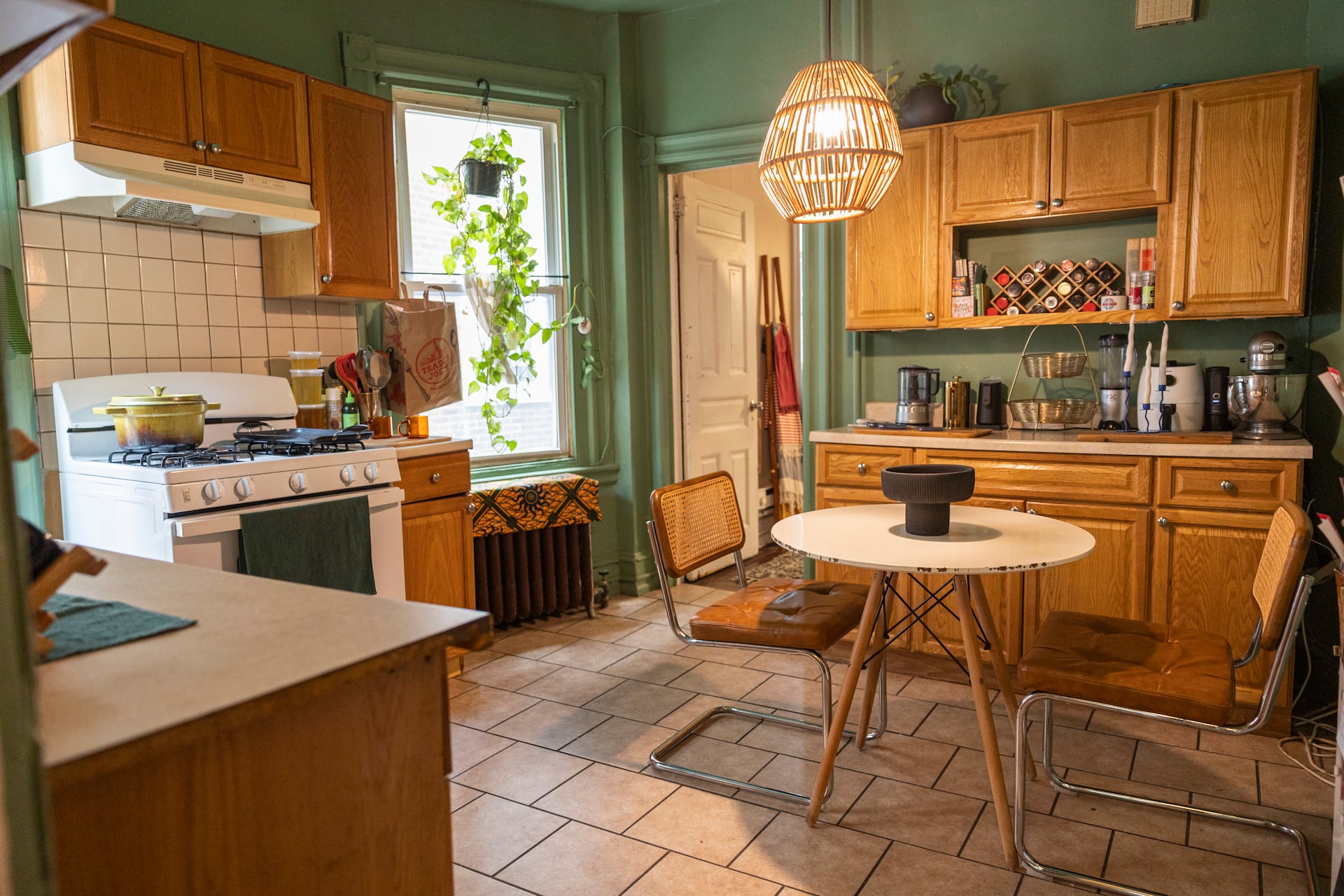
When baker Ashley Huston moved into her apartment in Cedar Park, she thought of the kitchen as “a landlord’s special,” very neutral.
“It was off-white, a blank kitchen. The cupboards and floors were the same color. I added a paint job, shelving, and pots and pans and furniture,” said Huston.
After the self-professed lover of glitter added personal touches, the space became a color-drenched, plant-filled haven. It’s an inspiring place for her to whip up her most ambitious creation yet: DreamWorld Bakes, a custom cake bakery that’s caught the attention of celebs including Patti LaBelle.
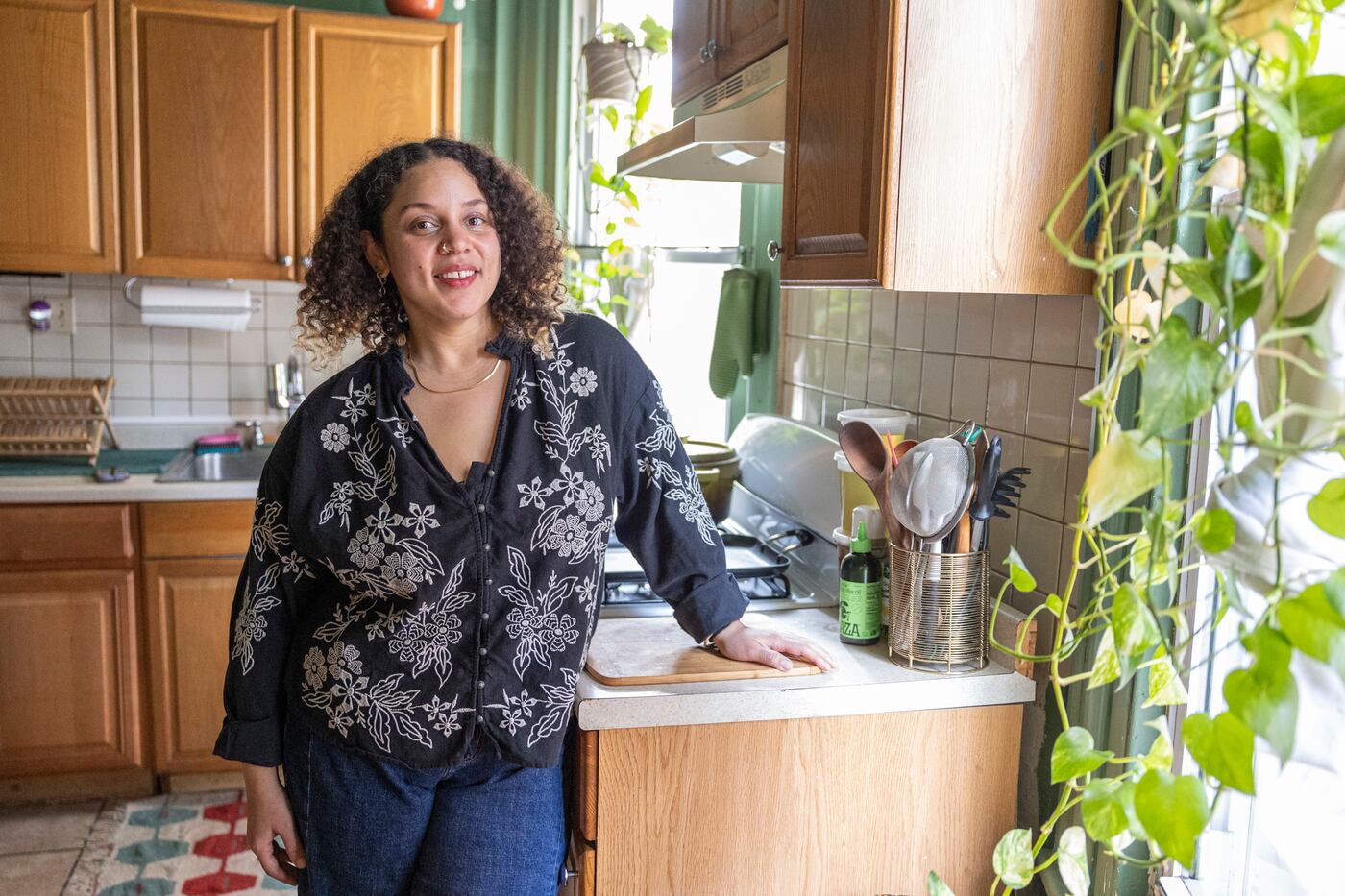
Huston painted her kitchen sage green and added pothos plants hanging in front of the windows. She added more color by tossing a bright Tanzanian sarong over a radiator — easy access to grab as a makeshift apron — and placing a Turkish rug, woven in deep shades of ocean blue and terracotta, atop the beige tile floor.
The cotton Tanzanian cloth is called a kitenge in Swahili.
“I got it … while I was in the Peace Corps. I brought it back in 2016,” said Huston.
The Turkish rug also has a story. “I went to Turkey last October on a friends’ trip. It was the vacation I won after being on the Sherri Shepherd show; they gifted me a vacation for my work during Black History Month. I wanted to bring back more rugs but they were pricey."
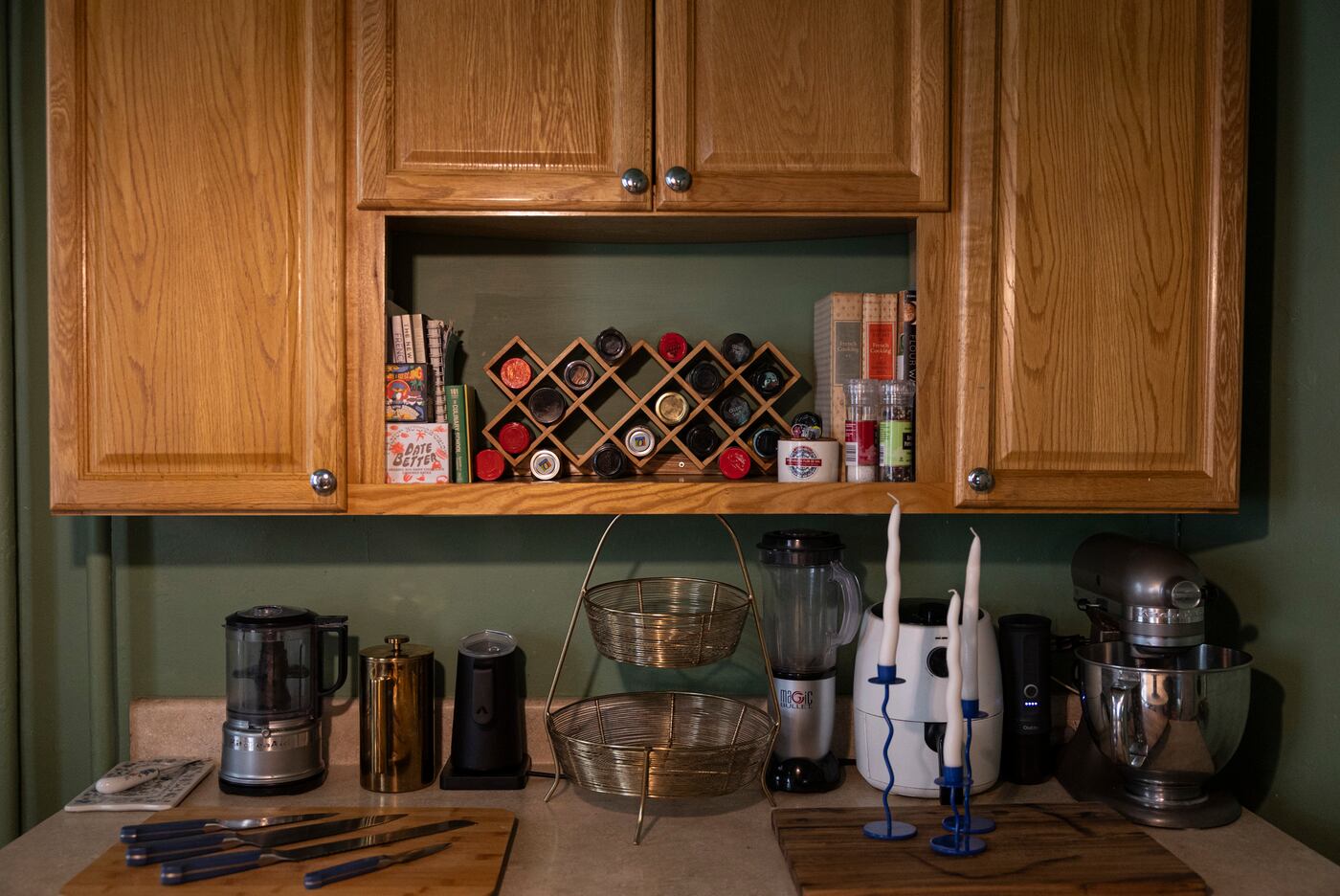
While you might expect a baker’s home kitchen to be stocked with baking supplies, Huston’s is surprisingly sparse in that area. Her collection of bench scrapers and many baking spices have been relocated to her East Kensington shop, which opened January.
The kitchen is accented by earthy tones, including a straw-covered light fixture, rattan-backed chairs, and a circular table that also served as a decorating stand when Huston started her micro-bakery.
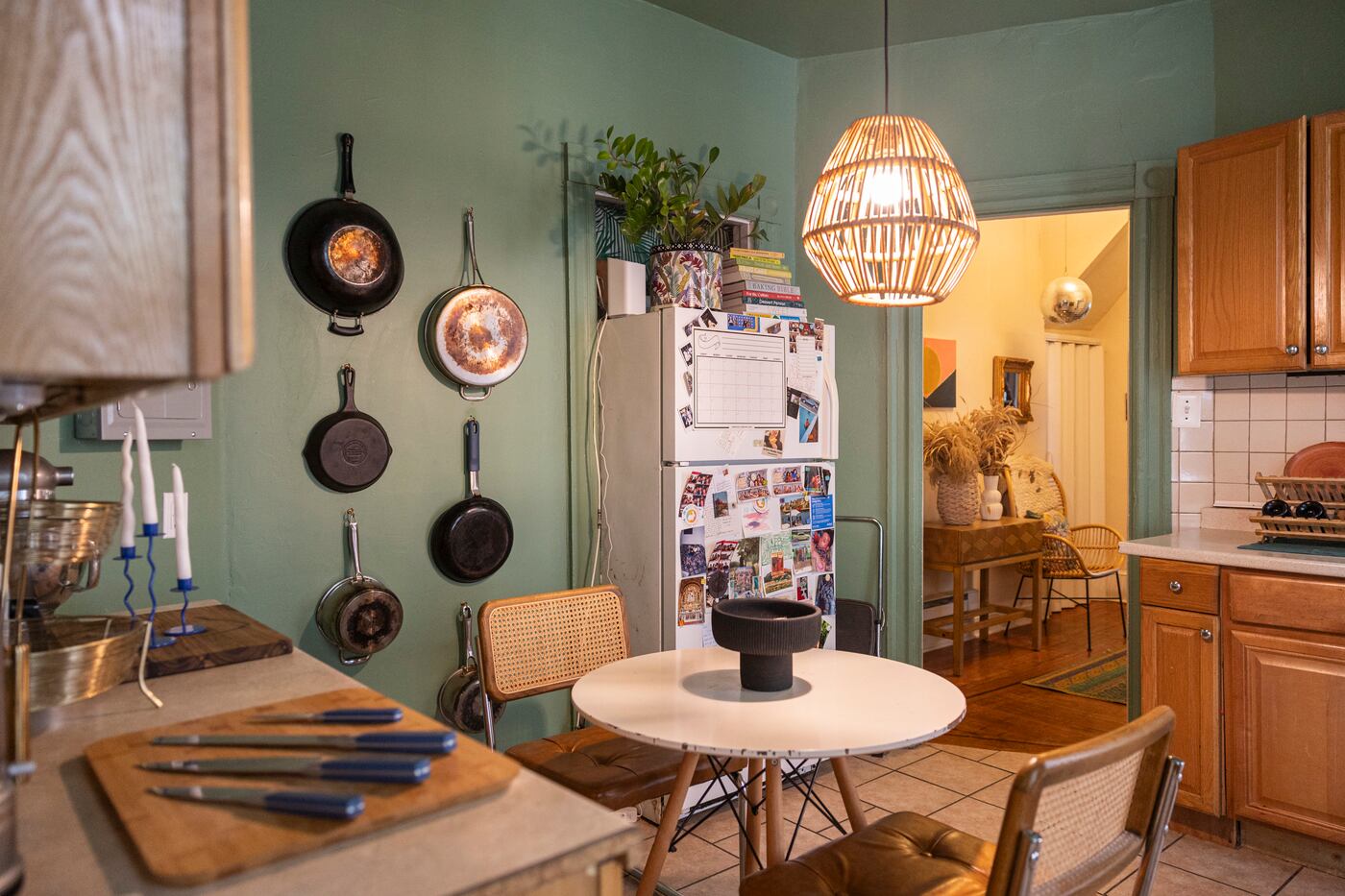
The three-room apartment itself is small — just 730 square feet — so the kitchen has only the essentials: no dishwasher, no microwave. But Huston made space to display her beloved KitchenAid mixer, shiny and silver. She’s tucked cooking spices into a deep shelf and stacked cookbooks atop her old-school white fridge. She keeps knives at the ready, splayed out on a bamboo cutting board on the counter.
Her best tip for maximizing the small space: use the walls for storage. Her pans hang neatly to the left of the refrigerator.
“I did the same thing in my little home in Tanzania,” said Huston. “It was in a small partitioned house so I had to get creative with utilizing space. I got gold hooks that matched the accents I decorated with. I’m all about using wall space,” said Huston.
‘Minimalistic with a little bit of glitz’
The chef: Ember & Ash’s Scott Calhoun
The space: A 3,000-square-foot town house in South Philly
Recipe for success: Let the kitchen breathe.
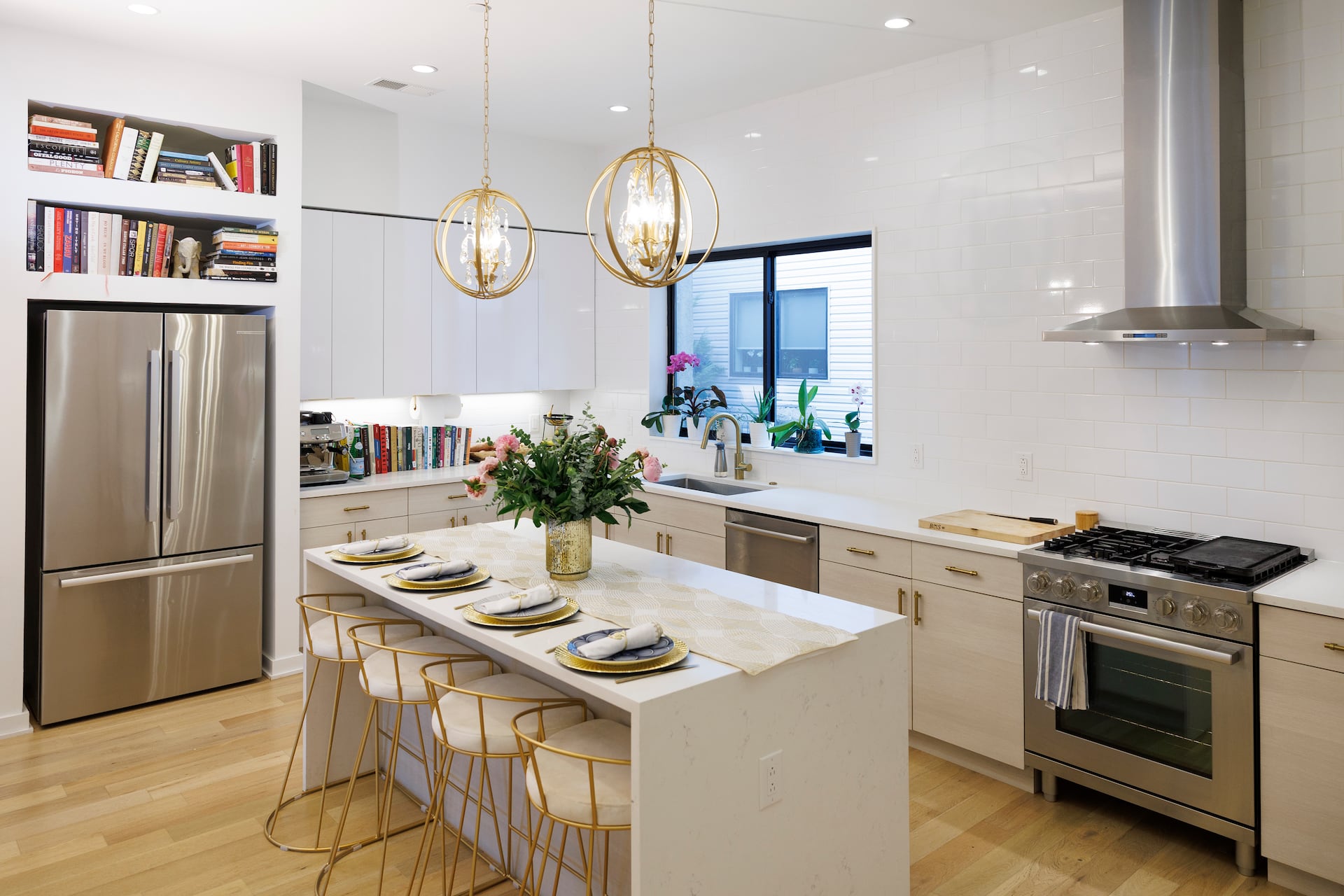
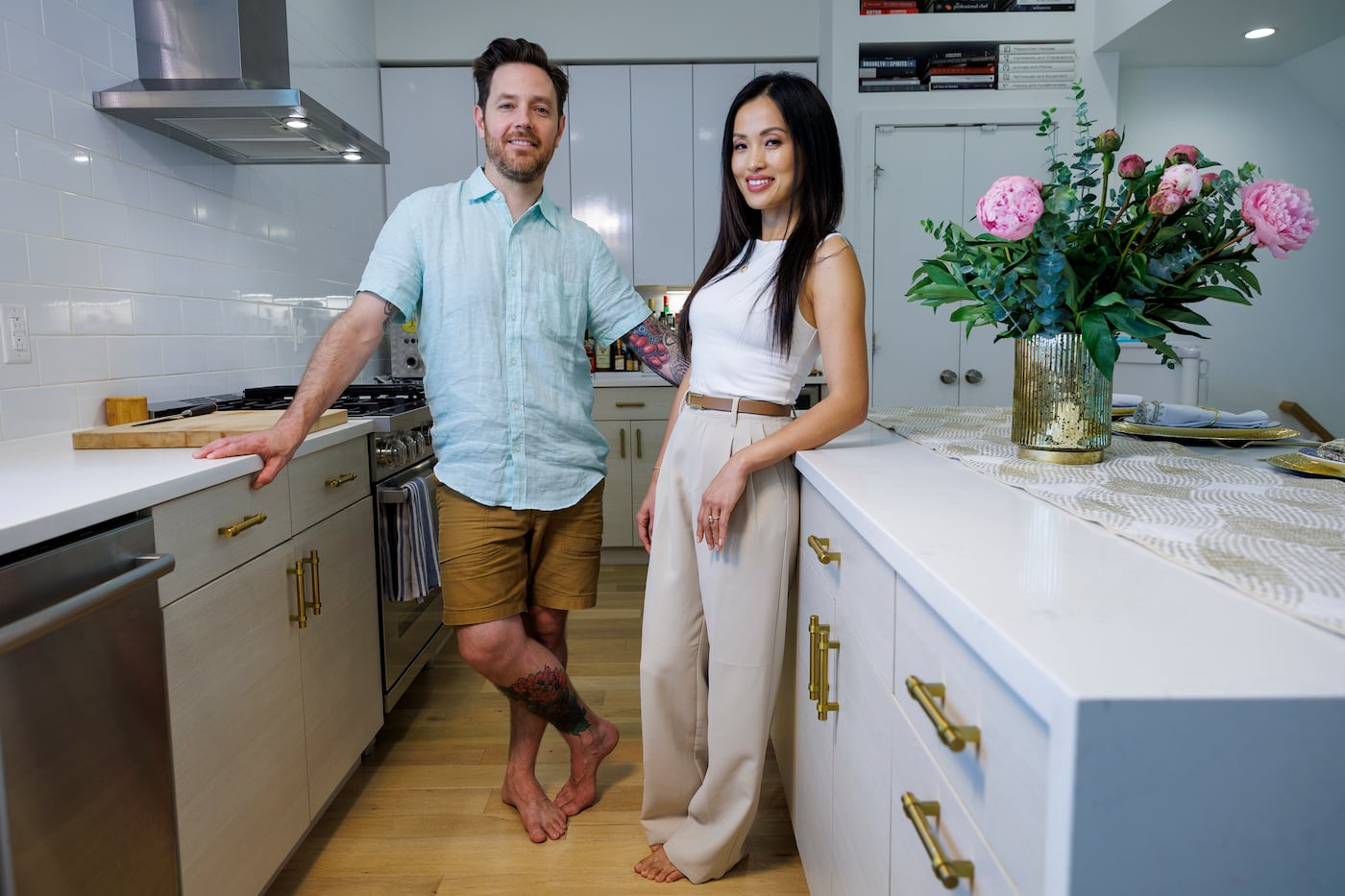
While Ember & Ash, Scott and Lulu Calhoun’s restaurant on East Passyunk, is a gastropub centered on wood-fire cooking, with dark gray walls, live-edge wood dining tables, and industrial metal chairs, the Calhouns’ home kitchen is its polar opposite.
In their South Philly town house, the kitchen is an oasis of gleaming white marble countertops, white subway tile, and glossy white cabinetry.
“It’s minimalistic with a little bit of glitz, fresh and bright. It’s like if Gwyneth Paltrow let her kids have sticky fingers,” said Lulu, describing the look she was aiming for when the couple bought the house three years ago.
There are no cabinets along the main wall of the kitchen, above the stove.
“It’s to let the kitchen breathe,” said Lulu.
The cabinets flanking either side of the central wall are filled with Calhoun’s homemade BBQ spice blends and Asian sauces, as well as Goldfish crackers for the couple’s two young children and treats for their cat and dog. Above each bank of cabinets are nooks crammed with Scott’s cookbooks, their thick colorful spines proclaiming cuisines from around the world.
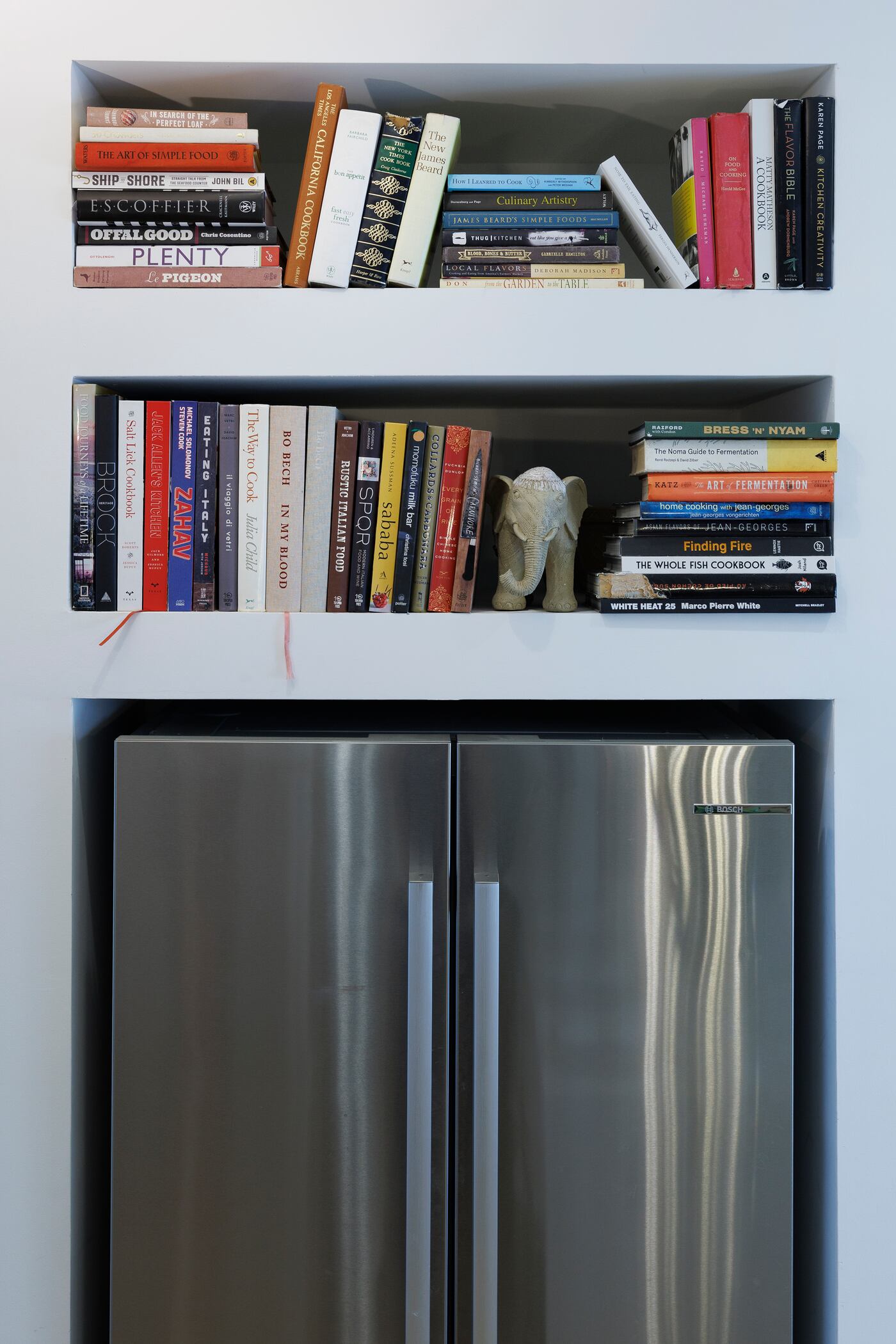
“There are even more cookbooks in the six other rooms in the house,” he said.
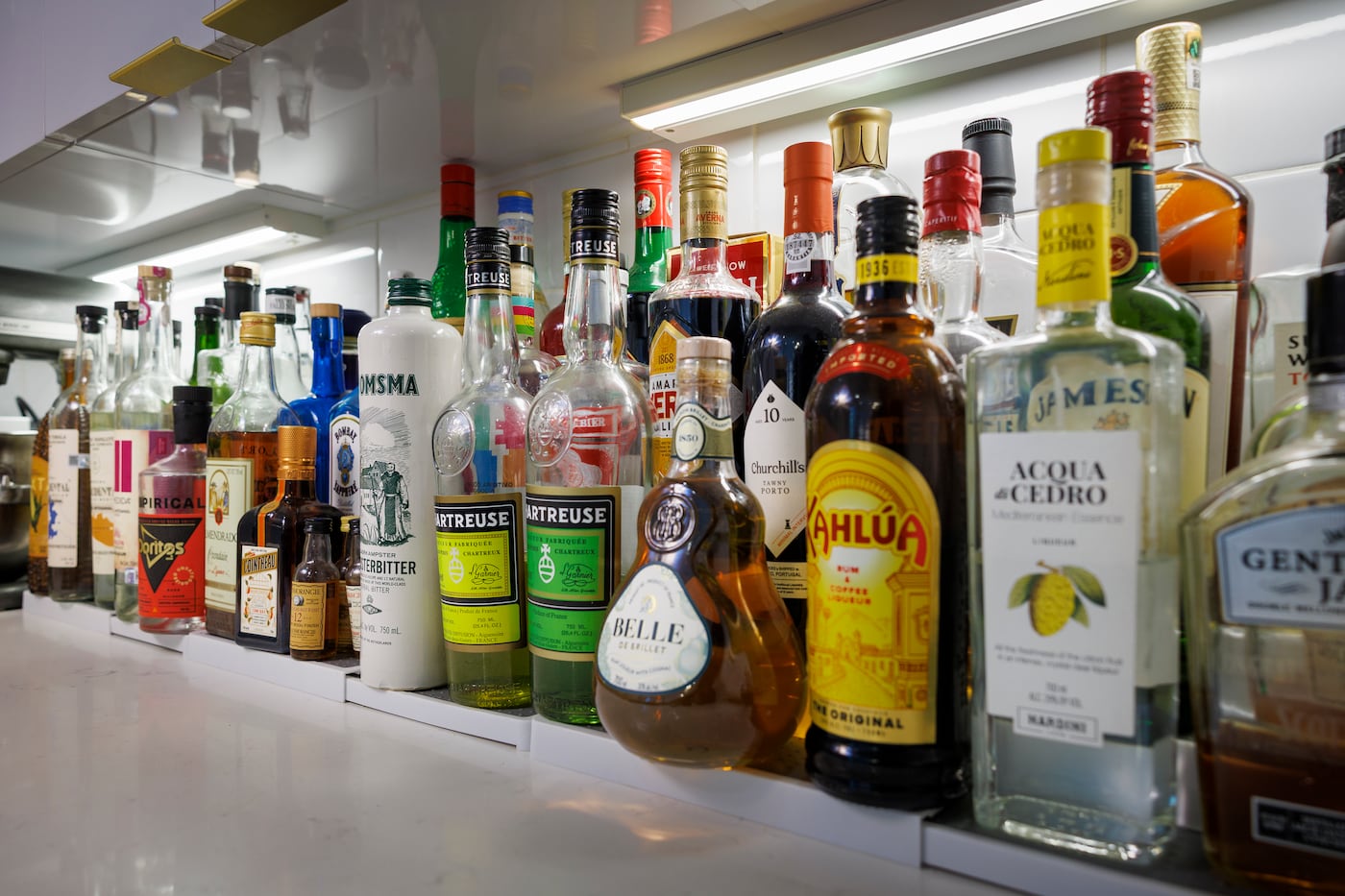
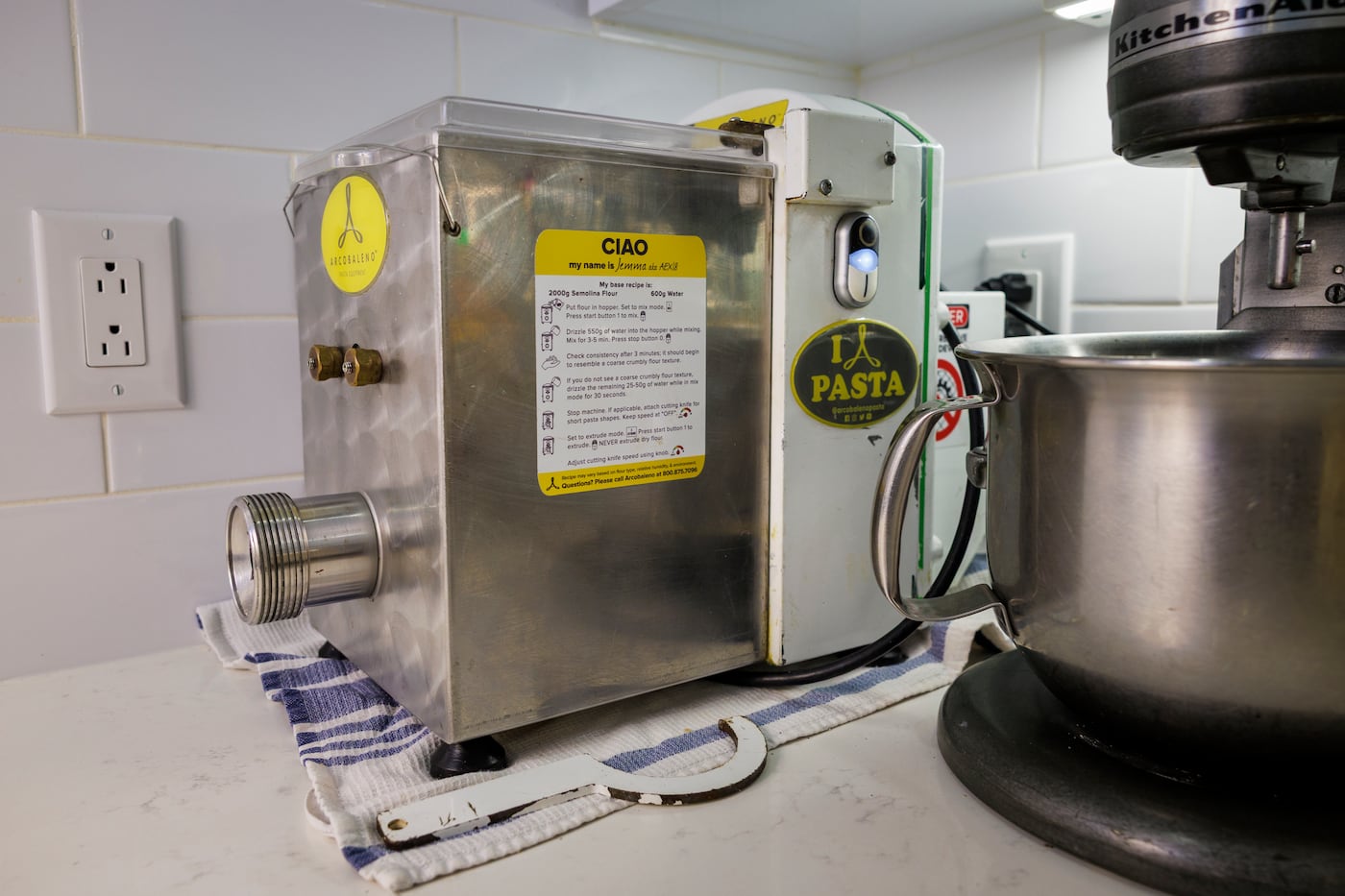
The couple strives to keep the countertops bare, “so it looks more open and minimalistic,” said Lulu. Still, a few items grace the gleaming countertops: a collection of esoteric liquors and liqueurs, including Doritos-flavored vodka from Copenhagen’s Empirical Spirits, set above a wine fridge stocked with rosé and coconut water. The couple also displays an Arcobaleno pasta machine made in Lancaster and purchased two years ago for $2,000, which Scott uses to make spaghetti alla chitarra and other noodles.
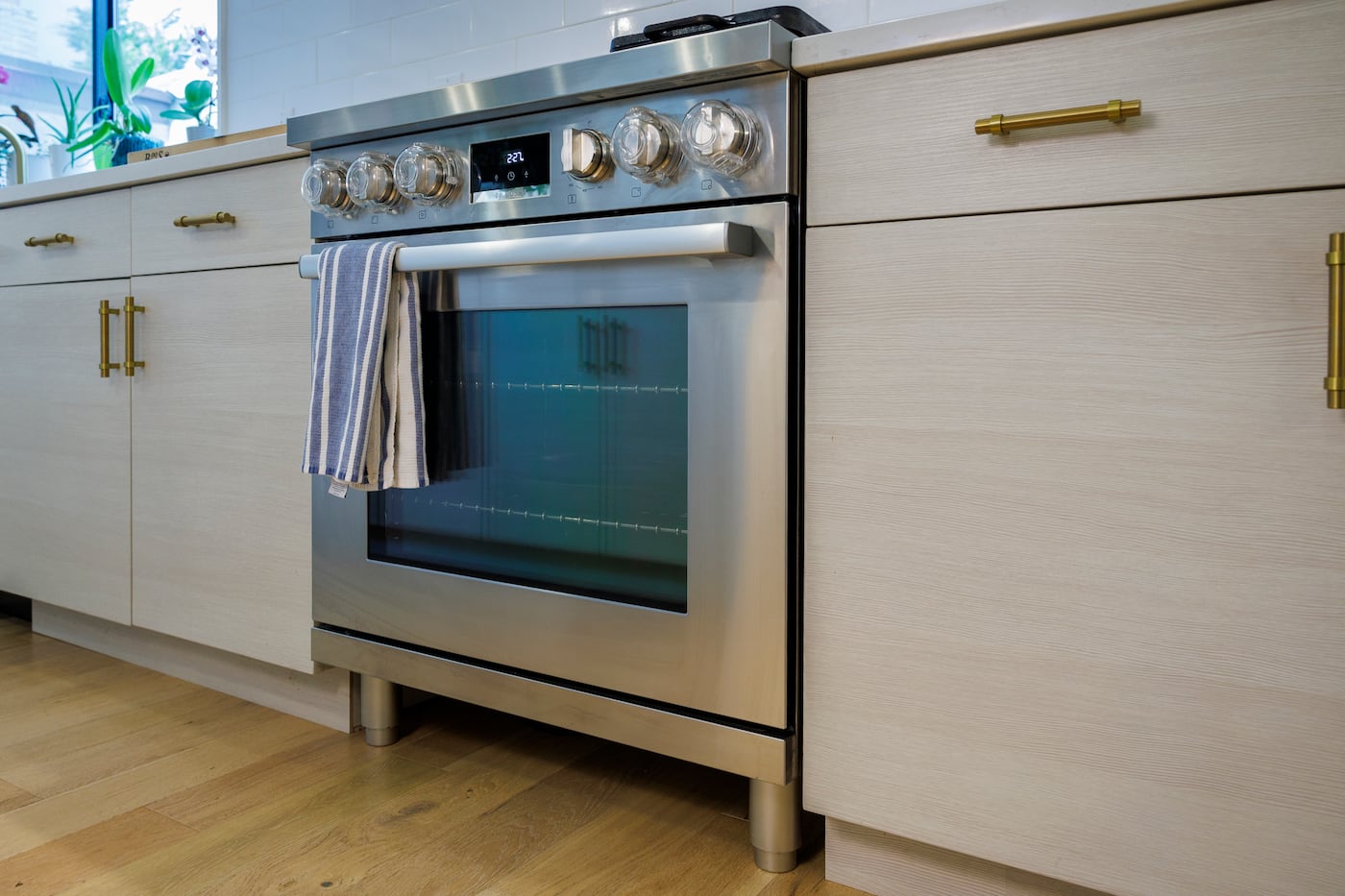
For Scott, the star of his home kitchen is the small Bosch range, which mimics that of a professional kitchen with its peg legs, allowing him to sweep under it. Its center burner is a high powered output burner, which allows him to almost mimic the “wok hei” essential to Chinese stir fries, the quintessential one-pot meal.
Scott is a different cook at home than in his restaurant, where he has an 8-foot-long custom grill from Grills by Demant in Atlanta.
At home, “how many one pot meals can I make so that we can get upstairs and get the kids to bed?” he laughed, confessing that in addition to using the range, he also makes those meals in an Instant Pot.
But for Lulu — who designed the kitchen from top to bottom, instructing their builders to put in specific finishes, like two dramatic gold and crystal light fixtures — the heart of it is the spacious, marble-topped island, equipped with so much storage that there is scarcely an appliance in sight. They are all tucked away in custom drawers beneath the island and countertops.
“The kitchen island is where we gather every day. The kids eat here, we cook here, we live here, we dance here. This is the focal point of the house,” said Lulu.