West Philly affordable housing project could finally advance, almost 6 years after it was proposed
A Cedar Park neighbor of a planned 104-unit affordable housing development lost a lawsuit that challenged the city’s zoning change to facilitate the project.
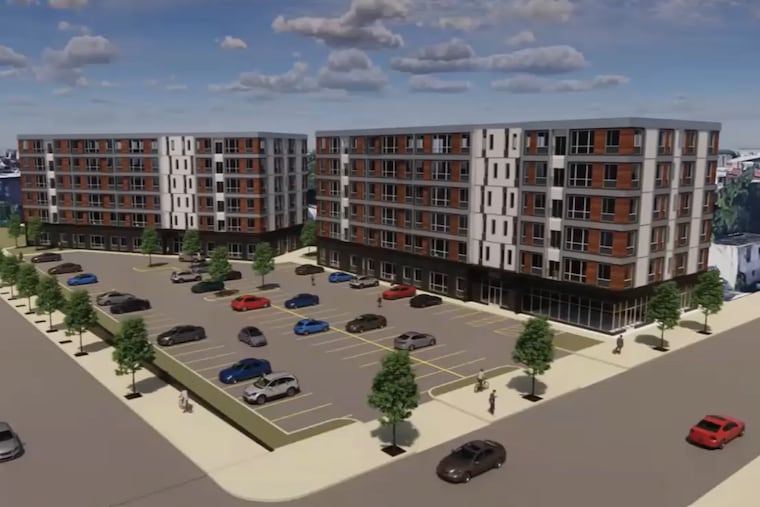
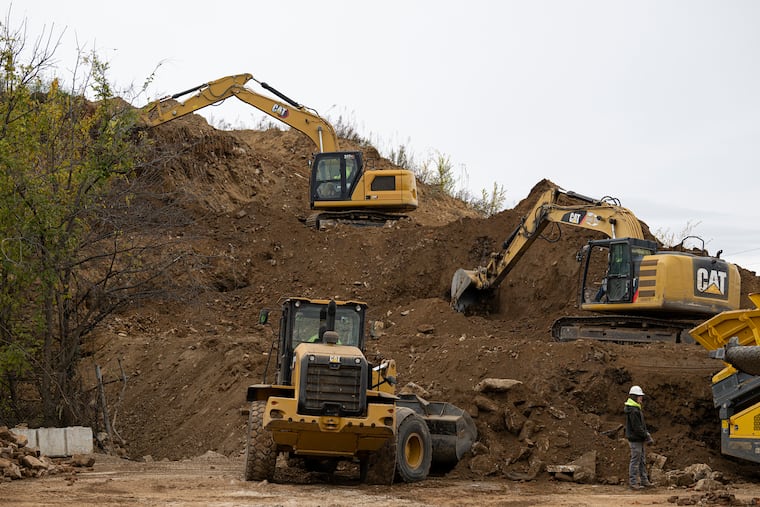
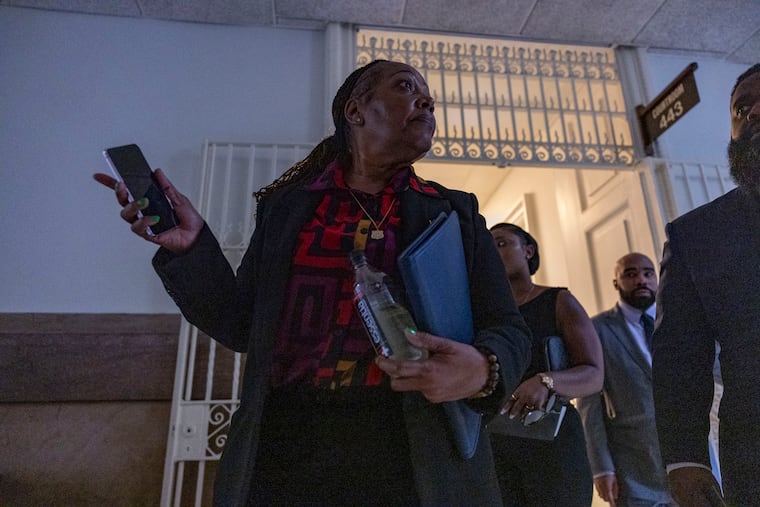
An affordable housing project slated for a junkyard in Cedar Park took a step forward Wednesday, when a Philadelphia judge rejected a neighbor’s challenge. The courtroom victory brings the 104-unit, two-building project, which was conceived in 2020, closer to reality.
Common Pleas Court Judge Idee Fox ruled that the new zoning of a triangular group of parcels on Warrington Avenue, which allows for buildings up to seven stories, was legal.
Melissa Johanningsmeier, who lives next to the planned development, sued the city to stop the project in 2023, arguing that the building was inconsistent with the city’s goal of preserving single-family homes in Cedar Park.
Johanningsmeier said in court filings she would be harmed by the parking, traffic, and loss of green space if the project were to proceed.
The homeowner told Fox during a two-day October bench trial that there was widespread discontent with the project in the neighborhood.
The judge seemed skeptical, as Johanningsmeier’s attorney didn’t provide witnesses or evidence to support claims of widespread backlash to the project that has been promoted by City Councilmember Jamie Gauthier.
It was not for her to decide whether the project was the best idea, Fox said, but whether the zoning was constitutional.
“If the community is unhappy with what’s being done, they have the right to express their concerns to the councilwoman at the ballot box,” Fox said.
Junkyard controversy
The project dates to 2020, when New York affordable housing developer Omni formulated plans to add 174 reasonably priced apartments to the West Philadelphia neighborhood.
But the developer’s plans for the junkyard at 50th and Warrington met opposition due to the proposed buildings’ height — six stories — and parking spaces for less than a third of the units.
Omni’s plan required permission from the Zoning Board of Adjustment to move forward, which was more likely to succeed with neighborhood support. So they compromised.
A new design unveiled in 2021 pushed the buildings back to the edge of the site, to avoid putting neighboring homes in shadow. A surface parking lot would offer 100 spaces for the 104 affordable apartments.
These concessions appeased almost all of the critical neighbors and community groups. Many of them supported Omni before the Zoning Board of Adjustment, which granted the project permission to move forward.
But Johanningsmeier remained a critic. She lives on the border of the property and challenged the zoning board’s ruling in Common Pleas Court. Judge Anne Marie Coyle ruled in her favor, arguing the new building “would unequivocally tower over the surrounding family homes.”
In the aftermath, Gauthier passed a bill to allow the project to move forward without permission from the zoning board. Johanningsmeier then sued over that legislation as well.
Affordable housing and fruit analogies
The issue at the heart of the case was whether a zoning change to allow for large multifamily buildings was considered spot zoning on the small parcel, which Johanningsmeier’s lawyer argued was inconsistent with the types on buildings on surrounding properties.
Just because the “mega apartment buildings” are for residential use doesn’t make the project similar to the surrounding zoning, which mostly allows single-family homes and duplexes, Edward Hayes, a Fox Rothschild attorney representing Johanningsmeier, told Judge Fox on Wednesday.
“A cranberry and a watermelon are fruit,” Hayes said. “They are not the same.”
And while affordable housing is a laudable cause, the attorney said, that doesn’t mean that the city should “shove it down the throat of a community” in the form of large buildings that are out of character with the rest of the neighborhood.
An attorney representing the developer, Evan Lechtman of Blank Rome, told the judge existing buildings of similar height are nearby, across the railroad track in Kingsessing.
“We are transforming a blighted, dilapidated junkyard into affordable housing,” the developer’s attorney said.
Johanningsmeier’s lawyer, Hayes, declined to comment after the ruling, which could be appealed.
Gauthier celebrated the outcome as a victory against gentrification.
“Lower-income neighbors belong in amenity-rich communities like this one, where they can easily access jobs, healthcare, groceries, and other necessities,” said Gauthier. ”I hope the court’s ruling puts an end to gratuitous delays.”
Housing advocates note that the years of neighborhood meetings and lawsuits over the project are an example of why housing, and especially affordable units, has become so expensive to build in the United States.
In the face of determined opposition from even a single foe, projects can incur millions in additional costs.
“It’s a travesty that one deep-pocketed opponent has been able to block access to housing for over 100 families in my neighborhood for years,” said Will Tung, a neighbor of the project and a volunteer with the urbanist advocacy group 5th Square. “It’s more expensive than ever to rent or buy here, and this project would be a welcome change to its current use as a derelict warehouse.”