Boyd Theatre owners want to remove historical marquee, angering preservationists
The Boyd Theatre was at the heart of a historic preservation conflict that helped revive the movement in Philadelphia.
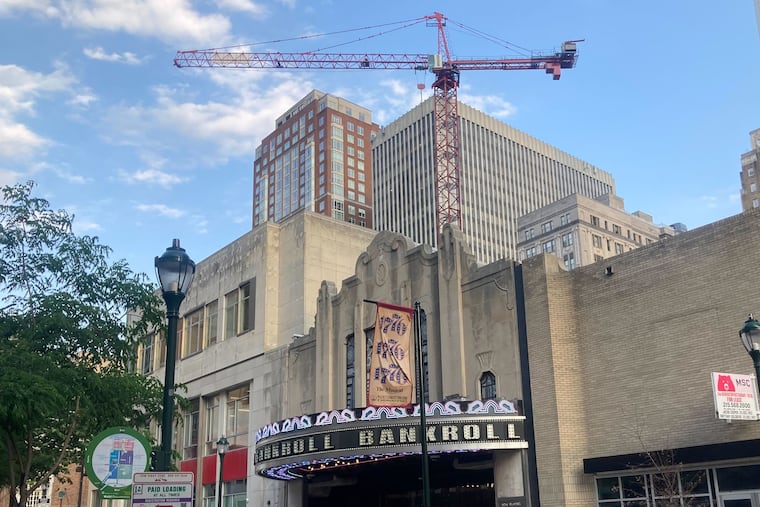
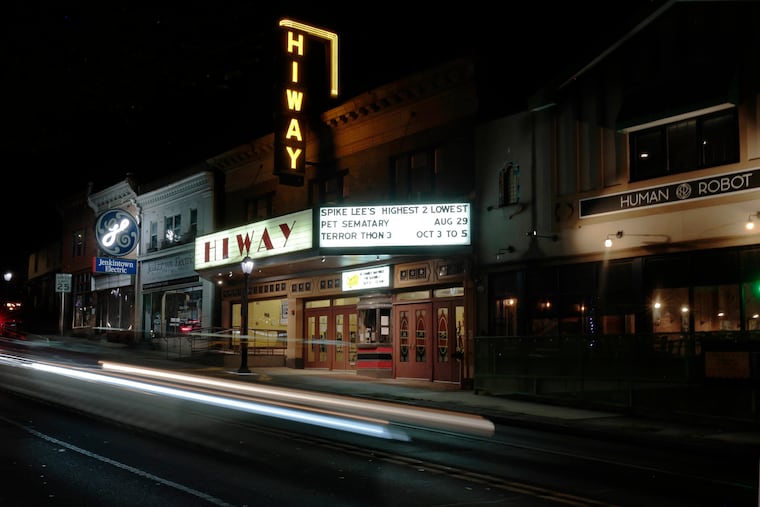
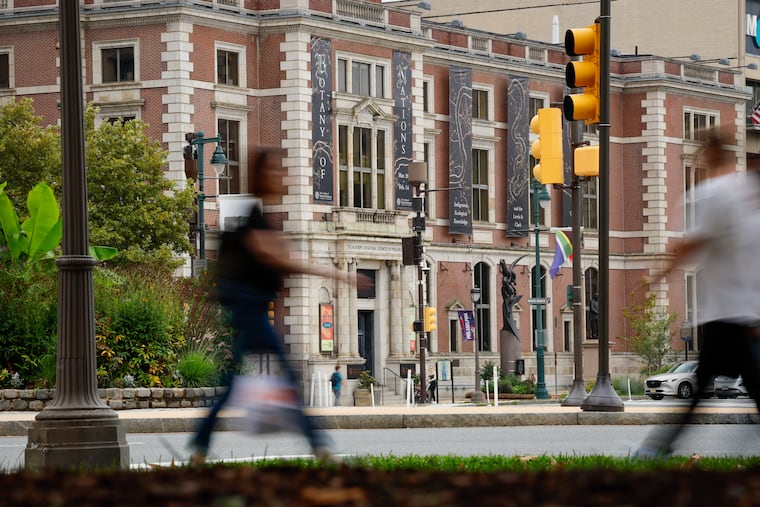
Pearl Properties is looking to dramatically alter the facade of the former Boyd Theatre at 1910 Chestnut St., scrapping the marquee and installing a new storefront flush with the sidewalk in hopes of attracting retail tenants.
For preservationists, long embittered by the loss of most of the theater building, the proposed renovation is a betrayal of a 2014 agreement between advocates for the building and property owners that allowed for the demolition of the auditorium in exchange for preservation of the facade.
But Pearl Properties argues that despite its prestigious location, the historically protected building has failed to attract tenants. In the last 12 years the only business that tried to make it was Bankroll, a sports betting oriented bar that went out of business in four months.
“The general feedback from prospective tenants is that while the location on Chestnut Street is prominent, the marquee and recessed storefront burden the space and create a nonretail experience,” said Reed Slogoff and Jim Pearlstein, who lead Pearl Properties, in an email to the Historical Commission.
“Specifically, commentary centers on the fact that the entrance feels like a movie theater, traditional signage, storefront and lighting are not available and there is a general lack of visibility,” they wrote.
In Pearl’s letter, they submit a list of 120 businesses that have considered, and ultimately decided against, locating in the former Boyd Theatre building. These include retailers like REI, restaurants like Iron Hill Brewery, and the movie theater company Alamo Drafthouse.
“To date, ownership has invested in excess of $2 million in connection with improvements to the property in the hopes of leasing it,” the letter reads. “The alterations requested will allow the property to be visible and leasable.”
The Boyd Theatre was an iconic Art Deco movie palace built in 1928, and lavishly decorated both inside and out. It closed as a theater in 2002 and then went through a series of proposals and owners that ultimately resulted in Pearl acquiring it in 2014.
The developer needed the property for its 24-story apartment building, known as The Harper, next door.
That development has proved to be one of Center City’s most popular rentals, and Pearl is now building a sequel across the street at 113-121 South 19th St. A tower crane for the project was installed last weekend.
But their plans for the original Harper also required the demolition of much of the Boyd Theatre, notably its uniquely decorated auditorium. (Some of its accoutrements have been moved to the Woodmere Museum in Chestnut Hill.)
In 2008, the building was protected from demolition by its inclusion on the Philadelphia Register of Historic Places.
That didn’t save the Boyd though. After years of battles to preserve the theater, in 2014 the Historical Commission agreed to allow demolition and accepted arguments that a new use could not be found for the building.
Shortly thereafter, advocates struck a deal with the then-property owners that allowed for the preservation of the exterior on Chestnut Street, the foyer, and lobby.
The fight over the Boyd is seen as one of the events that galvanized the resurrection of Philadelphia’s historic preservation movement and spurred the addition of more buildings and whole neighborhoods to the register, giving them protection from demolition.
Pearl’s designer for the redevelopment of the facade is Ambit Architecture.
In a separate message to the Historical Commission, Ambit’s principal Rich Villa argues that the developer was not required to preserve the marquee by the 2014 approval and that it is “nonoriginal” to the building.
Historic preservationists, however, oppose Pearl’s move.
The Preservation Alliance of Greater Philadelphia said it is researching what elements of the facade are legally protected.
“The loss of the marquee would drastically degrade the historic character of the building,” said Paul Steinke, president of the Preservation Alliance.
“We are also hard-pressed to understand why any prospective retail tenant would not want to make use of what amounts to a giant accessory sign for their business, as other former theaters along Chestnut Street have done,” he said.
The changes will be considered by the commission’s Architectural Review Committee next Tuesday morning, which will then advise the larger body on a final ruling.