One of Philly’s last architecturally intact old movie theaters is officially recognized as historic
The Circle Theatre on Frankford Avenue was built in 1929 for what was once the largest movie theater chain in the country. It’s “a significant surviving example” of a neighborhood movie theater.
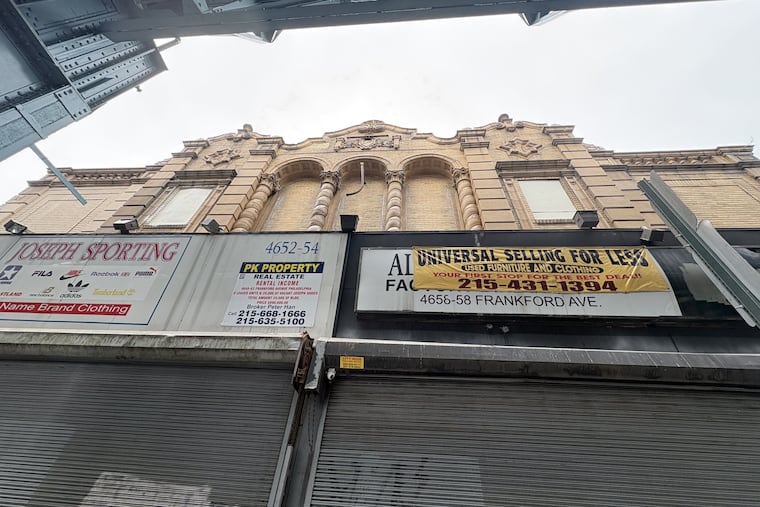
The Circle Theatre in Frankford, built in 1929 for what was once the largest movie theater chain in the country, is now officially recognized as historic.
The Philadelphia Historical Commission voted Friday to add the former movie theater on the 4600 block of Frankford Avenue to the Philadelphia Register of Historic Places.
According to the nomination, the Circle Theatre is “a significant surviving example of a neighborhood theater from a period when many were built” in the 1910s and ‘20s. The theater’s architects, Hoffman-Henon Co., “significantly shaped Philadelphia’s built environment through their commissions for theaters and Catholic institutions,” such as churches and schools.
The decorative facade of the Circle Theatre includes architectural terracotta with ornamental details and columns that have been preserved. The structure was a movie theater from the time it opened in 1929 until 1953, according to the nomination. The building, which included some commercial space, was then converted exclusively for commercial use and now includes both occupied and vacant storefronts.
“The Circle Theatre is absolutely a landmark, and there’s still people who remember coming up [Frankford Avenue] to go there,” Ellie Devyatkin, director of economic development and neighborhood planning at the Frankford CDC, said during Friday’s Historical Commission meeting.
According to the nomination, “while Philadelphia once had over 400 movie theaters, the Circle is one of relatively few survivors with significant architectural integrity.” The theater was nominated for designation by Historical Commission staff.
The Hoffman-Henon architectural firm designed the Circle Theatre for the major movie theater chain Stanley Co. of America. The firm designed theaters for the company in Philadelphia, Atlantic City, Baltimore, and smaller municipalities throughout the tri-state area. Hoffman-Henon designed four Stanley theaters on Market Street in Philadelphia that the historic nomination called “movie palaces” that were “characterized by a large seating capacity and opulent interiors.”
The Circle Theatre and the Warner Theatre, also known as the Embassy Theatre, on the Atlantic City boardwalk “included the most flamboyant interiors in the firm’s catalog,” according to the nomination. Both opened in 1929 after Warner Bros. acquired the Stanley Co.
Emily Cooperman, a member of the Historical Commission and chair of its historic designation committee, said the committee was “very enthusiastic about this nomination” and appreciated the creation of an inventory of historical theaters by commission staffer Ted Maust.
The Frankford CDC supported historic designation for the building, which is across from the community development corporation’s office. Through a Philadelphia Department of Commerce program, the organization worked with the owner of a produce market in the building to improve its facade and is working now with the owner of a salon, Devyatkin said.
Historic designation protects buildings from demolition but also requires permission for certain exterior changes. Building materials that preserve historic character and adhere to city guidelines can be expensive.
“Particularly in neighborhoods where rents and property values are low, these designations can be difficult … when they do not come with financial assistance,” Devyatkin said. “There are other parts of the city where you can justifiably command a higher rent or a higher sales price for doing the right type of restoration or preservation work. But without subsidy, that’s really difficult … in many neighborhoods in Philly.”
Oscar Beisert, a preservationist with the Keeping Society of Philadelphia, said he agreed and would like the city to show some “leniency, especially in areas where the economic viability is a lot lower.”
He thanked staff at the Historical Commission for nominating the Circle Theatre for inclusion on the city’s historic register.
“Frankford has a lot of great buildings,” Beisert said, “and it’s great to see one of them designated.”

Read the nomination and view more photographs at inquirer.com/circle.
