Permits for 824 apartments issued ahead of housing ban at former Hahnemann Hospital site
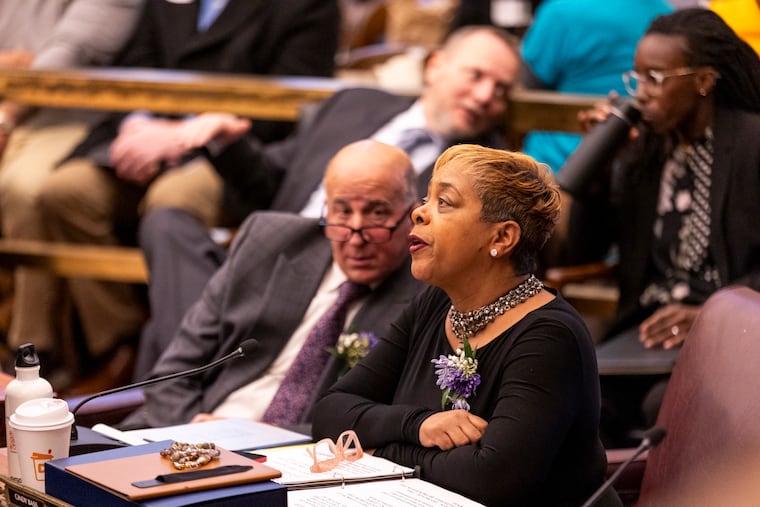
Councilmember Jeffery Young wants the property to be redeveloped into offices and other employment opportunities.
In the month since Philadelphia Councilmember Jeffery Young introduced a bill banning residential development around the former Hahnemann University Hospital, 824 apartments have been permitted in the area.
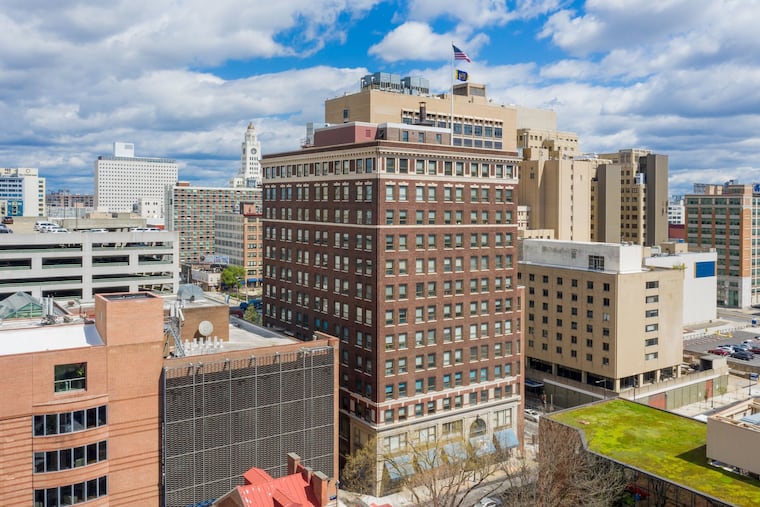
The latest zoning permits include 163 units at 1501-11 Race St., which were issued Monday. Brandywine Realty Trust purchased the former Bellet Building office tower in 2021 for $9.7 million.
Brandywine did not immediately respond to a request for comment. It is not clear whether Brandywine is seeking to develop the apartments or to just secure permits to preserve the option for a future buyer.
Last week, zoning permits were issued for 300 units at 300-304 N. Broad St., known as Martinelli Park, the last piece of the former Hahnemann Hospital site that has yet to be sold. The last bid for the site came from the HOW Group, which offered $5.5 million and planned multifamily housing there. But the sale did not go through.
Attempts to reach Hahnemann’s representatives were unsuccessful. It is likely the permits are being secured to preserve the property’s value.
A City Council Rules Committee hearing on Young’s bill is scheduled for Feb. 3.
The rush for permits began on Dec. 24, two weeks after Young introduced his bill, when the Dwight City Group received a zoning permit for 222-48 N. Broad St. to build a 361-unit apartment building.
The developer had long planned a building on that site, but the total number of units in the permit was far larger than the original plan.
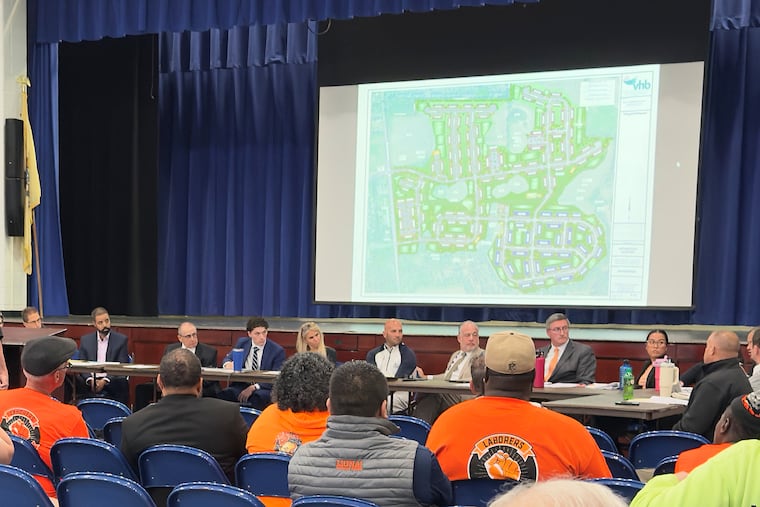
When “an overlay is placed like this ... even though we have our zoning permit already from one of the buildings, the message that it sends is that this area is closed for business,” Judah Angster, CEO of Dwight City Group, said at a January meeting of the Philadelphia Planning Commission.
He said the project now includes 90,000 square feet for commercial use, which would be dedicated to local small businesses.
Why does Young want to ban housing?
Young’s bill would create a new zoning overlay covering the area “bounded by the north side of Race Street, the east side of North 16th Street, the south side of Callowhill Street, and the west side of North Broad Street.”
This covers the former Hahnemann campus, which included seven medical buildings, a parking garage, and some surface lots. The hospital dated to the 19th century and had been operating from this location for 90 years before its bankruptcy.
A handful of other buildings are in the proposed overlay as well, including a PHA apartment building and a homeless shelter.
What once was the Hahnemann campus sprawls over nearly six acres, centered on Broad Street along the Vine Street Expressway, comprising seven medical buildings, a parking garage, and surface lots.
Young said that he wanted to ban new homes from the site to preserve job opportunities in the city, hopefully prompting the reuse of the site for office, medical, or educational use.
At the Planning Commission meeting, the bill was largely discussed as Young’s effort to force developers to meet with him over their plans. The Hahnemann site is zoned with Philadelphia’s most flexible land use rules, which means that under normal circumstances, residential conversions would not require neighborhood meetings or political approvals.
“I look forward to continuing dialogue that brings community stakeholders to the table for this important section of Center City,” Young said in an email Tuesday.
Dwight Group has said that it is having productive conversations with Young.
The legislation is considered by some legal experts as a blatant use of spot zoning, when a change in land use rules is targeted to a limited geography. Such legislation is often introduced to help or hurt a particular project.
“In my time as a zoning lawyer for 27 years, I don’t think I’ve seen a greater example of illegal spot zoning,” Matt McClure, head of law firm Ballard Spahr’s land use practice and a lawyer for developer Dwight City, said the January meeting. “It is targeted at a particular property, targeted around a certain transaction that was talked about. It’s just illegal.”
Hahnemann University Hospital has been closed for more than six years, and attempts to preserve medical and educational uses in its former buildings so far have faltered. Most are still vacant.