Philadelphia Housing Authority buys 200 apartments in North Philly for $49.1 million
The building near N. Fifth St. and Cecil B. Moore Ave. is part of PHA’s efforts to expand affordable housing by buying homes from private developers.
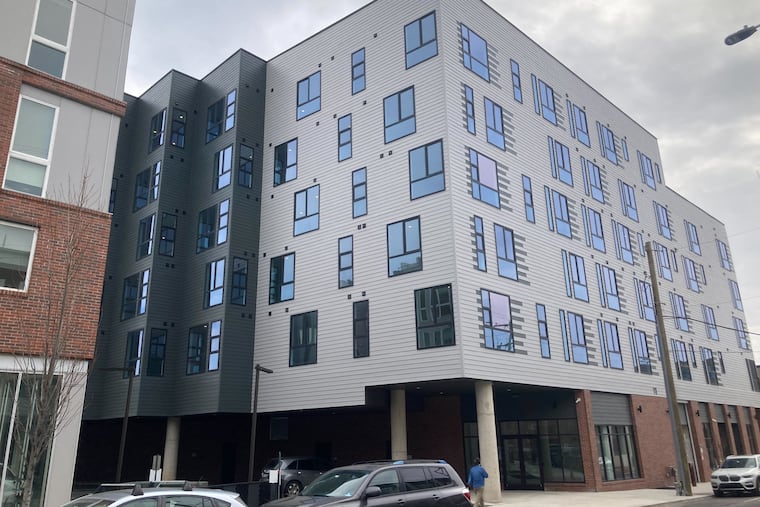
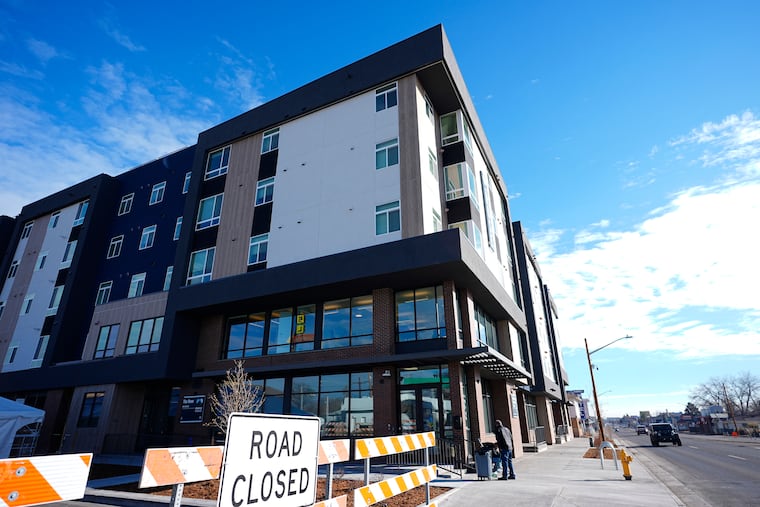
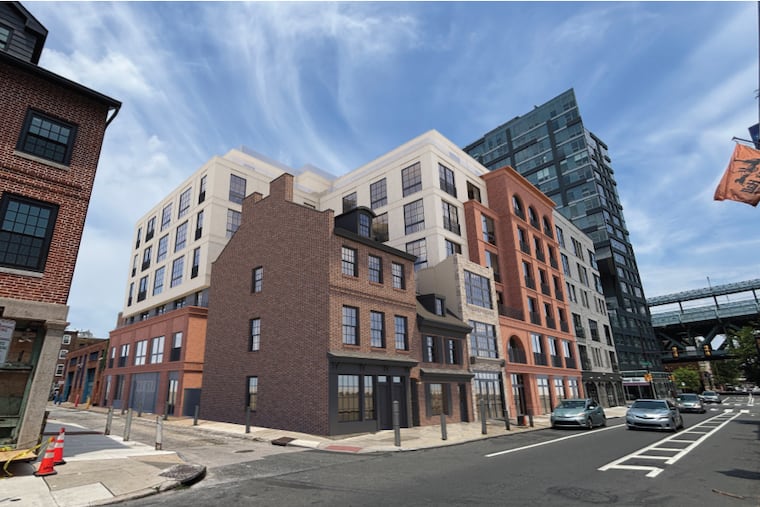
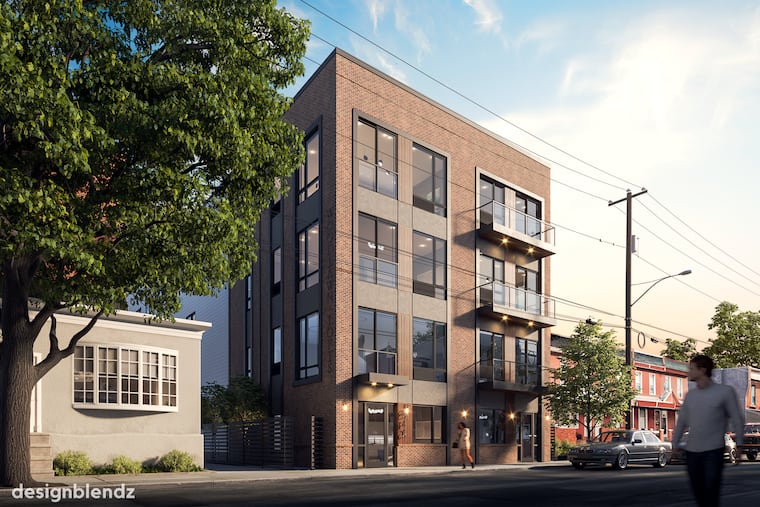
The Philadelphia Housing Authority (PHA) is spending $49.1 million to buy a newly constructed 200-unit apartment building at 1635 N. Fifth St.
This major purchase is the latest in the agency’s strategy to expand its affordable housing portfolio through acquisitions from private developers and landlords.
“These are all high-quality units that were slated to be luxury in a good part of town where we don’t have a lot of housing stock,” said Kelvin Jeremiah, president of PHA.
The building is being sold by the Riverwards Group, which transformed this corner of North Philadelphia in recent years.
“When we bought the land in 2018, it was industrial and underutilized parcels,” said Mohamed “Mo” Rushdy, managing partner of Riverwards, which builds, manages, and sells properties.
The 200-unit building — which consists entirely of studio and one-bedroom apartments — was completed at the end of January.
A neighboring building of 82 two-bedroom units was completed by Riverwards in 2022 and sold to a private company.
Before that, Riverwards built 50 single-family homes in the area, between 2018 and 2020. All were sold amid the COVID-19 pandemic when interest rates were low.
The development site is equidistant (about 0.8 miles) between the Cecil B. Moore stop on the Broad Street line and the Berks and Girard stops on the Market-Frankford line.
“Cecil B. Moore is a corridor connecting North Broad to Fishtown,” said Rushdy. “This intersection’s right there in the middle, creating this nice central critical mass of housing.”
It is also five blocks north of Girard Avenue, with its trolley line, and is close to neighborhood amenities like a bouldering gym and the original location of Human Robot brewery.
The building being sold to PHA has 52 parking spaces and a commercial space of 15,000-to-20,000 square feet.
PHA buys private buildings across Philly
The North Fifth Street building is not PHA‘s first acquisition this year. In mid-January the housing authority bought a 45-unit property at 234 W. Chelten Ave. for $8.6 million, near several other recently purchased buildings in Germantown.
PHA spent $280.6 million over 14 months to buy 17 multifamily properties with 1,515 units, the agency said in late February. That includes another Riverwards Group property, the 220-unit Somerset Station at 2230 E. Somerset St.
The acquisition campaign is part of a $6.3 billion strategy that would see PHA overhaul all 13,000 of its existing units and build 3,000 new ones.
Jeremiah has said he wants to buy 4,000 market-rate units, operating some buildings as mixed-income properties and using market-rate rents to subsidize operational costs.
The purchases come amid trying times in Philadelphia’s multifamily housing sector, as interest rates surged in the last four years just as the city’s 10-year property tax abatement was weakened.
Developers rushed to utilize the subsidy before it shrunk at the beginning of 2022. Zoning permits were issued for over 25,000 units in 2021, six times more than the second highest annual number of approvals.
So many buildings have opened in the years since — especially in the area around Fishtown and Northern Liberties — that some developers have not been able to charge the rents they need to pay off their loans.
“It’s not just the fact that we have higher interest rates,” said Jeremiah in February. “There’s the fact that we have overbuilt because of the expiration of the abatement a few years ago.”
Jeremiah also points to stricter regulations on evictions as a factor that has allowed PHA to more easily purchase buildings.
“I don’t think it’s any one single issue, it’s a combination of all of those things and PHA stepping in and saying, ‘We can save you,’” said Jeremiah in February.
But Rushdy says his company didn’t sell this North Philadelphia building because it was in distress or because an excess of apartments under Riverwards’ ability to charge profitable rents.
“The [rental] pricing that we have for these units are extremely competitive,” said Rushdy.
“This was just a great deal for us,” said Rushdy. “If it fits our financing, and if the deal makes sense for us, we sell. If it doesn’t, we don’t.”
PHA’s new buildings
It is cheaper for PHA to purchase new units than it is to build them. The agency is subject to federal regulatory requirements that private developers are not, which increases construction costs, especially labor.
“It is cost effective, substantially less than building new,” said Jeremiah.
He says that PHA is buying these units from the Riverwards Group at about $246,000 per unit, while if the agency built new it would cost between $550,000 and $600,000 apiece.
Unlike the North Fifth Street property, many of the buildings that PHA has bought are occupied. In those cases, PHA has been filling some vacancies with tenants using Section 8 vouchers but is trying to keep existing tenants in the buildings.
Managing PHA’s first two private-sector buildings has proven challenging.
The Brith Shalom apartments were in disrepair and the agency had to relocate tenants to gut rehab the building. At the nearby Dane, many tenants exited during a turbulent turnover between the previous owner and PHA.
PHA, however, says overall it hasn’t seen much tenant turnover.
Jeremiah says that PHA intends to purchase more private-sector buildings later this spring.
“We have a number still in the pipeline, going through our due diligence process, so you can expect further announcements,” he said.