New bill would ban new convenience stores and pharmacies from opening in Kensington
The new zoning restrictions on new pharmacies and convenience stores come in the wake of a curfew bill that sought to crack down on “nuisance businesses.”
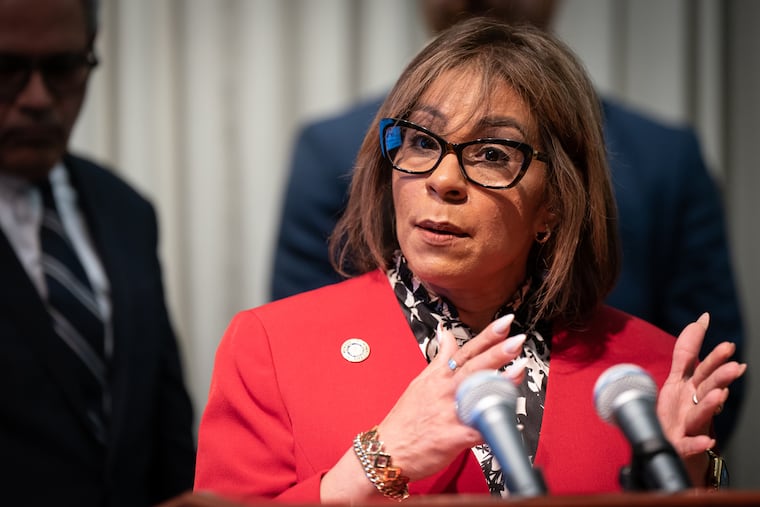
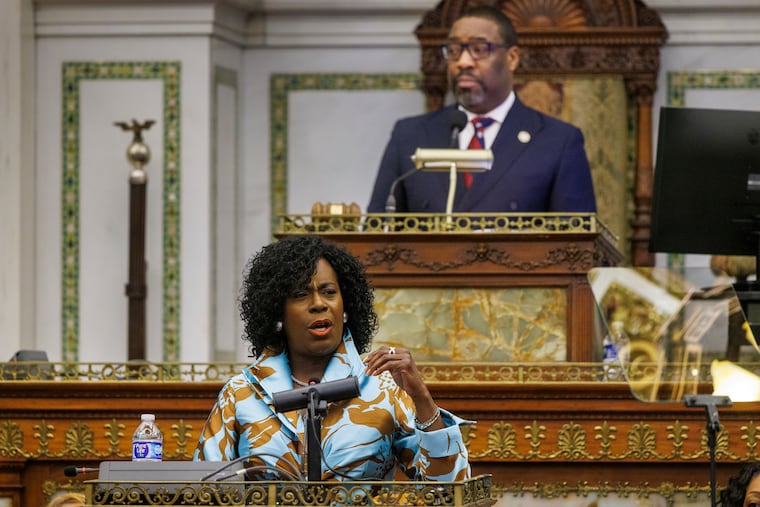
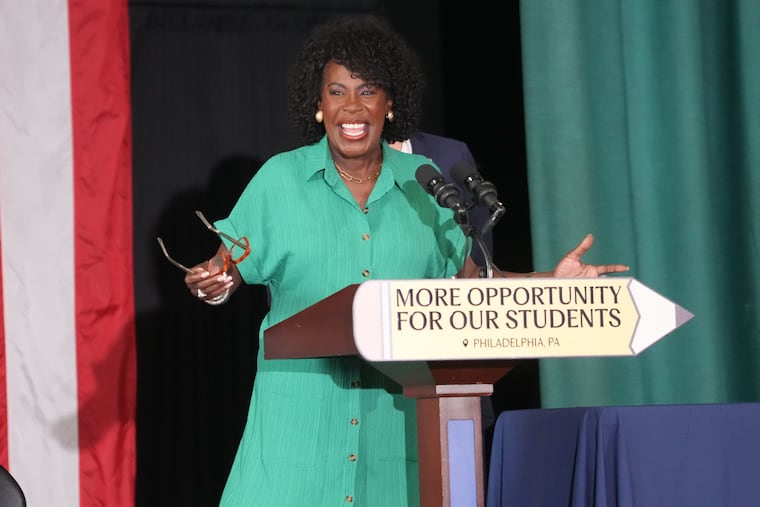
Councilmember Quetcy Lozada’s war on what she considers nuisance businesses heated up Thursday, as she introduced a zoning bill that seeks to ban new pharmacies and convenience stores from opening in the Seventh District.
The legislation would force any new “sundries, pharmaceuticals, and convenience sales” businesses in her district — which covers Kensington and other parts of North and Northeast Philadelphia — to get approval from the Zoning Board of Adjustment (ZBA).
In an interview after City Council’s Thursday session, Lozada said the bill was not crafted with chain businesses like CVS and 7-Eleven in mind, although they would also be affected by it.
“The convenience stores that are more problematic are those that just pop up overnight, are not connected to any particular chain, sell all types of narcotics paraphernalia, and continue to attract illegal businesses,” Lozada said.
In recent years, City Council has sought ways to curb an influx of businesses that host slot machine-like “skill games,” sell marijuana-like products that are often laced with toxins, and addictive substances like kratom.
All of these businesses flourish in legal gray zones left by federal and state policymakers when regulating — or not — these substances and games. Shops operating in this hazy space are most common in lower-income areas, although there are plenty in the suburbs and areas like South Street. Lozada has said they attract crime.
Some of Council’s attempts to regulate these businesses have been frustrated in court because skill games and hemp products are regulated in Harrisburg and Washington, D.C. But the proliferation of such stores is such a frequent constituent complaint that politicians keep seeking new legislative responses.
Because Council is preempted by Harrisburg and D.C., Lozada and her emulators have instead been writing more generalized legislation like Thursday’s bill that affect larger categories of businesses.
» READ MORE: ‘What do food trucks have to do with crime?’ North Philly vendors say new curfew enforcement may wipe them out.
Thursday’s zoning bill follows a controversial late-night business curfew championed by Lozada in her district and was swiftly adopted by several other City Councilmembers. It requires businesses to close by 11 p.m. and imposes $1,000 fines on violators.
That legislation has been opposed by a variety of small-business owners, including pharmacists and food truck vendors, who cater to late night and early morning customers.
Mayor Cherelle L. Parker refused to sign the legislation. It became law without her signature, however, and the mayor did not seek to veto it because she didn’t have the votes to win.
The Virginia-based libertarian law firm Institute for Justice, which opposed the curfew and threatened to sue the city over it, decried Lozada’s new bill.
“Crime is a serious issue, and we’re glad the city wants to address that problem, but current nuisance laws already give the city authority to crack down on businesses that are bad neighbors,” said Jennifer McDonald, director of activism with the Institute for Justice.
“While this bill isn’t as harmful as the recently enacted business curfew, it still raises concerns and will prevent new businesses from opening in District 7,” McDonald said.
The firm has said small-business owners who spoke out against the curfew last month were retaliated against by municipal authorities.
They asked the city to provide documentation proving there was no link between anti-curfew testimony that business owners provided in City Hall and food truck inspections and towings that affected some of them later that day. Authorities say the events were unrelated.
Lozada said the new zoning bill should be seen as part of her larger legislative campaign against nuisance businesses.
“All of this legislation does work hand in hand with one another, and it is legislation that we have been working on very closely with community residents who are impacted and whose quality of life is impacted on a day-to-day basis,” said Lozada.
City Council often insists that zoning laws of this sort do not constitute a ban, as would-be business owners can still go through the Zoning Board of Adjustment process and open if they get approval.
But the ZBA process is notoriously long — partly because Council keeps sending more cases to the board with restrictive new laws — and can be prohibitively expensive for applicants.
The process adds unpredictability to the other hardships new business owners face, and outcomes can be influenced by neighborhood or political pressure. A requirement to appear before the zoning board can discourage applicants from seeking to open businesses in heavily regulated areas.