A quarter-century-old zoning law threatens to block a restaurant and bar in Fishtown
A contentious zoning case, based on a decades-old law that covers only one side of Frankford Avenue, is splitting Fishtown.
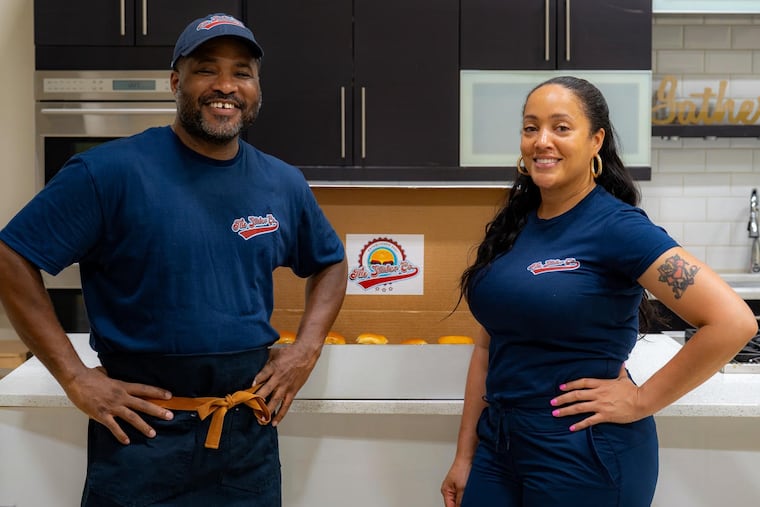
A plan to revitalize a neglected building at 2043 Frankford Ave. with a ground-floor burger restaurant and second-floor cocktail bar is facing stiff opposition in Fishtown.
Because of an over-25-year-old zoning overlay — which applies to the east side of Frankford Avenue and not the west side — the Slider Co.’s plans have been hung up for months awaiting a hearing from the city’s Zoning Board of Adjustment (ZBA).
On Wednesday, the board ruled in the Slider Co.’s favor, but the saga has cost the business owners at least $40,000 and almost six months of waiting for a hearing.
And that’s if opponents of the project don’t appeal the ZBA ruling to the Court of Common Pleas — adding at least another nine months and more legal costs to the project, probably killing it.
“We were expecting to have a straightforward project, and then all of a sudden all hell breaks loose,” zoning attorney Alan Nochumson, who represents Slider Co.’s William Johnson and Anesha Garrett, said at a late January ZBA hearing.
The principal opponent of the project is Ashley Gleason, who owns the clothing shop Vestige next door at 2041 Frankford Ave. She hired a zoning attorney to fight the case. At a Fishtown Neighbors Association (FNA) meeting last year, a narrow majority (36-30) voted to recommend that the zoning board deny the application.
“Our block is not like the lower part of Frankford. It doesn’t have the bars and restaurants,” Gleason said at the ZBA hearing. “It is mostly residential and retail. So it [the proposal] is out of character for this block.”
The property at 2043 Frankford Ave. is a faded two-story building at the end of the row, and it’s been in rough shape for years.
Unusually for a restaurant application, the case has stirred up allies in the community who submitted a petition in support of Johnson and Garrett, who already have a presence in the neighborhood.
The former president of FNA, Ashlei Tracy, spoke in support of their application at the zoning board, noting bars and restaurants on the blocks of Frankford to the north and south of this one.
“A constant complaint that we hear is that Fishtown is becoming very corporate,” Tracy said in an interview after the hearing. “A part of that is that it’s so expensive to even go through this [zoning] process.”
The cases can also stir neighborhood tensions. January’s ZBA hearing on the matter saw lengthy testimony, weeping, and accusations of racial discrimination. Johnson and Garrett are Black, and Fishtown is an overwhelmingly white neighborhood.
The wrong side of the street
The complexities of the Slider Co.’s attempt to open a new restaurant and bar in one of Philadelphia’s hottest culinary neighborhoods is an effect of a 1990s-era zoning law to address rowdy nightclubs along the Delaware River.
The “North Delaware Avenue overlay district,” which covers much of Northern Liberties and Fishtown, bans entertainment businesses from the area it covers while requiring food and beverage businesses to secure approval from the ZBA to open.
The overlay extends from the Delaware River to the east side of Frankford Avenue and from Lehigh Avenue down to Spring Garden Street.
The law was largely successful in its initial aims, stemming the creation of new nightclubs in the area. The Delaware riverfront is now known for its surplus of rental apartments, not for rowdy nightlife.
“Everyone agrees that the original purpose of the overlay no longer needs to be served,” said Matt Ruben, a longtime civic activist in Northern Liberties who has been involved with zoning and planning issues in the area — including negotiations around this overlay — for years.
“Where there is disagreement, and shifting views within some neighborhoods, is on the more subtle question of whether there should be some kind of zoning to help regulate everyday operational nuisances and negative impacts that can come from them,” Ruben said. “Even from operators who are not bad actors at all.”
Many overlays linger on for decades, long after the politicians who created them are retired because they empower neighborhood groups to stave off changes in their community.
In this case, Councilmember Mark Squilla, who represents the area, says he is open to rewriting or scaling back the overlay, but only if there is unanimity among neighborhood and business groups in Fishtown and Northern Liberties.
Currently, the Fishtown Neighbors Association (FNA) is in favor of the zoning overlay, which it argues gives residents of Frankford Avenue and the surrounding blocks a say in the restaurant boom.
The community group says new restaurants and bars have affected quality of life — such as when eateries implement late-night private trash collection that can wake up people who live nearby.
“I have not seen any interest in our community to get rid of” the zoning overlay, said John Scott, president of FNA. “It’s not seen as a detriment. It’s seen as a way to mitigate some of the impact of the food establishments.”
Johnson and Garrett fear the old zoning law has given opponents of their project a way to wage legal warfare against their proposal.
“We have never previously faced opposition to opening a new restaurant,” said Johnson, who has opened numerous culinary businesses in Delaware and Philadelphia.
“An appeal to the Court of Common Pleas would likely put the project in jeopardy due to the financial strain and delays it would impose on the property owner,” Johnson said.
Gleason’s lawyer declined to comment, and the property owner, Jordan Claffey, did not respond to a request for comment.
Staff writer Michael Klein contributed to this article.