How one South Jersey soybean farmer is being squeezed by warehouses, rising costs, and tariffs
Patrick Giberson, a soy farmer in Pemberton, Burlington County, says he’s determined to adapt and endure.

Like many farmers, Patrick Giberson feels squeezed from many sides these days.
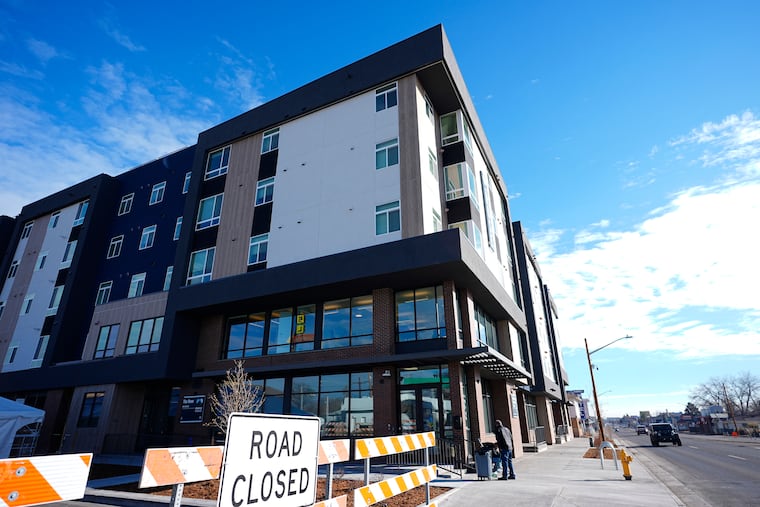
His family’s soybean and corn farm in Pemberton, Burlington County, has been flanked by a wave of development — new warehouses, shopping centers, and a Walmart.
Meanwhile, a Chinese soybean boycott continues in response to U.S.-imposed tariffs. Equipment is expensive. And weather remains, as always, unpredictable.
Yet Giberson, 57, a fourth-generation farmer, says he’s determined to adapt and endure. The family’s 800-acre farm, owned by his parents, Jo and Pat Giberson, features a restored 18th-century farmhouse and designated wildlife preserve.
“We have to be optimistic,” Giberson said on a tour of the farm organized Tuesday by the United Soybean Board, a promotional trade group he belongs to. “Everyone talks about this administration, or that administration. I’m fourth generation. My great-grandfather dealt with [President Herbert] Hoover.”
Giberson and other members of the soybean board say they stay out of policy and so refrained speaking directly about the politics involved.
But tariffs are only one of many issues facing farmers, they said.
Disappearing farmland
As pressingly, Giberson laments what he views as the overdevelopment — and disappearance — of prime New Jersey farmland. His farm on Pemberton Road grows soybeans, corn, and some wheat. He works the land alongside only one employee.
Just a few years ago, most of the land on either side of him was farmland.
Now, it’s lined by development, reducing how much land he — and others — can farm.
About 400 of the 570 acres the Gibersons own have been saved from development under the New Jersey Farmland Preservation Program. Giberson also leases other land, bringing the total amount of land he farms to about 1,000 acres.
Giberson said he can’t afford to own more land because of taxes and other costs. He once farmed 2,500 acres. Much of the land he once leased, however, was been sold to developers, leaving him few options to expand.
“Urban sprawl and warehouses has really knocked the wind out of our sails,” Giberson said. “It’s become increasingly difficult. When we lose a couple of hundred acres, it’s devastating. It’s very tough for us here as farmers in New Jersey.”
New Jersey had 711,502 acres of farmland in 2022, the most recent data available from the U.S. Department of Agriculture. That dropped by 22,582 acres in just five years.
The boycott
According to the Center for Commercial Agriculture at Purdue University, the U.S. soybean harvest began in September without any orders from China, the world’s largest buyer of the crop.
China, which is boycotting the crop because of Trump administration tariffs, typically buys about half the U.S. crop, which is estimated at 4.3 billion bushels. There’s no indication of when shipments to China will resume. Instead, China has been buying from Argentina and Brazil.
In 2024, New Jersey farmers harvested about 103,000 acres of soybeans, producing 4.22 million bushels.
Prices remain depressed for soybeans, at less than $10 per bushel. In 2022, the price per bushel was at nearly $17.
However, Giberson said he is somewhat insulated by tariffs and daily price fluctuations because he has long-standing agreements in place to sell soybeans directly. He sells to agricultural giant Perdue Farms and the DeLong Co., which ships the soybeans out of Newark. He also sells corn as feed to operations in Lancaster County. Some operations pay premium prices, he said.
Still, the tariffs and resulting boycott have had an impact, he acknowledges.
“One of the biggest problems we’re facing right now as soybean farmers is where we are at price-wise with commodities,” Giberson said.
He says tariffs are “probably hurting us some. But we’ve had all of our eggs in one basket for a long time. It’s time to look more domestically.”
Diversifying income
The Giberson farm has already diversified its income by finding a solid domestic source of income for the farm: hunters.
The family operates Giberson Farms Wildlife Preserve, where hunters pay to shoot pheasant, quail, and chukar amid cornfields, light brush, open fields, and woods. Hunting has become a big part of the farm’s business, Giberson said.
Michigan farmer Carla Schultz, a member of United Soybean Board who was visiting the Giberson farm on Tuesday, said it’s important to find other uses for soybeans to keep family farms in business. Schultz runs Eight Plates Farm with her husband and four young children.
There’s a push toward farm consolidation, Schultz said, in part because of high costs. Land, fertilizer, chemicals, and equipment have all skyrocketed, she said, noting that a combine that cost $30,000 in the 1970s now costs up to $400,000.
However, crop prices haven’t risen to keep pace.
“You have to be bigger to stay in the game,” Schultz said. “And that’s really difficult for small farmers … 90% of farms are family farms. … I feel like we’re losing our nucleus family farm.”
New uses for soybeans
As a result, soybean farmers hope to expand the uses for their crop. About 80% of U.S. soybeans get sold for meal and 20% for oil. The meal is used as feed for animals for food, such as tofu or soy milk.
Farmers want to promote the use of bio-based industrial products but say they are not trying to compete directly against petroleum-based products.
They are particularly enthusiastic about soy as a component of a new firefighting foam, SoyFoam. The new foam can be used as a substitute for foams made with per- and polyfluoroalkyl substances (PFAS) that have left behind widespread contamination at locations such as the military bases in Bucks and Montgomery Counties. The farmers hope that the federal government will adopt soybean-based foams for use in the military and forest firefighting.
» READ MORE: All adults and children tested near Pa. military bases have PFAS in their blood, study says
The farmers also note that Skechers uses soybean in the soles of some shoes under a collaboration with the Goodyear Tire & Rubber Co. Goodyear found that a polymer derived from soybean oil could be used in tires. Skechers transferred the technology to footwear.
DeWalt uses soybeans to make a dry, biodegradable lubricant for chain saws. Aveeno features soy in a moisturizer. And soybean oil is used as an alternative to some plastics and petroleum-based products.
Widening domestic markets is a key to survival, farmers say.
“We’re trying to get our own house in order here,” Giberson said, “instead of worrying about the exports.”