Mayor Parker backs legislation to boost housing development around SEPTA stations
As part of her effort to build or repair 30,000 homes, the mayor is pushing for more housing near mass transit.

Mayor Cherelle L. Parker’s administration sent City Council a bill on Thursday to encourage more apartment construction around SEPTA stations, in hopes of boosting ridership.
The proposal expands an existing law. Currently, if a SEPTA station is made a “transit-oriented development” district — a designation City Council must adopt — then most properties within a 500-foot radius receive a variety of benefits that allows developers to build more housing with less parking than otherwise allowed.
The legislation sent to Council by the Parker administration would expand that radius to 1,320 feet, or a quarter of a mile.
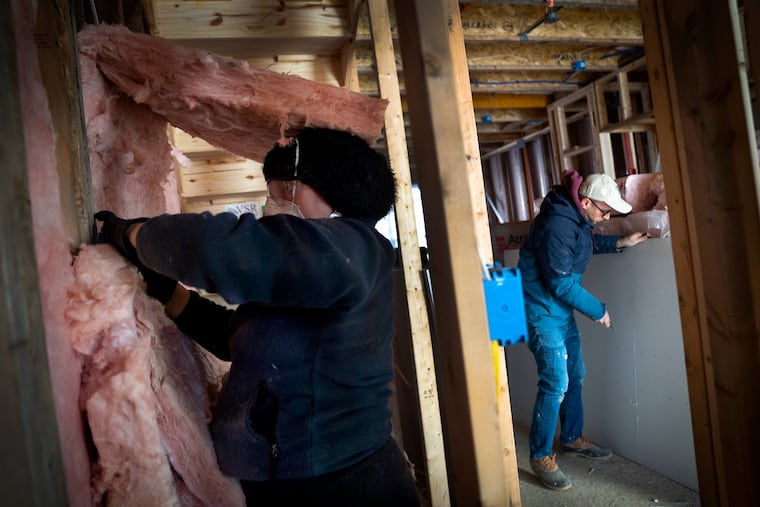
The bill is part of a package of zoning legislation meant to boost Parker’s effort to build or repair 30,000 homes in the coming years.
“Zoning is how we turn housing ambition into housing reality,” said Angela D. Brooks, chief housing and urban development officer. “These bills help us put more homes where our infrastructure can support them, near transit, near jobs, and near opportunity, while respecting the character of the neighborhoods Philadelphians already love.”
The hope is that SEPTA will benefit from a ridership boost if more housing is built close to transit, and more people will be able to afford to live near public transportation — which, in some areas, is in more expensive and sought-after neighborhoods.
The zoning overlay grants different types of development benefits depending on the existing zoning around transit stations.
In a bid to avoid controversies that have undermined similar laws in other cities, land zoned for single-family housing would not be given any development advantage under the law.
But properties already zoned for dense housing would be allowed to build many more units, with additional benefits given if they provide affordable housing or environmentally friendly design.
“This package will also increase ridership, reduce costly trips to the [zoning board], and allow more investment in transit stations,” Brooks said. “Zoning may sound technical to some, but investments in transit are something residents can see, touch, and feel every day.”
Projects that have benefited from the existing transit-oriented development overlay include The Noble, with 360 units, near the Spring Garden stop on the Market-Frankford Line, and a proposal for a 134-unit mixed-income development at the Frankford Transportation Center.
Land zoned for more modest density would be allowed to build 50% more units. That means if developers could build four units under normal conditions, in a transit-oriented development district, they could build six.
The overlay requires that the ground floor of commercially zoned buildings have active uses. Curb cuts, parking garages, and one-story buildings are not allowed.
Parker’s bill further eases some parking requirements, although the requirement for developers building in such areas is already less than under normal zoning rules.
The bill was circulated to City Council on Wednesday. Members wanted more time to review it before it was formally introduced.
“In general, I’ve been a proponent of the basic concept of increasing density around our transit stops,” said Councilmember Jamie Gauthier, who chairs City Council’s housing committee.
“It makes our neighborhoods more lively, more livable,” Gauthier said. “We have a great transit system, and we should be trying to help it be as successful as possible.”
Because City Council must pass legislation to include transit stations in the zoning overlay, district Council members are given effective control over how many stations will be included in the law’s benefits.
Both the Broad Street and Market-Frankford Lines run between Council districts, which means half of many stations are under one Council member’s purview while the other half are in another’s control.
Transit advocates have long hoped for legislation that would automatically apply to all major transit stations, but that idea could prove difficult to get through City Council.
Gauthier is one of the few Council members who have embraced transit-oriented development. All of the Market-Frankford Line stations in her district are covered by the overlay.
No stations on the Broad Street Line are included so far.
“I don’t want to speak about areas of the city that are not mine,” Gauthier said. But in her transit-rich West Philadelphia district, “I do think we can consider expanding that radius more. We know that less people are driving nowadays.”
The urbanist advocacy group 5th Square says that Parker’s bill should be broader.
The group called for the elimination of parking minimums near transit, an even larger coverage radius, and for multifamily housing to be allowed on land zoned for single-family homes near stations.
“These bills are a welcome step toward more housing near transit, but their scope doesn’t quite address our massive housing shortage,” said Fae Ehsan, board member with 5th Square Advocacy.
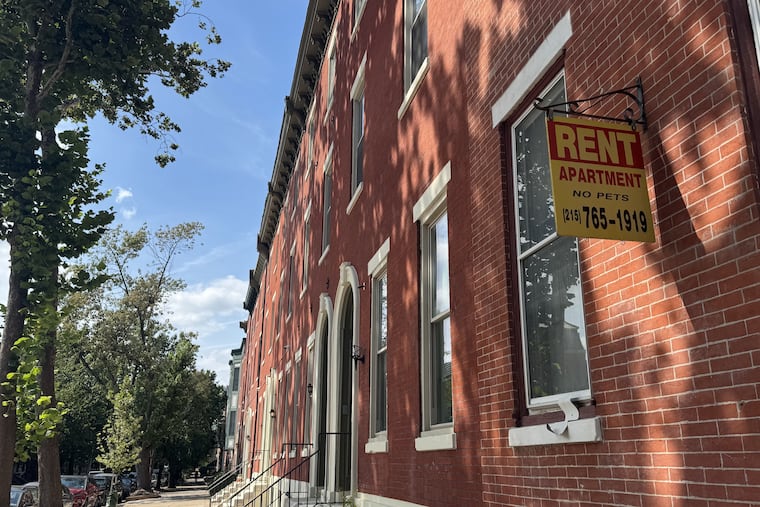
The other housing-related bill Parker sent to Council includes legislation that would make it easier to build more apartments above commercial buildings on the ends of some rowhouse blocks, which are currently allowed to have only one unit above ground-floor retail.
The bill would allow owners to convert the ground floor to residential uses if they cannot fill the storefront. The administration believes 7,000 to 12,000 more housing units could be allowed under the change.