A space between
In Philly rowhouses, an enclosed entry vestibule is both a practical feature and a canvas for bold design.
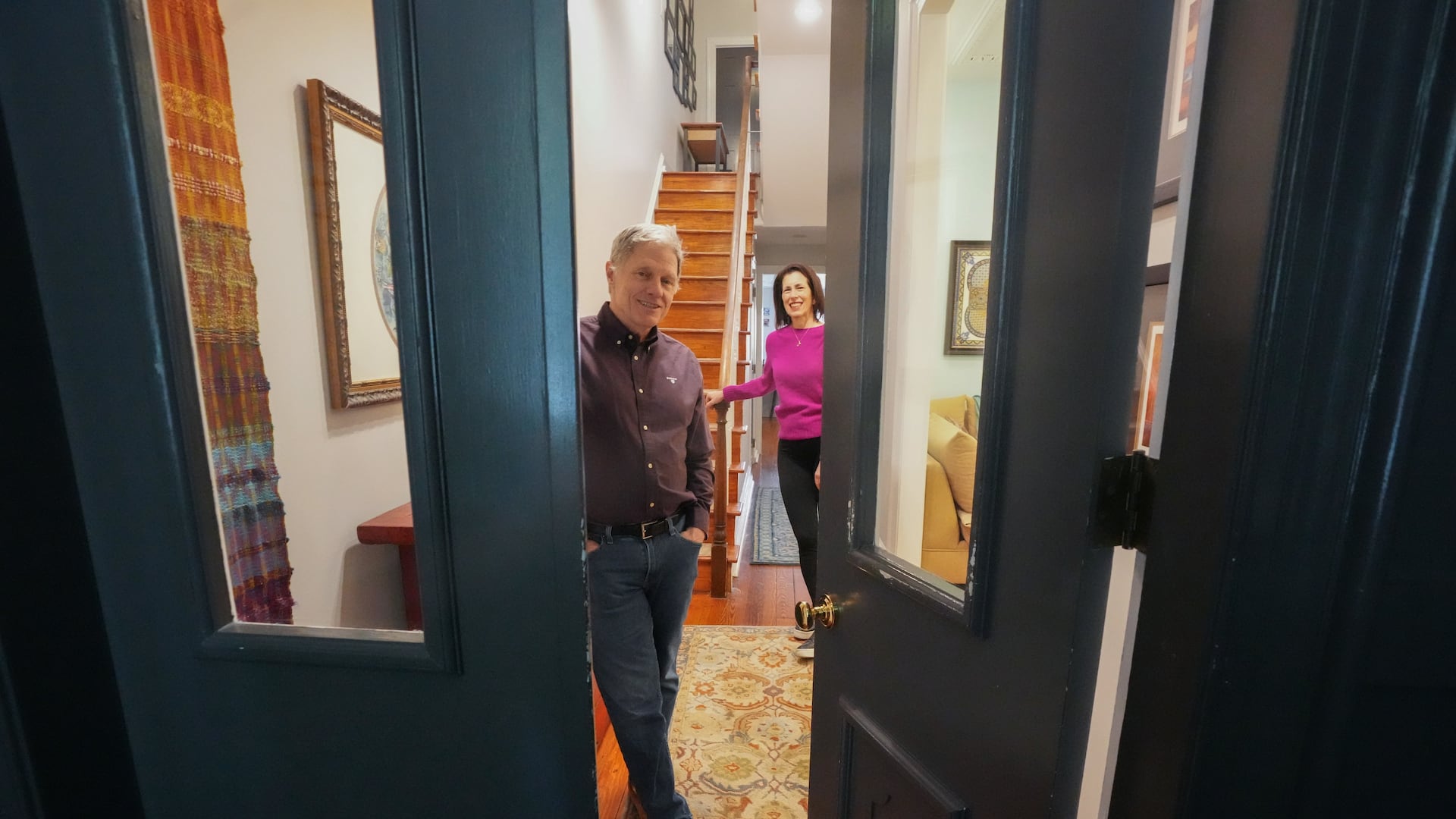
It’s a container for cold breezes. A spot to chat with neighbors or just to take a beat. A place to put on coats and shoes. A home for bright wallpaper and durable tiles. It’s all of these things, in a couple dozen square feet or less.
It’s the Philly rowhouse vestibule.
With each square foot of living space costing more than ever, and mountains of stuff increasingly overtaking the typical American home, it might seem frivolous to preserve a dedicated entry space in the already-compact floor plan of a rowhouse. But the vestibule has fans and defenders across the city.
“I’ve never met anyone who has a vestibule who didn’t like it,” said Jessica Hahn, a Philly Realtor and homeowner.
“It is sort of a respite because it is so different from the outside,” said Jocelyn Grayson of Spring Garden. “It does give you a certain sense of security ... like, ‘OK, I’m in my own space now.’”
It provides “a liminal space” and a “vibe shift,” said Mishel Castro.
Castro bought her Port Richmond rowhouse in 2013, wanting a “grandma’s house that wasn’t renovated,” not “something flipped into a gray sadness,” she said. She was hooked when she saw the vestibule with milk glass tile on the wall, penny tile on the floor, and a stained-glass transom. She painted it bright blue, and when the sunlight hit it just right, she said, “it would just glow.”
“You immediately get a sense of the house by stepping one foot into it,” Castro said. “It’s just classic Philly.”
Some, coveting their neighbors’ cozy entryways, have even built their own vestibules from scratch, or as a revival of one knocked down in prior renovations.
It creates a buffer, said Catherine Wargo Roberts of Passyunk Square. It’s “a transition zone between what can be a sort of chaotic outside world and your home, which you want to be calm and, you know, a sanctuary.”
A 19th-century feature with 21st-century designs
Vestibules were common in the “workingman’s house” format, which was a popular build in the mid- to late-1800s in several city neighborhoods, according to city records.
They’re all over the city, from South Philly to Cedar Park to Port Richmond to Fairmount. They’re not just a Philly thing. Other cities were also building rowhouses in the 1800s.
Over the years, some property owners chose to demolish their vestibules, opting for an open-concept floor plan or wanting to maximize natural light in their main living space. Others, however, have put great care — and sometimes expensive finishes — into highlighting these little rooms.
When Grayson moved into her Spring Garden home a decade ago, “the vestibule was existing, but it was just a space that you walked through. There was nothing to it.”
That presented an opportunity to get creative. Working with designer Michael Gruber and contractor David Kaiser, she put paneling on the lower wall, painted it dark gray, with wallpaper in a bold pomegranate pattern above. She kept the existing black porcelain tile and installed hooks for hanging coats.
“It’s a very small space, so you can make a bigger statement” without running up huge costs, Grayson said. “You can do something more dramatic.”
Interior designer Sary Em and architect Eric Heidel often work on rowhouses with vestibules. Their firm does much of its work in the city, and their own South Philly rowhouse has a vestibule.
“Philly rowhomes are pretty small, and oftentimes if they don’t have a vestibule, you walk in right into the living space,” Em said. “Having a vestibule is just a nice transition from the outside.”
Theirs is “tiny,” Em said, about 15 square feet. But it serves many purposes. Coats, bags, and umbrellas live there, and a mirror for one last look. It has marble tile floors, gray wainscoting on the bottom half of the wall, and floral wallpaper above.
“We love it,” Em said.
Why some homeowners are building vestibules anew
Some might keep a vestibule to preserve their home’s historic charm. But they are also quick to mention the practical perks.
It can help detain mischievous pets. And it acts as an air lock during the coldest and hottest months of the year, they note.
“We are slowly moving away from open-concept being the number-one thing people want” in a home, said Hahn, the Realtor. People with young children, in particular, often want separation so toys, clothes, and kid gear don’t overtake the entire home, she said. “It’s a more realistic way of actually living in and enjoying your home.”
Owners of homes where a vestibule was demolished, or never existed to begin with, could understandably be jealous. Em and Heidel have received multiple requests to build or rebuild a vestibule in the last few years. Some were new construction houses where the homeowners wanted a more traditional entryway.
“People want that separation,” Em said. “It adds character, too.”
Wargo Roberts’ house in Passyunk Square was not new construction by any stretch. It was built in 1915. But when she bought it in 2024, it had no vestibule. She assumes it was torn down at some point in the prior century.
“Living in Philly and going to different people’s houses who had them ... I’ve really always wanted one,” said Wargo Roberts.
So she and husband, Karsten Roberts, measured the vestibule in a friend’s home, then used painter’s tape in their own entryway to mock up the space. Pretending a wall had been erected there, they lived around it for a few weeks, and ultimately determined they could lose that bit of the floor plan. They called in a friend who does construction to help build the walls.
Wargo Roberts chose black and white floor tiles, beadboard for the lower wall, and a green and blue floral wallpaper on the upper half. They refashioned a glass lampshade found in the basement into a functioning light fixture. A piece of green marble, found in a trash pile, was upcycled into a threshold between the entry tiles and hardwood inside.
A strip of jingle bells on the front door is an homage to Wargo Roberts’ childhood home, ringing each time someone comes or leaves. They’re jingling all the time.
“We have kids and we’re always coming, going, in and out, talking to neighbors,” Wargo Roberts said. “We do a lot of chitchatting in the vestibule.”